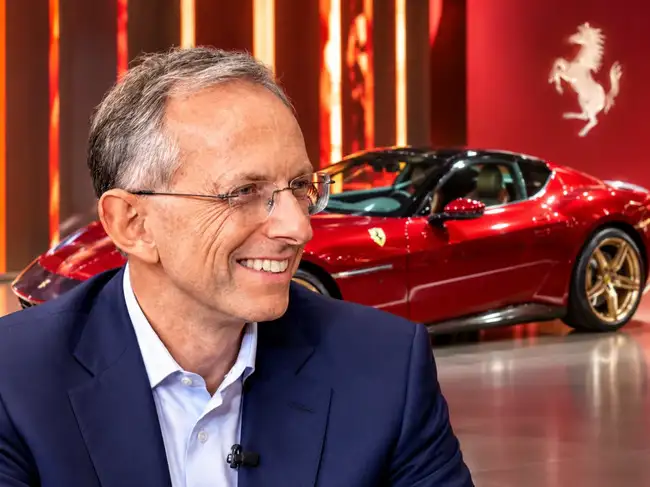
Ferrari is strengthening its presence in India, viewing the country as a market with significant long-term potential as a younger generation of wealthy buyers develops a growing interest in luxury performance cars. The Italian supercar manufacturer wants to build closer relationships with Indian customers while protecting the exclusivity that has long defined its brand.
Ferrari CEO Benedetto Vigna has been spending time in India, including driving on local roads and meeting customers, as the company evaluates opportunities in the country’s evolving luxury automobile market. His visit reflects Ferrari’s intention to understand the needs of Indian buyers more closely rather than treating the country simply as another destination for vehicle sales.
India remains a relatively small market for the global supercar industry, but rising wealth, a younger population and improvements in road infrastructure are creating new opportunities. Ferrari believes establishing a stronger connection with customers at this stage could help the business as demand develops over the coming years.
At the same time, the company does not intend to pursue growth by significantly increasing production. Ferrari’s approach remains centred on controlled volumes, personalised ownership experiences and maintaining demand above the number of cars it makes available.
Why Ferrari Considers India a Market of the Future
Vigna believes India’s growing wealth and changing customer profile make it an important market for Ferrari’s long-term strategy. Although the company sells fewer than 100 cars in India compared with approximately 14,000 vehicles globally, he sees signs that the country’s luxury-car market is developing.
One of the factors attracting Ferrari is the emergence of a younger group of wealthy customers. India’s expanding business community, particularly entrepreneurs and people working in technology and other new industries, is creating a customer base with growing purchasing power and an interest in premium international brands.
Vigna has also pointed to the importance of being present in a market before it reaches a larger size. In his view, companies cannot build strong customer relationships simply by monitoring sales figures or relying on digital information. They need to understand local conditions, meet buyers and experience the market directly.
That approach has influenced his visits to India. He has been driving Ferrari cars on Indian roads and meeting customers to understand how they use their vehicles and what they expect from the brand.
For Ferrari, this direct engagement is particularly important because purchasing a supercar is not simply a conventional automobile transaction. Customers often expect a personalised relationship with the manufacturer, access to distinctive experiences and a vehicle that reflects their individual preferences.
Ferrari Buyers in India Are Younger Than the Global Average
One of the most notable features of the Indian market is the age profile of its customers. Vigna said Ferrari buyers in India are younger than those in many other markets and that the company is seeing a growing number of first-time Ferrari owners.
The younger customer base reflects broader changes in India’s wealth landscape. Entrepreneurs, technology professionals and people from emerging business sectors are increasingly becoming part of the luxury-car market.
These buyers may have different expectations from traditional luxury-car customers. They are often familiar with international brands, technology-driven products and personalised services. Ferrari’s challenge is to understand these preferences while preserving the characteristics that distinguish the company from other luxury automobile manufacturers.
Vigna also observed that Indian customers tend to use their Ferraris more actively than buyers in some other markets. He described owners who wake up early to drive their cars and enjoy the experience, with one customer comparing the activity to meditation.
This relationship with driving is important to Ferrari’s identity. The company has built its reputation around performance, engineering and motorsport heritage. Customers who actively drive their cars, rather than treating them only as collectibles, connect with an important part of the brand’s philosophy.
Ferrari Plans to Expand Its Dealership Network in India
Ferrari’s growing interest in India is also reflected in its plans to strengthen its physical presence. The company already has three dealership locations in Bengaluru, New Delhi and Mumbai.
Vigna said Ferrari plans to add two more dealerships, in Ahmedabad and Chennai. The expansion would give the company a wider presence in a market where wealthy customers are spread across several major business centres.
Dealerships play an important role in Ferrari’s business model because customers often expect a high level of personal attention when selecting and configuring a vehicle. The buying process can involve decisions about colours, materials, finishes and other customisation options.
A stronger local network can make it easier for customers to interact with the brand, explore its models and access services. It also gives Ferrari more opportunities to understand local preferences and maintain relationships after a vehicle has been delivered.
The planned expansion is part of a longer-term strategy rather than an indication that Ferrari expects an immediate surge in sales. The company is seeking to establish a stronger foundation as the Indian luxury market develops.
Why Ferrari Refuses to Build More Cars Than the Market Demands
Despite its interest in growth, Ferrari remains committed to limiting production to protect its exclusivity. Vigna said scarcity and exclusivity are two important pillars of the company’s growth strategy.
He explained that Ferrari aims to produce one car less than the market demands. The principle means the company does not intend to satisfy every potential order by continuously increasing production.
This approach distinguishes Ferrari from manufacturers that primarily seek to expand sales volumes and market share. Ferrari instead places importance on the limited availability of its vehicles, the individuality of each model and the experience associated with owning one.
Controlled production also helps maintain the perception that a Ferrari is not an ordinary luxury purchase. Demand that exceeds available supply reinforces the exclusivity of the brand and supports its positioning in the high-end automobile market.
Vigna’s comments indicate that India will not be treated as an exception to this strategy. Even if demand grows, the company intends to balance additional market allocations with its broader production philosophy.
For Indian buyers, this means a stronger Ferrari presence does not necessarily translate into unlimited vehicle availability. The company wants to become closer to customers and serve a growing market without abandoning the controlled supply model that defines its business.
Universo Ferrari Exhibition Highlights the Brand’s India Strategy
Ferrari’s Universo Ferrari exhibition in Delhi provides another opportunity to strengthen its relationship with Indian customers and enthusiasts. The event showcases the company’s vehicles and its connection with performance, design and motorsport.
Among the displays is the 12Cilindri Manuale, highlighting Ferrari’s engineering and design heritage. The exhibition gives visitors an opportunity to engage with the brand beyond the conventional dealership experience.
Such events are important for a manufacturer whose appeal is closely connected to emotion, heritage and customer experience. Ferrari is not only selling vehicles; it is also building a community around its racing history, distinctive design and performance philosophy.
The exhibition also reflects the company’s effort to bring more of its global identity to Indian audiences. As the market develops, direct interaction with enthusiasts and prospective buyers can help Ferrari build familiarity with its products and ownership experience.
Ferrari’s Expansion Is Not Just About Selling More Cars
Ferrari’s India strategy is part of a broader effort to balance tradition with changing customer expectations. The company is preparing for developments in technology, powertrains and digital systems while continuing to protect its distinctive identity.
Under Vigna, who previously worked in the semiconductor industry, Ferrari has placed considerable emphasis on innovation. His background has brought experience from a technology sector where software and rapid product development play a major role.
However, Ferrari’s approach to innovation is not based on replacing its heritage. The company wants to combine its racing history and craftsmanship with new technologies that can improve performance and the driving experience.
That philosophy is also relevant to India. Younger customers may be interested in new technology and different forms of personalisation, but Ferrari must ensure that any changes remain consistent with the emotional experience associated with the brand.
Ferrari Wants to Give Customers Freedom of Choice on Powertrains
Another important part of Ferrari’s wider strategy is its approach to different powertrain technologies. Rather than relying on a single solution, the company is developing internal-combustion, hybrid and fully electric vehicles.
This strategy gives customers the option to choose a vehicle based on their preferences. Some buyers continue to value the sound, character and traditional driving experience of an internal-combustion engine, while others are interested in hybrid performance or electric propulsion.
Ferrari’s first fully electric model, the Luce, represents an important development in this direction. Its introduction has also generated discussion about how a brand with such a strong traditional identity should approach electrification.
Vigna has argued that electric propulsion is an addition to Ferrari’s product range rather than a complete replacement of its existing technologies. The company intends to maintain different powertrain options and allow customers to decide which type of vehicle suits them.
This approach reflects Ferrari’s broader belief that innovation should preserve the company’s identity while responding to changes in the automobile industry. For a manufacturer closely associated with the sound and performance of its engines, introducing electric technology requires balancing technical progress with customer expectations.
Can India’s Improving Infrastructure Support Ferrari’s Growth?
Road infrastructure has traditionally been one of the considerations for luxury sports-car ownership in India. High-performance vehicles are designed to deliver a particular driving experience, and road conditions can influence how owners use them.
Vigna said he has observed significant improvements in India’s roads during his visits over the past 25 years. He also described his own experience of driving in the country as positive.
Improving highways and road connectivity can make it easier for owners to use performance vehicles beyond major city centres. The development of racing circuits and other automotive facilities can also provide enthusiasts with opportunities to experience their cars in controlled environments.
However, infrastructure is only one part of the market’s development. Ferrari also needs a reliable dealership network, trained service personnel and an ownership experience that meets the expectations of customers purchasing highly specialised vehicles.
The company’s planned dealerships in Ahmedabad and Chennai would help expand its local reach, while its continued engagement with existing owners could provide a better understanding of the services and experiences buyers value.
India’s Luxury Car Market Offers Long-Term Opportunities
India’s luxury automobile market remains small compared with the country’s overall passenger vehicle industry. High prices, import duties and the limited number of buyers for expensive sports cars restrict the size of the potential market.
Nevertheless, rising wealth and the expansion of India’s business and technology sectors are creating opportunities for international luxury brands. A younger generation of high-net-worth individuals is also becoming more visible in the market.
Ferrari’s strategy reflects the view that long-term opportunities are not always measured by current sales volumes. Building relationships, expanding customer access and understanding local preferences can help a company prepare for future demand.
The company’s plans to add dealerships and increase its engagement with Indian customers suggest that it wants a more established presence in the country. But its commitment to limited production means expansion will remain carefully controlled.
What Ferrari’s India Push Means for the Future
Ferrari’s growing focus on India brings together two objectives that can appear difficult to balance: expanding its presence in a developing luxury market and maintaining the scarcity that supports its global reputation.
The company sees younger Indian buyers, rising domestic wealth and improving infrastructure as reasons to invest more time and resources in the country. Its plans for additional dealerships and customer engagement indicate that India is becoming a more important part of its long-term market strategy.
At the same time, Ferrari does not intend to turn growth into a race for maximum sales. Its production philosophy remains based on limiting supply, preserving personalisation and maintaining the exclusivity associated with its vehicles.
For Vigna, the opportunity lies in being close to customers before the market becomes significantly larger. Ferrari’s next phase in India will therefore depend not only on how many cars it sells, but also on how successfully it builds lasting relationships with a younger generation of buyers while remaining faithful to the brand’s identity.
For breaking news and live news updates, like us on Facebook or follow us on Twitter and Instagram. Read more on Latest Automobile on thefoxdaily.com.






COMMENTS 0