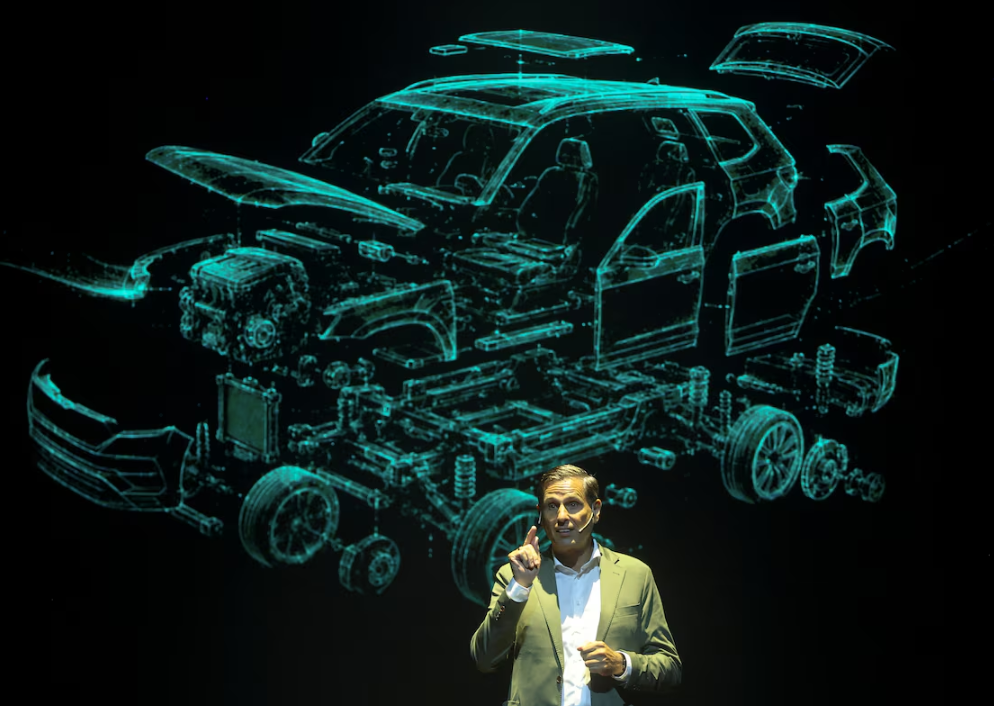
Volvo Cars has appointed Klaus Zellmer as its next president and chief executive officer, naming the current Skoda CEO to succeed Hakan Samuelsson within the next year. The Swedish automaker said Zellmer will take over no later than October 1, 2027, as it works to strengthen its business amid US tariffs, weaker sales in China and uncertainty in the electric vehicle market.
The leadership transition comes at a significant moment for Volvo Cars. Samuelsson returned to the company in 2025 with a mandate to revive its fortunes, but the automaker continues to face pressure from rising costs, changing consumer demand and a complicated relationship between its Western operations and Chinese ownership.
Samuelsson has recently outlined plans to introduce 13 new models by 2030, with the aim of doubling Volvo Cars’ market share. Zellmer will inherit this strategy alongside the challenge of improving profitability and navigating a rapidly changing global Automotive Industry.
Volvo Cars Names Klaus Zellmer as Its Next CEO
Volvo Cars announced on Sunday, September 20, that Klaus Zellmer would become its president and CEO, succeeding Hakan Samuelsson. The company said Zellmer would begin the role no later than October 1, 2027.
Zellmer currently serves as chief executive of Skoda, the Volkswagen Group brand. His appointment places an executive with experience at another major European automaker in line to lead Volvo Cars through its next phase of development.
The transition is not immediate. Samuelsson is expected to remain in charge during the period before Zellmer takes over, giving Volvo Cars time to prepare for the leadership change and continue implementing its current strategy.
The appointment also signals a planned succession rather than an abrupt departure. Samuelsson said last week that he did not intend to continue working full time after his contract expires in April, according to Reuters.
Who Is Klaus Zellmer?
Klaus Zellmer is a German automotive executive who currently leads Skoda. His appointment at Volvo Cars brings leadership experience from a major European vehicle manufacturer into a company balancing its Scandinavian identity, global operations and Chinese majority ownership.
His upcoming role will involve overseeing Volvo Cars’ product plans, commercial performance, technology strategy and response to international market conditions.
Although his appointment is confirmed, the Reuters report does not provide detailed statements from Zellmer about his priorities for Volvo Cars or identify specific changes he intends to make after taking office.
His leadership approach will become clearer as the transition progresses and the company communicates its plans for product development, profitability and market expansion.
Why Hakan Samuelsson Is Leaving the CEO Role
Hakan Samuelsson returned to lead Volvo Cars in 2025, having previously served as CEO from 2012 to 2022. His return was intended to help revive the automaker’s business and improve its performance.
Samuelsson has now indicated that he does not plan to work full time after his contract ends in April. Volvo Cars’ announcement sets out a transition to Zellmer by October 1, 2027, at the latest.
Samuelsson’s second period as CEO has taken place during a difficult phase for the automotive industry. Volvo Cars has been affected by US tariffs, weaker demand for electric vehicles, declining sales in China and high development costs.
The company has also struggled to meet earlier profitability targets. These pressures make the leadership transition important for the automaker’s efforts to improve its financial and commercial position.
Volvo Cars’ 2030 Strategy: 13 New Models
At a strategy day held on Thursday, Samuelsson outlined an ambitious plan to launch 13 new models between now and 2030. The company aims to double its market share through this product strategy.
The plan comes as automakers face changing consumer preferences, evolving technology and intense competition across vehicle categories. New models can help a manufacturer refresh its lineup, reach different customer groups and respond to changes in demand.
However, launching a large number of vehicles also requires significant investment. Automakers must fund design, engineering, testing, production preparation, marketing and after-sales support. These costs can weigh on profitability before new products generate sufficient sales.
Volvo Cars has already faced high development costs, according to Reuters. The company’s challenge will therefore involve balancing the ambition of its model rollout with the need to manage spending and deliver sustainable commercial results.
Why a broad model pipeline matters
A vehicle lineup needs to serve customers with different needs, budgets and driving habits. A broader range of models can provide opportunities to reach additional buyers, but the commercial impact depends on pricing, product appeal, production capacity and market conditions.
For Volvo Cars, the planned launches will also take place in a competitive environment where manufacturers are adjusting their electric and conventional vehicle offerings.
The 13-model target is a forward-looking strategy announced by Samuelsson. It should not be interpreted as a guarantee that every model will achieve its sales targets or that the company’s market share will automatically double.
US Tariffs Add Pressure to Volvo Cars
US tariffs are among the external challenges affecting Volvo Cars. Trade duties can influence the cost of importing vehicles and components, depending on where products are manufactured and how the relevant tariff rules apply.
For an international automaker, tariff changes can complicate decisions about manufacturing locations, sourcing, pricing and market access. A company may need to review its supply chain or adjust commercial plans when trade costs change.
The Reuters report identifies tariffs as one of the factors contributing to Volvo Cars’ difficulties in meeting previous profitability targets.
The precise financial impact on Volvo Cars depends on factors not detailed in the supplied report, including the vehicles affected, their production locations and how costs are managed across the business.
How tariffs can affect automakers
Tariffs can raise the cost of imported vehicles or parts. Companies may respond in different ways, such as absorbing some costs, changing prices, adjusting sourcing or considering where production takes place.
Each option has trade-offs. Raising prices may affect demand, while changing suppliers or production locations can require time and investment. Absorbing costs can place pressure on profit margins.
For Volvo Cars, the challenge is to maintain its position in the US market while managing the cost and complexity of its global operations.
China Sales and the Importance of the Chinese Market
Volvo Cars is also dealing with slumping sales in China, one of the world’s major automotive markets. Weak performance in a large market can affect a manufacturer’s global sales and make it harder to achieve growth targets.
China’s automotive sector has become highly competitive, particularly as manufacturers expand their electric vehicle offerings and compete on technology, pricing and product features.
Volvo Cars must respond to local market conditions while coordinating its global product and technology strategy. The Reuters report identifies weaker Chinese sales as a key challenge but does not provide detailed sales figures or a breakdown by model.
Without those figures, it is not possible to determine from the report alone which vehicle categories or customer groups account for the decline.
Why China matters to Volvo Cars
China is relevant to Volvo Cars not only as a market but also because of the company’s ownership structure. Volvo Cars is majority-owned by China’s Geely Holding, linking the Swedish automaker to a wider Chinese automotive group.
This ownership connection creates opportunities for coordination, but it also makes the company’s international operating environment more complex amid growing attention to technology, trade and national security.
Volvo Cars must continue to address the requirements of different markets while maintaining a coherent global business strategy.
Balancing Western and Chinese Technologies
One of Volvo Cars’ most delicate challenges is separating its Western and Chinese technologies sufficiently to continue selling vehicles in the United States.
The issue reflects broader tensions affecting companies with cross-border ownership or technology links. Governments may scrutinise technology, data and supply chains when they believe these areas have implications for national security.
The Reuters report notes that Volvo Cars is working through this balancing act and refers to a sales ban affecting its sister brand Polestar.
However, the supplied report does not specify the full legal scope of the Polestar restriction or describe the exact technical arrangements Volvo Cars would need to adopt. Those details should not be assumed from the brief reference alone.
Why technology separation can be difficult
Modern vehicles rely on interconnected systems, including software, electronics, communications technology and data-processing capabilities. A company’s global engineering structure can therefore become complicated when different markets apply different requirements.
Separating or adapting technologies may require changes to vehicle architecture, software, supplier relationships and internal development processes. Such changes can add cost and time to product programmes.
For Volvo Cars, the commercial question is how to meet market-specific requirements without undermining the efficiency of its global product development.
Volvo Cars’ Profitability Challenge
Volvo Cars has struggled to meet previous profitability targets, with Reuters identifying tariffs, weaker EV demand and high development costs as contributing factors.
Profitability is especially important during a period of major product investment. Automakers must fund new technologies and vehicles while managing manufacturing costs, marketing expenses and changes in demand.
If sales volumes are weaker than expected, the costs of developing and launching new products may be spread across fewer vehicles. This can make it more difficult to achieve targeted margins.
At the same time, reducing investment too aggressively could limit a manufacturer’s ability to refresh its lineup or respond to competitors.
The next CEO will therefore need to manage the relationship between investment, product competitiveness and financial discipline. The Reuters report does not provide a new profitability target or a detailed financial plan for Zellmer’s tenure.
Electric Vehicle Demand and Industry Competition
Weaker electric vehicle demand is another factor affecting Volvo Cars. The EV market has been evolving as customers weigh purchase prices, charging access, driving needs, incentives and the availability of different models.
Demand can vary substantially by country and vehicle segment. A slowdown in one market does not necessarily mean that all electric vehicle categories are experiencing the same trend.
For manufacturers, changes in EV demand can influence production planning, pricing and investment decisions. Companies may need to adjust the timing or mix of their vehicle launches in response to customer behaviour.
Volvo Cars’ planned 13-model rollout will take place against this changing market backdrop. Its success will depend on how well the company matches its products to customer needs and manages the costs of development and production.
Volvo Cars Shares Remain Under Pressure
Volvo Cars’ shares have continued to trade near record lows, according to Reuters, despite Samuelsson’s return being intended to help revive the company.
The report says the shares are down more than 45% so far in 2026. This provides an indication of the difficult market environment surrounding the company, although share-price movements alone do not explain the reasons behind investor decisions.
Stock prices can reflect many factors, including expectations about future earnings, industry conditions, trade policy, product demand and broader financial-market movements.
The share-price performance reported by Reuters should be understood within the article’s stated time frame. It does not establish how the stock will perform after Zellmer takes over.
What Klaus Zellmer Will Inherit
When Zellmer becomes CEO, he will take responsibility for a company facing several interconnected challenges. These include implementing the product strategy, improving profitability, responding to tariff pressures and addressing weaker sales in China.
He will also need to navigate the relationship between Volvo Cars’ Swedish identity, its majority Chinese ownership and the requirements of markets such as the United States.
The transition gives the company time to prepare, but it also creates a period in which leadership continuity and strategic execution will be important.
The immediate questions for Volvo Cars include whether it can deliver its planned product launches, improve its financial performance and adapt to changes in international trade and automotive demand.
Key Developments to Watch Before 2027
Several milestones may help clarify the direction of Volvo Cars before Zellmer formally takes over:
- CEO transition: Further details about the handover from Samuelsson to Zellmer.
- Product launches: Progress toward the announced target of 13 new models by 2030.
- Market share: Updates on the company’s ambition to double its share of the market.
- Profitability: Evidence of progress against the financial challenges identified by the company.
- US tariffs: Any changes in trade conditions affecting Volvo Cars’ costs and operations.
- China sales: Whether demand stabilises or continues to weigh on the company’s performance.
- EV demand: How the company adjusts its product and investment plans as customer demand changes.
- Technology rules: Further clarity on requirements affecting Volvo Cars’ ability to operate across markets.
These are areas to monitor rather than predictions about what will happen. The company’s performance will depend on developments in its own operations as well as external market and policy conditions.
Conclusion: A Leadership Change During a Strategic Turning Point
Volvo Cars’ appointment of Klaus Zellmer as its next CEO marks an important leadership transition for the Swedish automaker. Zellmer is scheduled to succeed Hakan Samuelsson no later than October 1, 2027, as the company works through challenges involving tariffs, weaker Chinese sales, EV demand and development costs.
Samuelsson’s strategy calls for 13 new models by 2030 and aims to double Volvo Cars’ market share. Delivering that plan while improving profitability will be a central task for the company during the transition.
The broader business environment adds further complexity. Volvo Cars must manage its global operations, address technology-related concerns in the United States and respond to competition across major automotive markets.
Zellmer’s appointment establishes the planned succession, but the details of his strategy and the company’s future performance remain to be seen. The key measures to watch will be execution of the product pipeline, financial results, market performance and the company’s ability to adapt to changing global conditions.
For breaking news and live news updates, like us on Facebook or follow us on Twitter and Instagram. Read more on Latest Business on thefoxdaily.com.



COMMENTS 0