Chinese automakers took centre stage at the Paris Motor Show, showcasing advanced Electric Vehicles, luxury features and autonomous-driving technology as they expand their presence across Europe. The growing participation of Chinese brands highlights intensifying competition for established European manufacturers, with market share gains, trade tensions and plans for local production reshaping the Automotive Industry.
Around 20 Chinese vehicle brands exhibited at the event, representing approximately one-third of all participating brands. That was a significant increase from the nine Chinese brands present at the previous show two years earlier, reflecting the rapid expansion of China’s automotive industry across international markets.
Chinese Automakers Showcase Advanced Technology
Several Chinese manufacturers used the Paris Motor Show to highlight their latest technology and compete for European customers. Beijing-based luxury carmaker Li Auto presented a vehicle featuring front massage seats, a 21-inch rear passenger screen and a central console designed to keep drinks either cool or warm.
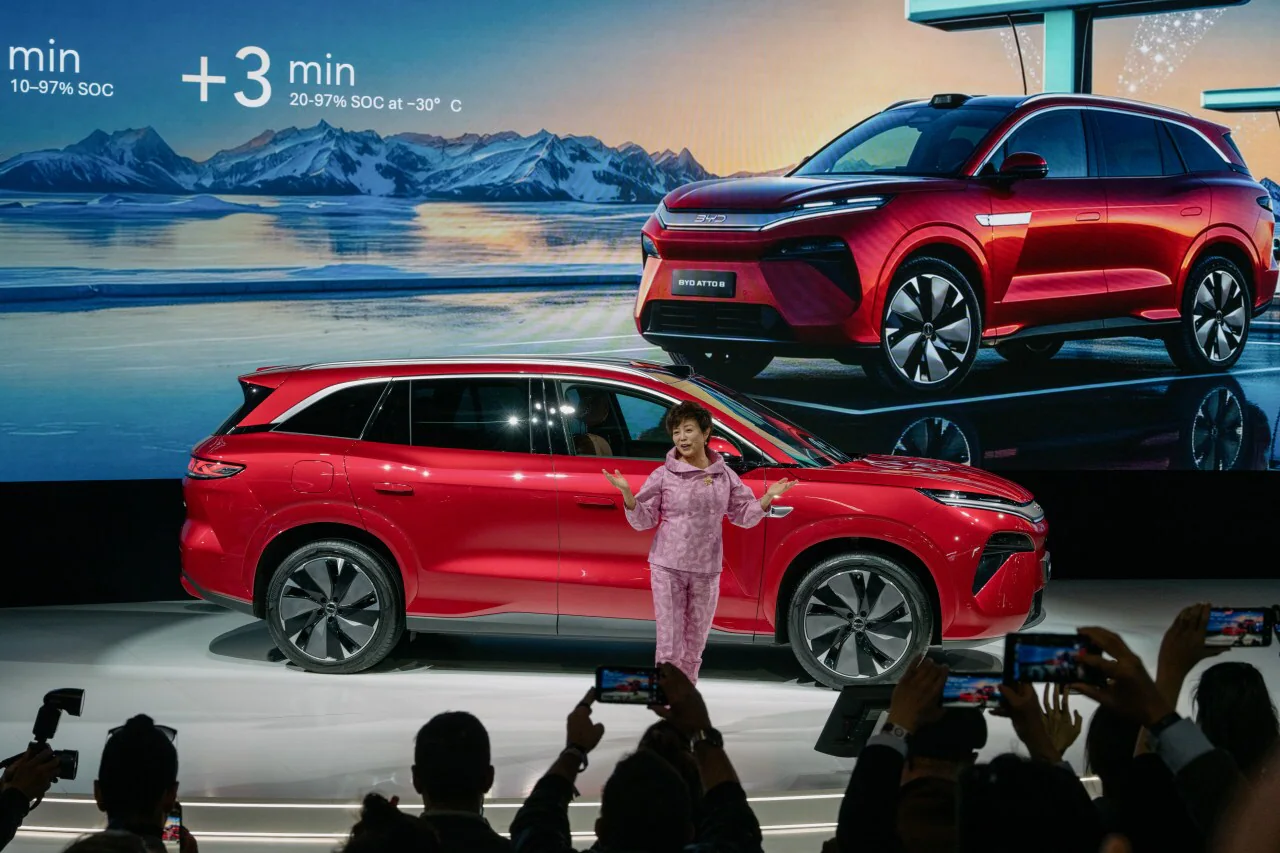
BYD, the world’s bestselling electric-vehicle brand, unveiled a new SUV developed for the European market. The company highlighted technology capable of charging a substantial portion of the vehicle’s battery in approximately five minutes, demonstrating its focus on reducing charging times and improving the convenience of electric vehicles.
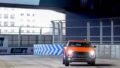
XPeng also attracted attention by promoting a test of its autonomous-driving technology around the Arc de Triomphe in Paris. The SUV completed the demonstration with a driver supervising the technology, according to the company’s chief executive, He Xiaopeng.
He acknowledged the difficulty of navigating the busy roundabout surrounding the historic monument, illustrating the challenges autonomous-driving systems face in complex urban environments.
Chinese Brands Increase Their Share of Europe’s Car Market
Chinese automakers are gaining ground in Europe by offering vehicles with extensive technology and premium features at competitive prices. Their growing presence is increasing pressure on established manufacturers, which are already dealing with changes in consumer demand, electrification costs and competition in key vehicle segments.
Chinese brands accounted for 11.3% of European vehicle sales in the year through August, up from 7.1% during the same period a year earlier. The increase underscores the speed at which manufacturers from China are expanding their market presence.
The leading companies behind Chinese vehicle imports into Europe include BYD, Chery Automobile, SAIC Motor, Geely Automobile and Leapmotor. The latter is expanding internationally through a joint venture with Stellantis, the parent company of Jeep.
The growing competition has contributed to concerns about employment and the future of European automotive manufacturing. A wave of job cuts across the region’s car industry has increased pressure on political leaders to address the competitive challenges facing domestic manufacturers.
European Union and China Discuss New Trade Restrictions
Trade policy has become an increasingly important part of the competition between Chinese automakers and European manufacturers. On Friday, the European Union and China reached an agreement that the bloc said could reduce imports of Chinese hybrid vehicles by as much as half.
According to EU officials, the arrangement would establish an annual quota of 350,000 units during the first year, with the limit potentially increasing by 6% in each of the following three years.
EU Trade Commissioner Maroš Šefčovič has described the bloc’s trade deficit as a major challenge. The negotiations reflect European concerns about the growing presence of Chinese vehicles while also highlighting the difficulty of balancing domestic industrial interests with continued access to international markets.
European governments face competing economic considerations. While some policymakers are concerned about the impact of Chinese imports on local manufacturing and employment, many European economies depend heavily on exports and are wary of potential retaliation from Beijing.
Plug-in Hybrids Help Chinese Automakers Expand
Chinese manufacturers have benefited from demand for plug-in hybrid vehicles, which offer a combination of electric driving and conventional fuel use. These models appeal to consumers seeking improved fuel economy without relying entirely on charging infrastructure.
Chinese brands gained an advantage after the European Union excluded plug-in hybrids from additional tariffs introduced in 2024 on Chinese electric vehicles. Manufacturers subsequently increased their focus on these models, helping them capture a larger share of a vehicle category that has become attractive to buyers.
The United Kingdom has also experienced an increase in Chinese vehicle imports. One model sold under Chery’s Jaecoo brand became the country’s bestselling vehicle in September, according to the supplied report, illustrating the growing reach of Chinese manufacturers beyond the EU market.
Changan Targets Faster Expansion in Europe
Changan Automobile, China’s fourth-largest automaker, is pursuing an ambitious international growth strategy. The state-owned company aims to sell 1.5 million vehicles outside China by 2030, more than twice its total from the previous year.
Changan also hopes to sell 100,000 vehicles in Europe next year, compared with its earlier target of 30,000 vehicles for 2026. Klaus Zyciora, the company’s global chief executive adviser, said the manufacturer had ambitious goals for its international business.
Other Chinese companies are preparing to enter more specialised market segments. Seres Group’s Aito brand, which promotes itself with the slogan “Intelligence Redefining Luxury”, announced plans to launch in Europe in autumn 2027.
Seres board member Clifford Kang acknowledged that Chinese companies are widely recognised for cost efficiency but said establishing a reputation for luxury would take time.
Chinese Automakers Consider Local Production
As trade barriers become more significant, Chinese manufacturers are increasingly looking at producing vehicles within Europe. Local manufacturing could help companies reduce their exposure to import tariffs, improve relationships with European governments and bring production closer to customers.
The message “In Europe for Europe” featured prominently in presentations by several Chinese automakers at the Paris Motor Show. Their emphasis on local production reflects a broader effort to establish a longer-term presence in the region rather than relying exclusively on exports from China.
Geely also highlighted the importance of international partnerships. At an industry event in Paris, company vice president Alex Nan described global expansion as a long-term effort that requires cooperation with partners.
Chinese Cars Raise Concerns in the United States
Chinese vehicles face substantial barriers in the United States, where high tariffs and software restrictions have limited their access to the market. However, US President Donald Trump reiterated in September that he would welcome Chinese automakers if they manufactured vehicles locally, a position that has raised concerns within the American automotive industry.
Congress is also debating legislation that would ban Chinese cars. John Bozzella, president of the Alliance for Automotive Innovation, a leading US automotive industry group, described Europe’s experience with Chinese imports as a warning for American policymakers.
The contrast between the two markets highlights different approaches to Chinese automotive competition. Europe continues to balance trade restrictions with its reliance on exports, while the United States has maintained significant barriers to Chinese vehicles.
Paris Motor Show Highlights a Changing Automotive Industry
The strong Chinese presence made the Paris Motor Show a major platform for new vehicle launches, technology demonstrations and discussions about international expansion. Crowds gathered around exhibition stages as manufacturers introduced new models and outlined plans for European production.
Three American brands Tesla, Ford Motor and Lucid Group were represented at the event, while Chinese companies attracted attention with electric SUVs, connected-car features and luxury offerings.
The growing influence of Chinese automakers reflects broader changes in the global automotive industry. Competitive pricing, rapid technology development and expanding international partnerships are helping Chinese manufacturers reach more customers, while established European brands face mounting pressure to protect their market positions.
As trade negotiations continue and manufacturers consider local production, the competition is likely to remain a central issue for Europe’s automotive sector. The Paris Motor Show demonstrated that Chinese companies are seeking not only to sell more vehicles in Europe but also to establish themselves as long-term participants in the region’s automotive economy.
For breaking news and live news updates, like us on Facebook or follow us on Twitter and Instagram. Read more on Latest Business on thefoxdaily.com.



COMMENTS 0