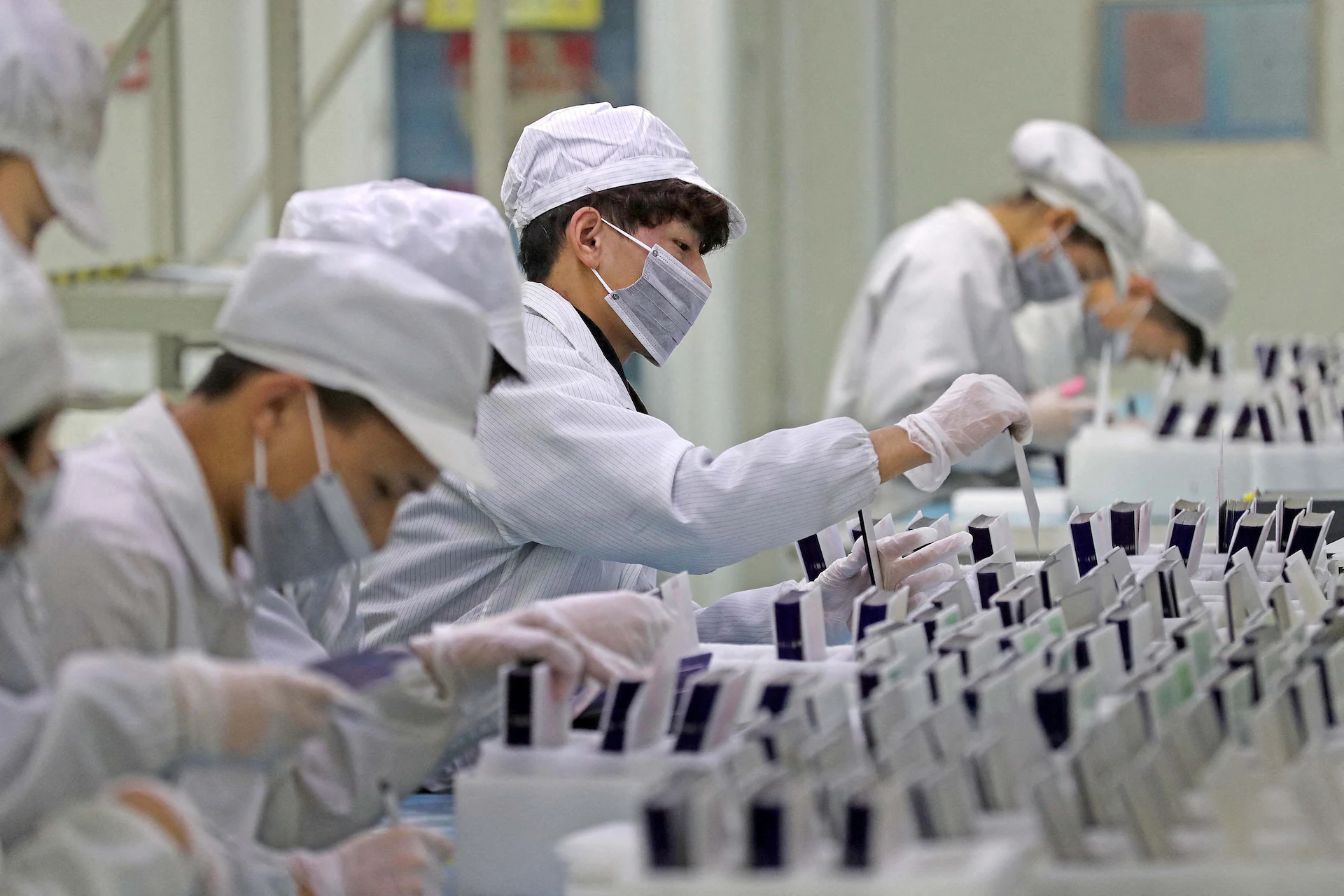
China has proposed new export restrictions covering 12 technologies used to manufacture solar equipment, marking another step in Beijing’s efforts to strengthen control over strategically important industries. The proposal, announced by the Ministry of Commerce, forms part of a broader revision of China’s export-control framework that also covers artificial intelligence and biotechnology.
The proposed measures would affect several advanced solar-manufacturing processes, including technologies used to produce thin wafers, perovskite solar cells, tandem cells and polysilicon. Beijing has argued that tighter oversight is necessary because solar technologies are increasingly being applied in sensitive areas such as aerospace and national defence.
The proposal could have implications for international solar manufacturers seeking access to Chinese technology, particularly companies in the United States and India. China has built a dominant position in the global solar supply chain, and restrictions on manufacturing technology could complicate efforts by other countries to expand domestic production.
China Cites National Security Concerns
China’s Ministry of Commerce said the proposed controls are intended to prevent sensitive technologies from being transferred or distributed in ways that could create risks. The measures would also establish clearer oversight of certain overseas technology transfers while allowing legitimate international scientific and technological cooperation to continue.
“Guard against the risks of technologies from running out of control or being improperly disseminated, while safeguarding normal international exchanges and cooperation in science and technology,” the ministry said.
Under the proposal, exporters must register certain overseas technology transfers until the export-control catalogue is formally updated. The public consultation period will close on November 15, giving interested parties an opportunity to respond before the proposed changes are finalised.
The proposal does not mean that every technology covered will face a complete export ban. China intends to prohibit exports of some technologies while placing restrictions, rather than outright prohibitions, on others. The distinction could determine how significantly individual manufacturers and overseas markets are affected.
Advanced Solar Technologies Face Potential Restrictions
The proposed controls cover technologies used to manufacture several types of solar cells and the materials required to produce them. These include certain thin wafers, perovskite solar cells, tandem solar cells and large-scale fluidized-bed processes for producing polysilicon.
Perovskite solar technology has attracted attention because it offers the potential to improve the conversion of sunlight into electricity. Researchers and manufacturers are exploring its use as an alternative or complement to conventional silicon-based solar cells.
Tandem solar cells combine different light-absorbing materials, including perovskite and silicon, to capture a wider portion of the sunlight spectrum. This approach has the potential to increase conversion efficiency compared with cells that rely on a single absorbing material.
Restrictions on technologies used to manufacture these advanced cells could affect companies seeking to commercialise next-generation solar products. Access to specialised manufacturing processes, equipment and technical expertise can be important for scaling production and competing in the global solar market.
Polysilicon Production Technology Also in Focus
China’s proposal would also cover large-scale fluidized-bed technology used to produce polysilicon, a key raw material for conventional solar panels.
Fluidized-bed processes can offer cost and energy-efficiency advantages over the dominant Siemens process. By allowing polysilicon production through a different industrial method, the technology may help manufacturers reduce operating costs and energy consumption.
Polysilicon is an essential building block in the solar supply chain, as it is processed into material used to manufacture silicon wafers and solar cells. Control over technologies for producing it can therefore influence the economics of solar manufacturing beyond the initial production stage.
Restrictions on specialised polysilicon production methods could create additional challenges for companies seeking to establish competitive manufacturing operations outside China. The actual impact, however, would depend on the final scope of the rules and the availability of alternative technologies.
TOPCon, HJT and XBC Technologies Would Face Export Restrictions
China has also proposed restricting, but not completely prohibiting, exports of advanced solar-cell manufacturing technologies, including TOPCon, heterojunction technology (HJT) and back-contact technology known as XBC.
These technologies are used to improve solar-cell performance and manufacturing capabilities. TOPCon is designed to reduce electrical losses in solar cells, while HJT combines different types of silicon layers to improve cell performance. XBC technologies place electrical contacts on the rear side of a solar cell, helping reduce shading on the front surface.
Although the proposed restrictions would not amount to a blanket ban on these technologies, additional approval or registration requirements could affect how manufacturers transfer technical expertise, production methods and related capabilities to overseas facilities.
The distinction between restricted and prohibited exports is important for companies planning international expansion. Manufacturers may still be able to access certain technologies, but they could face additional administrative requirements or limitations depending on the final rules.
US Solar Manufacturing Plans Could Face Uncertainty
The proposed controls follow earlier discussions between Chinese officials and solar manufacturers about possible restrictions on advanced solar-panel manufacturing technologies. Reuters reported in April that Beijing had held initial talks with industry participants about potential curbs.
Those discussions raised concerns about the implications for US companies seeking to expand domestic solar manufacturing. Tesla is among the companies whose plans could be affected by tighter access to Chinese manufacturing technology.
Building a solar-manufacturing industry requires more than factories and investment. Companies may also need access to specialised production techniques, technical knowledge and equipment that allow them to manufacture cells efficiently and at commercial scale.
If China limits the overseas transfer of key technologies, manufacturers could face additional challenges in reproducing advanced production capabilities outside the country. The extent of the impact will depend on which technologies are ultimately controlled and whether alternative suppliers or processes are available.
India Faces Challenges in Reducing Dependence on China
India could also be affected by China’s approach to solar-manufacturing technology exports. Beijing has previously restricted exports of certain solar technologies to India, according to earlier Reuters reporting.
Analysts have said China is seeking to preserve its leading position in the global solar industry as India attempts to strengthen domestic manufacturing and reduce its reliance on Chinese technology.
India has been working to develop its own solar supply chain, but expanding production capacity can be difficult when advanced manufacturing processes and technical expertise remain concentrated in another country. Restrictions on technology transfers could complicate efforts to develop competitive domestic production of solar cells and related materials.
The issue is significant because countries seeking greater energy security increasingly view domestic clean-energy manufacturing as a strategic priority. Access to manufacturing technology can influence the speed at which new facilities are established and the ability of local companies to compete internationally.
Global Solar Supply Chains Await Final Decision
China’s proposal comes as governments increasingly treat advanced technologies and clean-energy supply chains as matters of economic and national security. Export controls can provide authorities with greater oversight of technology transfers, but they can also introduce uncertainty for companies operating across international markets.
The proposed measures cover a range of technologies with different applications and levels of commercial maturity. Some could influence established solar-manufacturing processes, while others relate to emerging technologies that may play a larger role in future solar-cell production.
The public consultation period is scheduled to close on November 15. Until the export-control catalogue is formally updated, manufacturers and investors will be watching for further details on the scope of the restrictions and the procedures governing overseas technology transfers.
The final rules could shape how solar-manufacturing expertise moves between China and other major markets. For the United States and India, the proposal adds another challenge to efforts to expand domestic solar production and diversify supply chains. For the global industry, its effects will depend on how Beijing balances national security objectives with continued International Trade and technological cooperation.
For breaking news and live news updates, like us on Facebook or follow us on Twitter and Instagram. Read more on Latest Business on thefoxdaily.com.






COMMENTS 0