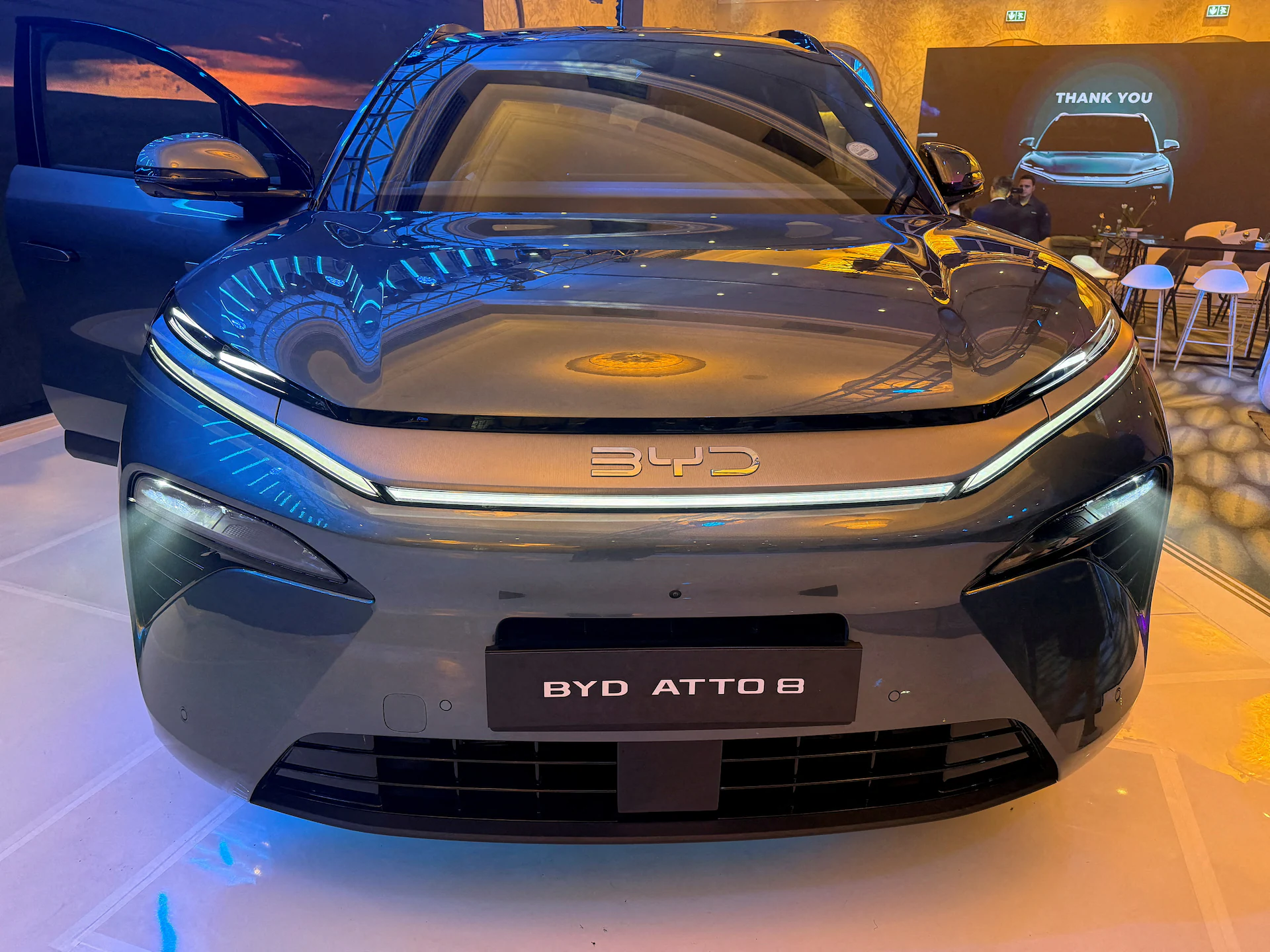
China’s agreement with the European Union to curb hybrid vehicle exports to the bloc could pose a fresh challenge for Chinese Automakers that have rapidly expanded shipments to Europe amid slowing domestic sales. The deal comes as Chinese manufacturers increasingly rely on plug-in hybrids to avoid additional EU tariffs imposed on Chinese-made electric vehicles.
China’s hybrid vehicle exports to the EU’s 27 member states tripled to $7.5 billion in the first half of 2026, up from $2.5 billion during the same period a year earlier, according to Chinese customs data. The value was nearly nine times the $845 million recorded for the whole of 2021.
The proposed restrictions could reshape competition in Europe’s automotive market, affecting Chinese manufacturers such as BYD, SAIC and Chery. The agreement could also encourage Chinese companies to expand vehicle production within Europe to maintain access to the market.
China’s Hybrid Vehicle Exports to Europe Surge
Chinese automakers have increased their focus on plug-in hybrid vehicles since the European Union imposed additional tariffs on Chinese-made electric vehicles in 2024. Plug-in hybrids have remained exempt from those extra duties, making them an alternative route for manufacturers seeking to expand sales in Europe.
Demand has also benefited from charging infrastructure limitations in parts of Europe. Plug-in hybrids combine an electric powertrain with a conventional engine, offering buyers flexibility for longer journeys and reducing reliance on public charging networks.
According to Jefferies, SAIC, BYD and Chery accounted for more than 90% of Chinese hybrid vehicle sales volume in the EU. Hybrids also represented more than half of their European sales, highlighting the importance of the segment to their expansion strategies.
However, the new China-EU arrangement could limit the growth of this export channel, depending on how the agreement is implemented and what restrictions are ultimately introduced.
China-EU Deal: ‘Tariff Risk Off, Quota Risk On’
European Trade Commissioner Maros Sefcovic said on Friday that the agreement would reduce imports by “several million cars over four years.” However, Brussels and Beijing have yet to disclose the detailed implementation framework.
China’s Commerce Ministry said on Monday that the arrangement would allow exports to continue growing while guaranteeing China a quota no smaller than that granted to any other source of imports.
Investors largely viewed the agreement as a sign of reduced trade tensions and an indication that additional tariffs on Chinese hybrids might be avoided for now. However, uncertainty remains over import quotas, pricing rules and possible exemptions.
Shares of Chinese automakers recorded mixed movements following the news. BYD shares fell 1.8%, while Chery rose 0.25% and SAIC gained 0.4%.
Citi analysts described the agreement as a potential relief for investors but cautioned that important details remain unresolved.
“Overall we believe it is a risk-relief rally story…as the implementation rules, volume caps, price floors, carve-outs are still pending technical negotiation,” Citi analysts said.
The final rules will determine how much the agreement affects Chinese automakers’ ability to sell hybrid vehicles in the European market.
BYD, Chery and SAIC Challenge European Automakers
The rapid expansion of Chinese hybrid sales has intensified competition for European manufacturers, including Volkswagen, which has traditionally held a leading position in the region’s plug-in hybrid market.
Li Yanwei, an analyst at the China Automobile Dealers Association, said Chinese manufacturers have increasingly challenged established European brands in the segment.
BYD, China’s largest hybrid vehicle exporter to Europe, sold more plug-in hybrids than fully electric vehicles during the first eight months of the year, according to data compiled by Li. The company’s Seal U SUV was its best-selling model during the period.
BYD, Chery, SAIC and Geely have collectively narrowed the gap with Volkswagen in Europe’s plug-in hybrid market. However, Volkswagen continued to hold a 31.8% share of the EU market, according to the reported figures.
The growing presence of Chinese manufacturers reflects their expanding product offerings and efforts to compete across different vehicle categories. Any new restrictions could affect how these companies price, distribute and market their vehicles in Europe.
Uncertainty Remains Over Implementation of the China-EU Agreement
Despite the initial positive market reaction, questions remain about whether China and the EU can implement the agreement without creating new trade disputes.
Michael Dunne, a consultant who closely follows the Chinese Automotive Industry, said the outcome would depend partly on whether China complies with the arrangement or seeks alternative routes to maintain exports.
“Let’s see if China honours the agreement or finds workarounds, or temporary tariff exemptions,” Dunne said.
The agreement’s practical impact will depend on the final rules governing export volumes, prices and exemptions. Until those details are settled, automakers and investors will have to assess the possibility of further changes to the trading environment.
Chinese Automakers May Accelerate European Manufacturing Plans
Analysts expect the agreement to strengthen incentives for Chinese manufacturers to expand production within Europe rather than rely entirely on exports from China.
Bill Russo, founder of Shanghai-based consultancy Automobility, said restrictions on imported vehicles could make local manufacturing more attractive for companies seeking to maintain access to European customers.
“If access through imports becomes more constrained, investing closer to the customer becomes more attractive. But localisation requires capital…smaller players may reconsider their European ambitions,” Russo said.
Building factories in Europe could help Chinese automakers reduce their exposure to import restrictions and establish a stronger local presence. However, setting up manufacturing operations requires substantial investment, which could prove difficult for smaller companies.
As a result, the agreement could lead some manufacturers to accelerate European investment plans while prompting others to reconsider the scale of their expansion.
What the China-EU Deal Means for European Carmakers
Jefferies analysts said the agreement signals a shift from tariff-related uncertainty towards potential restrictions on import volumes. They summarised the change as “tariff risk off, quota risk on.”
According to the analysts, the arrangement could encourage Chinese manufacturers to focus on higher-priced vehicles, increase competitive pressure on German premium brands and accelerate plans to manufacture more vehicles in Europe.
For European automakers, the development presents both a challenge and a potential shift in the competitive landscape. Chinese brands have already expanded their presence in the plug-in hybrid segment, and any move towards local manufacturing could allow them to maintain or strengthen their market position.
The agreement’s long-term impact will depend on the final implementation rules, the import quotas granted to Chinese manufacturers and their willingness to invest in European production facilities.
With Chinese hybrid exports to the EU reaching $7.5 billion in the first half of 2026, the outcome of the negotiations could have significant implications for trade relations, automotive investment and competition across Europe’s vehicle market.
(Reuters)
For breaking news and live news updates, like us on Facebook or follow us on Twitter and Instagram. Read more on Latest Business on thefoxdaily.com.





COMMENTS 0