The Indian National Space Promotion and Authorisation Centre (IN-SPACe) plans to introduce non-refundable advance payments for customers booking launches aboard rockets such as the Indian Space Research Organisation’s (ISRO) Small Satellite Launch Vehicle (SSLV). The move follows a series of last-minute withdrawals by prospective customers from an upcoming SSLV mission, leaving the rocket with significantly less payload than initially expected.
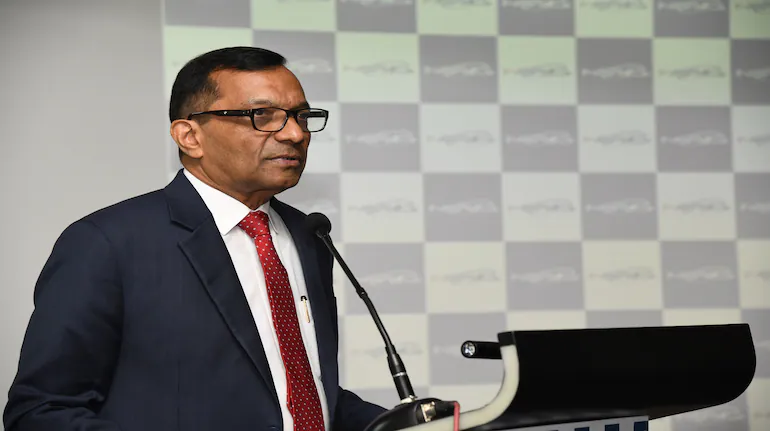
IN-SPACe chairman Pawan K Goenka announced the proposed change on November 24 at the India International Space Conclave in New Delhi. He said customers who confirm launch slots will be required to pay in advance, and the payment will not be refunded if they subsequently withdraw.
The upcoming SSLV launch, scheduled for the end of November, was initially expected to carry a much larger payload. Although prospective customers had indicated demand exceeding the rocket’s capacity, only two satellites weighing around 60 kg each are now expected to fly.
Customers Withdraw From Upcoming SSLV Launch
Explaining the situation, Goenka said the upcoming SSLV mission initially attracted demand for approximately 500 kg of payload, while the rocket’s capacity was estimated at 350-400 kg.
However, when the time came to finalise the launch arrangements, several prospective customers withdrew. As a result, the mission is expected to carry only two satellites, each weighing around 60 kg.
Goenka described the sudden change as a serious problem for launch planning. A rocket launch involves coordinating payload requirements, schedules and operational arrangements. When customers withdraw close to the launch date, the available capacity may remain unused even though other potential customers could have been interested in securing a launch opportunity.
He said the experience had prompted IN-SPACe to reconsider the flexibility it currently offers customers during the booking process.
“Next time we are not going to allow that. We are going to charge you in advance, non-refundable. Because the rocket is going to go up empty.”
The proposed policy is intended to discourage customers from making tentative commitments and then cancelling when the launch approaches. Requiring non-refundable advance payments could encourage companies to assess their readiness and funding before reserving payload capacity.
IN-SPACe Plans Stricter Rules for Rocket Launch Bookings
The proposed payment requirement reflects a broader shift in IN-SPACe’s approach to supporting India’s developing private space industry. Goenka indicated that the organisation would gradually become stricter rather than continuing to offer the same level of flexibility to companies.
He explained that the current approach was designed to provide initial momentum to the country’s space sector. However, the organisation would not be able to maintain such flexibility indefinitely, particularly when last-minute changes create difficulties for launch planning.
“We would at some point become more difficult and not accept this kind of flexibility. We are doing it today because we want to give that initial momentum to the country.”
The proposed non-refundable advance is therefore intended to establish greater commitment between launch providers and customers. Companies seeking space on future missions may need to demonstrate stronger readiness before confirming their participation.
However, the announcement does not provide details about the exact payment amount, booking deadlines or circumstances under which any exceptions might apply. These operational details would be important for companies evaluating how the proposed policy could affect their launch plans.
Why Unused Rocket Capacity Is a Concern
Launch capacity is a valuable resource in the commercial space industry. Rockets are designed to carry payloads within specific weight and operational limits, and available capacity can be allocated among multiple customers when mission requirements permit.
When customers withdraw shortly before a launch, unused capacity may be difficult to fill at short notice. Other satellite operators may not have completed technical preparations, secured the necessary approvals or arranged the logistics required to join the mission.
The SSLV example highlights the gap that can exist between initial market interest and confirmed demand. Although the upcoming mission reportedly attracted around 500 kg of prospective payload demand, the final confirmed payload is expected to be approximately 120 kg.
This difference matters for launch planning because early expressions of interest do not necessarily translate into completed bookings. A customer may indicate an intention to launch a satellite but later decide that the spacecraft, funding or other arrangements are not ready.
Non-refundable advance payments could help reduce uncertainty by making customers financially accountable for confirmed launch reservations. They may also help launch organisers distinguish between tentative interest and firm demand.
Demand Remains a Major Challenge for India’s Space Industry
Beyond the SSLV incident, Goenka identified demand generation as one of the biggest challenges facing India’s growing space sector.
“Demand is the elephant in the room,” Goenka said.
His remarks point to a fundamental issue for India’s private space companies. Building rockets, satellites and related technologies is only one part of developing a sustainable commercial space ecosystem. Companies also need a consistent pipeline of customers willing to purchase launch services and space-based applications.
Private companies may develop the technical capacity to provide satellite launches, Earth observation services, communications solutions and other space-related products. However, without sufficient demand, it can be difficult to achieve the scale needed to sustain operations and expand investment.
Goenka’s comments suggest that increasing the number of potential users of space technology will be important alongside improving launch infrastructure and supporting private-sector participation.
Government Departments and Non-Space Companies Could Expand Demand
Goenka said central and state governments are increasingly exploring applications of space technology. Public-sector demand could create opportunities for companies offering satellite-based services and solutions.
Government agencies can use space technology for a range of activities, including monitoring, planning and gathering information about conditions on the ground. The wider adoption of such applications could help expand the market for Indian space companies.
IN-SPACe is also engaging with businesses outside the traditional space industry to explain how space technology could support their operations. These companies may not directly build satellites or rockets, but they could benefit from services developed using satellite data and other space-based capabilities.
Expanding awareness among non-space businesses could help create new sources of commercial demand. Companies in different industries may be able to use space-based information to support operational decisions, improve monitoring or develop new services.
However, converting interest into actual business will require clear commercial benefits, reliable services and pricing that potential customers can justify. Awareness alone may not be sufficient to create the sustained demand that the sector needs.
What the New Payment Policy Could Mean for Private Space Companies
If implemented, the proposed non-refundable advance payment requirement could change how satellite operators approach launch bookings in India. Companies may need to complete more of their technical and financial planning before reserving space on a rocket.
For launch organisers, the policy could provide greater certainty about the payloads expected to fly. It may also reduce the risk of capacity being left unused because customers cancel after making preliminary commitments.
For smaller satellite companies, however, the terms of the policy will matter. Advance payments can create an additional financial commitment, particularly for startups operating with limited funding and uncertain project timelines.
The effectiveness of the approach will depend on how IN-SPACe structures the payment requirements and communicates the conditions to customers. Clear booking rules could help companies plan their missions while giving launch providers greater confidence in confirmed demand.
The policy also highlights the need for stronger coordination between satellite developers, launch providers and customers. A reliable launch schedule depends not only on rocket readiness but also on the ability of payload operators to meet technical, financial and operational commitments.
India’s Space Sector Moves Towards a More Commercial Approach
India has been working to expand private-sector participation in space activities, with IN-SPACe playing a role in promoting and authorising non-governmental involvement. As the industry develops, the relationship between public support and commercial discipline is likely to become increasingly important.
Goenka’s comments indicate that the organisation wants to provide flexibility during the sector’s early growth phase but expects companies to become more accountable as the market matures.
The proposed change in advance payments reflects that transition. Encouraging private participation remains important, but launch capacity also needs to be supported by reliable customer commitments and commercially sustainable demand.
The upcoming SSLV mission has brought this challenge into focus. Initial interest exceeded the rocket’s estimated capacity, yet last-minute withdrawals reduced the expected payload to just two satellites weighing around 60 kg each.
For India’s space industry, the broader lesson is that building launch capability must go hand in hand with developing a dependable customer base. IN-SPACe’s planned stricter booking rules could be one step towards achieving that objective, while efforts to involve government departments and non-space businesses may help create new demand for space-based services.
For breaking news and live news updates, like us on Facebook or follow us on Twitter and Instagram. Read more on Latest Business on thefoxdaily.com.





COMMENTS 0