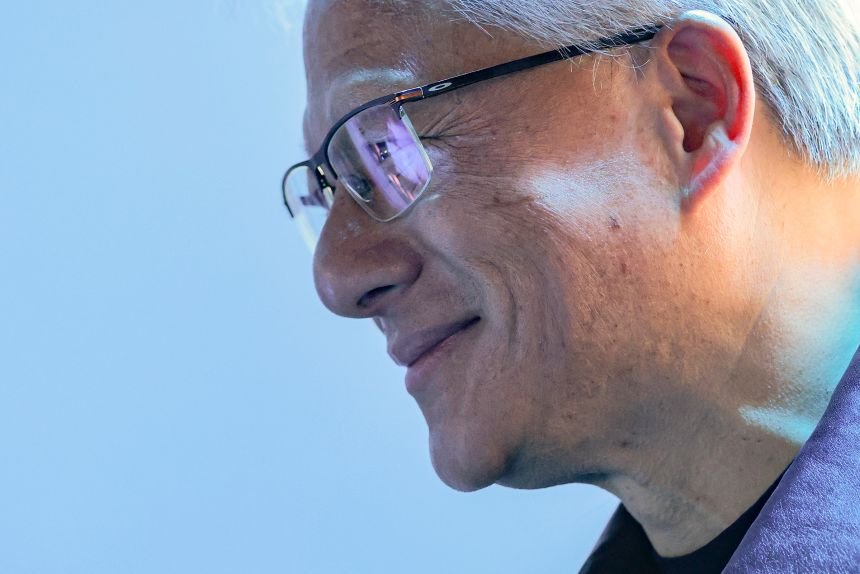
Nvidia’s decision to reinstate Jensen Huang after his resignation has sparked a wider debate about corporate accountability, executive misconduct and the risks of allowing influential business leaders to become too powerful to dismiss. The controversy has also revived an economic concept known as moral hazard, which describes how protecting individuals or institutions from the consequences of risky behaviour can encourage further irresponsible decisions.
The central question is whether a company should prioritise its immediate commercial interests over corporate accountability when an executive is considered indispensable to its business. In Huang’s case, Nvidia’s board faced a difficult choice: maintain its position and risk further disruption, or bring back its chief executive despite the concerns surrounding his conduct.
The board chose reinstatement, a decision that critics say could weaken the standards expected of corporate leaders. The episode has drawn comparisons with the government-backed financial rescues during the 2008 global financial crisis, when policymakers faced a similar conflict between allowing institutions to fail and protecting the wider economy.
Why Jensen Huang’s Reinstatement Has Triggered a Moral Hazard Debate
The controversy surrounding Huang illustrates the tension between corporate accountability and business continuity. According to the account, Huang’s resignation was followed by a $1.5 trillion decline in Nvidia’s market valuation, while the company faced pressure from the wider artificial intelligence industry and the US government.
The sharp decline in market value created a difficult situation for Nvidia’s board. Directors are expected to act in the best interests of shareholders, and the potential financial consequences of keeping Huang away from the company were significant.
However, critics argue that bringing him back could establish a troubling precedent: executives whose companies have become sufficiently important may escape serious consequences because replacing them could damage the business.
Chris Gannett, founder and CEO of executive coaching firm Gannett Partners, described the broader message for business leaders: “Every founder in America just watched what too big to fire looks like.”
The phrase captures the central concern behind the moral hazard argument. If employees, investors and executives believe that a powerful leader cannot be removed, the normal mechanisms of corporate accountability may become less effective.
What Is Moral Hazard? Lessons From the 2008 Financial Crisis
The concept of moral hazard has a long history in economics and insurance. It generally refers to a situation in which protection against the consequences of a decision changes someone’s incentives and encourages them to take greater risks.
The term emerged in the late nineteenth century as a criticism of insurance arrangements. According to Donald Light, a health policy researcher at Rowan University School of Osteopathic Medicine, some policyholders worried that insurance could protect irresponsible individuals from the financial consequences of their actions.
In 1968, economist Mark Pauly offered a different interpretation of the concept. He argued that moral hazard did not necessarily involve moral or immoral behaviour. Instead, people with insurance might consume more medical care because the financial protection changed the incentives they faced. Such behaviour could represent rational economic decision-making.
This distinction is important because moral hazard is not always an accusation of dishonesty. It can describe how people respond to the incentives created by a particular system.
The concept later became particularly prominent during the global financial crisis. Critics of taxpayer-funded bailouts argued that rescuing banks and other financial institutions after excessive risk-taking could encourage similar behaviour in the future.
If financial institutions believed that governments would prevent their collapse because of their importance to the wider economy, they could have less incentive to manage risk carefully. The expectation of rescue could effectively transfer some of the consequences of private decisions to taxpayers.
George W. Bush Faced a Similar Dilemma in 2008
The comparison with Nvidia’s decision begins with a televised address by former US President George W. Bush on September 24, 2008.
At that time, Lehman Brothers had failed, the Federal Reserve had rescued major insurer AIG, and the US government was considering a $700 billion taxpayer-supported rescue fund to stabilise the financial system.
Bush acknowledged that he generally supported free enterprise and believed companies should face the consequences of poor decisions. However, he argued that the financial crisis had created exceptional circumstances that required government intervention.
“Under normal circumstances, I would have followed this course. But these are not normal circumstances.”
His remarks reflected the conflict between allowing market participants to face the consequences of their decisions and preventing a wider economic collapse.
Former Treasury Secretary Henry Paulson expressed a similar concern in March 2008 after the government helped arrange JPMorgan Chase’s rescue of Bear Stearns. Speaking to ABC News, Paulson acknowledged concerns about moral hazard but emphasised that the immediate priority was financial stability and orderly markets.
The underlying calculation was that the consequences of allowing a major institution to fail could be more damaging than the risks created by intervening.
Nvidia’s board faced a comparable dilemma, although the circumstances were different. Instead of a financial institution threatening the stability of the banking system, the issue involved a technology company whose leadership and products had become central to the artificial intelligence industry and US strategic interests.
Why Nvidia Considered Huang Difficult to Replace
Nvidia occupies an unusual position in the technology industry. Its chips are central to the development and deployment of artificial intelligence systems, making the company important to businesses and governments seeking to expand their AI capabilities.
The company has also become closely associated with the growth of the AI industry and the technology infrastructure supporting it. This importance can make leadership decisions more complicated because a sudden change at the top may create uncertainty for shareholders, employees, customers and business partners.
According to the supplied account, Nvidia’s market value fell by 28% after Huang’s resignation. That decline added pressure on the board to consider the financial implications of keeping him away from the company.
President Donald Trump was also reportedly putting pressure on the board. Nvidia’s significance to US national security and economic growth made the leadership dispute more than an ordinary corporate personnel decision.
However, the argument that a company is too important to lose its chief executive raises a broader governance concern. If commercial importance becomes a reason to overlook alleged misconduct, the standards applied to powerful executives may differ from those applied to other employees.
Allegations Against Huang Raise Corporate Governance Concerns
The controversy also involves allegations concerning Huang’s personal relationships. According to the supplied report, he acknowledged an affair following reports of a relationship with a major customer who is suspected of having links to Chinese intelligence. He was also reportedly involved in a relationship with an employee.
These allegations raise questions about conflicts of interest, workplace power dynamics and the responsibilities of senior executives. A relationship between a senior leader and an employee can create an imbalance because the executive may influence the employee’s career, compensation or professional opportunities.
Similar concerns can arise when a chief executive has a personal relationship with a major customer. The commercial relationship may become difficult to separate from personal interests, potentially creating questions about fairness, decision-making and the company’s business arrangements.
The concerns are particularly sensitive when a customer is suspected of having connections to a foreign intelligence organisation. However, suspicion is not proof of espionage, and the allegations should not be treated as established findings.
The relationship involving a potential foreign intelligence asset remains the subject of an independent investigation commissioned by Nvidia’s board, according to the supplied account.
Why Relationships Between Executives, Employees and Customers Matter
Corporate policies often restrict or prohibit intimate relationships between senior executives and employees because of the potential for unequal power dynamics. An employee may feel pressured to maintain a relationship to protect their position or career prospects, even if the relationship is presented as consensual.
Relationships involving major customers can create a different but related problem. A customer may face concerns about whether commercial decisions are being influenced by personal connections or whether ending the relationship could affect its business with the company.
Nell Minow, chair of Corporate Governance advisory firm ValueEdge Advisors, argued that the alleged relationships raised serious concerns. She said that, even setting espionage questions aside, a sexual relationship with a customer and one with a subordinate could each justify dismissal for cause.
Minow’s comments reflect a wider corporate governance principle: executive accountability should not depend solely on a company’s financial performance or the personal influence of its chief executive.
Several prominent companies, including American Apparel, Boeing, Intel, McDonald’s and Hewlett-Packard, have previously experienced leadership controversies involving relationships or conduct concerns. Such cases demonstrate why companies establish policies governing executive behaviour and conflicts of interest.
Could Nvidia’s Decision Weaken Corporate Accountability?
The most significant concern surrounding Huang’s reinstatement is the precedent it could establish for other companies. Corporate governance systems depend on boards having the authority and willingness to hold executives accountable when their conduct conflicts with company policies or shareholder interests.
If a chief executive becomes so closely associated with a company’s success that the board considers dismissal too costly, the balance of power can shift away from independent oversight.
Shivaram Rajgopal, a professor of corporate governance at Columbia Business School, warned that executives who are considered too important to fire may take greater risks than they otherwise would.
He also criticised the message sent by Huang’s return, saying: “It says Huang is above the law. He’s an imperial CEO.”
The criticism points to a potential weakness in corporate governance. A board may formally retain the authority to dismiss an executive, but that authority can become less meaningful if directors believe the financial consequences of exercising it would be unacceptable.
There is also a difference between protecting a company from immediate disruption and deciding that an executive should face no meaningful consequences. A board can consider business continuity while still maintaining independent investigations, enforcing internal policies and establishing appropriate safeguards.
Shareholder Interests Versus Executive Accountability
Nvidia’s board operates under a responsibility to protect shareholder interests. A significant decline in market value can affect investors and create pressure for directors to restore confidence in the company.
From that perspective, reinstating a highly influential chief executive may appear to be a way of limiting uncertainty and maintaining business continuity. However, shareholders also have an interest in strong internal controls, transparent decision-making and consistent enforcement of corporate policies.
These interests are not necessarily contradictory. A company can seek to protect its financial performance while also ensuring that executives are subject to the same governance standards expected across the organisation.
The challenge is particularly difficult when a company’s commercial success is closely linked to one individual. Such dependence can make succession planning harder and reduce the board’s flexibility during a leadership crisis.
For Nvidia, the longer-term question is whether the board can demonstrate that its decision was based on a broader assessment of corporate interests rather than simply the immediate financial consequences of Huang’s absence.
What the Jensen Huang Controversy Means for Corporate Governance
The Nvidia episode highlights a tension that extends beyond one company or executive. As technology businesses become increasingly important to national economies and strategic industries, their leaders may acquire influence that makes ordinary corporate accountability more difficult to enforce.
The moral hazard argument suggests that protecting powerful executives from the consequences of their actions can create incentives for future risk-taking. If other founders and chief executives conclude that strong business performance can shield them from dismissal, internal policies may lose some of their deterrent effect.
At the same time, boards must consider the immediate consequences of leadership changes, particularly when a company’s operations, market position and investor confidence are closely tied to one individual.
The outcome of Nvidia’s independent investigation and the board’s subsequent decisions will be important in assessing how the company addresses the concerns. The available account does not establish that the allegations amount to proven violations, but it does illustrate why independent oversight and transparent processes matter.
Ultimately, the debate is not simply about whether Jensen Huang is indispensable to Nvidia. It is about whether any executive should become so powerful that a company feels unable to enforce its own standards. When business importance begins to outweigh accountability, the risks associated with moral hazard can extend well beyond a single boardroom.
For breaking news and live news updates, like us on Facebook or follow us on Twitter and Instagram. Read more on Latest Business on thefoxdaily.com.




COMMENTS 0