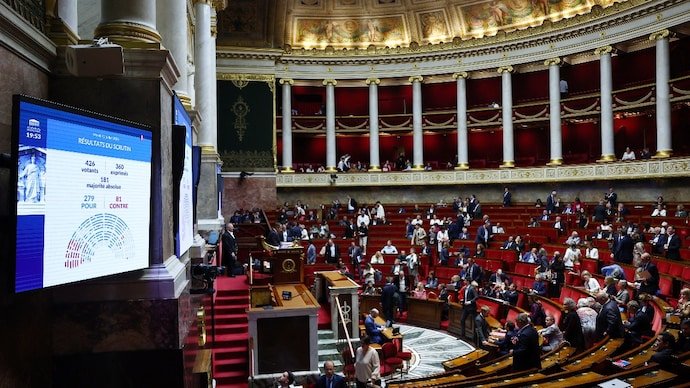
France has taken a historic step in regulating children’s access to social media by becoming the first European Union member state to ban social media accounts for children under the age of 15. The legislation, approved by both chambers of Parliament, is expected to come into force before the new school year begins in September, pending the formal signature of President Emmanuel Macron.
The new law places France at the forefront of Europe’s efforts to strengthen online child safety and signals a broader shift toward holding Technology companies more accountable for protecting younger users. While countries around the world continue debating how to balance digital freedom with child protection, France’s approach could influence future legislation across the European Union.
The measure introduces strict obligations for social media platforms, including mandatory Age Verification, removal of existing underage accounts and restrictions on advertising that targets children. It also raises important questions about privacy, enforcement and the future of Digital Regulation in Europe.
What Does France’s New Social Media Law Do?
Under the legislation, children younger than 15 will no longer be permitted to create accounts on major social media platforms operating in France.
The government plans to implement the new rules from September 1, giving technology companies a limited transition period to comply.
The law requires platforms to:
- Prevent users under 15 from opening new accounts.
- Remove existing accounts belonging to underage users within the compliance period.
- Introduce robust age verification systems approved by French regulators.
- Comply with oversight from France’s communications regulator, Arcom.
- Ensure child safety measures are consistently enforced across their services.
The legislation applies broadly to major social networking platforms available in France, although implementation details will be finalized before the law officially takes effect.
Why France Introduced the Ban
The decision follows years of growing concern among policymakers, educators, Healthcare professionals and parents regarding the impact of excessive social media use on children and teenagers.
Several issues have repeatedly been highlighted:
- Screen addiction.
- Reduced attention spans.
- Exposure to harmful or inappropriate content.
- Cyberbullying.
- Online harassment.
- Mental Health challenges.
- Sleep disruption.
- Algorithm-driven content recommendations.
French leaders argue that children require stronger protections during critical stages of cognitive and emotional development.
President Emmanuel Macron’s Long-Running Campaign
President Emmanuel Macron has consistently advocated stricter rules governing children’s digital lives.
Over recent months, he has argued that social media platforms are increasingly competing for children’s attention through algorithms designed to maximize engagement rather than promote healthy online experiences.
Macron has also encouraged teenagers to reduce screen time, spend more time reading and develop healthier digital habits.
His administration accelerated work on the legislation with the goal of implementing the restrictions before students return to school after the summer holidays.
How Will Age Verification Work?
One of the biggest challenges facing the new law is implementation.
Social media companies will need to deploy age verification systems capable of accurately identifying underage users while respecting privacy rights and complying with European data protection regulations.
Although French authorities have confirmed that approved verification systems will be introduced, the exact technical framework has not yet been publicly detailed.
Potential verification methods discussed internationally include:
- Government-issued identity verification.
- Third-party digital identity services.
- AI-based age estimation.
- Parental verification systems.
- Secure privacy-preserving authentication technologies.
Each option presents different legal, technical and privacy considerations.
Advertising Rules Become Much Stricter
The legislation extends beyond account creation by targeting how social media platforms are marketed to children.
Under the new framework:
- Advertising promoting social media to children under 15 will be prohibited.
- Influencers will be restricted from marketing social media platforms to young audiences.
- Advertisements for social media services must carry mandatory warning messages highlighting potential risks for children.
The approach mirrors Public health strategies used for other products considered potentially harmful to minors.
Why Online Child Safety Has Become a Global Priority
France’s legislation reflects a broader international trend toward stronger digital safeguards for children.
Governments worldwide are increasingly examining issues such as:
- Online addiction.
- Mental health impacts.
- Exposure to violent or explicit content.
- Algorithmic amplification.
- Privacy protection.
- Data collection involving minors.
- Cyber exploitation.
Rapid technological advances have outpaced many existing regulations, prompting lawmakers to reconsider how online platforms should operate when serving younger audiences.
Comparison: France and Other Countries
| Country | Minimum Age Rule | Current Status |
|---|---|---|
| France | Under 15 prohibited from creating social media accounts | Approved by Parliament |
| Australia | Under 16 restricted from major social media platforms | National legislation adopted |
| Spain | Minimum age proposals under discussion | Policy review ongoing |
| Greece | Exploring stronger child protection rules | Consultation stage |
| Denmark | Considering age-based digital safeguards | Policy development |
Research on Children’s Digital Habits
Publicly available research from health organizations and digital regulators has consistently found that children are spending increasing amounts of time online.
Studies have linked excessive social media use with several challenges, including:
- Higher anxiety levels.
- Sleep disturbances.
- Reduced concentration.
- Exposure to unrealistic social comparisons.
- Increased risk of cyberbullying.
Experts generally emphasize that technology itself is not inherently harmful, but prolonged and unsupervised use may contribute to negative outcomes for some young users.
What Challenges Could Platforms Face?
Implementing the legislation may prove technically complex.
Major challenges include:
- Accurately verifying users’ ages.
- Preventing fake identities.
- Balancing privacy with security.
- Applying consistent rules across multiple platforms.
- Managing cross-border digital services operating throughout the European Union.
Technology companies may also need to redesign onboarding processes and strengthen compliance systems to meet France’s regulatory requirements.
Could the Law Influence the Rest of Europe?
Many Policy analysts believe France’s decision could become a turning point in European digital regulation.
If implementation proves successful, other EU member states may adopt similar legislation or support a harmonized European framework governing children’s access to online platforms.
The European Commission has already signaled increasing interest in strengthening child protection measures under existing digital legislation, making France’s experience an important test case.
Expert Insight: A Shift in Platform Responsibility
One of the most significant aspects of the French law is that responsibility shifts from parents alone to technology companies themselves.
Rather than expecting families to monitor every online interaction, the legislation requires digital platforms to build safety protections directly into their services. This reflects a growing international regulatory philosophy that companies designing digital products should also be responsible for minimizing foreseeable risks to young users.
Similar approaches are already influencing discussions around Artificial Intelligence, online advertising and digital privacy.
What Happens Next?
Before the law officially takes effect, several steps remain:
- Presidential approval.
- Publication of implementation regulations.
- Approval of age verification standards.
- Platform compliance preparations.
- Regulatory oversight by Arcom.
The European Commission is also expected to review how the legislation aligns with existing European Union digital laws and privacy requirements.
Conclusion
France’s decision to prohibit social media accounts for children under 15 marks one of Europe’s most significant digital policy developments in recent years. By introducing mandatory age verification, stricter advertising rules and stronger platform responsibilities, the country aims to create a safer online environment for young users while encouraging healthier digital habits.
Although practical challenges surrounding enforcement and privacy remain, the legislation is likely to influence future debates across Europe about the role of technology companies in protecting children online. As governments continue balancing innovation with public safety, France’s approach may become a model for broader international efforts to strengthen child protection in the digital age.
For breaking news and live news updates, like us on Facebook or follow us on Twitter and Instagram. Read more on Latest World on thefoxdaily.com.






COMMENTS 0