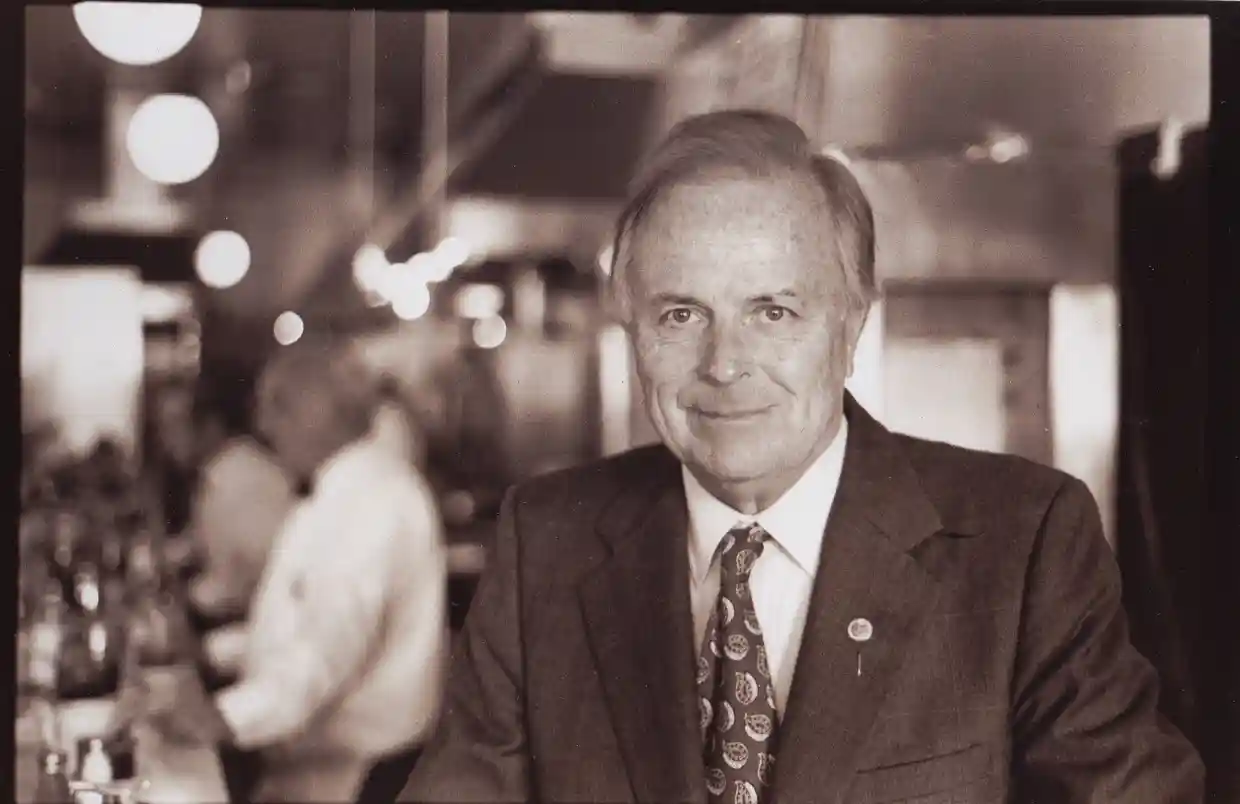
Los Angeles‘ historic Original Pantry diner has made an unexpected comeback after years of decline, a bitter closure and growing fears that another piece of the city’s culinary history had disappeared forever. The restaurant, which served generations of Angelenos since 1924, has reopened under new ownership with a fresh purpose: combining its traditional diner experience with a mission to help people experiencing homelessness.
Once famous for remaining open around the clock, the Original Pantry was a downtown Los Angeles institution where politicians, Hollywood stars, students, workers and people living on the streets could sit at the same tables. Its generous portions, inexpensive food and old-fashioned service made it more than a restaurant. For many residents, it represented a rare place where the city’s social and economic divisions seemed to disappear.
Its closure following the death of former owner and Los Angeles mayor Richard Riordan in 2023 prompted an outpouring of sadness. Now, after renovations, new investment and a partnership with homelessness services provider Hope the Mission, the Pantry has returned with a redesigned menu, former employees back behind the counter and a nonprofit model intended to direct restaurant profits towards helping vulnerable people.
Original Pantry: A Los Angeles Institution Since 1924
The Original Pantry began operating in 1924 and gradually became one of downtown Los Angeles’ most recognisable dining landmarks. Its modest, low-rise building stood in contrast to the modern towers that eventually transformed the surrounding neighbourhood.
For decades, the restaurant was known for a remarkable tradition: it never closed. Operating 24 hours a day, seven days a week, it served customers at practically every hour, from early-morning workers and late-night diners to people looking for a substantial meal after a night out.
Its menu reflected an older American diner culture. Pancakes, omelettes, hash browns and steaks were served in generous portions at prices that remained relatively affordable. The food was straightforward rather than fashionable, and the restaurant made little effort to follow the changing culinary trends of a city that had become one of the world’s most diverse food destinations.
The atmosphere was equally distinctive. Servers often wore white shirts and bow ties, while the dining room retained the appearance of a traditional American diner. Politicians, movie stars, students, businesspeople and homeless residents shared the same space, giving the Pantry a social character that few modern restaurants could easily reproduce.
Its appeal was rooted in consistency. Customers knew what they would find: familiar food, large portions, inexpensive meals and a welcoming environment that did not demand a particular income or social status.
How the Original Pantry Survived Decades of Change
The Pantry’s history closely followed the changing fortunes of downtown Los Angeles. It survived economic downturns, speculative property booms, neighbourhood decline and major construction projects that transformed the area around it.
One of its biggest challenges came when freeway construction forced the restaurant to relocate. Rather than disappearing, it adapted and continued serving customers as downtown Los Angeles evolved around it.
The restaurant also remained open through periods when the city’s central business district became quieter after working hours. Rising homelessness, drug abuse and crime created additional challenges for businesses operating in the neighbourhood, but the Pantry retained a loyal customer base.
Much of its endurance was credited to businessman Richard Riordan, who bought the restaurant during the Reagan era. Riordan later served two terms as mayor of Los Angeles, but his attachment to the Pantry remained personal.
He continued supporting the restaurant even as high-rise developments and large commercial projects increasingly surrounded its modest building. A 37-storey financial services tower appeared on an adjoining site, while the development of LA Live transformed much of the surrounding area.
One incident in 1997 demonstrated how far Riordan was willing to go to protect the business. The county health department temporarily closed the Pantry after identifying dozens of relatively minor food safety violations. Riordan reportedly rushed over from City Hall and personally worked the phones to help get the restaurant reopened.
For him, the Pantry was not simply another commercial property. It was a historic part of Los Angeles that deserved to survive the city’s rapid physical and cultural transformation.
Richard Riordan’s Death and the Diner’s Sudden Decline
The Original Pantry’s long history could not protect it indefinitely from financial and operational difficulties. After Riordan died in 2023, the restaurant entered a difficult period from which it struggled to recover.
The post-pandemic downturn had already weakened its business. Staff disputes added to the problems, with employees raising concerns about unpaid back wages. The restaurant also faced criticism over declining food quality, including reports that its once-famous pancakes were being prepared using packaged mix rather than the traditional approach customers associated with the diner.
For longtime customers, these developments suggested that the Pantry was losing the qualities that had made it special. Its reputation had been built over generations, but maintaining that legacy required investment, stable operations and a commitment to the standards that had attracted loyal diners.
After Riordan’s death, his heirs eventually decided to close the restaurant. Padlocks were placed on the doors, and police escorted the remaining workers out of the premises. Many of those employees had spent decades working at the diner.
The closure was widely treated as the loss of a historic Los Angeles landmark. Local coverage reflected the sadness of customers who had grown up visiting the restaurant and feared that its disappearance was another example of the city’s changing urban landscape pushing out longstanding neighbourhood institutions.
For a business that had survived economic crises, construction and decades of neighbourhood change, its abrupt end seemed particularly difficult to accept.
How the Original Pantry Made an Unexpected Comeback
The turnaround began when Ukrainian American businessman Leo Pustilnikov took over the property and decided against operating the Pantry as a conventional restaurant business.
Rather than attempting to maximise income from food sales, Pustilnikov developed a model in which the restaurant would support a wider social purpose. He approached Hope the Mission, a Los Angeles-based organisation that provides services to people experiencing homelessness, and offered the group a substantial rent reduction of approximately 50%.
In exchange, Hope the Mission agreed to restore the restaurant and direct any profits towards programmes helping homeless people rebuild their lives.
The arrangement gave the Pantry a new identity. It would continue operating as a diner, preserving its historic character and welcoming ordinary customers, while using its financial success to support people facing homelessness.
Pustilnikov said the only money-making component of the wider venture outside the restaurant would be a digital billboard on the building’s roof. The decision reflected his intention to make the Pantry’s food business part of a social mission rather than a conventional profit-driven operation.
For Hope the Mission founder Ken Craft, the concept could be summed up in a simple phrase: “Pancakes with a purpose.”
More Than $1 Million Raised to Restore the Historic Diner
Bringing the Pantry back required substantial work. Its kitchen equipment had aged, the furniture needed attention and parts of the dining area had become worn after decades of use.
Craft and his team set about raising more than $1 million to finance the restoration. The money was used to replace ageing kitchen equipment, update tables and chairs, remove accumulated grime and chewing gum, and replace the old black-and-white chequered floor.
The renovation was not intended to erase the restaurant’s history. Instead, the goal was to preserve its recognisable appearance while making it suitable for a new generation of customers.
Photographs of Hollywood icons Marilyn Monroe and Humphrey Bogart remain on the walls. The old taxi telephone has also been retained, as has the cashier’s cage near the entrance, even though modern handheld payment machines are now used for most transactions.
One particularly unusual feature has been preserved in front of the cashier’s cage. The area displays layers of flooring worn away over the decades as generations of customers walked through the restaurant. The exposed layers offer a physical record of the Pantry’s long history.
These details help maintain the atmosphere that made the diner distinctive, allowing the reopened restaurant to feel connected to its past rather than like an entirely new establishment occupying an old building.
Original Pantry Menu Gets a Modern Los Angeles Makeover
While the restaurant has retained its traditional identity, the menu has been updated to reflect the changing tastes of Los Angeles. The city is now recognised for its multicultural food culture, and the new operators have attempted to bring some of that diversity into the Pantry without abandoning its diner foundations.
Classic breakfast dishes remain central to the offering, but the preparation has changed. Eggs and hash browns are no longer served in the oversized portions associated with the old restaurant. Instead, the food is presented with greater attention to texture and balance, including crisp edges on the hash browns.
The updated menu also includes ingredients reflecting Los Angeles’ diverse culinary influences. Poblano chillies have been added to the Denver omelette, while Korean pickles feature in the coleslaw.
Another new addition is an in-house bakery. The team now produces desserts including vanilla-bean cheesecake and chocolate crunch cake, designed to offer a lighter finish than the heavy portions traditionally associated with American diners.
The changes represent an attempt to balance nostalgia with modern expectations. The Pantry is not abandoning pancakes, eggs, steaks or hash browns, but it is recognising that a restaurant serving Los Angeles in the present day must appeal to a more varied and internationally influenced customer base.
Former Employees Return as the Pantry Reopens
One of the most meaningful aspects of the reopening has been the return of former employees. Around a dozen workers who previously served customers at the Pantry have put their uniforms back on and returned to the restaurant.
Their presence gives the revived business a connection to its earlier identity. For regular customers, familiar faces behind the counter help restore the atmosphere that cannot be recreated through renovation or menu changes alone.
The reopening ceremony attracted a large crowd despite heavy rain. Invited guests and ordinary diners queued outside, eager to be among the first customers to place orders after the restaurant’s return.
Los Angeles mayor-elect Nithya Raman attended the event and described the gathering as a room full of people who had never given up hope. Since the Pantry does not have a liquor licence, attendees raised coffee mugs instead of alcoholic drinks.
The ceremony also attracted local political representatives, including the city council member for downtown, a county supervisor and a former mayor. Their presence underlined the symbolic importance attached to the restaurant’s return.
Restaurant union leader Kurt Peterson described the reopening as one of Los Angeles’ great love stories, reflecting the belief that the Pantry had long offered a place where people from different economic backgrounds could sit together.
Why the Pantry’s Reopening Matters to Los Angeles
The restaurant’s return comes at a difficult time for Los Angeles. The city has faced devastating wildfires in two foothill neighbourhoods, rising living costs, persistent homelessness and the closure of numerous retail businesses and restaurants.
Immigration raids have also disrupted families and communities, adding to the sense of uncertainty in parts of the city. Against this backdrop, the revival of a much-loved local institution has offered residents a rare positive story.
For many people, the Pantry represents something larger than a place to eat breakfast. Its history reflects a version of Los Angeles in which a shared public space could bring together people who otherwise experienced the city in very different ways.
The new ownership model adds another dimension to that tradition. By directing restaurant profits towards homelessness services, the revived Pantry aims to turn its longstanding role as an affordable meeting place into a more direct contribution to the community.
Pustilnikov described the reopening as a possible sign that the city’s economic and social difficulties could begin to reverse. His optimism reflects the hope that restoring familiar institutions can help rebuild confidence in downtown Los Angeles.
Other Historic Los Angeles Restaurants Are Also Fighting to Survive
The Pantry is not the only historic Los Angeles restaurant to face uncertainty over its future. The city has a long culinary history, and several well-known establishments have recently faced the possibility of closure.
Cole’s, another historic downtown restaurant, also experienced a threatened closure before reopening. The establishment is associated with Hollywood-era figures, including gangster Mickey Cohen, and claims a connection to the creation of the French dip sandwich, a well-known Los Angeles speciality.
Langer’s Delicatessen has also faced pressure from neighbourhood problems around its MacArthur Park location. The restaurant, recognised as the city’s only fully unionised restaurant besides the Pantry, has raised concerns about drug activity and crime in the surrounding area.
Its customers have so far appealed for the business to remain open, highlighting the emotional connection that can develop between historic restaurants and the communities they serve.
These examples suggest that preserving Los Angeles’ culinary heritage requires more than celebrating old establishments. Restaurants must also deal with rising operating costs, changing neighbourhood conditions, staffing challenges and the financial realities of running a business.
Nithya Raman Sees the Original Pantry as a Symbol of a City Comeback
The reopening has also offered a political opportunity for Nithya Raman, who is preparing to take office as Los Angeles mayor next month after Karen Bass’s single term.
During her election campaign, Raman visited the Pantry twice and promised that, if elected, she would issue an executive order declaring that the restaurant served the city’s “best damned pancakes”.
At the reopening ceremony, Hope the Mission staff jokingly tried to hold her to that promise. Raman smiled and shrugged when the subject came up, but her attendance itself gave the restaurant valuable public attention.
Her presence also connected the Pantry’s revival to wider expectations that the incoming administration will deliver visible improvements in the city. With residents facing concerns over homelessness, living costs and business closures, a successful local comeback story offers a welcome contrast to the problems dominating public debate.
Rowan Vansleve, deputy at Hope the Mission, said the city was crying out for a comeback story. He also made a promise of his own: if the revived restaurant succeeds, it could eventually return to operating around the clock.
Will the Original Pantry Ever Return to 24-Hour Service?
For now, the Pantry is no longer open 24 hours a day. Its new operators are focused on restoring the business, rebuilding its customer base and establishing the nonprofit model before considering a return to its former schedule.
The possibility of all-night service remains an important part of the restaurant’s future ambition. Vansleve suggested that a successful revival could eventually allow customers to return during the early hours for a slice of cake or a late-night meal.
That prospect carries particular significance because round-the-clock service was one of the defining features of the Pantry for generations. Restoring it would signal that the restaurant had not only survived its closure but had regained enough stability to resume one of its most cherished traditions.
The new Pantry may have smaller portions, a more contemporary menu and a different business model, but its central promise remains familiar: a place where people can come together over an affordable meal.
Its survival will ultimately depend on whether the restaurant can attract enough customers to sustain its operations while fulfilling its commitment to homelessness services. But its reopening has already restored something that many Angelenos feared they had lost permanently: a historic gathering place with a story deeply connected to the city.
Nearly a century after it first opened, the Original Pantry is beginning another chapter. This time, its future is tied not only to pancakes and hash browns but also to the idea that a beloved restaurant can serve a wider purpose in the community it calls home.
For breaking news and live news updates, like us on Facebook or follow us on Twitter and Instagram. Read more on Latest World on thefoxdaily.com.



COMMENTS 0