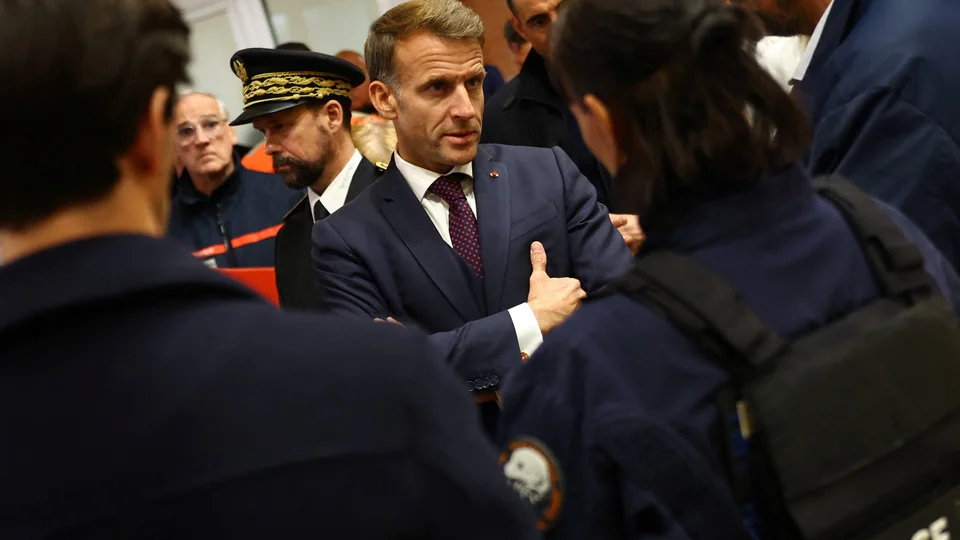
France is expanding its nuclear deterrence strategy to involve European allies as concerns grow over Russia’s military posture and uncertainty surrounding the United States’ long-term security commitments to Europe. The initiative, described by President Emmanuel Macron as “forward deterrence,” aims to strengthen European Security through closer military coordination, intelligence sharing and the potential deployment of French nuclear-capable Rafale fighter jets across the continent.
The plan reflects a changing security environment in which European governments are reassessing how they would respond to a major confrontation with Russia. France, which maintains an independent nuclear arsenal outside NATO’s nuclear planning structure, wants to create additional strategic uncertainty for Moscow while giving European partners a greater role in discussions about their security.
Ten European countries have joined the initiative at varying levels of involvement since Macron announced it in March. The participating nations include the United Kingdom, Germany, Poland and several Nordic countries. The framework does not transfer control of French Nuclear Weapons to those partners, and Paris has not offered an explicit nuclear guarantee to them.
Instead, the initiative is intended to supplement existing security arrangements, including the American nuclear umbrella, while developing new options for European defence if confidence in US protection weakens.
What is France’s forward deterrence strategy?
France’s forward deterrence initiative is designed to broaden the European dimension of its nuclear strategy without surrendering national control over its weapons. Under the plan, French nuclear-capable Rafale fighter jets could be deployed across Europe, supported by new infrastructure, secure communications, early-warning systems and intelligence-sharing arrangements.
The objective is to complicate Russia’s strategic calculations by introducing another layer of uncertainty into any potential military confrontation. Russian leaders would have to account for France’s nuclear capabilities and the possibility that French forces could operate from locations beyond French territory.
Xavier Chatel, Macron’s strategic-affairs adviser, explained at a security conference in Warsaw that the arrangement would create additional challenges for an adversary because Russia would have to assess another set of possible military responses. He also said the initiative would give France more options for dispersing its nuclear forces in the event of nuclear escalation.
Dispersal can make it harder for an adversary to predict where forces might operate during a crisis. However, the precise deployment arrangements, participating facilities and operational procedures have not been fully detailed in the supplied report.
The initiative also includes cooperation on conventional defence. European officials say the proposed communications, intelligence and early-warning infrastructure could support broader military coordination if the United States were unable or unwilling to provide the expected level of protection to NATO allies.
That broader role is important because deterrence depends on more than the weapons themselves. Governments also need reliable information, secure channels for communicating during a crisis and the ability to understand and respond to potential threats.
Which European countries are participating?
Ten countries are currently involved in France’s forward deterrence initiative: the United Kingdom, Germany, the Netherlands, Belgium, Poland, Greece, Finland, Norway, Sweden and Denmark. Their involvement varies, and the framework does not mean that every participating country will host French nuclear weapons.
The Baltic states, which are particularly exposed to Russia’s military power, are not included in the group identified in the report. Italy has declined to join the initiative.
The participation of countries such as Poland and Finland is significant because of their geographic proximity to Russia and their concerns about European security following Moscow’s full-scale invasion of Ukraine in 2022.
Finnish President Alexander Stubb said the country had no plans to host nuclear weapons on its territory during peacetime. He nevertheless argued that involvement in the French initiative could help create a strategic dilemma for Russia and improve Finland’s security through access to information and participation in discussions.
Stubb described the project as a long-term process, suggesting that it could take 10 to 15 years to develop fully. His comments indicate that the initiative is not an immediate replacement for existing nuclear arrangements but an evolving framework whose practical scope remains to be determined.
The differing levels of participation also reflect the political and strategic sensitivities surrounding nuclear weapons in Europe. Governments may be willing to cooperate on intelligence, communications and strategic planning without agreeing to host nuclear-capable aircraft or weapons on their territory.
Why France wants a stronger European nuclear role
France’s nuclear policy has long been built around national independence. Under President Charles de Gaulle in the 1960s, the country developed a sovereign nuclear deterrent outside NATO’s integrated nuclear arrangements.
France does not participate in NATO’s Nuclear Planning Group, which brings together the United States, the United Kingdom and other alliance members to discuss nuclear policy. Its deterrent remains under French control, with decisions about nuclear use reserved to the French leadership.
The historical rationale for an independent arsenal was rooted partly in doubts about whether the United States would risk a nuclear confrontation to defend a European ally. The report recalls that de Gaulle asked US President John F. Kennedy in 1961 whether Washington would sacrifice New York to save Paris but received no reply.
The underlying question remains relevant: would an American president risk the destruction of US cities in a nuclear conflict to protect a European ally?
Those concerns have intensified amid tensions over US policy toward Russia and the war in Ukraine. The report points to President Donald Trump’s engagement with Vladimir Putin’s Russia, including energy deals and pressure on Ukraine, as factors contributing to uncertainty in European capitals.
French officials argue that France has a more direct interest in European security because it shares the same continent and has deep geographic, economic and social connections with neighbouring countries.
Chatel has argued that these shared circumstances distinguish France from the United States. From Paris’s perspective, a threat to European partners could have consequences for France’s own security that are more immediate than those faced by Washington.
However, France has deliberately left the geographic scope of its “vital interests” undefined. Although Macron has said those interests have a European dimension, France has not issued an explicit commitment to use nuclear weapons to defend any particular ally.
How large is France’s nuclear arsenal?
France is believed to possess approximately 290 operational nuclear warheads, according to the supplied report. That arsenal is considerably smaller than the nuclear stockpiles maintained by the United States and Russia, but its strategic importance depends on more than the total number of weapons.
Macron said in his March announcement that France would resume manufacturing nuclear devices after decades without doing so. He also said the country would stop disclosing the size of its nuclear stockpile.
The move signals a desire to reinforce the credibility and long-term sustainability of France’s independent deterrent. However, the report does not specify the planned production schedule, the number of additional weapons or the timetable for implementing the manufacturing decision.
French nuclear doctrine allows for the use of nuclear weapons when the country’s “vital interests” are at stake. Macron has reiterated that these interests are not necessarily limited to France’s national borders.
He has questioned whether the survival of France’s closest partners could be threatened without affecting French vital interests. The statement suggests that European security could form part of the strategic calculations behind France’s nuclear posture, but it does not amount to a formal guarantee that France would use nuclear weapons on behalf of another country.
The distinction is central to the forward deterrence plan. France wants its capabilities to influence Russian decision-making while maintaining the flexibility to determine when and how its nuclear forces would be used.
How French nuclear deterrence differs from the US nuclear umbrella
The United States maintains a separate nuclear-sharing arrangement with several European NATO members. Under this programme, American tactical nuclear weapons are deployed for potential use by allied aircraft, with any use requiring authorisation from both the host nation and Washington.
The programme is intended to demonstrate that the United States has a direct role in NATO’s nuclear deterrence and that European allies participate in the alliance’s nuclear arrangements.
The British nuclear deterrent differs from France’s in another important respect. Although the United Kingdom is a nuclear-armed state, its deterrent relies on American-made platforms and operates within NATO’s nuclear framework.
France, by contrast, maintains an independent force and retains national control over its nuclear decision-making. Its forward deterrence initiative would therefore introduce a separate French dimension into European security planning rather than expand the existing US-led programme.
European officials and analysts have questioned whether American strategic nuclear forces would be used in a conflict that primarily threatened Europe rather than the US homeland. The United States deliberately maintains ambiguity about how it would respond to different scenarios, a feature that can complicate an adversary’s calculations but also leave allies uncertain.
The existing NATO nuclear-sharing arrangements include B61 gravity bombs designed during the Cold War. The report notes that these weapons were originally developed in an era when NATO planners were concerned about Soviet armoured forces advancing through Central Europe.
Advances in Russian air defences have raised questions about the ability of aircraft carrying these bombs to reach targets in a modern conflict. The report characterises the weapons as providing a form of political assurance, although their effectiveness would depend on the circumstances of any potential confrontation.
France’s ASMP-A nuclear-tipped cruise missiles, carried by Rafale aircraft, offer a different capability. Military officials and analysts cited in the report say these missiles are designed to strike targets inside Russia and have a high probability of reaching their intended destinations.
The distinction gives France a separate way to signal that an attack on European interests could expose Russia to nuclear retaliation. However, the credibility of that threat depends partly on whether Russian leaders believe France would risk a retaliatory strike against its own territory to defend another European country.
Would France risk Paris to defend Warsaw?
One of the central questions surrounding the initiative is whether France would use its nuclear arsenal if a European ally faced an existential threat. The issue is closely related to the historical debate over the credibility of extended deterrence: whether a nuclear power will risk its own security to protect another state.
Nicole Grajewski, a Russia and nuclear-affairs expert at Sciences Po in Paris, said it remained unclear whether Russia would believe France was willing to risk retaliation against Paris in order to defend Warsaw. She added, however, that Russia was paying attention to the French initiative.
Grajewski argued that France’s nuclear doctrine and weapons provide a different kind of threat from the US-led NATO nuclear-sharing arrangements. In her assessment, the B61 bombs primarily serve a political reassurance function, while France’s nuclear arsenal has the ability to reach Russian territory.
That distinction could affect how Moscow evaluates the risks of a confrontation. A deterrent is intended to influence an adversary’s decisions by making the potential costs of aggression difficult to predict or accept.
Nevertheless, a more direct French role does not automatically resolve the credibility problem. France has not publicly guaranteed that it would launch a nuclear response if a particular partner were attacked, and the decision to use nuclear weapons would remain under French control.
The forward deterrence plan may therefore be best understood as an effort to complicate Russian calculations and deepen European cooperation, rather than a promise that France will automatically extend its nuclear protection to every participating country.
European allies will not control French nuclear decisions
France’s partners are being drawn into the initiative through a structure designed to preserve national control. Paris has established 10 separate steering groups with participating countries and is conducting discussions through bilateral channels rather than creating a single multinational nuclear club.
In practice, defence officials from participating countries communicate with one another to compare information about their discussions with France. The arrangement allows governments to become involved in the process without establishing a collective authority over French nuclear forces.
A government minister from one participating country joked that France would allow its neighbours to participate in French nuclear deterrence about as much as the United States allows them to participate in its own arrangements.
The comment highlights the limits of allied involvement. Countries may receive information, coordinate planning and help develop supporting infrastructure, but they will not necessarily have a say in the final decision to use French nuclear weapons.
That limitation is partly a consequence of France’s political and strategic tradition. The independence of its nuclear force has been a defining feature of its defence policy for decades, and transferring authority to a multinational body would represent a fundamental change.
At the same time, retaining French control may make the initiative more politically acceptable at home, where support for the national deterrent extends across parts of the political spectrum.
Could a future French government weaken the initiative?
The long-term credibility of the forward deterrence strategy may depend not only on military capabilities but also on France’s domestic politics. The report highlights Marine Le Pen’s far-right National Rally, known in French as Rassemblement National, as a potential source of uncertainty ahead of the presidential election scheduled for next spring.
Le Pen’s party has implicitly endorsed the initiative, but analysts have warned that a Le Pen presidency could weaken its appeal among European partners. Concerns stem from her past warm relations with Putin and the party’s broader scepticism toward European commitments.
Bruno Tertrais, deputy director of the Foundation for Strategic Research in Paris and a specialist in French nuclear policy, said a National Rally presidency could undermine the credibility of both the deterrent against Russia and the reassurance offered to allies.
A senior European defence official from a partner country similarly said that France’s intentions, priorities and the scope of cooperation would face renewed scrutiny in Paris and among its allies if Le Pen came to power.
The issue illustrates a challenge for any long-term security arrangement: military plans can be developed over years, but their credibility depends on whether future governments remain committed to them.
Because the forward deterrence initiative is expected to evolve over a decade or longer, political continuity could become as important as the development of new infrastructure and operational arrangements.
France’s initiative is designed to supplement, not replace, US protection
Despite the increased emphasis on French capabilities, analysts caution against treating forward deterrence as a substitute for the US nuclear umbrella. Vipin Narang, a professor of nuclear security and political science at the Massachusetts Institute of Technology who previously oversaw nuclear policy at the Pentagon under the Biden administration, said the French initiative was better than having no additional arrangement but should not replace American extended deterrence.
Narang noted that French officials were also clear about this distinction. He described the development of a stronger French role as significant while expressing concern that European governments felt the need to pursue additional arrangements in the first place.
The United States retains a much larger strategic nuclear arsenal than France. However, some European policymakers believe Washington’s principal priority in a nuclear confrontation would be protecting the American homeland, leaving uncertainty about the level of risk it would accept on behalf of European allies.
France’s initiative is intended to add another layer of deterrence, providing European governments with closer access to French strategic planning and additional military options without removing the American role.
The arrangement could also strengthen conventional defence through better intelligence sharing, early warning and secure communications. Those capabilities may prove useful even if no nuclear escalation occurs.
What France’s nuclear expansion means for European security
France’s forward deterrence strategy reflects a broader reassessment of European security as governments respond to Russia’s war against Ukraine and uncertainty about future US commitments. By involving 10 European partners in a structured process, Paris is seeking to make its independent nuclear force more relevant to the continent’s collective defence.
The initiative combines potential deployments of nuclear-capable Rafale aircraft with cooperation on communications, intelligence, early warning and infrastructure. It also gives France additional options for dispersing its forces during a crisis, while preserving national control over any decision to use nuclear weapons.
For participating countries, the benefits may include closer access to information, greater coordination with France and additional strategic uncertainty for Russia. The limitations are equally important: France has not issued an explicit nuclear guarantee, allies will not control its nuclear decisions, and the initiative is not intended to replace US extended deterrence.
Its success will depend on whether the arrangements develop into credible and lasting cooperation, whether participating governments remain politically committed and whether Russia takes the additional French role into account when assessing the risks of aggression.
The process is likely to take years. Finland’s president has suggested a 10- to 15-year horizon, underscoring that forward deterrence is a long-term project rather than an immediate change to Europe’s nuclear posture.
For now, France is attempting to strengthen European deterrence without abandoning the independence that has defined its nuclear policy since the 1960s. The central question is whether a larger French role can make Russia more cautious while reassuring European allies that they have additional security options in an increasingly uncertain strategic environment.
For breaking news and live news updates, like us on Facebook or follow us on Twitter and Instagram. Read more on Latest World on thefoxdaily.com.






COMMENTS 0