A meeting involving three of the world’s most influential leaders would ordinarily be expected to take place in a grand diplomatic setting. But China appears to have chosen a more discreet location for the planned meeting between US President Donald Trump, Chinese President Xi Jinping and Russian President Vladimir Putin.
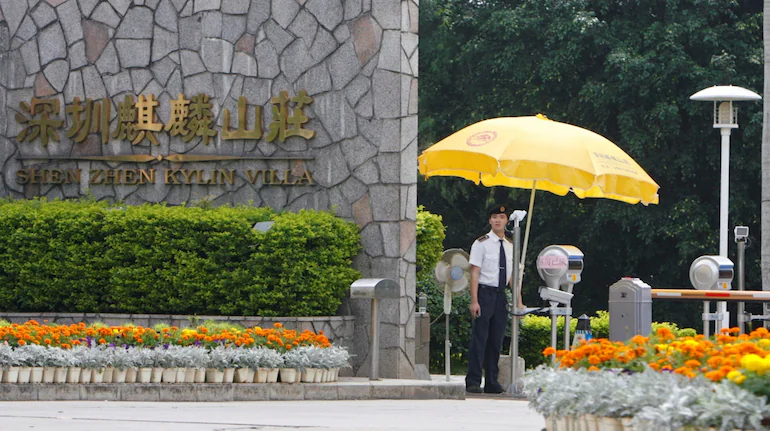
The three leaders are expected to meet at Kylin Villa in Shenzhen, southern China, on Thursday, with security tightened around the state-owned compound ahead of the high-profile engagement.
The venue’s selection has attracted attention because it is not a conventional international conference centre. Instead, Kylin Villa offers a relatively private environment with established security arrangements and a history of hosting Chinese leaders and foreign dignitaries.
Diplomatic observers suggest that the choice may reflect Beijing’s desire to keep the meeting relatively low-key, particularly because it is taking place alongside the Asia-Pacific Economic Cooperation (APEC) summit. The location could also make it easier for Trump to depart shortly after the discussions.
Why China Chose Kylin Villa for the Trump-Xi-Putin Meeting
Kylin Villa, which opened in 1997, is a state-owned compound that has hosted Chinese leaders and prominent international visitors. Its relatively private character makes it different from the formal venues typically associated with major diplomatic summits.
According to experts cited by the BBC, the decision may have both diplomatic and practical explanations. Beijing could be trying to prevent the trilateral meeting from becoming the central attraction of the APEC gathering, while also ensuring that the leaders can meet in a controlled environment.
Minseon Ku of DePaul University, a specialist in summit diplomacy, said the venue suggested that the engagement was being treated as a side meeting rather than an independent summit with a separate diplomatic identity.
“Xi would want that, since, as the host of Apec, China would want the Apec summit to be the primary event and would not want the trilateral meeting to overshadow it,” Ku told the BBC.
The distinction matters for China. Hosting the APEC summit gives Beijing an opportunity to showcase its diplomatic relationships and regional leadership. A separate, highly publicised meeting involving Trump and Putin could shift international attention away from the wider gathering.
Security and Airport Access Are Key Practical Advantages
Another explanation for choosing Kylin Villa concerns security and logistics. Professor Shaoyu Yuan of New York University, who studies US-China diplomacy, pointed to the compound’s relative ease of securing and its proximity to the airport.
The location could allow Trump to travel directly to the airport after the meeting, reducing the complexity of moving a visiting US president through a major city following a high-security engagement.
Yuan also suggested that the venue’s less formal atmosphere could help manage expectations surrounding the discussions.
“The setting carries less diplomatic formality than an official venue in Beijing, framing the roughly one-hour meeting as a working-level engagement. The lower the ceremonial profile, the lower the political cost if the meeting produces no tangible outcomes,” Yuan said.
In diplomatic terms, the setting can influence how an engagement is perceived. A grand venue and elaborate ceremony may signal that leaders intend to announce a major agreement. A private meeting at a less formal location can provide greater flexibility if discussions are exploratory or produce limited immediate results.
Trump Arrives in China as Xi Personally Welcomes Him
Trump arrived in China on Wednesday ahead of the expected trilateral meeting. Chinese President Xi Jinping personally welcomed the US president at the airport, according to footage distributed by AFP.
After stepping off Air Force One, Trump saluted while standing beside Xi on a red carpet. The welcome ceremony featured people waving colourful pom-poms alongside Chinese and American national flags.
The two leaders subsequently shook hands, marking the beginning of Trump’s latest high-level engagement with the Chinese leadership.
The airport reception was a carefully visible diplomatic moment, contrasting with the more private setting reportedly selected for the subsequent meeting involving Putin.
Trade, Ukraine War and Iran Conflict May Dominate Discussions
The planned meeting comes at a time of significant international tensions involving all three countries. Trade disputes, advanced technology, Russia’s war in Ukraine and the conflict involving Iran are among the issues that could feature in discussions.
Artificial intelligence, nuclear weapons and other geopolitical flashpoints may also form part of the wider conversation.
For Washington and Beijing, trade and technology remain particularly important. Competition over advanced technologies has implications for economic influence, national security and access to critical industries.
Russia’s war in Ukraine presents another major challenge. Moscow’s relationship with Beijing and its ongoing confrontation with Western governments could shape the discussions involving Putin and Trump.
The conflict involving Iran adds another layer of complexity to the international agenda. The three governments have different strategic interests in the region, making any discussion potentially sensitive.
With the meeting expected to last around an hour, the leaders may have limited time to address the full range of issues. The choice of a relatively informal venue could therefore reflect an effort to hold a focused exchange rather than conduct a comprehensive diplomatic negotiation.
Three Presidents, Three Different Political Legacies
The meeting also brings together three leaders who have spent years cultivating distinct public images and political identities. Their approaches to leadership, personal presentation and national power differ, even as they share an interest in projecting authority on the international stage.
Donald Trump: A Presidency Focused on Legacy
At 80, Trump has increasingly emphasised the physical and symbolic changes he wants to leave behind during his second presidential term. His proposed projects include a White House ballroom, a helipad, a triumphal arch and the addition of his name to the Kennedy Center.
In September, Trump acknowledged that he was pursuing some of these projects himself because, as he put it, “nobody will do it once I’m gone”.
He has also spoken publicly about how he wants his presidency to be remembered. Following his party’s defeat in the US midterm elections, Trump discussed his political legacy in an interview with CBS’s 60 Minutes.
“I hope I’m missed,” he said.
These remarks reflect Trump’s attention to his place in American political history and the lasting visibility of his presidency. His approach to diplomacy has also frequently involved personal relationships and direct engagement with other national leaders.
Vladimir Putin: The Image of Strength and Military Authority
Russian President Vladimir Putin, 74, has spent much of his time in power projecting an image of physical toughness and national strength.
Earlier publicity campaigns featured him riding horses bare-chested in Siberia, diving for ancient Greek urns and flying in a motorised hang-glider alongside cranes. These appearances helped establish a public image that contrasted with the conventional presentation of many Western political leaders.
Journalist Andrey Pertsev of the banned independent outlet Meduza described the staged appearances as an effort to portray Putin as a physically fit Russian strongman.
Since Russia launched its full-scale invasion of Ukraine, Putin has increasingly appeared in military clothing alongside senior military officials. He has also shown interest in subjects such as longevity, genetics and biotechnology.
Last year, Putin and Xi were heard discussing the possibility that humans could eventually live to 150, drawing attention to their interest in scientific advances related to ageing and life expectancy.
Xi Jinping: Discipline, Party Authority and National Identity
Chinese President Xi Jinping, 73, has cultivated a different public image, presenting himself as a disciplined leader with close connections to ordinary Chinese citizens.
His political career began in a village, and Chinese state media has highlighted his experiences of manual labour during his youth, physical stamina and swimming habits. These accounts form part of a broader public narrative around his personal background and leadership style.
Xi has also consolidated his position within China’s political system through an extensive anti-corruption campaign. Supporters have presented the campaign as an effort to strengthen discipline within the Communist Party, while critics argue that it has also helped eliminate political rivals and consolidate his authority.
His political ideology, known as Xi Jinping Thought, has been incorporated into Communist Party policies. China’s constitution was also amended in 2018 to include references to his political doctrine.
Unlike Trump’s highly visible personal branding and Putin’s carefully staged displays of physical strength, Xi’s public image places greater emphasis on discipline, political authority and continuity within the Chinese state.
Why Xi Could Have the Diplomatic Advantage
Although the meeting brings together three powerful leaders, their positions and immediate political circumstances are not identical.
US-based researcher Joseph Torigian, who studies Chinese and Russian politics, said the three leaders shared “a preoccupation with virility, hardness, masculinity, toughness”. However, he described Xi as more ascetic in comparison with Trump and Putin.
Torigian suggested that Xi could approach the engagement with greater confidence, given the political circumstances facing the other two leaders. Putin continues to oversee Russia’s war in Ukraine, while Trump is dealing with political challenges following his party’s midterm election defeat.
China’s position as the host also gives Xi an opportunity to shape the meeting’s setting, format and diplomatic presentation. By bringing the three leaders together in Shenzhen, Beijing can demonstrate its ability to engage directly with Washington and Moscow while maintaining control over the event’s organisation.
Torigian said Beijing would seek to facilitate the meeting on its own terms while benefiting from the international visibility of hosting the leaders of three major powers.
“This trilateral summit, which the Chinese initially didn’t seem to be super enthusiastic about, they’ll ultimately try to facilitate on their own terms and draw the benefit of seeming like one of the world’s great powers while doing it,” he said.
What the Kylin Villa Venue Says About the Meeting
The reported choice of Kylin Villa offers a glimpse into how Beijing may be approaching the trilateral engagement. Rather than presenting it as a separate, elaborate summit, China appears to be favouring a more controlled and relatively discreet meeting alongside the larger APEC event.
The location combines practical advantages, including security and airport access, with diplomatic flexibility. It allows the leaders to meet without necessarily giving the encounter the ceremonial weight of a major international agreement.
That does not mean the discussions will lack importance. Trade, technology, Ukraine, Iran and nuclear security are all issues with consequences extending far beyond the three countries.
Ultimately, the significance of the meeting will depend less on the venue than on what the leaders discuss and whether they make concrete progress. For Beijing, however, hosting Trump and Putin together with Xi at Kylin Villa could itself serve as a demonstration of China’s diplomatic reach and international standing.
For breaking news and live news updates, like us on Facebook or follow us on Twitter and Instagram. Read more on Latest World on thefoxdaily.com.



COMMENTS 0