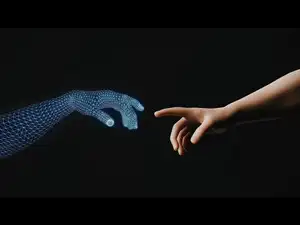
In a year dominated by Artificial Intelligence, Cambridge Dictionary has turned the spotlight back on people. The dictionary has named ‘human’ its Word of the Year 2026, reflecting a renewed interest in human qualities at a time when AI systems are becoming increasingly capable of performing tasks once associated exclusively with people.
The choice captures a cultural shift unfolding alongside the rapid expansion of AI. From writing and education to entertainment, design and business, artificial intelligence is changing how people work and create. At the same time, concerns about automated content, job displacement and the loss of human judgement have prompted fresh questions about the role people should continue to play.
Cambridge Dictionary defines ‘human’ as having the qualities, faults and feelings that people have, as opposed to gods, animals or machines. The word has been in use since the 15th century, but its meaning has gained renewed relevance as technology increasingly blurs the distinction between human-produced and machine-generated work.
Cambridge Dictionary lexicographer Colin McIntosh said the growing use of artificial intelligence had changed how people talk about being human. He highlighted concerns about what people might lose by outsourcing their thinking to AI, pointing to its expanding influence in fields ranging from mathematics to teaching.
The increased use of expressions such as ‘human-made’ and ‘human-written’ also reflects this shift. Such terms distinguish work produced by people from content generated by artificial intelligence, suggesting that human involvement is becoming a quality people increasingly want to identify.
AI’s growing capabilities sharpen the human distinction
Artificial intelligence has moved beyond being a specialised technology used mainly by researchers and technology companies. AI tools can now generate text, images, music and video, assist with coding, analyse large volumes of information and perform complex tasks across different industries.
As these capabilities expand, the debate is no longer limited to what machines can do. It increasingly concerns what makes human thinking, creativity and experience different from the output of an artificial system.
One of the central concerns is the possibility of people becoming too dependent on AI for decisions and intellectual work. When students use AI to complete assignments, professionals rely on automated analysis or organisations replace parts of creative production with generated material, questions arise about how much independent thinking and skill development may be affected.
Cambridge Dictionary’s choice reflects these concerns. The issue is not simply whether AI can produce a convincing answer or imitate a particular style. It is also about the value of human judgement, lived experience, responsibility and the ability to understand situations in ways that go beyond processing information.
The distinction becomes particularly important when AI-generated work is difficult to identify. A piece of writing, an image or a performance may appear convincing, but audiences and consumers may still want to know whether a person created it, contributed to it or approved its use.
This has helped give greater visibility to terms that explicitly identify human involvement. Expressions such as ‘human-made’ and ‘human author’ are increasingly useful in conversations about authenticity, originality and accountability.
The debate also extends to employment. AI systems are being introduced into workplaces to automate repetitive tasks, support decision-making and improve productivity. While these tools can create new opportunities, they have also raised concerns about the future of jobs and the skills workers will need.
Another important question is whether convenience should always take priority over human participation. AI can make certain activities faster, but speed does not necessarily replace the value of personal interaction, individual expression or the experience of creating something through one’s own effort.
Microsoft co-founder Bill Gates has also commented on the significance of the dictionary’s choice. He said AI could help cure diseases, improve education and give people more time for important activities. However, he argued that its success should ultimately be judged by how much it improves human lives.
That perspective highlights the broader question behind the word of the year: artificial intelligence may become more capable, but its purpose should remain connected to human needs and well-being.
Artists push back as entertainment industry draws boundaries
The growing use of AI has also created tensions in the entertainment industry, where creative professionals are debating how their work, identities and performances can be used by automated systems.
Actors, musicians, writers and visual artists have raised concerns about AI-generated replicas, unauthorised use of creative material and the possibility of digital tools reproducing their voices, faces or artistic styles without meaningful permission.
For performers, the issue goes beyond whether an AI system can imitate a voice or appearance. It also involves control over personal identity, consent, compensation and the ability to decide how a digital version of a person is represented.
Several well-known figures have drawn attention to these questions. Actors including Scarlett Johansson and Cate Blanchett, along with musicians and authors, have raised concerns about AI-generated replicas and the use of human-created content. Matthew McConaughey and Taylor Swift have also taken steps to protect elements of their identities, including their voices and images, against unauthorised digital reproduction.
These developments have made the distinction between human and machine-generated creativity an important issue for the entertainment business. AI can help with production, editing and creative experimentation, but disputes arise when technology uses an artist’s work or identity without clear permission.
The debate is also changing how audiences think about creative ownership. Consumers may appreciate the convenience and novelty of AI-generated entertainment while still placing special value on work that reflects an individual’s experiences, decisions and artistic vision.
For creative industries, the challenge is finding ways to use new technology without undermining the rights and livelihoods of the people whose work makes those industries possible. Questions around consent, licensing, payment and disclosure are likely to remain central as AI-generated material becomes more common.
Cambridge Dictionary’s selection of ‘human’ does not suggest that artificial intelligence will disappear from creative fields. Instead, it highlights the growing importance of identifying and protecting the human contribution as technology becomes more involved in producing content.
From ‘humanmaxxing’ to a return to analogue habits
The renewed interest in human experiences is also visible in lifestyle and internet culture. Alongside debates about AI, people are increasingly using language that describes efforts to improve themselves, reconnect with everyday experiences and place greater value on activities that do not depend on digital technology.
One expression associated with this trend is ‘humanmaxxing’, which reflects the idea of making the most of human qualities and experiences rather than treating every aspect of life as something that should be automated or optimised through technology.
The broader interest in human-centred living can be seen in the appeal of personal creativity, face-to-face interaction, physical activities and experiences that offer a break from constant digital engagement.
Another related trend is the renewed interest in analogue experiences. The word ‘analogue’ refers to activities or objects that do not rely on digital technology. It can describe everything from listening to music on vinyl records and using film cameras to writing in notebooks, reading printed books or spending time away from screens.
These habits are not necessarily a rejection of technology. Rather, they reflect a desire to maintain a balance between digital convenience and activities that offer a more direct, physical or personal experience.
In a world where digital platforms and AI tools can make many tasks immediate, analogue activities can provide a different kind of engagement. Taking photographs on film, writing by hand or listening to a physical music collection involves processes that cannot be reduced entirely to speed and automation.
Cambridge Dictionary also highlighted ‘wholesome’ as one of the contenders for its 2026 Word of the Year. The word describes something that is good for a person’s physical, moral or emotional well-being. Its presence among the contenders reflects interest in experiences and choices that contribute positively to everyday life.
Another expression under consideration was ‘dusking’, which describes the practice of watching daylight turn to darkness as a form of relaxation. The trend has been associated with reconnecting with the natural world and taking time away from the pace of digital life.
Together, these expressions point towards a broader cultural conversation about well-being, authenticity and the value of experiences that do not depend on technology.
Other words that reflected the changing relationship with technology
‘Human’ was selected from a shortlist that included several words reflecting the influence of technology and changing lifestyle preferences. One of them was ‘agent’, referring to an artificial intelligence system capable of carrying out tasks or operating with a degree of independence from direct human control.
The growing use of AI agents has become an important part of the technology debate. Unlike conventional digital assistants that mainly respond to instructions, more advanced agents can handle multiple steps towards completing a task. Their development has raised questions about how much decision-making should be delegated to automated systems.
‘Analogue’ also featured among the contenders, reflecting interest in non-digital experiences. ‘Wholesome’ was another shortlisted word, highlighting the appeal of things that improve physical, emotional or moral well-being.
The shortlist demonstrates how language is responding to several developments at once. Artificial intelligence is changing professional and creative work, while lifestyle trends are encouraging people to reconsider their relationship with screens, technology and personal well-being.
New dictionary additions reflect internet culture
Cambridge Dictionary also highlighted expressions that have gained popularity through social media and online communities. Among the additions were ‘aura farming’ and ‘looksmaxxing’, both of which reflect the influence of internet culture on everyday language.
‘Aura farming’ describes the act of doing things with the intention of displaying a personality that other people find attractive, impressive or interesting. The expression is often used in discussions about social media personalities and the way people cultivate an appealing public image.
‘Looksmaxxing’ refers to efforts to improve one’s physical appearance. The term has become particularly visible in online communities, where discussions about grooming, fitness and appearance can sometimes develop into more extreme forms of self-improvement culture.
The addition of such expressions illustrates how dictionaries track changes in the way people communicate. Online trends can introduce new words into everyday conversations, and some eventually become established enough to receive formal dictionary entries.
FOBO and other expressions to watch
Cambridge Dictionary also drew attention to emerging expressions that could become more widely used in the future. One of them is ‘FOBO’, meaning ‘fear of becoming obsolete’.
The term reflects anxiety about becoming professionally irrelevant as technology changes the skills required in the workplace. With AI increasingly capable of performing tasks across different sectors, some workers are concerned that their roles could be automated or that their existing skills may lose value.
Another expression being watched is ‘weather whiplash’, which describes a rapid change from one extreme weather condition to another. The term captures the experience of abrupt shifts between contrasting weather patterns.
‘Dusking’, the practice of watching daylight fade into darkness for relaxation, was also highlighted as an expression gaining attention.
These terms show that language trends are shaped by more than technology alone. Employment concerns, environmental changes, online behaviour and lifestyle choices all influence the expressions people adopt.
Why ‘human’ captures the mood of 2026
The selection of ‘human’ is significant because it is not a newly invented expression or an unfamiliar piece of internet slang. It is an established word whose importance has grown as artificial intelligence has become part of everyday life.
For much of the digital era, technological progress has often been discussed in terms of speed, efficiency and automation. The growing presence of AI has added another dimension to that conversation: the need to understand what should remain distinctly human.
Creativity, emotional connection, personal experience, independent judgement and accountability are now central to discussions about the limits and appropriate use of AI. Even when machines can produce convincing results, people may continue to value knowing who created something and what human experience lies behind it.
The word also reflects a more practical concern. As AI becomes part of education, business, entertainment and public services, society will need to decide how to use it without losing important human skills or weakening personal relationships.
Cambridge Dictionary’s choice does not frame technology and humanity as opposing forces. Instead, it highlights the growing need to consider how artificial intelligence can support people while preserving the qualities that make human participation meaningful.
In that sense, ‘human’ is more than a reflection of the year’s technology debate. It captures a wider question about the future: as machines become capable of doing more, what do people want to protect, value and continue doing themselves?
For breaking news and live news updates, like us on Facebook or follow us on Twitter and Instagram. Read more on Latest World on thefoxdaily.com.






COMMENTS 0