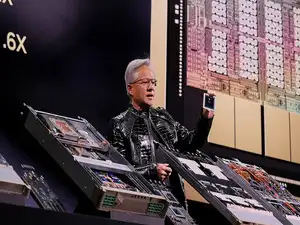
Nvidia has stopped shipping its Hopper data centre chips to China, marking a significant shift in the company’s approach to one of the world’s largest technology markets as scrutiny of its Artificial Intelligence (AI) chip exports intensifies in the United States.
The decision was confirmed by interim CEO Colette Kress during the company’s third-quarter earnings call on Tuesday. Nvidia had previously received US government approval to sell certain versions of its Hopper data centre processors to selected Chinese customers. However, its latest business outlook does not include any licensed Hopper data centre products for China.
The announcement comes amid heightened regulatory and political attention on Nvidia’s China-related business, following the departure of co-founder Jensen Huang as CEO and concerns about potential national security risks associated with advanced chip exports.
Nvidia has also announced the formation of a board-level committee focused on national security policies, export controls and compliance. The move signals greater oversight of the company’s international technology sales as Washington examines how advanced AI processors could reach Chinese companies through direct purchases or overseas data centres.
Key Highlights of Nvidia’s China Chip Decision
- Hopper shipments stopped: Nvidia has confirmed that it is no longer shipping licensed Hopper data centre chips to China.
- Previous sales: The company sold $2.4 billion worth of licensed Hopper data centre products to China during the third quarter.
- Future outlook: Nvidia’s forward guidance does not include licensed Hopper data centre products for the Chinese market.
- Leadership change: Colette Kress is serving as interim CEO following Jensen Huang’s departure.
- Board oversight: Nvidia has formed a committee focused on national security and export-control compliance.
- Huang’s return: Board chairman Harvey Jones has indicated that the company does not plan to reinstate its former CEO.
Nvidia Confirms It Has Stopped Shipping Hopper Chips to China
During the earnings call, Kress confirmed that Nvidia was no longer shipping licensed Hopper data centre products to China. She also said the company’s future guidance did not include any such products.
The disclosure is notable because Nvidia had previously secured US government permission to sell certain versions of its Hopper processors to selected Chinese customers. The approval had offered the company a limited route back into China’s data centre computing market despite broader restrictions on advanced semiconductor exports.
Nvidia sold $2.4 billion worth of licensed Hopper data centre products to China during the third quarter, according to Kress. However, the company has now excluded further licensed Hopper shipments from its forward business outlook.
Kress did not provide a detailed explanation for the decision during the call. Therefore, the announcement should be understood as confirmation that shipments have stopped, rather than evidence that a single regulatory development directly triggered the move.
The development represents a change in Nvidia’s China strategy. The company had previously argued that maintaining access to Chinese customers was important for its competitiveness, particularly as domestic semiconductor companies in China continued developing alternatives to US-designed AI processors.
Why Nvidia’s China Business Faces Greater Scrutiny
Nvidia’s advanced processors are widely used to train and operate sophisticated AI models. Their computing performance makes them strategically important in the global competition to develop increasingly capable artificial intelligence systems.
US policymakers have raised concerns that advanced chips sold to Chinese customers could strengthen China’s AI and military-related technology capabilities. Export restrictions are intended to limit access to certain high-performance computing technologies that Washington considers sensitive to national security.
The scrutiny has extended beyond direct exports to Chinese buyers. US officials and lawmakers are also examining whether companies based in other countries could provide Chinese businesses with access to advanced Nvidia processors through overseas data centres.
This issue is important because access to computing power does not always require a company to own the physical hardware. A customer may potentially rent computing capacity remotely from a data centre located in another country.
As a result, export-control discussions increasingly involve not only where chips are shipped but also who can access the computing systems in which they are installed. Restrictions targeting remote access could affect the business models of international cloud providers and data centre operators.
Jensen Huang’s Departure Adds to Pressure on Nvidia
The decision to stop Hopper shipments comes shortly after Jensen Huang stepped down as Nvidia’s CEO following reports concerning his personal relationships, including allegations involving a woman suspected by US authorities of having links to Chinese intelligence.
Huang acknowledged an extramarital affair but did not publicly identify the person involved. The allegations have drawn additional attention to Nvidia’s business relationships and its China-related activities.
Huang had been one of the strongest advocates for allowing Nvidia to continue selling advanced AI processors in China. He argued that maintaining a presence in the market was important for US technology companies and their ability to compete globally.
His departure therefore comes at a significant moment for the company. Nvidia is navigating changing export rules, questions about national security and uncertainty over its future access to Chinese customers.
However, the company has not publicly established that the end of Hopper shipments was caused solely by Huang’s departure. Kress confirmed the shipping decision during the earnings call but did not provide a detailed explanation for the change.
Nvidia Forms Board Committee on National Security and Export Controls
Alongside the China chip announcement, Nvidia said it had formed a board-level committee dedicated to national security policies and export-control compliance.
The committee is expected to strengthen oversight of issues involving international trade, regulatory requirements and the security implications of the company’s products and business relationships.
The development comes as US lawmakers seek closer examination of advanced chip exports and the effectiveness of existing restrictions. Concerns have also been raised about whether chips sold through overseas companies or data centres could ultimately provide computing access to Chinese entities.
For Nvidia, stronger board oversight could become an important part of managing regulatory exposure. The company operates across multiple international markets, and its advanced processors are subject to export rules that can change as governments reassess national security risks.
The committee’s formation does not, by itself, establish that Nvidia has violated export regulations. Instead, it reflects the growing importance of compliance and national security oversight in the company’s global operations.
Nvidia Rules Out Reinstating Jensen Huang as CEO
The company’s leadership transition was another major subject during the earnings call. Huang, who co-founded Nvidia and led its expansion into a leading AI chip supplier, has stepped down from the chief executive position.
Huang has indicated that he would be willing to return if the board believed it was in the company’s best interests. However, board chairman Harvey Jones made clear that Nvidia does not plan to reinstate him as CEO.
The board’s position suggests that the company intends to move forward with its leadership transition rather than immediately reverse the decision. Colette Kress is currently serving as interim CEO while the board considers the company’s longer-term leadership arrangements.
The transition comes at a sensitive time because Nvidia is managing several major business challenges, including export restrictions, competition in AI computing and the need to maintain confidence among customers, investors and policymakers.
What the Decision Means for Nvidia’s China Market Opportunity
China has been an important potential market for Nvidia because of demand for advanced computing infrastructure and AI development. However, US export restrictions and China’s own regulatory position have made it increasingly difficult for the company to serve local data centre customers.
Stopping licensed Hopper shipments removes one previously available route for Nvidia to supply advanced data centre processors to selected Chinese customers.
The decision could also create opportunities for domestic Chinese chipmakers to expand their presence. When access to leading foreign processors becomes restricted, local technology companies may have stronger incentives to develop alternative hardware, software ecosystems and AI computing infrastructure.
For Nvidia, the longer-term risk is not limited to lost sales in China. A reduced presence in the market could also allow competitors to build relationships with developers and customers who might otherwise have used Nvidia’s products.
However, the extent of that impact will depend on the performance of alternative processors, the availability of computing infrastructure and the direction of future export regulations.
What Investors Will Watch Next
Nvidia’s decision to stop shipping licensed Hopper products to China raises several questions about its future business outlook and exposure to geopolitical risks.
US export policy: Investors will monitor whether Washington introduces additional restrictions covering advanced processors, overseas data centres or remote access to AI computing infrastructure.
China revenue exposure: The company’s disclosure of $2.4 billion in licensed Hopper sales during the third quarter provides an indication of the business it had generated through the approved shipment route. Future results will show how the absence of these products affects its revenue mix.
Leadership transition: The process of selecting permanent leadership and the board’s approach to governance will remain important as Nvidia navigates regulatory and commercial challenges.
Competition from Chinese chipmakers: Restricted access to Nvidia processors could encourage domestic suppliers to strengthen their products and software ecosystems. The pace of that progress will influence the competitive landscape.
National security oversight: The new board committee’s approach to export compliance and international trade risks will be closely watched as scrutiny of advanced AI chips continues.
Outlook: Nvidia Faces a New Phase in Its China Strategy
Nvidia’s decision to stop shipping licensed Hopper data centre chips to China marks an important development in the company’s relationship with the market. The move comes despite previous US approval for selected sales and follows a period of growing scrutiny over the national security implications of advanced AI processors.
The company is now facing a combination of commercial, regulatory and leadership challenges. Its new board committee on national security and export controls indicates that compliance oversight will remain a central part of its international strategy.
For now, Nvidia’s forward guidance excludes licensed Hopper data centre products for China, while its leadership team is moving ahead under interim CEO Colette Kress. Whether the company can eventually establish another commercially viable route into the Chinese data centre market will depend on future US and Chinese policies, as well as the availability of products that meet both countries’ requirements.
The broader issue extends beyond Nvidia. The dispute highlights how access to advanced AI computing has become closely linked to international trade policy, technology competition and national security. As governments examine both direct chip exports and remote access through overseas infrastructure, the rules governing the global AI semiconductor market could continue to evolve.
For breaking news and live news updates, like us on Facebook or follow us on Twitter and Instagram. Read more on Latest Business on thefoxdaily.com.






COMMENTS 0