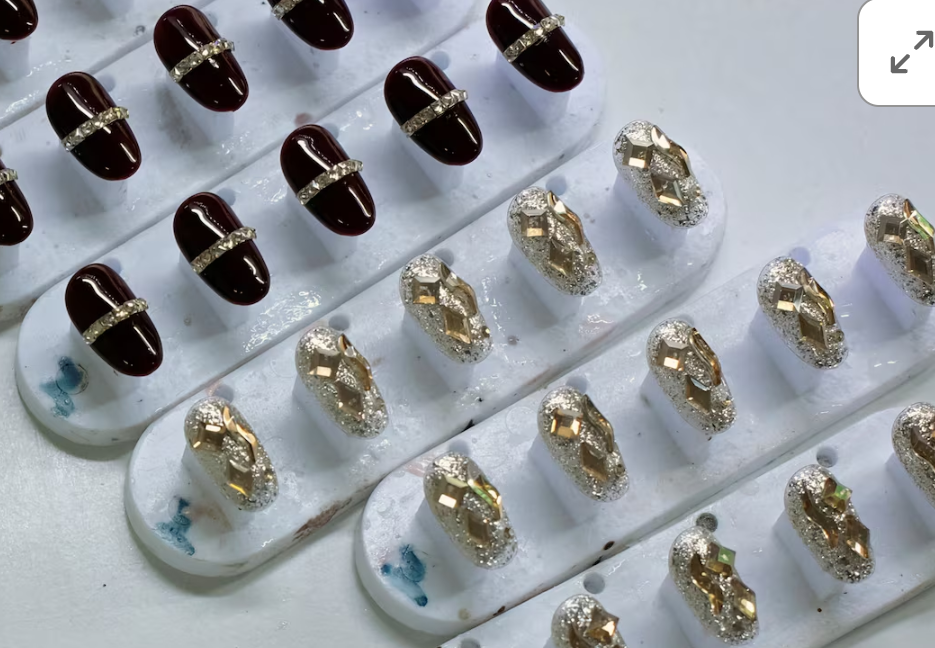
Chinese beauty accessory exporters are seeing strong demand from the United States, despite ongoing trade tensions between Washington and Beijing. Sales of wigs, hair extensions and press-on nails are growing, highlighting the strength of China’s manufacturing networks and its ability to supply both affordable and customized products.
According to a Reuters report published on September 23, 2026, Chinese hair-product exports to the US increased 12.4% year-on-year to $1.3 billion in the first half of 2026. Producers say demand remains strong, with social media platforms such as TikTok and Instagram helping connect Chinese manufacturers with American buyers.
Chinese Hair and Nail Products Gain Ground in the US
Chinese-made beauty accessories, including pre-bleached wigs, clip-in hair extensions and decorative press-on nails, are attracting customers across the United States.
The growth comes as trade friction between the two countries remains a major issue in other sectors, including cars and batteries. However, beauty accessories illustrate how consumer demand can continue to support trade in products that are not considered strategically sensitive.
Exporters say their ability to produce large volumes, offer varied designs and respond to changing customer preferences helps them compete in the US market.
China’s Hair Product Exports Rise 12.4%
Chinese customs data cited by Reuters showed that exports of hair products to the United States reached $1.3 billion in the first six months of 2026, up 12.4% from the same period a year earlier.
Shipments were on track to exceed the full-year 2025 total of $2.3 billion, according to the report. Hair products have become one of China’s faster-growing export categories, alongside goods such as computer parts, scooters and plastic products.
Artificial nail exports are not separately tracked in the cited customs data because they are categorized as plastic products. Nevertheless, manufacturers report that overseas demand for press-on nails is increasing.
Xuchang’s Wig Industry Benefits From Manufacturing Scale
Xuchang, a city in central China known as the country’s wig capital, has developed a large workforce and supply network focused on hair products.
Exporter Joe Wu expects his sales to grow 40% in 2026, driven heavily by US buyers he reaches through TikTok and Instagram. Another seller from Xuchang, identified by the surname Tian, said his US sales had increased 10% to 15% compared with the previous year.
State media figures cited by Reuters indicate that approximately 300,000 people in Xuchang work in the hair industry, out of a population of 4.4 million. The concentration of workers and related businesses gives manufacturers access to specialized skills and established production networks.
Donghai’s Press-On Nail Businesses Expand Overseas
Donghai county, in Jiangsu province, is another important manufacturing centre for beauty accessories, particularly artificial nails.
Zhang Da, who owns a press-on nail factory employing 200 workers, said exports had risen to 70% of his company’s revenue in 2026, compared with 20% in late 2025. He said the United States accounted for a substantial share of those overseas sales.
Reuters reported that Donghai, a county with around one million residents, had nearly 25,000 press-on nail businesses. The concentration of producers supports a specialized manufacturing ecosystem serving domestic and international customers.
How Social Media Is Driving Beauty Product Sales
Social media platforms are helping Chinese exporters reach US consumers who follow beauty trends and frequently change their hairstyles and manicures.
Influencers and celebrities often showcase different wigs, extensions and nail designs, creating demand for products that allow customers to experiment with their appearance. TikTok and Instagram provide sellers with channels to demonstrate products and connect with potential buyers.
Data analytics platform Fast Moss found that hair products occupied 17 of the top 20 positions in TikTok’s US fashion-accessory sales revenue rankings in August 2026, according to Reuters. The top-selling item was a glueless, pre-bleached straight-hair wig.
The figures indicate the importance of hair accessories within that platform’s reported fashion-accessory sales rankings. They do not represent the entire US beauty market.
Personalization Helps Sellers Attract Customers
Chinese sellers say customization is an important part of their appeal to American buyers. Tian, a hair-product seller in Xuchang, said US customers place considerable value on personalization.
Offering customized products can allow sellers to charge higher prices for smaller orders, according to Tian. This gives manufacturers an opportunity to serve customers looking for specific styles rather than only competing through mass-produced designs.
Customization also reflects the changing nature of online retail, where customers can discover products through social media and seek designs that match their individual preferences.
Supply Chains Give Chinese Manufacturers a Competitive Advantage
Exporters point to economies of scale and integrated supply chains as major reasons they can compete with producers in other countries.
Wu said Chinese manufacturers benefit from high production capacity and established networks of suppliers. In the wig industry, producers source some hair domestically, including from rural areas, while outsourcing the labour-intensive process of tying individual hair strands to lace to North Korea, according to Reuters.
This division of work allows companies to combine different sources of materials and labour within their production networks. The result is a system that exporters say would be difficult for competitors elsewhere to replicate quickly.
China’s manufacturing strength is not limited to advanced technology products. The beauty-accessory sector demonstrates how specialized labour, supplier networks and large-scale production can also support exports of lower-value consumer goods.
US-China Tariffs Have Not Stopped Demand
Despite the possibility of additional US trade restrictions, Chinese beauty-product exporters interviewed by Reuters said they remained confident in demand from American customers.
Wu acknowledged that tariffs affect business but said they were not the decisive factor. Exporters argued that US demand remains strong and that production capacity outside China cannot easily expand enough to replace existing supply.
However, the report does not establish that beauty accessories are exempt from tariffs or that future trade measures would have no effect. Changes in import costs, regulations or consumer demand could still affect exporters and US buyers.
China’s Manufacturing Reach Extends Across Industries
The growth of Chinese beauty accessories offers an example of the country’s extensive manufacturing capabilities across different product categories.
Dan Wang, China director at Eurasia Group, said China’s combination of scale and product improvements gives it a distinctive position in global manufacturing. Wang argued that the country competes across both advanced and lower-value-added industrial goods, making its advantages difficult to replace in the near term.
Her assessment reflects a broader debate about the role of Chinese manufacturing in global trade. For importing countries, strong competition from Chinese producers can create challenges for domestic manufacturers, while consumers and retailers may benefit from access to a broad range of products.
What the Export Trend Means for the Beauty Industry
Chinese wig and nail exporters are benefiting from a combination of consumer demand, social-media marketing, customization and concentrated manufacturing expertise.
The rise in hair-product exports suggests that US buyers continue to provide an important market for Chinese beauty accessories despite wider trade tensions. At the same time, the sector’s reliance on established supply chains may make it difficult for alternative manufacturing centres to expand quickly.
Future growth will depend on continued consumer demand, the ability of manufacturers to adapt to changing beauty trends and the effects of trade policy. For now, the reported export figures and seller experiences show how Chinese producers are maintaining a strong presence in this part of the US consumer market.
Frequently Asked Questions
Why are Chinese beauty product exports to the US increasing?
Exporters cite strong consumer demand, social-media exposure, customization and China’s large-scale manufacturing networks as important factors.
How much did China’s US hair-product exports increase in the first half of 2026?
Chinese hair-product exports to the United States rose 12.4% year-on-year to $1.3 billion in the first half of 2026, according to customs data cited by Reuters.
Which Chinese city is known as the wig capital?
Xuchang, in central China’s Henan province, is known as China’s wig capital.
How are TikTok and Instagram helping Chinese beauty exporters?
The platforms help sellers showcase products, reach US customers and respond to demand for changing hairstyles, nail designs and personalized accessories.
What is happening to press-on nail exports from Donghai?
A Donghai factory owner told Reuters that exports had increased to 70% of his company’s revenue in 2026, up from 20% in late 2025.
Why are Chinese manufacturers competitive in the beauty-accessory market?
Exporters point to economies of scale, specialized labour, high production capacity and integrated supply chains.
Have US-China trade tensions stopped beauty-product sales?
No such stoppage was reported. Exporters interviewed by Reuters said US demand remained strong, although tariffs and future trade restrictions could still affect business.
Are artificial nail exports separately tracked in Chinese customs data?
Not in the data cited by Reuters. Artificial nails are categorized as plastic products, so the report did not provide a separate customs export figure for them.
For breaking news and live news updates, like us on Facebook or follow us on Twitter and Instagram. Read more on Latest Business on thefoxdaily.com.




COMMENTS 0