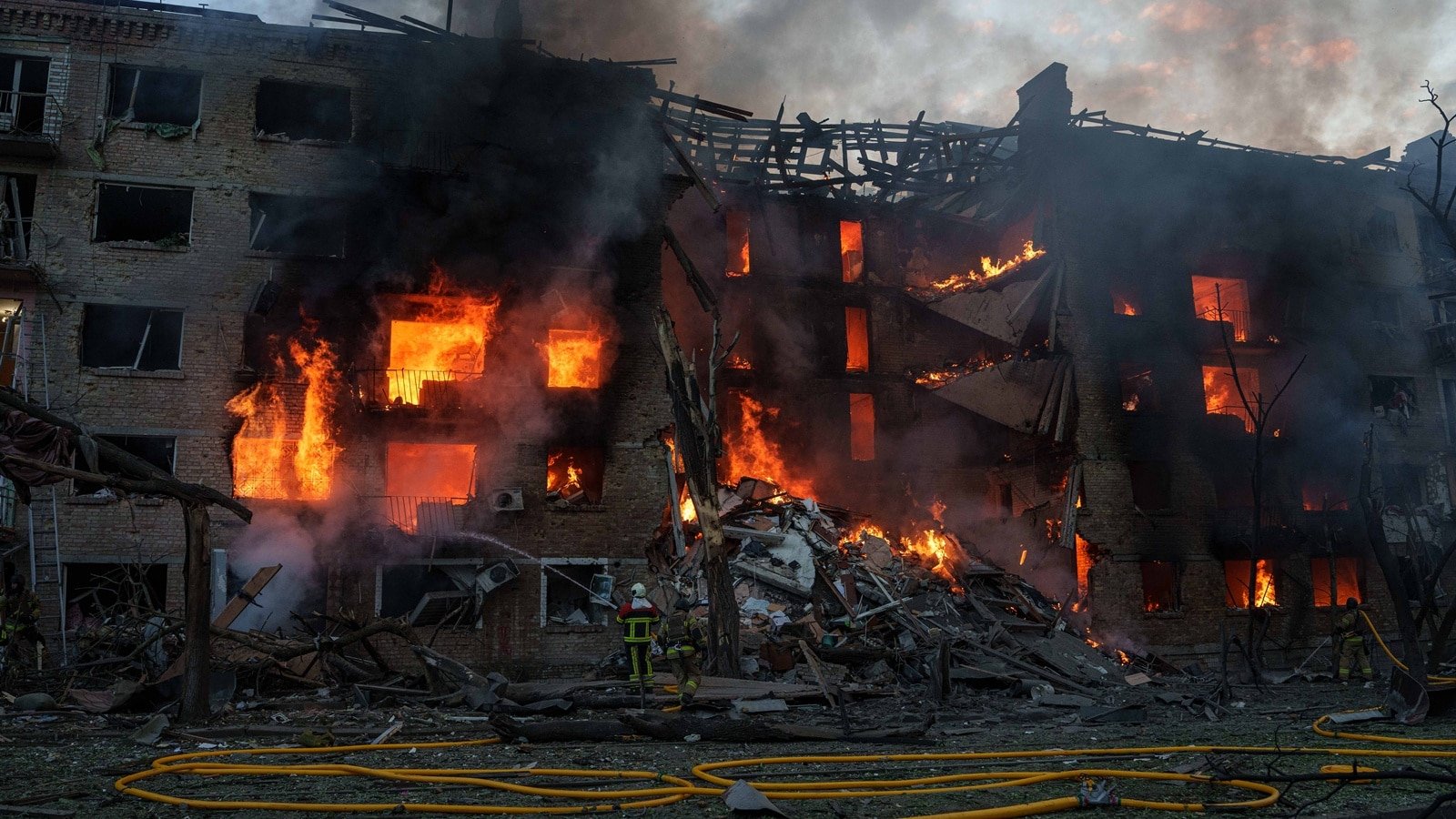
Russia has issued one of its starkest warnings since the start of the Ukraine war, urging foreign nationals and diplomatic missions to leave Kyiv immediately as Moscow prepares what it describes as a “series of systematic strikes” against Ukrainian defence facilities in the capital.
The warning came days after Russia launched one of the largest missile and drone assaults on Kyiv since the full-scale invasion began in February 2022. Moscow now says further attacks are being prepared in retaliation for a Ukrainian strike in the occupied Luhansk region that reportedly killed 18 people.
The escalation has raised fears that the war may be entering another dangerous phase, with both sides increasingly targeting strategic infrastructure while rhetoric from Moscow grows more aggressive.
Russia Issues Rare Public Warning to Foreign Nationals
In a statement posted on social media, Russia’s foreign ministry directly warned diplomats and foreign citizens to leave Kyiv “as soon as possible”.
“Given the continued terrorist attacks by the Kyiv regime against Russian civilians, Russia will be targeting Ukrainian defence industry facilities in Kyiv. Foreign nationals, including diplomatic missions and staff, should leave the city ASAP.”
⚡️ Given the continued terrorist attacks by the Kiev regime against Russian civilians, @mod_russia will be targeting Ukrainian defence industry facilities in Kiev.
Foreign nationals, including diplomatic missions & staff, should leave the city ASAP.https://t.co/yUFj4twX81 pic.twitter.com/9Hu0lPauvH
— MFA Russia 🇷🇺 (@mfa_russia) May 25, 2026
The statement is significant because Russia rarely issues explicit evacuation-style warnings before planned strikes. Analysts say the message appears designed not only as a military signal to Ukraine but also as psychological pressure on Western governments supporting Kyiv.
The warning also increases concerns about the possibility of larger-scale missile operations against government-linked or industrial targets in and around the Ukrainian capital.
What Triggered Russia’s Threat?
Moscow says the planned retaliation follows a Ukrainian drone attack on a student dormitory in Starobilsk, located in the Russian-occupied Luhansk region of eastern Ukraine.
According to Russian officials, the strike killed at least 18 people and injured dozens more. Russia described the attack as terrorism targeting civilians.
Ukraine, however, strongly rejected that accusation.
Ukrainian military officials said the operation targeted an elite Russian drone command unit operating in the area and denied deliberately striking civilians.
The conflicting narratives reflect a familiar pattern throughout the war, where both sides accuse each other of targeting civilian infrastructure while insisting their own operations are focused on military objectives.
Kyiv Already Facing Intensified Attacks
The latest warning follows a massive overnight assault on Kyiv involving missiles and drones that shook the city and damaged residential areas.
Air raid sirens reportedly lasted for hours as Ukrainian Air Defence systems attempted to intercept incoming projectiles.
The recent attacks highlighted several important trends in the war:
- Russia is increasing the scale and frequency of combined missile-drone operations
- Ukraine’s air defence systems remain under sustained pressure
- Civilian areas continue to face collateral damage despite claims of precision targeting
- The conflict is becoming increasingly unpredictable for residents of major cities
Military analysts say Moscow appears to be trying to overwhelm Ukrainian air defence capabilities through repeated saturation attacks.
Why Russia Is Focusing on Kyiv Again
Kyiv carries enormous symbolic, political and strategic importance.
Although front-line fighting remains concentrated in eastern and southern Ukraine, attacks on the capital serve multiple purposes for Moscow.
1. Psychological Pressure
Strikes on Kyiv create nationwide anxiety and demonstrate that no part of Ukraine is fully insulated from the war.
2. Political Messaging
Targeting the capital sends a signal to both Ukrainian leadership and Western allies that Russia retains long-range strike capabilities despite years of sanctions and battlefield losses.
3. Military Disruption
Russia claims it is specifically targeting defence-industrial facilities linked to weapons production, Logistics and military coordination.
4. Strategic Retaliation
The warning also appears intended to deter future Ukrainian strikes inside Russian-held territories or against Russian infrastructure.
What Russia Means by “Systematic Strikes”
The phrase “systematic strikes” suggests Moscow may be preparing a sustained campaign rather than isolated attacks.
In military terms, systematic targeting often refers to repeated operations designed to degrade a specific capability over time.
Potential targets could include:
- Weapons manufacturing facilities
- Drone production sites
- Military logistics hubs
- Energy infrastructure supporting defence production
- Communication and coordination centres
Russia has previously used similar strategies against Ukraine’s energy grid during winter months, aiming to weaken infrastructure and reduce operational capacity.
The Diplomatic Angle: Why the Warning Matters Internationally
The direct call for diplomats to leave Kyiv carries broader geopolitical implications.
Foreign embassies have become important symbols of international support for Ukraine since the war began. Many Western countries reopened or maintained embassy operations in Kyiv even during periods of heavy fighting to demonstrate continued backing for President Volodymyr Zelenskyy’s government.
If diplomatic missions begin reducing staff or temporarily relocating operations again, it could signal growing concern about the security situation in the capital.
However, many governments may also avoid appearing to yield to Russian pressure.
Ukraine’s Expanding Drone Strategy
One reason behind Russia’s increasingly harsh rhetoric is Ukraine’s growing use of long-range drones.
Over the past two years, Ukraine has expanded its ability to strike targets deep behind Russian lines, including:
- Military airfields
- Fuel depots
- Command centres
- Drone launch facilities
- Occupied territories
drone warfare has become one of the defining characteristics of the conflict.
Compared to expensive missiles, drones are cheaper, flexible and harder to intercept consistently. Both Russia and Ukraine now rely heavily on them for surveillance and offensive operations.
This evolving battlefield reality has blurred traditional front lines.
Could Russia Escalate Further?
The latest statements have triggered concerns about whether Moscow is preparing a broader escalation.
Several factors suggest Russia wants to increase pressure:
| Factor | Potential Impact |
|---|---|
| Growing Ukrainian drone strikes | Pushes Russia toward stronger retaliation |
| Pressure on Russian-held territories | Increases urgency for Moscow to respond |
| Military-industrial targeting | Could intensify attacks on Kyiv infrastructure |
| Political signalling to NATO | Attempts to discourage deeper Western involvement |
Still, analysts caution that Russia has repeatedly issued dramatic warnings throughout the war, sometimes as deterrence messaging rather than indicators of immediate escalation.
The War Is Increasingly Moving Beyond the Frontline
One major shift in the conflict is how deeply warfare now affects civilian and urban environments far from active front lines.
Early phases of the war focused heavily on territorial battles. Today, both sides increasingly target logistics, infrastructure and military support systems across broader geographic areas.
This means:
- Cities far from trenches remain vulnerable
- Civilians face constant uncertainty
- Diplomatic and economic centres are exposed
- Infrastructure warfare is becoming central
The warning to diplomats underscores how the distinction between battlefield zones and administrative capitals is becoming increasingly blurred.
How the International Community May Respond
Western governments are likely to monitor the situation carefully before making decisions about embassy operations.
Possible responses could include:
- Enhanced security measures around diplomatic compounds
- Temporary reduction of non-essential staff
- Renewed travel advisories for citizens in Ukraine
- Additional air defence support for Kyiv
- Stronger political condemnation of Russian threats
At the same time, NATO countries will likely avoid actions that could appear overly reactive or suggest panic.
Energy Markets and Global Concerns
Escalation fears also have implications beyond Eastern Europe.
Global markets remain sensitive to developments in the Russia-Ukraine war because the conflict affects:
- Energy prices
- Food exports
- Shipping routes
- Defence spending
- European economic stability
Although Energy Markets have become somewhat more resilient since the early stages of the invasion, major escalations still create volatility in oil, gas and commodity prices.
Why This Moment Feels Different
Russia’s latest messaging stands out because of its combination of military threat and diplomatic warning.
Publicly advising diplomats to leave a capital city is an unusually direct signal. Whether intended as deterrence, psychological warfare or genuine operational warning, it reflects the increasingly dangerous tone surrounding the conflict.
It also comes at a time when:
- Drone warfare is expanding rapidly
- Long-range strikes are becoming more frequent
- Civilian infrastructure remains vulnerable
- Peace negotiations appear distant
The war increasingly resembles a prolonged strategic attrition conflict where military pressure, psychological operations and infrastructure disruption are all deeply intertwined.
Conclusion: Kyiv Braces for Another Dangerous Phase
Russia’s warning that “systematic strikes” are coming to Kyiv marks another sharp escalation in rhetoric during a war already defined by unpredictability and growing technological warfare.
While it remains unclear how extensive the planned operations may be, the combination of missile attacks, drone warfare and public evacuation-style warnings signals rising tension around the Ukrainian capital.
Ukraine, meanwhile, continues expanding its own strike capabilities, particularly through drones targeting Russian-held territories and military infrastructure.
The result is a conflict that increasingly extends far beyond traditional front lines.
For civilians, diplomats and governments watching closely, the latest warning reinforces a sobering reality: more than four years into the war, neither side appears ready to reduce pressure and the risks surrounding Kyiv may be growing once again.
For breaking news and live news updates, like us on Facebook or follow us on Twitter and Instagram. Read more on Latest World on thefoxdaily.com.






COMMENTS 0