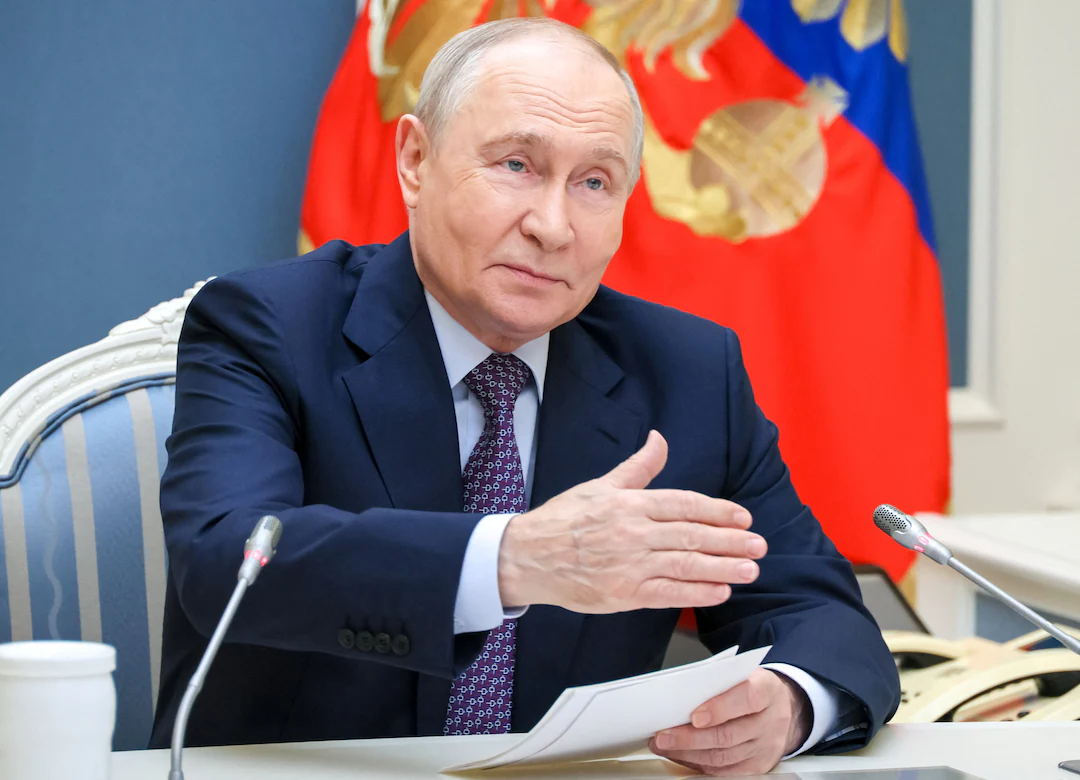
Pope Leo has appealed directly to Russian President Vladimir Putin to permit humanitarian aid and food supplies to enter the Russian-occupied Ukrainian town of Oleshky, where residents are facing a deepening crisis. During a telephone conversation on Friday, October 16, the pope called for a ceasefire to enable essential supplies to reach the town, according to the Vatican.
The appeal highlights growing concern over conditions in parts of Ukraine under Russian occupation, where access to food and medical supplies has become a serious challenge. Oleshky, located in the southern Kherson region, has experienced a sharp population decline since Russia’s full-scale invasion of Ukraine began in February 2022.
The Vatican said Leo expressed “deep concern” about the humanitarian situation in the town and reaffirmed the Holy See’s commitment to supporting initiatives aimed at achieving peace. His intervention places the immediate needs of civilians at the centre of a diplomatic appeal directed at the Russian president.
Pope Calls for Ceasefire to Deliver Food and Humanitarian Supplies
According to the Vatican, Pope Leo asked Putin to facilitate a ceasefire that would allow aid and food supplies to enter Oleshky. The request comes as the town faces an increasingly difficult humanitarian situation, with residents dependent on access to essential goods and services.
A temporary cessation of hostilities could create an opportunity for humanitarian deliveries to reach civilians, although the practical arrangements would depend on cooperation between the parties involved and the security conditions on the ground.
The Vatican did not provide further details about any commitments made during the call or indicate whether Russia had agreed to the pope’s request. The announcement focused on Leo’s appeal, his concern for residents and the Holy See’s willingness to support peace initiatives.
The call represents a diplomatic effort to address an immediate civilian need amid the wider conflict. Rather than focusing solely on the broader political and military issues surrounding the war, the pope’s appeal centred on ensuring that people in Oleshky can obtain food and other essential supplies.
For residents remaining in the town, access to humanitarian assistance could be critical as the crisis deepens. The presence of children among the population also underscores the importance of maintaining reliable access to food, medical care and other necessities.
Oleshky Faces a Deepening Food Crisis
Oleshky had a pre-war population of approximately 24,000 people. According to Danielle Bell, head of the United Nations Human Rights Monitoring Mission in Ukraine, around 1,700 residents remain in the town, including 47 children.
The dramatic reduction in population reflects the impact of the war and the conditions that have shaped civilian life in the area since Russian forces took control in February 2022. The remaining residents face a humanitarian situation that has raised concerns among international officials.
Food shortages can have particularly serious consequences for people who cannot easily leave an affected area or obtain supplies through alternative routes. Children, older people and residents with medical needs can face additional risks when access to basic goods becomes unreliable.
The Vatican’s statement did not specify the quantity of food available in Oleshky, how long existing supplies might last or the precise number of people requiring urgent assistance. However, its description of a worsening food crisis indicates that the situation has become a significant concern.
The population figures provided by Bell offer an indication of the scale of the challenge. Although the town’s current population is only a fraction of its pre-war size, those who remain still require dependable access to food, healthcare and other essential services.
Humanitarian deliveries into conflict-affected and occupied areas can be complicated by security restrictions, damaged infrastructure and disagreements over access. A ceasefire intended to facilitate aid would therefore need to translate into practical arrangements that allow supplies to reach civilians safely.
Russia Acknowledges Supply Problems but Blames Ukraine
Russia has acknowledged that Oleshky is experiencing critical problems with food and medical supplies. Russian authorities have said their military is working to resolve the shortages, while blaming Ukraine for obstructing the delivery of supplies to the town.
The competing accounts underline the difficulties surrounding humanitarian access in an area affected by the ongoing war. While Russia has recognised the supply problems, its explanation for the crisis differs from the emphasis placed by the Vatican on the urgent need for a ceasefire to enable deliveries.
The available statements do not independently establish responsibility for the obstacles to aid entering Oleshky. Determining the causes of the shortages and the conditions preventing supplies from reaching residents would require further information about access routes, security restrictions and the arrangements governing deliveries.
Nevertheless, Russia’s acknowledgement of critical shortages points to the seriousness of the situation. Food and medical supplies are essential for civilians who remain in the town, and delays in delivering them could further increase the risks facing vulnerable residents.
Pope Leo’s appeal seeks to create conditions in which humanitarian assistance can reach those in need, regardless of the wider disagreements between Moscow and Kyiv. The request for a ceasefire reflects the practical importance of reducing immediate security barriers to aid deliveries.
Whether the appeal leads to concrete steps remains unclear. The Vatican’s announcement did not indicate that an agreement had been reached, and Russia’s stated position continues to place responsibility for the supply difficulties on Ukraine.
Leo and Putin Have Spoken Before
The October 16 conversation was only the second publicly known phone call between Pope Leo and Putin. The two previously spoke in June 2025, establishing an earlier channel of direct communication between the Vatican and the Russian president.
The latest call demonstrates the Holy See’s continued willingness to engage directly with political leaders as part of its efforts to support peace and address humanitarian concerns connected to the war in Ukraine.
The Vatican said Leo reaffirmed the Holy See’s commitment to any initiatives for peace. The statement did not detail a new peace proposal or announce a specific diplomatic framework arising from the conversation.
The distinction is important because calls for peace and humanitarian access do not necessarily translate into an immediate agreement between the parties. Even when leaders express concern about civilian suffering, implementation depends on decisions by the authorities and forces controlling access to affected areas.
In this instance, the pope’s message focused on a specific and urgent objective: enabling food and humanitarian supplies to reach Oleshky. The appeal offers a defined humanitarian priority even as the broader conflict remains unresolved.
The Vatican’s role in promoting peace initiatives also places the call within a wider diplomatic context. Religious leaders and institutions can use direct communication with political authorities to draw attention to civilian needs, although their influence depends on whether governments respond to their appeals.
Pope Leo Recovering After Lung Cancer Surgery
The phone call took place as Pope Leo was recovering at Rome’s Gemelli hospital following surgery for lung cancer. The Vatican said on Friday that his condition was showing steady improvement and that he was able to work and carry out normal daily activities.
The update indicated that the pope remained engaged in his responsibilities while recovering. The Vatican did not provide additional medical details in the statement about the call, and its announcement focused on his reported progress and ability to continue working.
Leo’s appeal to Putin demonstrates his continued involvement in international issues during his recovery. His intervention on Oleshky also reflects the Vatican’s emphasis on the humanitarian consequences of the war and the need to support initiatives that could reduce civilian suffering.
The pope’s health remains separate from the practical question of whether humanitarian access can be secured. The immediate outcome of his appeal will depend on developments on the ground and the willingness of the relevant authorities to permit aid deliveries.
Why Humanitarian Access Matters for Civilians in Occupied Ukraine
Access to food and medical supplies is a central concern in areas where fighting, occupation or restrictions on movement disrupt ordinary civilian life. When supply routes are blocked or deliveries become unreliable, residents may struggle to obtain even basic necessities.
For Oleshky, the reported presence of around 1,700 people, including 47 children, gives the humanitarian appeal a clear civilian focus. The town’s reduced population does not diminish the needs of those who remain, particularly if they have limited ways to obtain essential goods.
Food shortages can also compound other difficulties. People who lack adequate nutrition may be less able to cope with illness, while shortages of medical supplies can make existing health problems harder to manage. Children and people with ongoing medical needs may be particularly vulnerable when services and supplies are disrupted.
Humanitarian access requires more than an announcement that assistance is available. Supplies must be able to travel through accessible routes, reach their intended destinations and be distributed to residents. Security arrangements and cooperation from the authorities controlling relevant territory can therefore determine whether aid reaches those who need it.
A ceasefire could help create an opportunity for deliveries, but its effectiveness would depend on how it was implemented and whether humanitarian movements were permitted in practice. The Vatican’s statement did not specify the proposed duration of a ceasefire or the operational arrangements that might govern any aid mission.
The situation also illustrates the distinction between acknowledging a Humanitarian Crisis and resolving it. Russia has recognised critical problems with food and medical supplies, while the Vatican has called for a ceasefire to allow assistance into the town. The next significant development would be evidence that these concerns are being translated into safe and reliable access for civilians.
What Happens Next?
For now, the Vatican has announced Pope Leo’s appeal but has not reported an agreement from Putin to establish a ceasefire or facilitate deliveries into Oleshky. It also has not announced a timetable for humanitarian assistance or confirmed that new supplies have reached the town.
Russia has said its military is working to address the supply problems, while continuing to blame Ukraine for obstructing deliveries. The competing positions leave questions about access and responsibility unresolved.
The immediate priority remains the welfare of civilians who continue to live in Oleshky. With around 1,700 residents reportedly remaining, including children, access to food and medical supplies is essential to preventing the situation from deteriorating further.
Pope Leo’s direct appeal to Putin has brought renewed attention to those needs and called for a ceasefire to make humanitarian deliveries possible. Whether the call produces a practical breakthrough will depend on the response from Russian authorities and the conditions governing aid access in the occupied town.
The Vatican has reiterated its commitment to peace initiatives, while the humanitarian situation in Oleshky remains a pressing concern. Until reliable access to essential supplies is secured, residents will continue to face uncertainty over their ability to obtain the food and medical assistance they need.
For breaking news and live news updates, like us on Facebook or follow us on Twitter and Instagram. Read more on Latest World on thefoxdaily.com.


COMMENTS 0