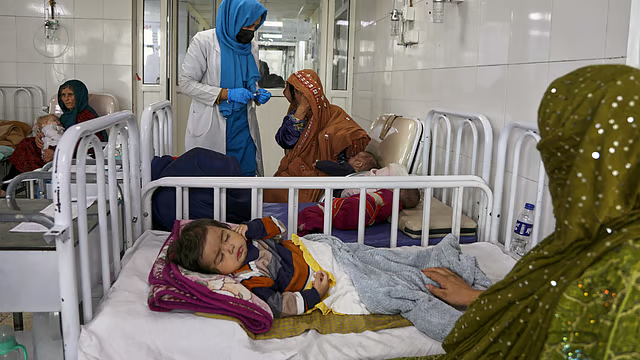
Afghanistan is facing an escalating Humanitarian Crisis as child malnutrition reaches its highest recorded levels across large parts of the country. The United Nations World Food Programme (WFP) has warned that a combination of shrinking international aid, Health facility closures, supply disruptions and worsening economic conditions is leaving millions of children and women without the nutrition support they urgently need.
According to the UN agency, nearly 3.7 million Afghan children are projected to suffer from acute malnutrition this year, alongside approximately 1.2 million pregnant and breastfeeding women. The warning comes as humanitarian organizations report that available resources are no longer sufficient to meet rapidly growing needs.
The latest assessment highlights not only the scale of the crisis but also the growing pressure on Afghanistan’s already fragile Healthcare and humanitarian systems. Aid agencies say immediate financial support will be critical to prevent further deterioration during the country’s peak malnutrition season.
UN Warns of Record Levels of Child Malnutrition
The World Food Programme said acute child malnutrition has reached critical levels in 12 of Afghanistan’s provinces, the highest number ever recorded in the country.
The agency warned that conditions are expected to worsen further unless additional humanitarian funding becomes available.
John Aylieff, WFP’s Country Director for Afghanistan, described the situation as an urgent humanitarian emergency, warning that delays in assistance could lead to more preventable child deaths.
The assessment reflects a significant deterioration compared with previous years and underscores the growing pressure facing humanitarian organizations operating across the country.
Millions of Children and Mothers Need Nutritional Support
According to the WFP’s latest projections, those expected to require assistance this year include:
| Group | Projected Number |
|---|---|
| Children facing acute malnutrition | Nearly 3.7 million |
| Pregnant and breastfeeding women requiring support | Approximately 1.2 million |
| Provinces at critical child malnutrition levels | 12 |
These figures illustrate the widespread Nature of the crisis, affecting vulnerable populations across multiple regions of Afghanistan.
What Is Acute Malnutrition?
Acute malnutrition refers to a serious nutritional condition in which individuals, particularly children, do not receive enough nutrients to maintain healthy growth and development.
One of its most severe forms is known as wasting, a condition in which children become dangerously thin relative to their height.
Children experiencing wasting require prompt therapeutic feeding and medical care because prolonged malnutrition significantly increases the risk of illness and death.
Humanitarian agencies consider wasting one of the most urgent indicators of food insecurity and public health distress.
UN Reports Worsening Wasting Across Most of the Country
Olga Cherevko, spokesperson for the UN humanitarian office in Afghanistan, said nutrition specialists have observed worsening rates of child wasting across more than three-quarters of the country this year.
She noted that many children arrive at healthcare facilities only after becoming severely malnourished, while others never reach treatment at all.
These observations are based on assessments conducted by humanitarian personnel working across different parts of Afghanistan in recent months.
The findings suggest that access to timely treatment has become increasingly difficult for many vulnerable families.
Funding Cuts Have Forced Health Centre Closures
One of the principal drivers of the worsening crisis is the reduction in humanitarian funding.
According to the WFP:
- 142 health centres closed during 2025 because of aid reductions.
- More than 13,000 children consequently lost access to nutrition treatment.
The agency did not identify any specific donor when discussing the funding shortfalls.
The closure of healthcare facilities has reduced access to essential nutrition programmes in areas where humanitarian assistance is often the primary source of medical support.
Multiple Factors Are Driving the Crisis
While funding shortages are a major concern, humanitarian agencies say the emergency is being intensified by several interconnected challenges.
According to the WFP, contributing factors include:
- Years of conflict and instability.
- High unemployment.
- Rising food prices.
- Disease outbreaks.
- Poor access to clean water and sanitation.
- Declining humanitarian funding.
Together, these pressures have weakened household Food Security and increased the number of families requiring humanitarian assistance.
Supply Disruptions Have Reduced Nutrition Services
The WFP also reported that nutrition supplies have been disrupted by conflict in the Middle East and the prolonged closure of Pakistan’s border due to fighting.
According to the agency, these disruptions have interrupted deliveries of specialized nutrition products used to treat malnutrition.
As a result, nearly one million malnourished women and children have reportedly been without essential nutrition services for approximately five months.
The supply constraints have added another layer of difficulty for humanitarian agencies already struggling with limited financial resources.
Food Assistance Faces Suspension During Peak Malnutrition Season
The WFP has warned that food distributions designed to prevent famine in the most severely affected areas will be suspended from August through October because of insufficient funding.
This period coincides with Afghanistan’s annual peak malnutrition season, which generally falls between July and October.
The timing has heightened concern among humanitarian organizations because reduced assistance during the period of greatest nutritional need could further increase health risks for vulnerable communities.
The agency says it urgently requires USD 540 million over the next six months to continue its operations.
Funding Has Declined Even as Needs Continue to Grow
According to a recent WFP report cited in the available information, funding for food assistance has declined by approximately 59 percent since 2022, despite rising humanitarian needs.
Earlier this year, WFP officials warned that financial constraints were forcing the organization to turn away a large proportion of acutely malnourished children who would otherwise qualify for treatment.
The widening gap between available funding and humanitarian requirements has become one of the most significant challenges facing aid agencies operating in Afghanistan.
Broader Humanitarian Appeal Remains Underfunded
The nutrition emergency forms part of a wider humanitarian crisis affecting the country.
According to the UN humanitarian office, the overall humanitarian appeal for Afghanistan totals USD 1.71 billion.
Officials say the appeal is currently funded at just over 26 percent, leaving substantial unmet needs across multiple sectors, including food assistance, healthcare, sanitation and emergency relief.
Humanitarian agencies describe the funding level as deeply concerning given the worsening conditions reported across the country.
International Assistance Continues but Challenges Remain
The available information notes that the United States pledged USD 800 million to the World Food Programme in June.
According to the agency, the funding is intended to support more than 38 million people across at least 37 countries.
While such contributions provide critical support to global humanitarian operations, the WFP continues to emphasize that Afghanistan faces significant funding gaps requiring additional international assistance.
Timeline of Recent Developments
| Development | Status |
|---|---|
| Funding for food assistance since 2022 | Down by about 59% |
| Health centres closed during 2025 | 142 facilities |
| Children losing nutrition treatment access | More than 13,000 |
| Food distributions in worst-hit areas | Planned suspension from August to October due to funding shortages |
What Could Happen Next?
The immediate outlook will largely depend on whether humanitarian agencies can secure additional funding quickly enough to maintain food assistance and nutrition programmes during the coming months. The World Food Programme has indicated that continued operations require substantial financial support, particularly as Afghanistan enters its annual period of heightened malnutrition risk.
If funding gaps persist, aid organizations may be forced to reduce services further, limiting access to therapeutic feeding, healthcare and emergency food assistance for vulnerable children and mothers. Conversely, additional international support could help restore nutrition services, reopen treatment programmes and reduce the number of people left without essential care.
For now, humanitarian agencies continue to warn that Afghanistan’s malnutrition crisis is deepening. With record numbers of children and women requiring assistance, shrinking resources and ongoing supply disruptions, the coming months are expected to be critical in determining whether lifesaving nutrition programmes can continue reaching those most at risk.
For breaking news and live news updates, like us on Facebook or follow us on Twitter and Instagram. Read more on Latest World on thefoxdaily.com.





COMMENTS 0