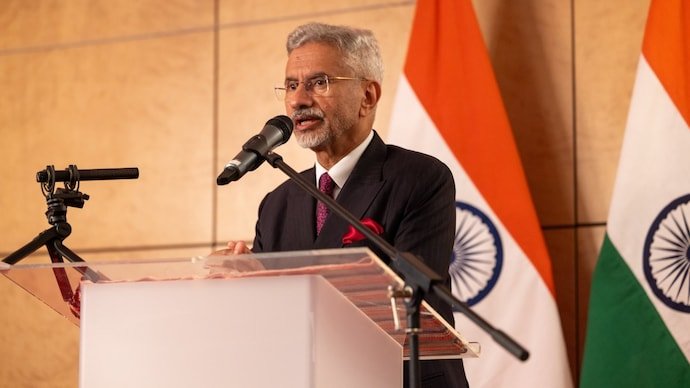
External Affairs Minister S Jaishankar is set to address the high-level General Debate of the 81st United Nations General Assembly on September 26, placing India’s foreign policy at the centre of one of the busiest diplomatic gatherings of the year.
Jaishankar’s scheduled appearance comes as governments confront a difficult international Environment marked by continuing armed conflicts, economic uncertainty, climate-related risks and growing pressure on multilateral institutions. The annual UN gathering will bring together leaders and senior representatives from the organisation’s 193 member states for a week of speeches, bilateral meetings and high-level discussions.
The 81st session of the General Assembly is scheduled to begin on September 8, while the main General Debate will take place from September 22 through September 28, with another day of debate scheduled on September 28. Jaishankar is listed to speak during the afternoon session on September 26.
His speech will give India an opportunity to outline its position on major international issues while highlighting the country’s priorities on global security, economic cooperation, development, climate action and reform of international institutions.
Jaishankar’s UNGA address comes at a critical moment
The timing of this year’s General Assembly session is significant. The United Nations is convening world leaders as several international crises continue to place pressure on diplomacy and multilateral cooperation.
Wars and prolonged geopolitical confrontations have disrupted trade, energy markets and food supplies across regions. At the same time, developing countries are dealing with the effects of higher costs, climate vulnerabilities and limited financial space for development.
Against this backdrop, speeches at the General Debate are closely watched because governments use the UN podium to communicate national positions directly to a global audience. For India, Jaishankar’s address will be an opportunity to explain New Delhi’s approach to a rapidly changing international order.
India has increasingly emphasized strategic autonomy, multipolarity, national development and greater representation for developing countries within global institutions. Those themes are likely to remain relevant as countries debate how international organisations should respond to today’s conflicts and economic pressures.
When will Jaishankar speak at the UN?
According to the revised provisional list of speakers, Jaishankar is scheduled to address the General Debate on the afternoon of September 26.
The General Debate itself begins on September 22 and provides the main platform for heads of state, heads of government and senior ministers to present their views before the international community.
Jaishankar also addressed the UN General Assembly in the previous session, making his latest appearance part of India’s continuing high-level engagement with the organisation. His speeches at the UN have often combined immediate geopolitical concerns with broader arguments about reforming global institutions.
The order of speakers can change because of diplomatic schedules and last-minute adjustments, so the provisional list should be viewed as the planned arrangement rather than an immutable sequence.
US President Donald Trump also set to address world leaders
The opening day of the General Debate will feature major international figures, with Brazil traditionally opening the debate before the United States takes the floor.
US President Donald Trump is scheduled to address the General Assembly on September 22. The appearance is expected to attract substantial attention because it will be his second address to the UN during his second presidential term.
The opening speeches from the United States and other major powers often establish some of the dominant themes of the diplomatic week. Positions taken by Washington on conflicts, sanctions, trade, energy and international institutions can shape discussions throughout the remainder of the session.
For India, the presence of major global powers at the same gathering creates an opportunity for high-level engagement even beyond the formal General Debate. The week traditionally includes a large number of bilateral and multilateral meetings on the margins of the UN programme.
Bangladesh to preside over the 81st General Assembly
The year-long 81st session of the UN General Assembly will be presided over by Khalilur Rahman of Bangladesh, who was elected to lead the 193-member body in June.
The presidency carries responsibility for guiding debates, managing the assembly’s agenda and helping member states navigate negotiations on a wide range of international issues. The choice of Bangladesh also highlights the continued role of developing countries in the leadership of the General Assembly.
The leadership transition comes at a time when many governments are calling for stronger international cooperation but disagreeing sharply over how that cooperation should work.
Questions surrounding representation, financing, development, peace and security are likely to remain central throughout the session.
Bangladesh, Nepal and Pakistan also scheduled to speak
The General Debate will feature leaders from South Asia as well as other regions. The heads of government of Bangladesh and Nepal are scheduled to address the assembly on September 24, while Pakistan is listed for September 25.
The concentration of South Asian leaders during the same diplomatic period could create additional opportunities for regional conversations alongside the formal proceedings.
For India, the UN platform also provides space to reinforce its position on regional stability, economic development, terrorism, connectivity and the interests of developing economies. However, the formal address is expected to be framed within India’s broader global diplomatic priorities rather than focusing solely on regional issues.
Conflicts will dominate the diplomatic backdrop
One of the biggest challenges facing this year’s UN gathering is the continuation of major armed conflicts and their wider economic consequences.
Ongoing wars have affected energy supplies, Shipping routes, food prices and international trade. Disruptions to critical maritime routes can have consequences far beyond the countries directly involved in a conflict, particularly for economies that depend heavily on imported fuel, food or manufactured goods.
The situation in and around the Strait of Hormuz has been particularly important to global markets because the waterway is a critical route for energy shipments. Prolonged instability in such a strategically important corridor can increase transportation costs and add to inflationary pressure in countries that are already vulnerable to higher energy prices.
These challenges have increased the importance of diplomatic efforts aimed at preventing conflicts from widening and reducing the economic costs imposed on countries that are not directly involved in the fighting.
Climate change will be another major UNGA theme
Geopolitical crises will not be the only focus of the 81st General Assembly. Climate action, energy transitions and the consequences of environmental changes are also prominent in the high-level programme.
A high-level meeting on climate action and the just transition is scheduled during the session. The concept of a just transition has become increasingly important as governments attempt to cut emissions while protecting jobs, economic growth and vulnerable populations.
For developing countries such as India, the issue also involves access to affordable energy, climate finance and technology. Rapid economic growth and rising energy demand create a complicated policy balance between development needs and long-term climate commitments.
India has repeatedly argued in international forums that climate action must account for differences in historical responsibility, development levels and access to financial and technological resources.
Sea level rise and vulnerable countries in focus
The General Assembly programme also includes a high-level meeting on the existential threats posed by sea level rise.
Rising seas are particularly dangerous for low-lying island states and coastal communities, where even gradual increases in sea levels can damage infrastructure, contaminate freshwater supplies and increase the risks from storms and flooding.
The issue illustrates why climate negotiations at the UN increasingly extend beyond emissions targets. Countries are also seeking stronger international support for adaptation, resilience, disaster preparedness and recovery from climate-related losses.
The debate is especially relevant to the Global South, where many countries face significant climate risks despite having relatively limited financial resources to address them.
Development and the right to development under discussion
Another major event during the session will commemorate the 40th anniversary of the Declaration on the Right to Development.
The discussion is expected to focus attention on the continuing gap between economic growth, social development and access to opportunities across countries and communities.
For India and other developing economies, the right to development remains closely connected with issues such as access to technology, infrastructure, health, education, energy and global financing.
The debate also reflects a larger question facing the international system: how can countries pursue development while dealing with climate constraints, debt pressures, conflicts and disruptions to international trade?
Nuclear risks and pandemic preparedness remain on the agenda
The UN programme includes discussions on several other global risks, including pandemic preparedness and response and nuclear weapons.
A high-level plenary meeting will be held to commemorate and promote the International Day for the Total Elimination of Nuclear Weapons. Nuclear disarmament has remained one of the longest-running issues on the UN agenda, but renewed geopolitical tensions have increased concerns about arms races, deterrence and strategic stability.
The pandemic agenda reflects another lesson from recent years. Governments continue to debate how international institutions should prepare for future disease outbreaks, improve early warning systems and coordinate responses without disrupting essential trade and public services.
These topics demonstrate the wide range of issues that the General Assembly must address even while wars and geopolitical rivalries dominate headlines.
A major leadership transition is approaching at the UN
This year’s General Assembly session will also take place during an important transition at the top of the United Nations.
António Guterres is scheduled to complete his second five-year term as UN Secretary-General in December. The process to select his successor is already underway, making the 81st session one of the final major high-level gatherings during Guterres’ tenure.
The succession process is attracting particular attention over the question of whether a woman could become the first female Secretary-General in the UN’s history.
The next Secretary-General will inherit an organisation facing pressure from multiple directions, including conflicts, humanitarian emergencies, funding challenges, geopolitical divisions and questions about the effectiveness of multilateral institutions.
What India may emphasize at the UN
Jaishankar’s September 26 address is likely to be closely watched for India’s assessment of the international environment and its priorities for global cooperation.
New Delhi has positioned itself as a major voice for developing countries and has frequently called for reforms that make global institutions more representative of contemporary economic and political realities.
India’s diplomatic messaging is also likely to reflect its effort to maintain relationships with competing power centres while protecting its own strategic interests. The country’s foreign policy has increasingly involved engagement with the United States, Europe, Russia, the Gulf region, Africa and the wider Indo-Pacific at the same time.
This balancing approach is particularly relevant during periods of geopolitical confrontation, when governments face pressure to align themselves more clearly with one side or another.
Why Jaishankar’s September 26 speech matters
The significance of Jaishankar’s UN appearance extends beyond the speech itself. The General Assembly week is one of the most important periods on the international diplomatic calendar, bringing together governments that may otherwise have limited opportunities for direct engagement.
India’s presence at the highest political level allows New Delhi to communicate its views on conflict, development, Energy Security, climate policy and multilateral reform while participating in negotiations and bilateral meetings outside the main chamber.
For the international community, India’s position matters because the country is one of the world’s largest economies, a major developing power and an increasingly influential actor in Global Diplomacy.
For India, the UN platform offers a way to present its priorities to a broad audience at a moment when the global system is under unusual strain.
A UN General Assembly shaped by uncertainty
The 81st UN General Assembly will bring together leaders at a time when the international system is facing several overlapping crises. Wars are affecting global markets, climate risks are becoming harder to ignore, and governments continue to debate how institutions created decades ago should respond to today’s geopolitical realities.
Against that backdrop, S Jaishankar’s scheduled address on September 26 will be an important opportunity for India to put its foreign-policy priorities on the global record.
The speech will take place during a week dominated by diplomacy, but its impact will depend not only on the words delivered from the UN podium. The meetings, negotiations and strategic conversations taking place around the General Assembly will help shape the international agenda for the months ahead.
As the United Nations moves toward another leadership transition and governments confront conflicts, climate threats, development challenges and questions over multilateral cooperation, India’s message at the General Assembly is likely to receive attention well beyond September 26.
For breaking news and live news updates, like us on Facebook or follow us on Twitter and Instagram. Read more on Latest World on thefoxdaily.com.




COMMENTS 0