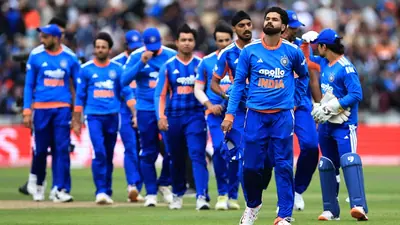
Just months after celebrating global success and reinforcing their position among the strongest T20 sides in international cricket, India suddenly find themselves facing uncomfortable questions. Consecutive defeats, inconsistent performances, and visible tactical struggles have transformed what was expected to be a routine overseas assignment into a period of intense scrutiny.
While technical issues, team selection, and unfamiliar conditions have all played a role, one debate has gained significant attention: has the rapid appointment of Shreyas Iyer as captain disrupted the team’s chemistry?
Leadership transitions are rarely simple in elite sport. When they happen abruptly, especially in a high-pressure environment like Indian cricket, the effects can extend beyond tactical decisions and directly influence dressing-room dynamics, communication, and player confidence.
The bigger question is not whether Shreyas Iyer is capable of leading India. His domestic and franchise captaincy record speaks for itself. Instead, the discussion revolves around whether the timing and manner of his appointment created challenges that the team is still attempting to overcome.
India’s Sudden Decline Raises Difficult Questions
For a team that recently looked nearly unbeatable in the shortest format, India’s performances in the UK have been surprising.
The batting unit has appeared inconsistent, bowling plans have occasionally lacked clarity, and fielding standards have not always matched expectations. More importantly, the side has struggled to display the confidence and cohesion that usually define successful international teams.
Such downturns are common in sport, but the timing has intensified scrutiny because they have coincided with a major leadership change.
Whenever results deteriorate shortly after a new captain takes charge, attention naturally shifts toward team culture and leadership integration.
Why Leadership Changes Matter More Than Fans Realize
Many supporters view captaincy primarily as an on-field responsibility. In reality, modern cricket captains influence nearly every aspect of team functioning.
A captain serves as:
- The primary link between players and coaching staff.
- The architect of on-field tactics.
- The emotional leader during pressure situations.
- The voice of the team in public settings.
- The individual responsible for creating unity within the squad.
When leadership changes occur, players must adjust to new expectations, communication styles, and strategic philosophies.
Even talented teams can require time to adapt.
The Unusual Nature of Shreyas Iyer’s Appointment
One factor that makes this transition particularly unique is the route through which Iyer became captain.
Typically, national teams groom future leaders over several years. Vice-captains, senior performers, or long-term squad members gradually move into leadership positions.
In India’s case, the transition took a different path.
Iyer returned to the T20I setup and was immediately entrusted with captaincy responsibilities despite not being a regular fixture in the format for an extended period.
This decision reflected the selectors’ confidence in his leadership abilities, but it also introduced challenges that more gradual transitions often avoid.
| Traditional leadership transition | Iyer’s Appointment Scenario |
|---|---|
| Vice-captain promoted | Direct appointment |
| Long-term squad integration | Recent return to setup |
| Extended preparation period | Limited bonding time |
| Gradual authority building | Immediate leadership responsibility |
Does Team Bonding Really Affect Performance?
Sports psychology research consistently highlights the importance of team cohesion in elite performance.
Strong teams are not merely collections of talented individuals. They are groups that trust one another, understand their roles, and communicate effectively under pressure.
When players have confidence in their captain and share a collective understanding of expectations, decision-making often becomes smoother.
Conversely, periods of transition can create uncertainty, especially if players are still adapting to new leadership structures.
This does not necessarily mean there is dissatisfaction within the squad. Rather, it highlights the reality that relationships take time to develop.
The Challenge of Building Authority Quickly
One of the most difficult tasks for any new captain is establishing authority without disrupting existing relationships.
In international cricket, this challenge becomes even greater because many players have established reputations, leadership aspirations, and strong personalities.
Building trust is not an overnight process.
Captains earn credibility through:
- Consistent communication.
- Clear tactical thinking.
- Strong performances.
- Fair decision-making.
- The ability to support teammates during difficult moments.
For Iyer, the compressed schedule has limited opportunities to develop these relationships outside match situations.
Shreyas Iyer’s Leadership Credentials Are Strong
Criticism of India’s recent performances should not overshadow Iyer’s impressive leadership résumé.
His success in franchise cricket demonstrates his ability to manage high-pressure environments and diverse squads.
Leading teams deep into major tournaments requires tactical intelligence, emotional maturity, and the ability to unite players around a common objective.
Those qualities helped establish his reputation as one of Indian cricket’s emerging leaders.
His appointment was not based on potential alone. It was based on proven success in competitive environments.
The Scheduling Problem Nobody Is Talking About
One overlooked aspect of India’s struggles is the lack of preparation time.
Modern international cricket schedules leave very little room for teams to adjust after major changes.
Players often move directly from one series to another with minimal opportunity for team-building activities, strategic discussions, or adaptation to new conditions.
In this case, India entered a demanding overseas tour shortly after previous commitments, leaving little time for a new captain to establish his methods.
This may be one of the most important factors influencing the team’s current challenges.
England Conditions Have Exposed Existing Weaknesses
While leadership has become a talking point, India’s struggles cannot be attributed solely to captaincy.
English conditions traditionally test visiting teams in unique ways.
Bowlers benefit from movement, batters must adjust to different bounce patterns, and weather conditions can influence match situations dramatically.
Successful overseas tours require adaptability, something India has not consistently demonstrated so far.
These challenges would have existed regardless of who held the captaincy.
The Importance of Dressing-Room Stability
Elite teams often perform best when players feel secure in their roles.
Frequent changes to leadership structures, team combinations, or tactical approaches can create uncertainty.
This is why many successful international sides prioritize continuity.
Stable environments allow players to focus on performance rather than adjusting to organizational changes.
India currently finds itself balancing two objectives:
- Winning matches immediately.
- Building a sustainable leadership structure for the future.
Achieving both simultaneously is rarely straightforward.
Could Early Success Change Everything?
One reality of professional sport is that victories often accelerate acceptance.
Winning creates confidence, reduces external pressure, and strengthens belief in leadership.
Many successful captains faced criticism during difficult starts before eventually earning widespread support.
A strong performance in upcoming matches could quickly shift the narrative surrounding Iyer’s captaincy.
Momentum remains one of the most powerful forces in sport.
A Comparison With Previous Indian Captaincy Transitions
Indian cricket has experienced several major leadership transitions over the years.
| Captaincy Era | Transition Style | Adjustment Period |
|---|---|---|
| MS Dhoni Era | Gradual leadership growth | Moderate |
| Virat Kohli Era | Structured succession | Limited |
| Rohit Sharma Era | Experienced senior replacement | Minimal |
| Shreyas Iyer Era | Rapid transition | Ongoing |
The current transition differs because it combines leadership change, team evolution, and challenging overseas conditions simultaneously.
Unique Insight: The Bigger Issue May Be Succession Planning
The debate surrounding Iyer’s appointment reveals a larger structural question.
Should a cricket powerhouse like India have clearer leadership succession plans?
Top sporting organizations often identify future captains years in advance, allowing them to develop leadership experience before assuming full responsibility.
The current discussion suggests that India’s leadership pipeline may still be evolving.
If anything, the controversy highlights the importance of long-term planning rather than reflecting negatively on Iyer himself.
What the Next Few Months Could Determine
The coming months may prove decisive for both India’s T20 future and Iyer’s captaincy journey.
Results will matter, but so will visible signs of progress.
Selectors and supporters will be watching for:
- Improved team cohesion.
- Clearer tactical execution.
- Better performances in pressure situations.
- Strong communication between players and leadership.
- Consistent results across different conditions.
If those elements improve, concerns about team chemistry may quickly fade.
Conclusion
India’s disappointing performances in the UK have inevitably raised questions about leadership, team dynamics, and preparation. While the lack of bonding time between Shreyas Iyer and his teammates may have contributed to early challenges, it is unlikely to be the sole reason behind the team’s struggles.
International cricket is influenced by multiple factors, including conditions, form, tactics, confidence, and squad balance. However, leadership transitions do require time, especially when they occur as suddenly as this one.
Shreyas Iyer possesses the credentials, experience, and cricketing intelligence to succeed as India’s captain. The greater challenge lies in building relationships, establishing a clear vision, and helping the team adapt during a demanding period.
The coming matches may ultimately determine whether this difficult start becomes a temporary setback or the beginning of a successful new era in Indian cricket. For now, patience may be just as important as performance.
For breaking news and live news updates, like us on Facebook or follow us on Twitter and Instagram. Read more on Latest Sports on thefoxdaily.com.






COMMENTS 0