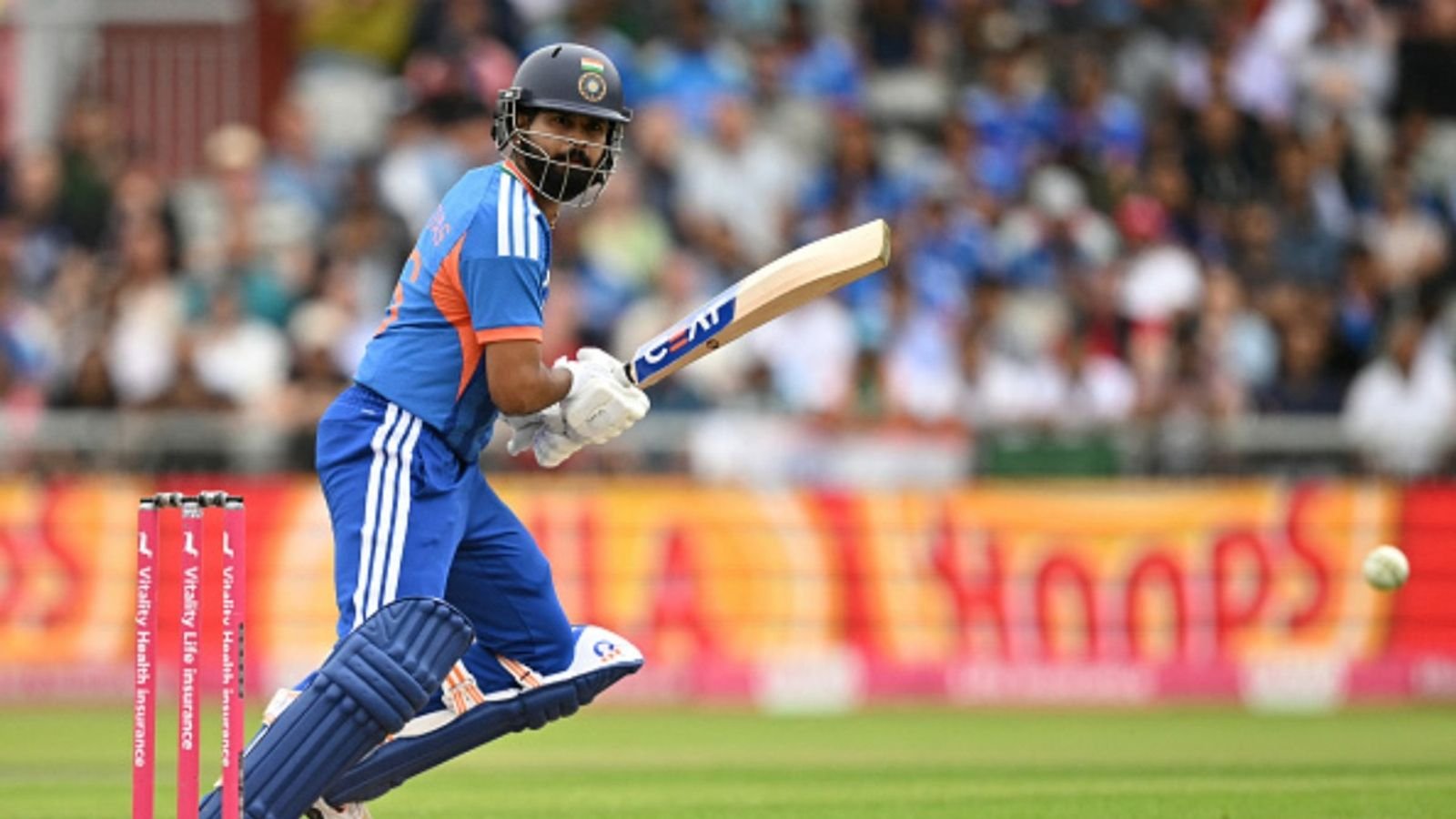
India’s defeat in the second T20I against England not only put the visitors under pressure in the five-match series but also saw Shreyas Iyer register an unfortunate captaincy milestone in Indian cricket history.
England continued their impressive run in the ongoing T20I series by defeating India in the second match at Old Trafford, Stretford. While the result strengthened England’s position in the series, it also brought unwanted attention to Indian captain Shreyas Iyer, who became the first Indian skipper to remain winless in his first four T20 International matches as captain.
The record highlights the challenging start to Iyer’s leadership journey at the international level. Although captaincy records often fail to tell the complete story, the statistic reflects the difficulties India has faced during a transitional phase as the team looks to establish a new leadership group in the shortest format.
With the T20 World Cup cycle already underway, the pressure is mounting on both the captain and the squad to quickly find winning combinations before major tournaments arrive.
Shreyas Iyer’s Unwanted T20I Captaincy Record
Following India’s defeat against England in the second T20I, Shreyas Iyer became the first Indian captain to go through his first four T20I matches without registering a victory.
Indian cricket has witnessed several successful T20I captains over the years, from MS Dhoni’s pioneering leadership to Rohit Sharma’s highly successful era and Suryakumar Yadav’s impressive win percentage. Against that backdrop, Iyer’s difficult start stands out statistically.
However, numbers alone rarely provide complete context. Captaincy success often depends on squad balance, form, opposition strength, injuries, and transitional phases within a team.
While the record is undesirable, it is still early in Iyer’s leadership tenure, leaving plenty of time to reshape the narrative.
India’s T20I Captains Compared
| Captain | Matches | Wins | Losses | Win Percentage |
|---|---|---|---|---|
| MS Dhoni | 72 | 41 | 28 | 56.94% |
| Rohit Sharma | 62 | 49 | 12 | 79.03% |
| Suryakumar Yadav | 52 | 40 | 8 | 76.92% |
| Virat Kohli | 50 | 30 | 16 | 60.00% |
| Hardik Pandya | 16 | 10 | 5 | 62.50% |
| Rishabh Pant | 5 | 2 | 2 | 40.00% |
| Shubman Gill | 5 | 4 | 1 | 80.00% |
| Shreyas Iyer | 4 | 0 | 4 | 0.00% |
While the comparison may seem harsh, it demonstrates the high standards associated with leading India’s T20 side. Every captain is judged not only by results but also by their ability to build a team capable of sustained success.
How England Outplayed India in the Second T20I
England’s victory was built on a combination of disciplined bowling, smart game management, and an excellent run chase under pressure.
After winning the toss, England captain Harry Brook elected to field first, a decision that quickly paid dividends as India’s batting lineup struggled to build momentum during the middle overs.
Although India posted a competitive total of 190/7, the innings never fully exploded despite several promising starts.
India’s Top Order Failed to Maximize Strong Starts
India received useful contributions from several batters but lacked a defining innings that could completely shift the momentum.
- Abhishek Sharma scored a fluent 43.
- Ishan Kishan contributed 49 runs.
- Shreyas Iyer added 37 runs.
- Tilak Varma produced a late cameo with an unbeaten 24 off 11 deliveries.
While these contributions helped India approach the 200-run mark, England’s bowlers consistently picked up wickets at important moments, preventing the visitors from launching a sustained assault.
In modern T20 cricket, teams frequently target totals exceeding 210 on batting-friendly surfaces. India’s inability to fully capitalize on their platform ultimately proved costly.
Sam Curran’s Tactical Bowling Made the Difference
One of the key reasons England remained in control was the performance of Sam Curran.
The left-arm all-rounder once again demonstrated why he remains one of the most valuable white-ball cricketers in the world.
Rather than relying solely on pace, Curran mixed his variations intelligently, forcing Indian batters to constantly adjust their approach.
His figures of 3/33 reflected not only wicket-taking ability but also his effectiveness in disrupting partnerships.
By preventing India from accelerating through the middle overs, Curran helped ensure that the target remained manageable.
Jacob Bethell Announces Himself on the Big Stage
If there was one defining performance in the match, it came from Jacob Bethell.
The young English batter delivered a mature unbeaten innings that showcased both composure and power.
Chasing nearly 200 against a quality Indian bowling attack is never straightforward, particularly after early wickets.
However, Bethell never appeared rushed.
He paced the innings beautifully, rotating strike when necessary and punishing loose deliveries whenever opportunities emerged.
His unbeaten 76 off 46 deliveries transformed the chase from a difficult assignment into a controlled pursuit.
More importantly, the innings reinforced England’s growing confidence in their next generation of white-ball stars.
Harry Brook’s Aggressive Approach Set the Tone
Although Bethell ultimately guided England home, captain Harry Brook deserves significant credit for changing the momentum early in the chase.
Brook’s explosive 39 runs from just 15 balls immediately shifted pressure back onto India.
His aggressive intent prevented Indian bowlers from settling into a rhythm and ensured England remained ahead of the required run rate.
Even after his dismissal, the damage had already been done.
England’s middle order inherited a favorable situation and capitalized accordingly.
Where India Lost Control of the Match
India actually had opportunities to regain control during the chase.
Early wickets from Arshdeep Singh gave the visitors an ideal start, removing dangerous batters Phil Salt and Jos Buttler.
Axar Patel also bowled impressively, maintaining pressure and delivering one of the most economical spells of the innings.
However, T20 matches often hinge on a handful of overs, and one expensive spell changed everything.
The Costly 17th Over
The turning point arrived during the 17th over when England dramatically accelerated.
The over produced 29 runs and included two costly no-balls, effectively shifting the contest beyond India’s reach.
In modern T20 cricket, discipline remains one of the most valuable assets for bowling units.
Extras, no-balls, and missed execution can quickly undo several overs of good work.
That reality was evident as England seized complete control during the closing stages.
What This Means for Shreyas Iyer as Captain
Leadership in international cricket is often judged by results, but successful captains are also measured by how they respond to adversity.
For Shreyas Iyer, the current situation presents an important test.
Many of India’s most successful captains experienced setbacks early in their leadership journeys before establishing themselves as long-term leaders.
The challenge now is to ensure that short-term disappointment does not affect the team’s broader development.
Iyer’s tactical decisions, communication style, and ability to keep the dressing room united will become increasingly important as scrutiny grows.
The coming matches could prove crucial in determining how his captaincy tenure is remembered.
England’s Emerging White-Ball Strength
Beyond India’s struggles, England deserves significant credit for the way they have approached the series.
Their batting lineup continues to embrace an aggressive philosophy while maintaining enough flexibility to adapt to different match situations.
Players such as Jacob Bethell, Harry Brook, and Tom Banton represent the next phase of England’s white-ball evolution.
Their performances suggest that England remains committed to developing a deep talent pool capable of competing across formats.
This depth could become a major advantage as global tournaments approach.
Key Takeaways from the Second T20I
- Shreyas Iyer became the first Indian captain to remain winless in his first four T20I matches.
- India posted a competitive but potentially below-par total of 190/7.
- Sam Curran’s bowling played a crucial role in restricting India’s scoring rate.
- Jacob Bethell’s unbeaten 76 anchored England’s successful chase.
- A costly 17th over significantly damaged India’s chances of defending the target.
- England now holds valuable momentum in the five-match series.
Conclusion
India’s defeat in the second T20I will be remembered not only for England’s impressive chase but also for the unwanted captaincy record attached to Shreyas Iyer. While becoming the first Indian skipper to go winless in his opening four T20I matches is far from ideal, the statistic tells only part of the story.
The bigger concern for India lies in improving execution during key moments, maximizing batting opportunities, and maintaining discipline under pressure. At the same time, England’s performance demonstrated why they remain one of the strongest white-ball teams in world cricket.
With three matches still remaining in the series, both teams have plenty to play for. For Shreyas Iyer, the upcoming games offer an opportunity to turn criticism into motivation and begin building a captaincy legacy that extends far beyond one unwanted record.
For breaking news and live news updates, like us on Facebook or follow us on Twitter and Instagram. Read more on Latest Sports on thefoxdaily.com.






COMMENTS 0