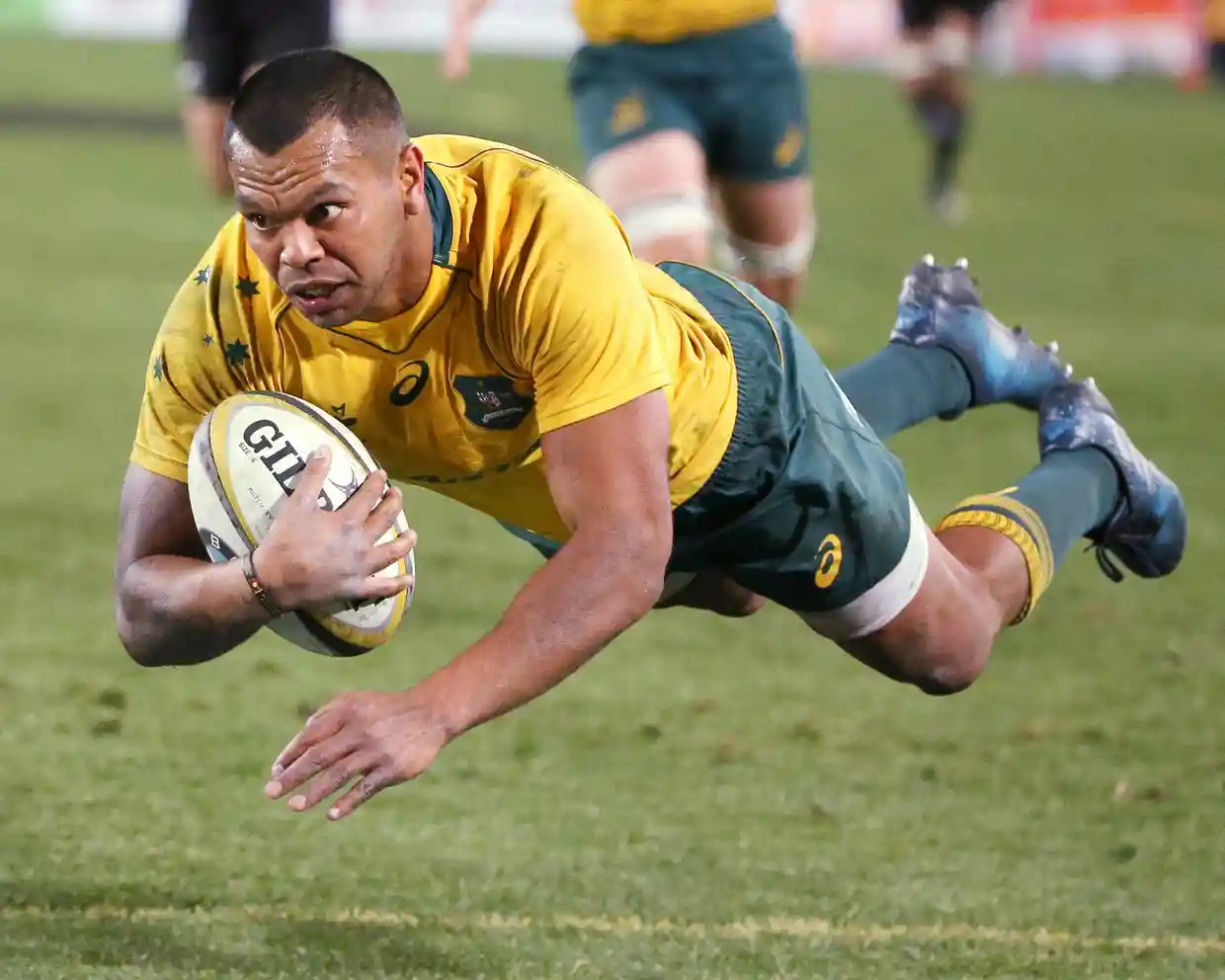
Kurtley Beale’s return to the Wallabies at the age of 37 marks another remarkable chapter in a rugby career shaped by success, setbacks and determination. Recalled by Australia head coach Les Kiss for the Nations Championship Tests this month, the experienced playmaker believes he still has unfinished business in International Rugby.
Beale, who turns 38 in January, is preparing to represent Australia again after overcoming a serious Achilles injury that threatened to end his career. Having made his Wallabies debut in 2007 and earned 95 international caps, he now returns with two decades of experience and a renewed desire to contribute to the national team.
His recall also comes at an important time for Australia, with the coaching staff looking for experienced players who can provide stability across several positions. Beale believes his physical preparation, rugby knowledge and ability to support younger teammates can help him make a meaningful contribution.
Kurtley Beale believes he still has unfinished business
Beale said his determination to return to the Wallabies never disappeared, even when injuries and difficult periods made the prospect of another international appearance uncertain.
“I just kept believing, I felt like there was some unfinished business,” Beale said ahead of Australia’s match against England in London.
The veteran explained that his focus throughout the comeback process was to get his body into the right condition while maintaining a positive state of mind. For a player approaching his 38th birthday, physical preparation has become particularly important.
Beale has spent much of his career earning recognition for his creativity, decision-making and ability to influence attacking play. His experience at fly-half, inside centre and full-back also gives Australia additional options as the team works through selection and injury challenges.
His return is especially significant because his previous Wallabies recall, when he was 35, was followed by a major injury that could easily have ended his playing career.
Achilles injury threatened to end his rugby career
Shortly after his previous return to the Wallabies setup, Beale suffered a ruptured Achilles while playing club rugby. It was a serious setback for the experienced back, with such injuries often requiring a lengthy rehabilitation process and creating uncertainty about an athlete’s ability to return to elite competition.
At the time, many observers believed the injury could mark the end of Beale’s career. Given his age and the severity of the damage, a retirement following his previous Wallabies selection might have appeared to be a natural conclusion to his international journey.
Beale, however, was unwilling to accept that outcome. He told then-Wallabies coach Joe Schmidt that he intended to return, even as he began the difficult process of recovering from the injury.
His rehabilitation required patience, discipline and considerable mental strength. Less than a year after the setback, he was back playing Super Rugby, demonstrating that he remained determined to compete at the highest level.
“It was a rollercoaster ride,” Beale said.
He acknowledged that the recovery period included difficult days but also highlighted the support he received throughout the process. The experience, he believes, helped shape his approach to rugby and strengthened his motivation to continue pursuing his goals.
“There was a lot of support there and, yeah, there were some tough days but I feel like that allowed me to be the person I am today, and allowed me to stay motivated and still be attached to my goals.”
Western Force experience helped Beale earn his Wallabies recall
Beale’s recent performances for the Western Force have played an important role in bringing him back into Australia’s international plans. Rather than relying solely on his reputation and previous achievements, he has continued contributing at Super Rugby level.
He has provided experienced cover behind Wallabies fly-half Ben Donaldson while also operating at inside centre and full-back. His versatility has allowed the Force to use him in different roles depending on team requirements.
Playing at No. 12, Beale helped the Western Force win the Super Rugby Aus title last month. He lined up outside fly-half Harry McLaughlin-Phillips, who subsequently made his Wallabies debut against the All Blacks.
His performances have demonstrated that he can still offer value in a competitive environment. Alongside his experience, his understanding of attacking structures and ability to read situations remain important parts of his game.
However, Beale’s playing future at the Force is not completely secured beyond the current arrangement. Following the signing of his former Wallabies teammate James O’Connor, the Force have offered Beale a train-and-trial contract for next year rather than a guaranteed playing deal.
Beale does not appear to view the arrangement negatively. Instead, he sees it as another opportunity to demonstrate his fitness and earn his place.
“I’ve always built myself in that way to be able to be ready if an opportunity came,” he said.
He added that he had been looking for a place to continue playing next year and was pleased to have an opportunity with the Force. His immediate priority is to make the most of that chance while continuing to contribute to the team.
Wallabies looking for stability ahead of the Nations Championship
Beale’s recall comes as Australia seek greater consistency among their key attacking players. The Wallabies have experienced changes and uncertainty in several positions, making the availability of an experienced international back particularly valuable.
The competition for the fly-half position has continued to develop, while suspensions and injuries have affected the team’s options at centre. Full-back Tom Wright has also been working to produce his strongest form under head coach Les Kiss.
Beale’s ability to cover multiple positions could therefore provide the coaching staff with useful flexibility. His experience of international rugby may also help the younger players understand the demands of facing leading teams.
Australia have made clear their ambition to rebuild their international standing ahead of next year’s men’s Rugby World Cup. The recall of a player with Beale’s background reflects the importance of experience as the team continues its preparations.
For Beale, returning to the national setup is not simply about adding another appearance to his international record. He wants to help the team develop, contribute to its preparation and make the most of the opportunity he has earned.
Beale’s Wallabies career includes 95 caps and three World Cups
Across his international career, Beale has experienced some of the most significant moments in Australian rugby. He made his Wallabies debut in 2007 and went on to earn 95 caps, establishing himself as one of the country’s most recognisable attacking players.
One of the highlights came in 2011, when he won the John Eales Medal. The award recognised his contribution to Australian rugby during a period when he was regarded as one of the most exciting talents in the national setup.
He also represented Australia at three Rugby World Cups, including the 2015 tournament, where the Wallabies reached the final. Those experiences have given him an understanding of the pressure, preparation and expectations associated with international rugby.
However, his career has not been without controversy. During his earlier years, several off-field incidents attracted attention and contributed to a public reputation that sometimes overshadowed his performances on the field.
His personal life returned to the headlines in 2023 when he faced sexual assault charges following an incident at a Bondi pub. Beale was ultimately found not guilty after a high-profile trial. During the legal proceedings, Rugby Australia stood him down, preventing him from playing during that year’s Rugby World Cup period.
His return to the Wallabies therefore represents a significant moment after a period in which his international future was uncertain. The latest recall gives him another opportunity to contribute to Australian rugby on the field.
Veteran playmaker wants to guide younger Wallabies players
Beale believes his experience can benefit the next generation of Australian players, particularly those still learning how to manage the demands of international rugby.
He said he wants to help younger teammates broaden their understanding of the game and approach the challenges of playing at the highest level with confidence. Having experienced major tournaments, difficult injuries and different stages of the Wallabies’ development, he believes he can offer useful guidance.
His role will not necessarily depend on whether he is selected in the starting team or included among the substitutes. Beale stressed that he can add value through preparation, communication and helping create competition within the squad.
He was also asked by a British journalist whether he still possessed the X-factor that made him such an influential attacking player during his earlier career. The question prompted a smile and a confident response from the veteran.
“What do you reckon?”
Beale explained that his ability to influence a match depends on maintaining high standards away from the field, understanding his responsibilities and preparing properly for the team’s strategy.
“I feel like if I’m training well, doing all the one percenters off the field, [understanding] my role, strategy – whether you’re in the 23 or you’re not in the 23 – but I’m adding value, I’m feeling good, then 100%.”
He also emphasised the importance of training as the foundation for performing naturally during matches. For him, building confidence begins with preparation, competition and pushing teammates to improve.
“I do feel like if I can be physically prepped, then I’m able to go out there and just react to the game in front of me, but it all starts at training and creating that level of competition and pushing each other.”
He believes that once the team develops the right competitive environment in training, players can take that confidence into international matches and play with greater freedom.
A new opportunity for Kurtley Beale at 37
Beale’s return to the Wallabies is the latest chapter in a career that has included major achievements, difficult personal moments and a remarkable recovery from a potentially career-ending injury.
At 37, he faces a different challenge from the one he encountered when first breaking into Australian rugby. His experience is now one of his greatest strengths, but maintaining the physical condition required for international competition remains essential.
His performances for the Western Force have helped him earn another opportunity, while his ability to play across several backline positions offers Australia additional selection flexibility. Just as importantly, he wants to use his experience to support younger teammates as the Wallabies prepare for the Nations Championship.
Beale has made it clear that he has not returned simply to look back on his achievements. His focus is on staying fit, contributing to the team and making the most of the opportunity in front of him.
After an Achilles rupture, a long rehabilitation and several challenging years, the veteran playmaker is once again wearing Australian gold. For Beale, the belief that there was unfinished business has brought him back to the international stage.
For breaking news and live news updates, like us on Facebook or follow us on Twitter and Instagram. Read more on Latest Sports on thefoxdaily.com.



COMMENTS 0