International Rugby delivered an extraordinary weekend of action, with a relentless 72-hour schedule of televised matches putting supporters’ viewing stamina to the test. From Ireland’s encouraging performance against Argentina to England’s impressive victory over Australia and South Africa’s dominant display against Italy, there was plenty to discuss as the autumn international campaign gathered momentum.
However, not every team emerged from the weekend with positive results. Australia suffered a damaging defeat against England, Scotland missed another opportunity against New Zealand, while Fiji and Italy continued to search for their first victories in the Nations Championship.
With France and South Africa preparing for another major encounter in Paris this Friday, the weekend’s results have also raised questions about the international pecking order, player availability and the impact of recent law changes.
Rugby’s 72-Hour Weekend: An Ultimate Test of Viewing Stamina
The weekend began with Ireland taking on Argentina on Friday night, followed by an extensive programme of international and domestic rugby. The match had its moments, although England A’s meeting with Argentina on YouTube also attracted attention.
Saturday brought an even bigger schedule. South Africa raced into a 45-0 half-time lead against Italy, making the contest increasingly one-sided. Scotland then hosted New Zealand at Murrayfield, where the traditional haka provided the build-up to another important international fixture.
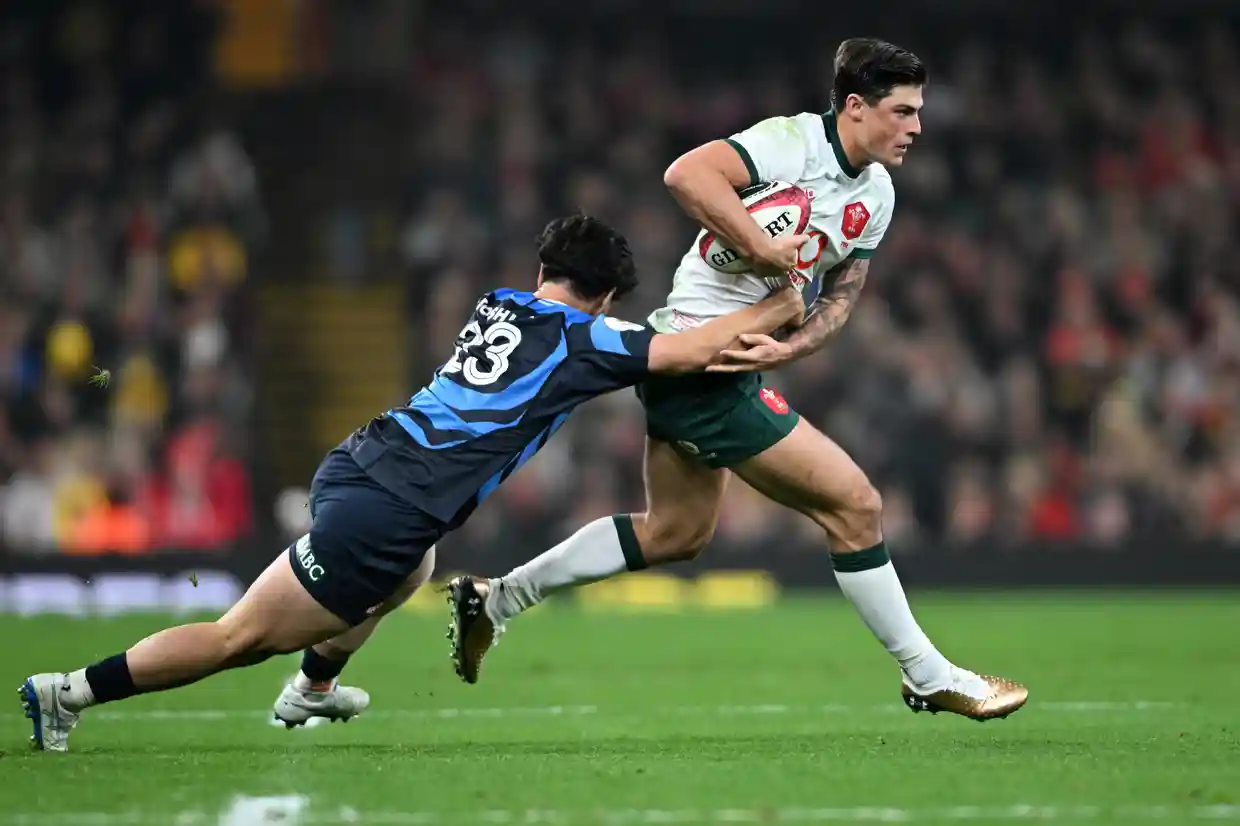
The schedule also included an entertaining Championship clash between Cornish Pirates and Richmond, followed by Wales against Japan in Cardiff. Louis Rees-Zammit and Eddie James provided some of the memorable moments for Wales, while Japan once again demonstrated its determination and fighting spirit.
France and Fiji then brought the day’s international programme to Lyon, adding another fixture to an already packed weekend.
Sunday offered little opportunity for a break. England faced Australia in a major encounter, while the Rugby League World Cup, second-tier Nations Cup fixtures, French Top 14 action and Prem Cup matches provided even more rugby for supporters.
By the end of the weekend, even the most committed rugby fans had experienced an exhausting schedule. The action delivered several important talking points, but the number of matches also raised questions about how much televised rugby audiences can realistically consume over three days.
Biggest Winners From Rugby’s Weekend
1. England Deliver an Impressive Performance Against Australia
England were among the biggest winners of the weekend after producing an outstanding performance against Australia. Their victory was particularly encouraging because of the discipline and defensive organisation they displayed throughout the match.
One of the most impressive aspects was what England avoided doing. They did not receive a single card of any colour, demonstrating improved discipline in a contest where maintaining composure was essential.
Their defence also looked impressive, although Australia struggled to produce a consistent attacking threat. England were able to control the contest while allowing their attacking talent to influence the game.
The performance suggested that Steve Borthwick’s team may finally be finding a way to get the best out of the quality available in their squad. England have considerable individual talent, and the victory over Australia offered encouraging evidence that the players are beginning to perform with greater confidence.
2. Ireland Show Signs of Improvement Against Argentina
Ireland also emerged as one of the weekend’s major winners after beating Argentina. Although the visitors were below their best, Ireland showed enough quality to suggest that Andy Farrell’s motivational approach is beginning to produce positive results again.
Sam Prendergast was another encouraging aspect of the performance. The young playmaker appeared more comfortable in the role of Ireland’s chief attacking organiser, giving the team another reason for optimism.
There is still work to do, but Ireland’s performance provided a timely confidence boost as they continue their autumn campaign.
3. England A Provide More Selection Options for Steve Borthwick
England’s second-string side also made a strong impression against Argentina, giving Steve Borthwick additional selection options ahead of the upcoming fixtures.
With injury concerns surrounding Seb Atkinson and Immanuel Feyi-Waboso, England could consider introducing Max Ojomoh into the midfield against Japan. Noah Caluori is another potential option on the wing, with Will Joseph, Cadan Murley and Joe Marchant also among the available possibilities.
Another interesting possibility would be to continue experimenting with Henry Pollock in a wider attacking role. His physicality and ability to threaten opponents could make him an unusual but effective hybrid option.
England’s performances across both teams suggest that the squad has considerable depth, giving Borthwick more flexibility when making selection decisions.
4. South Africa Look Increasingly Dangerous
South Africa were another major winner, producing a dominant performance against Italy and establishing a commanding 45-0 half-time advantage.
The Springboks’ performance reinforced their status as one of the strongest teams in international rugby. Their physical approach and attacking quality made life extremely difficult for Italy, while the scale of the lead demonstrated the difference between the two sides on the day.
Attention now turns to their upcoming meeting with France in Paris. The Springboks will face a more demanding challenge, but their latest performance suggests they are approaching the contest with considerable confidence.
Biggest Losers From Rugby’s Weekend
1. Australia Suffer a Damaging Defeat Against England
Australia were among the biggest disappointments after producing a subdued performance against England. The Wallabies struggled to generate consistent attacking pressure and were unable to match England’s defensive organisation.
The defeat has increased the importance of their next match against Scotland in Edinburgh. Australia now face a fixture that could become defining for their season, particularly after such an underwhelming performance against England.
The team’s ongoing fly-half problem also remains a concern. Finding a reliable solution in that position will be important if Australia are to improve their attacking structure and compete more consistently against leading international sides.
2. Scotland Miss Another Opportunity Against New Zealand
Scotland also endured a disappointing weekend after losing to New Zealand at Murrayfield. Although they had the opportunity to challenge the All Blacks on home soil, their performance lacked the consistency required to secure a major victory.
One particularly concerning statistic was their failure to score a single point in the second half. Scotland could not maintain their attacking threat after the break, allowing New Zealand to control the closing stages.
Head coach Gregor Townsend suggested after the match that nobody should consider themselves undroppable. His comments indicated that changes could be considered as Scotland look to address their latest setback.
For a team with ambitions of competing against the world’s best, another missed opportunity at home will be difficult to accept.
3. Fiji and Italy Continue to Struggle
Fiji and Italy also had difficult weekends, with neither side managing to record a victory or earn a bonus point during the Nations Championship action covered.
Italy’s heavy first-half deficit against South Africa highlighted the challenge they face when competing against one of the strongest teams in the world. Fiji also failed to secure a positive result against France.
The results underline the competitive gap that can emerge in international rugby when teams are unable to match the physicality, organisation and attacking quality of their opponents.
Is the Latest Rugby Law Change Fair on Tacklers?
Angus Bell’s yellow card against England provided another major talking point, particularly because of the recent adjustment to rugby’s tackling laws.
The Wallabies prop was sent to the sin-bin for a knee-drop tackle on Immanuel Feyi-Waboso. Under the revised interpretation, tacklers who drag down opponents while already on their knees or hips can be penalised.
The incident raised questions about the options available to defenders when facing powerful attacking players. Bell appeared to have limited opportunities to stop Feyi-Waboso legally as the England winger attempted to break through the defensive line.
However, Feyi-Waboso suffered an ankle injury during the incident, highlighting the safety concerns behind the law change. World Rugby introduced the amendment to bring rugby union more closely into line with other sports and reduce potentially dangerous tackling situations.
The challenge is finding the right balance between protecting attacking players and ensuring defenders still have practical ways to stop opponents.
Early indications suggest that the amendment could create more attacking opportunities and potentially lead to additional tries. However, its long-term impact on defensive play and the fairness of tackling decisions will require further examination.
One to Watch: New Zealand’s Challenge Against Wales
New Zealand appear to be improving under head coach Dave Rennie, with the All Blacks looking more organised and efficient than they did during the latter stages of Scott Robertson’s tenure.
Their next challenge is Wales in Cardiff, where they will be looking to continue their positive momentum before travelling to London to face England the following week.
New Zealand have an important objective beyond simply winning their remaining fixtures. Even victories with try-scoring bonus points might not be enough to secure a place in the Nations Championship grand final if South Africa maintain a superior points difference.
As a result, the All Blacks may need a substantial victory against Wales, potentially targeting a winning margin of around 50 points. Such a result would improve their points difference and strengthen their chances of finishing ahead of South Africa in the southern hemisphere standings.
The upcoming fixtures could therefore have major implications for the Nations Championship standings and the battle to reach the grand final.
France Face a Fly-Half Selection Crisis Ahead of South Africa Clash
France’s preparations for their upcoming match against South Africa have been complicated by injuries to several recognised fly-halves.
Matthieu Jalibert and Romain Ntamack are among the injured players, while Ruben Love, Richie Mo’unga and Jack Crowley are also unavailable. The situation has created uncertainty around the fly-half position ahead of Friday’s major encounter in Paris.
One possible solution is to use Maxime Lucu at No. 10 outside Antoine Dupont. However, facing South Africa with an improvised fly-half arrangement would be a considerable challenge.
South Africa, meanwhile, have Sacha Feinberg-Mngomezulu available. The 24-year-old has demonstrated impressive pace and an ability to identify attacking opportunities when given space.
With several established international fly-halves currently injured, Feinberg-Mngomezulu could become one of the standout players in the autumn international window. His performances will be particularly important as South Africa prepare to face a French side dealing with significant selection problems.
Memory Lane: Wales’ Historic Victory Over New Zealand
Wales are preparing for another meeting with New Zealand while carrying a remarkable historical statistic into the fixture.
The last time Wales defeated the All Blacks was on December 19, 1953, when Bleddyn Williams captained the Welsh side to a 13-8 victory in Cardiff.
Nearly 73 years and 34 matches have passed since that memorable result. The Welsh team of 2026 will now hope to repeat the achievement and end one of international rugby’s longest-running losing streaks.
Beating New Zealand would represent a significant achievement for Wales, particularly given the All Blacks’ recent improvement under Dave Rennie.
Final Verdict: England and Ireland Lead the Weekend’s Winners
The weekend delivered a mixture of impressive performances, disappointing defeats and important talking points across international rugby. England and Ireland were among the biggest winners, with both teams showing signs of progress ahead of their remaining autumn fixtures.
South Africa also looked ominous after their dominant display against Italy, while New Zealand continued to show improvement under Dave Rennie. On the other side, Australia and Scotland will need to respond quickly after disappointing performances.
The upcoming France versus South Africa encounter in Paris promises to be one of the biggest tests of the international window. France’s fly-half injury concerns could become a major factor, while South Africa will look to continue building momentum.
Ultimately, rugby’s extraordinary 72-hour weekend provided plenty of entertainment, but it also highlighted the importance of competitive balance. Big victories can be impressive, yet supporters still need close contests and late drama to keep the excitement alive.
For breaking news and live news updates, like us on Facebook or follow us on Twitter and Instagram. Read more on Latest Sports on thefoxdaily.com.






COMMENTS 0