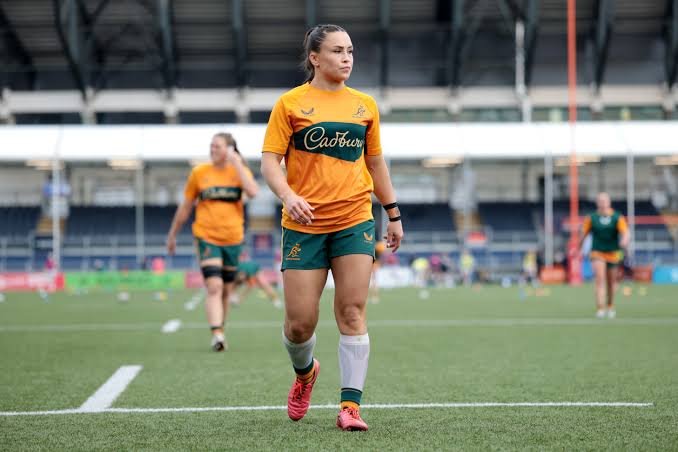
Australian rugby star Emily Chancellor has announced her retirement from international rugby, bringing an emotional end to a remarkable career that included 41 Test caps, two Women’s Rugby World Cup appearances, and eight years representing the Wallaroos.
The 35-year-old back-rower confirmed her decision on Monday, reflecting on a journey she never imagined would take her to the highest level of the sport. Chancellor will play her final international match against Scotland on Friday at GIO Stadium, with the opportunity to make her 42nd Test appearance before bringing her Wallaroos career to a close.
For Chancellor, the announcement represents more than the end of a playing career. It marks the conclusion of a journey that began when she discovered rugby at university and developed into a long-standing commitment to Australia’s national women’s team.
Despite her achievements, Chancellor admitted that she still finds it difficult to comprehend how much she has accomplished. Growing up, she never considered rugby a realistic option for herself because she did not know that opportunities existed for women to play the game professionally or internationally.
Her retirement brings an emotional chapter to a close, but the veteran forward believes she is ready to embrace the next stage of her life after years of dedication to the Wallaroos.
Emily Chancellor Reflects on an Unlikely Rugby Journey
Chancellor’s journey into international rugby was far from conventional. Unlike players who begin pursuing elite rugby from a young age, she discovered the sport later and gradually developed a passion that would eventually define much of her adult life.
She initially encountered rugby sevens while studying at university before discovering the 15-a-side format in 2015. That experience convinced her that rugby was something she wanted to pursue seriously.
Speaking emotionally about her retirement, Chancellor explained that she had never expected to represent Australia, let alone spend eight years with the national team.
“Rugby wasn’t an option for me growing up. I didn’t know that it (the women’s game) existed,” Chancellor said.
Her introduction to the sport came at a time when she was exploring different opportunities at university. What began as an opportunity to try rugby sevens eventually opened the door to the traditional 15-a-side game, where she discovered a sport that suited her interests and ambitions.
Chancellor recalled that she quickly recognised how much she wanted to be involved in rugby after experiencing the 15-a-side format in 2015.
“Having found the game when I was at uni, playing sevens, dabbling in that, and then finding 15s in 2015. I knew from the start that this was a game that I wanted to be involved in.”
That early enthusiasm eventually translated into a lengthy international career. Chancellor went from being a university player discovering the sport to becoming one of the Wallaroos’ experienced campaigners and eventually earning the responsibility of leading the team as captain.
Looking back on that progression, she admitted that the scale of her achievements would have seemed unbelievable when she first began playing.
“But if you told me then that I would have been playing internationally for eight years, I would have probably laughed at you.”
Her story highlights the importance of access and opportunity in women’s sport. Chancellor did not grow up believing that international rugby was a possible career path. Instead, she discovered the game later and built her place in the national team through commitment, development, and perseverance.
Why Chancellor Decided to Retire at 35
Chancellor’s decision to retire was not prompted by an inability to continue playing. In fact, she acknowledged that she still feels physically capable of competing at the international level.
That made the decision particularly difficult. After dedicating years to the Wallaroos, she could still imagine herself taking the field, but she also recognised that the time had come to consider what she wanted from the next stage of her life.
“It’s a hard one because I’m still here, physically, and feel capable. But I also think I’m ready for the next chapter,” Chancellor said.
The comments reveal the emotional challenge athletes often face when stepping away from international competition. Retirement is not always about reaching a point where the body can no longer perform. Sometimes, it involves recognising that a long chapter has reached a natural conclusion, even when the desire and ability to play remain.
For Chancellor, eight years with the Wallaroos have involved demanding training schedules, international travel, major tournaments, physical challenges, and the responsibility of representing Australia. The commitment required to sustain that lifestyle has shaped a significant part of her life.
Her decision reflects a balance between her continuing love for rugby and her readiness to move forward. Rather than waiting until she can no longer compete, Chancellor is choosing to leave international rugby while she still feels capable of performing.
Her final appearance against Scotland will therefore be an opportunity to celebrate the career she has built and acknowledge the contribution she has made to Australian women’s rugby.
From a Nervous Debut to 41 Wallaroos Test Caps
Chancellor made her Wallaroos debut against New Zealand in 2018 at the age of 26. Her first international appearance proved to be a memorable occasion, as she was named player of the game despite feeling overwhelmed by the experience beforehand.
Before stepping onto the field, Chancellor struggled with nerves and questioned whether she belonged at that level. Playing against another country for the first time was an intimidating prospect, particularly for someone who had entered the sport later than many of her international peers.
“I was so terrified. I remember sitting in the change room, thinking, ‘Oh my goodness, I’m playing against another country. I’m not good enough for this,'” she recalled.
However, she quickly challenged those doubts by reminding herself that being selected for Australia meant she had earned the opportunity.
“Then (I was) like, ‘Well, of course I’m good enough. I’ve been picked to play for my country.'”
That moment captures the mixture of uncertainty and determination that can accompany an athlete’s first international appearance. Chancellor had followed rugby for years, attended matches with her parents, and developed a strong interest in the sport. What she had not realised while growing up was that women could pursue the same game at the highest level.
Her debut marked the beginning of a career that would eventually include 41 Test appearances before her planned final match against Scotland. If selected to play, she will reach 42 international caps, adding another milestone to an already significant career.
Chancellor’s rise from a nervous debutant to an experienced international forward reflects her development as both a player and a leader. The confidence she initially questioned became an important part of a career built around learning, competing, and contributing to the Wallaroos.
Two Women’s Rugby World Cups Defined Her International Career
Representing Australia at the Women’s Rugby World Cup was among the defining achievements of Chancellor’s career. She featured at the 2021 tournament and later returned to the world stage for the Wallaroos’ campaign in England.
Competing at a World Cup represents a major achievement for any international rugby player. The tournament brings together leading national teams and places athletes under the pressure of performing on one of the sport’s biggest stages.
For Chancellor, the experience was especially meaningful given how unexpectedly her rugby journey had begun. A player who had not even known that women’s rugby was an option while growing up went on to represent Australia at two World Cups.
Her path was not without setbacks. Chancellor suffered an anterior cruciate ligament (ACL) injury in 2024, presenting a significant challenge during the latter part of her career.
An ACL injury can require extensive rehabilitation and a gradual return to competitive rugby. For a forward whose role involves physical contests, tackling, and repeated changes of direction, returning to the field after such an injury can demand considerable patience and determination.
Chancellor’s subsequent return to the Wallaroos and her eventual appointment as captain demonstrated her continued importance to the team. Rather than allowing the injury to define the final years of her career, she went on to reach another major milestone by leading Australia.
Her two World Cup appearances, recovery from injury, and leadership responsibilities form a significant part of the story behind her retirement. They reflect a career that included both major opportunities and difficult periods, with Chancellor continuing to contribute to the national team through different stages of her development.
Becoming the Wallaroos’ 19th Captain
One of the proudest achievements of Chancellor’s international career came when she became the Wallaroos’ 19th captain last year. The appointment recognised her experience, commitment, and ability to help set standards within the squad.
Captaining a national rugby team involves responsibilities beyond individual performance. A captain is expected to support teammates, communicate effectively, maintain standards, and help create an environment in which the team can improve.
Chancellor explained that she viewed leadership as an opportunity to push the programme forward rather than simply occupy a position of authority.
“If I can drive a standard and keep pushing a program to be better than we are, then I have done my job. And I think back to the years of being in this team, and I’m pretty proud of how I have tried to do that,” Chancellor said.
Her comments suggest that she measured her contribution to the Wallaroos by the standards she helped establish and the progress she encouraged within the programme. For an experienced player, leadership can involve influencing younger teammates, sharing lessons from major tournaments, and maintaining a strong culture during difficult periods.
Chancellor’s appointment as captain also represented a remarkable development from the player who once sat nervously in the changing room before her international debut. Over time, she moved from questioning whether she belonged on the international stage to becoming one of the people responsible for leading the team.
That transition is a central part of her legacy. Her contribution extended beyond the number of matches she played, encompassing the standards she sought to maintain and the example she set for those who will continue representing Australia.
A Special Wallaroos Team and a Career Shared With 108 Players
Chancellor spoke warmly about the Wallaroos and the relationships she developed during her international career. Across her time with the national team, she played alongside 108 different players, experiencing the evolution of the squad and the changing landscape of Australian women’s rugby.
“It’s a really special team. I’ve played with 108 players across my (Wallaroos) career,” she said.
The figure highlights how much a national team can change over an eight-year period. Players enter the squad, establish themselves, and eventually move on, while new generations arrive with their own ambitions and strengths.
For a long-serving international, those changes create a unique perspective. Chancellor has witnessed different teammates, changing team dynamics, major competitions, and the development of the Wallaroos programme over several seasons.
She also reflected on the unusual and memorable experiences that came with representing Australia, describing how the team had been part of some remarkable moments throughout her career.
“We’ve seen the growth. We’ve been part of some crazy experiences … I wouldn’t have pushed myself and my body and made the choices to choose this lifestyle for so many years if it wasn’t worth it.”
Her words make clear that the demands of international rugby were balanced by the relationships, experiences, and sense of purpose the sport provided. The physical sacrifices and lifestyle commitments were substantial, but she believes the rewards made those years worthwhile.
That sense of connection may be one of the most lasting parts of her Wallaroos career. Statistics can record caps, tournaments, and individual performances, but they cannot fully capture the relationships and shared experiences that shape an athlete’s time in a national team.
Chancellor’s Retirement Marks Another Chapter for Australian Women’s Rugby
Chancellor’s retirement comes after a career that reflects the opportunities and progress within women’s rugby. Her experience demonstrates how players can discover the sport later in life, develop through different formats, and ultimately establish themselves at the international level.
Her journey began with university rugby sevens before she moved into the 15-a-side game in 2015. Three years later, she made her Wallaroos debut, and over the following years she became an established member of the national team.
Her career included two Women’s Rugby World Cups, a major injury setback, a return to international competition, and the honour of captaining Australia. Each stage added to her experience and helped shape her role within the squad.
For younger players, Chancellor’s story offers an example of how an unconventional entry into sport does not have to limit future opportunities. Her experience also underlines the importance of making women’s rugby visible to girls who may not know that the game is open to them.
Chancellor herself said she had watched rugby with her parents while growing up but had not realised that girls could pursue the sport. That memory gives additional meaning to her eventual success and highlights how greater visibility can influence the next generation of athletes.
As the Wallaroos prepare for the next phase of their development, the departure of an experienced player and former captain will mark the end of an important era. The team will need to continue building its leadership group and developing players capable of carrying its standards forward.
Chancellor’s influence, however, will not be measured solely by what happens after her retirement. Her years of service, experience across two World Cups, and commitment to improving the programme have already made her a significant figure in the team’s history.
Final Wallaroos Appearance Against Scotland
Chancellor is scheduled to play her final game for the Wallaroos against Scotland on Friday at GIO Stadium. The match offers a fitting opportunity for the veteran back-rower to bring her international career to a close in front of supporters.
If she takes the field, the appearance will be her 42nd Test, adding one final milestone to a career that began against New Zealand in 2018. It will also give the Wallaroos an opportunity to recognise the contribution of a player who progressed from a nervous debutant to the captain of her country.
The occasion is likely to carry considerable emotion for Chancellor, her teammates, and those who have followed her journey. Her retirement announcement has already prompted reflection on the distance she has travelled since first discovering rugby at university.
At 35, she believes she is ready for a new chapter despite still feeling physically capable of playing. That decision reflects both the difficulty of leaving a sport she loves and the confidence to move forward after years of commitment.
Chancellor’s international career has been defined by unexpected opportunities, personal development, resilience, and leadership. From her first experience of rugby sevens to competing at two World Cups and captaining the Wallaroos, she has built a career that far exceeded her early expectations.
As she prepares to take the field against Scotland for the final time, her story stands as a reminder of what can happen when a player discovers a passion, embraces the challenge, and commits to developing at the highest level.
For Emily Chancellor, the end of international rugby is not simply a farewell to the Wallaroos. It is the conclusion of a remarkable journey that she once could never have imagined, and the beginning of a new chapter after eight years representing Australia.
For breaking news and live news updates, like us on Facebook or follow us on Twitter and Instagram. Read more on Latest Sports on thefoxdaily.com.



COMMENTS 0