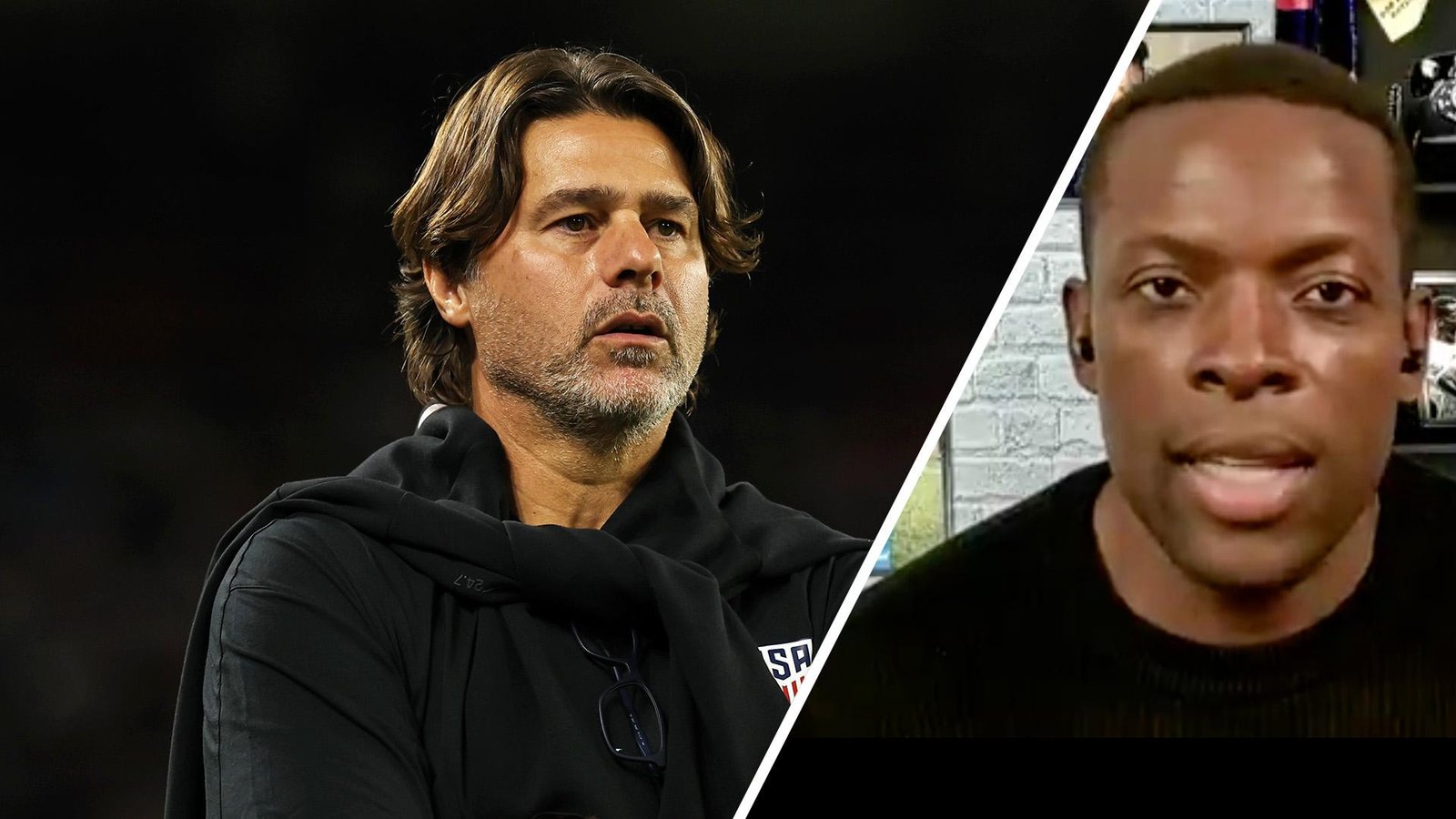
Mauricio Pochettino begins his Manchester United tenure with an immediate test of his managerial credentials: a trip to Anfield to face fierce rivals Liverpool on Sunday. With United struggling near the bottom of the Premier League table, the Argentine manager has little time to settle into his new role before facing one of English football’s most demanding fixtures.
Pochettino has replaced the sacked Michael Carrick after United’s difficult opening to the campaign. After 10 league matches, the club are in the relegation zone, one point behind newly promoted Coventry City. The situation presents a significant challenge for a manager whose previous appointments have included clubs with very different expectations, resources and ambitions.
However, Pochettino has experience of making an immediate impact. Across his five previous club appointments, his teams have produced a mixture of slow beginnings, impressive early winning runs and memorable debut performances. His record over the first 10 matches at each club also provides an indication of how his teams developed under his management.
From a difficult introduction at Espanyol to a successful period at Tottenham Hotspur and a trophy-winning spell at Paris Saint-Germain, Pochettino’s career offers several examples of how his teams have responded to his methods. His opening match at Manchester United will provide the first indication of how quickly he can begin implementing his approach at Old Trafford.
Espanyol: A difficult first assignment against Barcelona
Pochettino’s managerial career began in January 2009 with one of the most challenging fixtures imaginable: a Barcelona derby against Pep Guardiola’s Barcelona. It was his first match as a head coach at any level, and he had been appointed to take charge of an Espanyol side already struggling near the bottom of LaLiga.
Despite the difficult circumstances, Espanyol produced an impressive performance to secure a 0-0 draw. The result was particularly notable because Pochettino had managed only two training sessions with his players before the match. He used the limited preparation time to introduce an aggressive approach, instructing his team to press Barcelona high and defend one-on-one at the back.
Espanyol lined up in a 4-2-3-1 formation, a system that would become closely associated with Pochettino’s managerial identity.
Espanyol’s debut starting formation:
- Goalkeeper: Carlos Kameni
- Defence: Sergio Sánchez, Dani Jarque, Nicolás Pareja and Grégory Béranger
- Midfield: Román Martínez and Moisés Hurtado
- Attacking midfield: Nenê, Valdo and José Callejón
- Forward: Luis García
The encouraging debut did not immediately translate into consistent results. Espanyol were already on their third manager of the season when Pochettino arrived, and their relegation battle made the job particularly demanding. He managed just one victory in his first 10 matches, alongside five draws and four defeats.
However, the team improved considerably as the season progressed. Pochettino’s first managerial victory came against Guardiola’s Barcelona in LaLiga, a significant achievement given the difference in resources between the two local rivals. Espanyol subsequently won eight of their final 10 league matches and finished the campaign in 10th place.
Across his overall spell at Espanyol, Pochettino recorded 53 victories, 38 draws and 70 defeats, giving him a win rate of approximately 33 per cent. His team’s numbers also improved compared with the opening 10 matches.
Pochettino’s first 10 matches compared with his overall Espanyol record:
- Goals scored per game: 1.0 compared with 1.1
- Goals conceded per game: 1.5 compared with 1.4
- Possession: 48 per cent compared with 52 per cent
- Clean-sheet percentage: 10 per cent compared with 29 per cent
The figures illustrate a gradual improvement rather than an immediate transformation. Pochettino’s early Espanyol experience also demonstrated his willingness to introduce an energetic pressing style even when preparation time was limited.
Southampton: Establishing himself in English football
After leaving Espanyol by mutual consent in November 2012, with the club at the bottom of LaLiga, Pochettino remained a highly regarded coaching prospect. Southampton appointed him in January 2013, making him only the second Argentine manager to work in English football after Osvaldo Ardiles.
His first match in charge of the Saints ended in a 0-0 draw against David Moyes’ Everton at St Mary’s Stadium. Southampton created several promising opportunities, with striker Rickie Lambert particularly unfortunate not to score. He struck the post and also saw a header cleared off the goal line.
As at Espanyol, Pochettino selected a 4-2-3-1 formation for his debut.
Southampton’s debut starting formation:
- Goalkeeper: Artur Boruc
- Defence: Nathaniel Clyne, Maya Yoshida, Jos Hooiveld and Luke Shaw
- Midfield: Morgan Schneiderlin and Jack Cork
- Attacking midfield: Jason Puncheon, Guly do Prado and Gastón Ramírez
- Forward: Rickie Lambert
Pochettino’s first victory in English football came against the defending Premier League champions, Manchester City. The result helped establish his reputation in England and showed that Southampton could compete against stronger opposition with his pressing-based approach.
His first 10 matches at Southampton produced four wins, three draws and three defeats. That was a more encouraging beginning than his spell at Espanyol, and the team continued to develop under his management.
During the 2013-14 season, his first and only full campaign at the club, Pochettino guided Southampton to eighth place in the Premier League. It was the club’s highest league finish in a decade and an important achievement for a team that had only recently returned to the top flight.
His overall Southampton record stood at 23 victories, 18 draws and 19 defeats, representing a win rate of approximately 38 per cent. The statistical comparison shows that the team maintained much of its early progress throughout his tenure.
Pochettino’s first 10 matches compared with his overall Southampton record:
- Goals scored per game: 1.6 compared with 1.5
- Goals conceded per game: 1.3 compared with 1.2
- Possession: 54 per cent compared with 57 per cent
- Clean-sheet percentage: 30 per cent compared with 35 per cent
Southampton represented an important stage in Pochettino’s development. His work with young players, tactical organisation and aggressive style helped establish him as a manager capable of building competitive teams in the Premier League.
Tottenham Hotspur: The spell that established his reputation
Pochettino joined Tottenham Hotspur in May 2014, beginning what would become the most influential period of his club management career. His first match was a Premier League meeting with West Ham United, and Spurs secured a dramatic 1-0 victory thanks to a 93rd-minute goal from Eric Dier.
Tottenham used Pochettino’s familiar 4-2-3-1 system, with Hugo Lloris in goal and Emmanuel Adebayor leading the attack.
Tottenham’s debut starting formation:
- Goalkeeper: Hugo Lloris
- Defence: Kyle Naughton, Eric Dier, Younès Kaboul and Danny Rose
- Midfield: Étienne Capoue and Nabil Bentaleb
- Attacking midfield: Erik Lamela, Christian Eriksen and Aaron Lennon
- Forward: Emmanuel Adebayor
Pochettino’s first season brought encouraging progress. Tottenham reached the League Cup final and finished fifth in the Premier League. One of his most important contributions was developing young players and giving academy graduates and promising signings greater responsibility in the first team.
Harry Kane became one of the biggest success stories of that period. Although he had already received his first Premier League start under Tim Sherwood, Pochettino helped establish him as a regular and eventually one of the most important forwards in world football.
Tottenham continued to improve over the following seasons. Under Pochettino, the club achieved several significant milestones, including reaching the 2019 Champions League final. They also finished second in the 2017-18 Premier League campaign, their highest league position since the 1962-63 season.
His opening 10 matches at Tottenham produced five wins, three draws and two defeats. That represented a strong beginning, and his team maintained an impressive level of performance throughout his five-and-a-half-season spell.
Pochettino finished his Tottenham tenure with 159 victories, 62 draws and 72 defeats, giving him a win rate of approximately 54 per cent. His attacking numbers also improved significantly compared with the early stages of his appointment.
Pochettino’s first 10 matches compared with his overall Tottenham record:
- Goals scored per game: 1.6 compared with 1.9
- Goals conceded per game: 0.9 compared with 1.1
- Possession: 54 per cent compared with 59 per cent
- Clean-sheet percentage: 40 per cent compared with 34 per cent
The Tottenham period remains a major reference point when assessing Pochettino’s managerial career. He combined a high-intensity playing style with the development of young talent, helping turn Spurs into regular contenders near the top of English and European football.
Paris Saint-Germain: A flying start among football’s biggest stars
Pochettino returned to a familiar environment in January 2021 when Paris Saint-Germain appointed him during the 2020-21 season. He replaced Thomas Tuchel, who later became England’s manager, and took charge of a squad filled with international stars.
His first match ended in a 1-1 draw against Saint-Étienne. Unlike at his previous clubs, Pochettino did not use his usual 4-2-3-1 formation. Instead, he selected a 4-3-3 system, reflecting the different tactical demands of managing a team with PSG’s attacking options.
PSG’s debut starting formation:
- Goalkeeper: Keylor Navas
- Defence: Colin Dagba, Thilo Kehrer, Marquinhos and Mitchel Bakker
- Midfield: Idrissa Gueye, Marco Verratti and Ander Herrera
- Attack: Ángel Di María, Moise Kean and Kylian Mbappé
Pochettino quickly made his mark in Paris. Within a fortnight of arriving, he won his first trophy as a manager when PSG defeated Marseille to lift the French Super Cup.
However, managing PSG required a different approach from the one he had developed at Espanyol, Southampton and Tottenham. His trademark high pressing and collective defensive intensity had to be adapted to accommodate a squad containing several established superstars. Neymar and Lionel Messi would also feature in the team during his time at the club.
Despite the draw on his debut, Pochettino enjoyed his strongest opening 10-game run at any of his previous clubs. PSG won eight matches, drew one and lost one, giving him an impressive start in the French capital.
His overall record was also strong, with 55 victories, 15 draws and 14 defeats. That translated into a win rate of approximately 66 per cent. During his time in Paris, he won Ligue 1 and the Coupe de France in addition to the French Super Cup.
Pochettino’s first 10 matches compared with his overall PSG record:
- Goals scored per game: 2.1 compared with 2.2
- Goals conceded per game: 0.6 compared with 0.9
- Possession: 63 per cent compared with 63 per cent
- Clean-sheet percentage: 60 per cent compared with 39 per cent
The numbers underline how effective PSG were during his opening matches, particularly defensively. Although his overall record remained impressive, the team’s early defensive statistics were considerably stronger than those across his complete tenure.
Chelsea: A promising start followed by an inconsistent season
Pochettino returned to English football in May 2023 when Chelsea appointed him as their new manager. The London club were coming off a difficult period and needed stability after significant changes to their squad and management structure.
His first match brought an entertaining 1-1 draw against Liverpool, managed by Jürgen Klopp. Axel Disasi scored Chelsea’s equaliser, giving Pochettino a respectable introduction to life at Stamford Bridge.
His tactical selection was different from the systems used at his previous clubs. Pochettino opted for an unusual 3-4-2-1 formation, reflecting the squad available to him. Andrey Santos, who would later become a Manchester United midfielder, was among the substitutes but did not feature.
Chelsea’s debut starting formation:
- Goalkeeper: Robert Sánchez
- Defence: Axel Disasi, Thiago Silva and Levi Colwill
- Wing-backs: Reece James and Ben Chilwell
- Central midfield: Enzo Fernández and Conor Gallagher
- Attacking midfield: Raheem Sterling and Carney Chukwuemeka
- Forward: Nicolas Jackson
Pochettino’s first 10 matches at Chelsea produced five victories, two draws and three defeats. The beginning was reasonably positive, but the club experienced an inconsistent campaign as the manager worked to develop a new team amid considerable squad changes.
Chelsea reached the League Cup final under his management and produced some entertaining attacking performances. The team also finished the league season with a five-match winning run, offering encouragement for the future.
However, Pochettino departed in May 2024 after disagreements with the club’s management over strategy and recruitment. His overall record at Stamford Bridge included 26 wins, 11 draws and 14 defeats, representing a win rate of approximately 51 per cent.
The statistical comparison shows that Chelsea became more attacking as the season progressed, although their defensive numbers declined.
Pochettino’s first 10 matches compared with his overall Chelsea record:
- Goals scored per game: 1.4 compared with 2.0
- Goals conceded per game: 0.8 compared with 1.5
- Possession: 62 per cent compared with 59 per cent
- Clean-sheet percentage: 40 per cent compared with 24 per cent
The Chelsea experience was shorter than his spells at Tottenham and Southampton, but it demonstrated another side of Pochettino’s management. His teams could become more productive in attack over time, although achieving the right defensive balance remained a challenge.
What Pochettino’s first 10 matches could mean for Manchester United
Pochettino’s record across his five previous clubs suggests that there is no single pattern to his opening matches. His first 10 games at Espanyol produced only one victory, while Southampton brought four wins and Tottenham delivered five. At PSG, he won eight of his first 10 matches, while Chelsea recorded five victories.
Those figures show that his early results have depended heavily on the circumstances surrounding each appointment. At Espanyol, he inherited a team fighting relegation and had almost no preparation time before facing Barcelona. At Southampton, he took charge of a club looking to establish itself in the Premier League. Tottenham offered an opportunity to build a competitive side over several seasons, while PSG provided a squad filled with elite players and immediate expectations of trophies.
Manchester United present a different challenge. Pochettino arrives at a major club under pressure, with the team in the relegation zone after 10 Premier League matches. His first assignment is also one of the toughest away fixtures in English football, against Liverpool at Anfield.
The historical record offers some encouragement for United supporters. Pochettino has previously shown that he can organise a team quickly, introduce a pressing approach and produce competitive performances against stronger opponents. His opening draw against Barcelona with Espanyol and his victory over Manchester City with Southampton are examples of his ability to make an impact in demanding situations.
However, the statistics also show that an immediate improvement cannot be guaranteed. His Espanyol side needed time to recover from a difficult beginning, while his Chelsea team experienced inconsistency despite a promising attacking finish. His strongest opening run came at PSG, where the quality and depth of the squad provided a different starting point.
Can Pochettino deliver a strong start at Old Trafford?
Pochettino’s debut against Liverpool will be an important early examination of his tactical ideas and ability to manage pressure. His previous appointments suggest that he is comfortable using different formations when circumstances demand it, even though the 4-2-3-1 has been a recurring feature of his coaching career.
At Manchester United, the immediate priorities will include improving organisation, restoring confidence and finding a balance between pressing aggressively and remaining defensively secure. His previous teams have generally developed their attacking output over time, but United’s current position makes early results particularly important.
His career statistics provide reasons for both optimism and caution. Pochettino has delivered strong starts at several clubs, but his Espanyol experience demonstrates that difficult beginnings can happen even to managers with a clear tactical identity. The Anfield fixture will therefore be an early test of how quickly he can adapt his methods to the players and circumstances at Manchester United.
For United, the objective will be to turn the appointment into a sustained improvement rather than rely on one impressive result. Pochettino’s record shows that his most successful projects have required time, consistency and the development of a collective playing identity. His first match against Liverpool will begin the next chapter of that process.
Source: ESPN Global Research.
For breaking news and live news updates, like us on Facebook or follow us on Twitter and Instagram. Read more on Latest Football on thefoxdaily.com.






COMMENTS 0