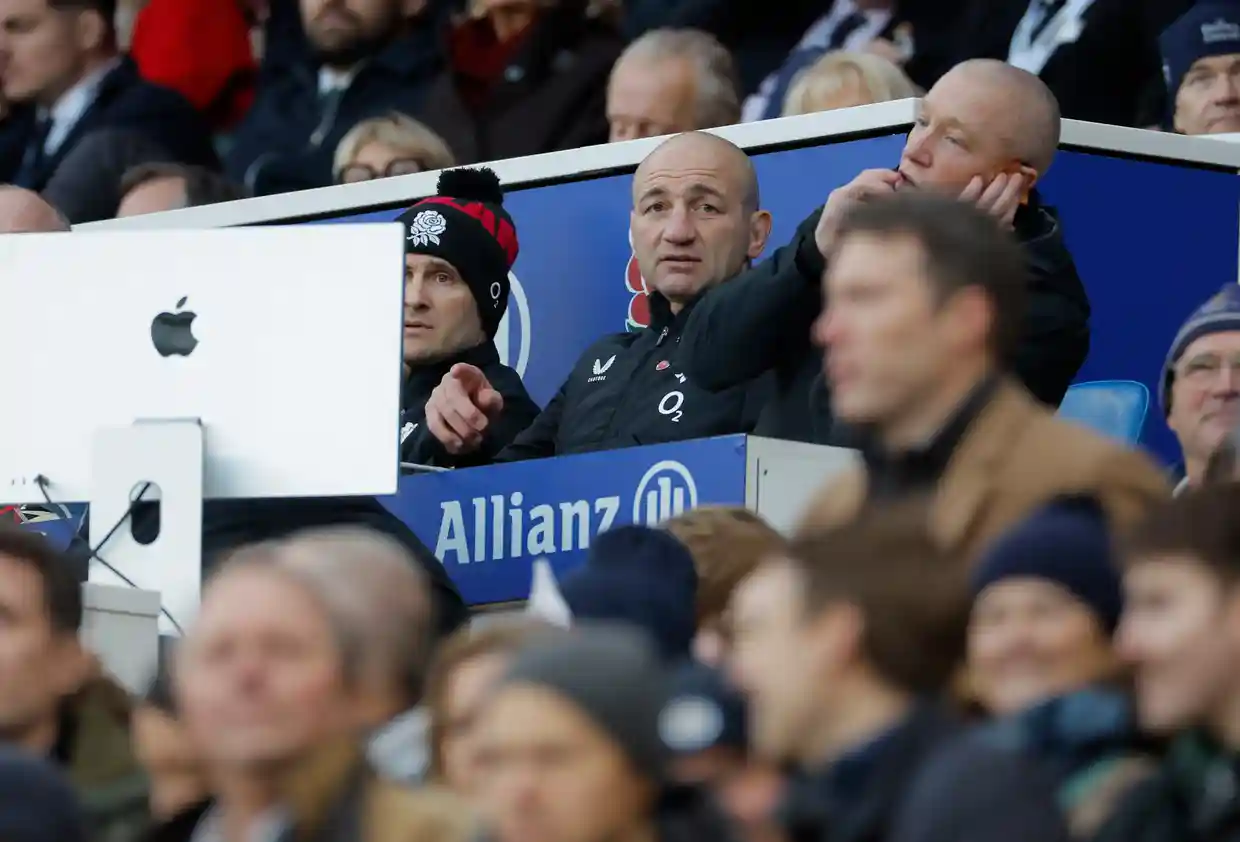
England head coach Steve Borthwick has looked back at the team’s successful past under Eddie Jones to understand how to produce the fast starts that have become a defining feature of their recent performances. By revisiting training plans, match footage and the methods used during Jones’s tenure, Borthwick has made early attacking intensity a central part of England’s preparation.
England’s latest victory over New Zealand was powered by emotion, confidence and a clear tactical approach. The response to the All Blacks’ haka, combined with the influence of former England captain Lewis Moody, helped create an atmosphere that translated into an explosive opening. Henry Slade crossed for a try in the fourth minute, setting the tone for a record-breaking victory.
However, Borthwick’s strategy extends beyond the emotional energy surrounding the team. England have repeatedly started matches with attacking purpose, scoring their opening try within the first seven minutes in each of their three fixtures this month. The pattern also appeared during the summer, when their first tries against Fiji and Argentina arrived within the opening five minutes.
Lewis Moody’s influence helps fuel England’s response
England’s preparation for the New Zealand match included a strong emotional element, with former captain Lewis Moody invited to stand at the front of the team’s V formation during the haka. His presence and pre-match message appeared to have a significant effect on the players.
Ellis Genge was so energised by England’s response to the haka that he removed his anthem jacket afterwards, seemingly forgetting that he was not in the starting lineup. Ollie Chessum also gave Moody instructions about the team’s immediate plans, telling him they would go long to the left and asking him to remain on the field to chase the kick-off.
Ben Earl suggested the emotional impact of Moody’s speech had been so strong that some players struggled to sleep the night before the match. Earl himself appeared eager to keep playing, saying he would still be on the Twickenham pitch carrying the ball through traffic if he had the opportunity.
The atmosphere helped England begin the contest with remarkable intensity. Their early try from Slade was the first major reward for that approach, and the team continued to build on the momentum throughout the match.
Borthwick looks back at England’s fast starts under Eddie Jones
England’s recent opening performances have brought back memories of the period when fast starts became a trademark of the team under Jones. During the 2019 Six Nations and the build-up to the Rugby World Cup, England regularly put opponents under immediate pressure.
At one stage, Jones’s side scored a try inside the opening three minutes in five consecutive matches. Jonny May needed only two minutes to score during England’s 2019 victory in Dublin, a result that helped set the team on its journey to the World Cup final.
The approach continued at the tournament in Japan. Manu Tuilagi crossed after just two minutes in England’s semi-final against New Zealand, demonstrating how quickly the team could turn its attacking plans into points against elite opposition.
Between 2018 and 2020, England scored a try inside the first 10 minutes on 16 occasions. Those performances established a clear identity: attack early, put the opposition under pressure and attempt to control the match before the other side could settle.
Borthwick was part of that coaching setup, serving as Jones’s assistant from 2016 to 2020. His familiarity with the methods used during that period has given him a reference point as he works to develop a similarly aggressive approach with the current England squad.
Video footage and training plans shape the new approach
Borthwick confirmed that he has actively studied England’s performances under Jones, particularly their scoring patterns during the opening stages of matches. Rather than simply recalling successful results, he has examined the training methods and preparation that helped produce them.
“Yes, without question. If you look at the scoring rate in first halves and first 20s, all the way through then, through 2019, through to the World Cup, the team was excellent. I’ve revisited session plans, revisited videos of those sessions. I discussed with some people who were around at that point in time. I’ve discussed it with players who were involved at that point. And that meant an adjustment to our training and adjustment to the way we approached [things], and it’s been a very important reference point.”
The admission offers a rare glimpse into Borthwick’s detailed approach to England’s preparation. The head coach does not often reveal the specific methods used during training, but his comments make clear that the team’s recent improvement in starting matches has been carefully planned.
His review involved studying old session plans, watching footage of training exercises and speaking with people who were involved in the programme during Jones’s tenure. He also consulted players who experienced that period firsthand.
The result was an adjustment to England’s training and the way they approach the opening stages of a match. Instead of placing most of the emphasis on finishing games strongly, Borthwick has made the first 20 minutes a major priority.
Eddie Jones recognised England’s attacking identity
Jones himself has recognised the aggressive approach that England have developed under Borthwick. Before Japan suffered a heavy defeat against England earlier this month, the former England head coach described the team’s ability to put opponents under immediate pressure.
“The English like to try and blow you out of the water early and then take the game from there.”
The observation reflected a philosophy Jones had helped establish during his time in charge. His England teams were known for detailed pre-match analysis, extensive preparation and carefully organised training sessions designed to identify weaknesses in opponents.
Borthwick was closely involved in that work as an assistant coach, giving him direct experience of the planning behind England’s successful opening periods. He has now adapted elements of that approach to suit the current squad.
For Borthwick, the objective is not simply to recreate the performances of the past. It is to build a consistent identity in which players take the initiative from the opening whistle rather than waiting for the match to develop.
England want to maintain their attacking intensity
Borthwick said the team had now produced five consecutive matches in which they had taken the game to their opponents from the beginning. He made it clear that he wants England to continue embracing that mentality.
“That’s five games in a row now where we have come out and taken the game to the opposition. I want to keep embracing that. We’ve discussed it openly, and discussed it with the senior players. Training is framed in that manner. I’ve talked a lot of times about putting the shirt on and then just wanting to ease into a game, or not wanting to make a mistake. These guys aren’t like that.”
The comments underline a shift in the team’s mindset. Borthwick wants his players to approach international matches with the confidence to attack immediately, rather than becoming overly cautious or concentrating primarily on avoiding mistakes.
The senior players have also recognised why the opening stages matter so much. England’s summer defeat against South Africa provided a particularly difficult lesson after the Springboks scored three tries inside the first 11 minutes.
South Africa defeat became a turning point
Genge described the damage caused by conceding several early scores against a top-level opponent. He believes falling that far behind makes it extremely difficult for a team to recover in Test rugby.
“Three scores down, it’s extremely hard to come back from that,” Genge said. “In tier one rugby, to go that many scores down and come back is difficult. It’s definitely the start of Test match rugby that’s the most important.”
The South Africa performance appears to have reinforced Borthwick’s decision to review the methods used during Jones’s time as head coach. The opening 20 minutes, rather than the closing stages, have become a major focus of England’s preparation.
Genge also acknowledged how quickly public opinion can change after a series of results. He pointed to the heavy defeat against South Africa, the subsequent victory over Fiji, the narrow win against Argentina and England’s latest performance against New Zealand.
“Obviously, we were the worst team in the world against South Africa when we got hammered at their gaff. Then we hammered Fiji because of the red [card] apparently and then scraped past Argentina, and then now we’re the best thing since sliced bread.”
His comments reflected the changing reactions surrounding the team, but also highlighted why England cannot afford to become complacent after one impressive result.
England face the challenge of sustaining their momentum
England’s next challenge is to reproduce their intensity when they face New Zealand again. Their recent record of scoring early has attracted attention, but the bigger test will be maintaining that standard consistently against the strongest international sides.
The same approach will also be important as England look ahead to next year’s Six Nations. Borthwick wants the emotional energy displayed against New Zealand to work alongside detailed preparation and tactical discipline.
The upcoming fixtures at Allianz Stadium, Twickenham, include England against New Zealand on Saturday, November 28, at 4:40 p.m. Other scheduled matches include Italy against Fiji and Ireland against Australia on Friday, November 27, followed by Wales against Japan and Scotland against Argentina on Saturday and Sunday respectively. The Nations Championship final between France and South Africa is scheduled for Sunday, November 29, at 4:40 p.m.
Under the competition’s points system, winners of the first five matches earn one point for their hemisphere, while the winners of the final receive two points.
For England, however, the immediate priority is to build on their recent performances and demonstrate that their fast starts are a repeatable strength rather than a temporary run of form.
Earl believes the team is making progress but remains aware that there is still significant room for improvement. With a major international challenge approaching and almost a year remaining before the next Rugby World Cup, England are focused on developing rather than celebrating too early.
“There’s going to be another expectation on us, so again, we’ll take it in our stride,” Earl said. “We don’t think we’re anywhere near the finished product, but we’re bubbling away nicely with almost 12 months to go before the big dance.”
Borthwick’s decision to revisit England’s successful past under Jones has provided a clear reference point for the team’s current development. By combining lessons from previous campaigns with the energy of the present squad, he is attempting to make aggressive starts a consistent part of England’s identity.
For breaking news and live news updates, like us on Facebook or follow us on Twitter and Instagram. Read more on Latest Sports on thefoxdaily.com.






COMMENTS 0