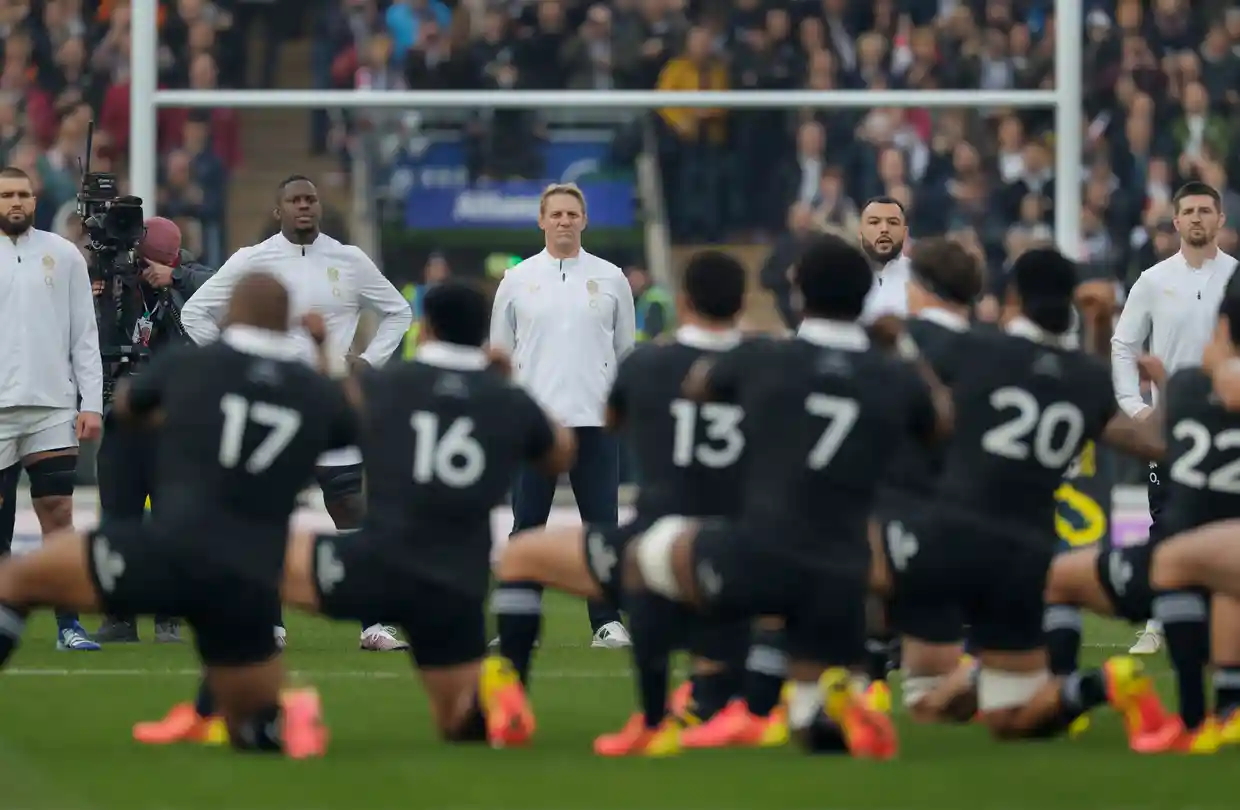
England and Ireland delivered two statement victories over New Zealand and South Africa respectively, giving the northern hemisphere plenty of momentum ahead of the inaugural Nations Championship finals weekend. England’s record-breaking 37-12 triumph over the All Blacks at Twickenham was followed by Ireland’s 20-17 victory against the reigning world champions in Dublin, completing a significant weekend for European rugby.
The results have added further excitement to an autumn that has already produced compelling performances, dramatic finishes and a growing sense that the balance of power in International Rugby could be shifting. With France preparing to face South Africa in Sunday’s Nations Championship final, the northern hemisphere has an opportunity to carry that momentum into the competition’s decisive weekend.
England’s record victory sends a warning to New Zealand
England’s performance at Allianz Stadium, Twickenham, was about more than securing a memorable win. Their 37-12 victory over New Zealand represented a record-breaking home result against the All Blacks and offered evidence that the team is beginning to deliver the attacking rugby many supporters have been waiting to see.
The occasion began with an emotional moment as Lewis Moody, who is living with motor neurone disease, stood alongside England’s players while they faced the New Zealand haka. His presence provided a powerful backdrop to a match that quickly became one of the most significant results of England’s recent international campaign.
England’s improvement has been particularly noticeable given their difficult results earlier in the year. In March, they were sitting fifth in the Six Nations standings after losing to Italy in Rome and suffering a 42-21 home defeat against Ireland. Their summer tour also exposed weaknesses, with South Africa racing into a 17-0 lead inside the opening 12 minutes at Ellis Park before completing a 45-21 victory.
For much of that period, England appeared to possess considerable potential without consistently producing it on the field. Their latest performances suggest that the team is beginning to find a more confident and cohesive identity.
Belief and attacking freedom transform England
One of the most encouraging aspects of England’s recent performances has been their willingness to play with greater freedom. Rather than relying heavily on a cautious approach, they have shown more confidence in their attacking options and taken greater responsibility for creating opportunities.
That development has been especially important because England have been without two of their most dangerous try-scorers, Manny Feyi-Waboso and Tommy Freeman. Their absence has not prevented the team from producing exciting attacking rugby, suggesting that England are developing a broader range of threats.
The return of influential players such as Maro Itoje and George Furbank has also helped. Their experience and presence have contributed to greater assurance and cohesion in both attack and defence, allowing other players to perform with increased confidence.
Henry Slade has been one of the players to benefit from the more expressive approach. His footballing ability and vision have become increasingly visible, while the emerging Seb Atkinson has also made an impression. Ollie Chessum and Ben Earl have brought considerable intensity, reflecting a wider determination within the squad to make up for earlier disappointments.
Earl’s performance against New Zealand was particularly striking. He made 33 carries and scored a powerful try after breaking from the back of a scrum, running through a static All Blacks defence. His contribution captured the energy and attacking ambition that characterised England’s performance.
Ireland complete a northern hemisphere double
England’s victory was followed by another major result as Ireland defeated South Africa 20-17 in Dublin. The win gave the Irish side one of their most significant victories since the 2023 Rugby World Cup and completed a memorable northern hemisphere double against the two leading southern hemisphere teams.
Ireland deserved their success, combining physical commitment with intelligent attacking play. Rob Baloucoune was a major contributor, scoring two tries and underlining his growing importance as an attacking threat.
South Africa, meanwhile, were left to reflect on a disappointing performance. The Springboks entered the match with their reputation as world champions, but they struggled to produce the level of rugby expected from a side that has dominated international competitions in recent years.
The absence of head coach Rassie Erasmus from the touchline was also noticeable. Serving a ban, Erasmus watched the match remotely through an online broadcast, delivering a watchalong from an otherwise deserted room. His side’s performance offered little comfort as Ireland secured the victory.
South Africa face a major test against France
Despite the defeat in Dublin, South Africa remain in contention to finish the Nations Championship with a major trophy. They have reached Sunday’s final as the highest-ranked southern hemisphere side in the competition and will face France at Twickenham.
France have reasons to approach the contest with confidence. Their Six Nations rivals have produced impressive results this autumn, while the Springboks have struggled in their recent meetings with northern hemisphere opposition. The French side will nevertheless have to contend with a lengthy injury list, which could influence their preparations.
South Africa still possess considerable experience of winning major matches, and Erasmus will be looking for his players to respond. However, their recent performances have raised questions about whether their current tactical approach is becoming too predictable.
The Springboks have traditionally relied on their physical strength and ability to dominate opponents through their forward pack. That approach remains an important part of their identity, but their recent struggles suggest that physical superiority alone may not be enough against increasingly adaptable opponents.
They may need to show greater confidence in a more varied attacking game, particularly against teams capable of matching their intensity and exploiting space across the field.
New Zealand must respond after another setback
New Zealand also have important questions to answer after their heavy defeat against England. The All Blacks have long been recognised for their consistency, attacking creativity and ability to respond under pressure, but recent performances have raised concerns about the foundations of their traditional dominance.
Head coach Dave Rennie faces significant decisions regarding several experienced players whose performances have come under scrutiny. The importance of a fit and rejuvenated Ardie Savea was particularly evident during the weekend, but his influence was not enough to prevent the defeat at Twickenham.
New Zealand have also slipped to fifth in the world rankings, adding further pressure ahead of their next meeting with England. Another disappointing performance would make it increasingly difficult for the team to explain their struggles solely through changes in coaching leadership.
The All Blacks have an immediate opportunity to respond when they return to Twickenham on Saturday. However, England will approach the rematch with confidence after producing one of their most convincing performances in recent years.
Wales add to the northern hemisphere’s momentum
The wider picture has also been influenced by Wales, who recorded their first victory over New Zealand since 1953. Alongside England’s success against the All Blacks and Ireland’s win over South Africa, the result has strengthened the impression that northern hemisphere rugby is becoming increasingly competitive.
With the 2027 Rugby World Cup approaching, the timing of these results is significant. The tournament is due to begin in Australia on 1 October, giving teams less than a year to assess their strengths, address weaknesses and build towards the competition.
The Springboks and All Blacks remain formidable opponents, but their recent performances suggest that their rivals are closing the gap. The extended rivalry series between South Africa and New Zealand may also have taken a physical and mental toll, although the results cannot be explained by that factor alone.
Australia, which will host the next World Cup, has also received a reminder of the growing strength of European rugby. The southern hemisphere’s leading teams will need to respond if they are to maintain their traditional position at the top of the international game.
Nations Championship finals weekend: Full schedule
The inaugural Nations Championship finals weekend will take place at Allianz Stadium, Twickenham, from Friday, 27 November, to Sunday, 29 November. The programme features five matches between teams placed at corresponding positions in the northern and southern hemisphere standings, followed by the final between France and South Africa.
Friday, 27 November
- Sixth versus sixth: Italy vs Fiji – 4:40pm
- Third versus third: Ireland vs Australia – 8:10pm
Saturday, 28 November
- Fifth versus fifth: Wales vs Japan – 1:10pm
- Second versus second: England vs New Zealand – 4:40pm
Sunday, 29 November
- Fourth versus fourth: Scotland vs Argentina – 1:10pm
- Nations Championship final: France vs South Africa – 4:40pm
The competition’s scoring system gives the weekend an additional layer of significance. Winners of the first five matches will earn one point for their respective hemisphere, while the winners of the final will receive two points.
This format means that every fixture can influence the overall northern versus southern hemisphere contest. The corresponding-position match-ups also provide a direct way to measure how the two groups compare across the competition.
How the northern hemisphere could take control
The northern hemisphere has an opportunity to build an advantage before Sunday’s final. If Italy defeat Fiji, Ireland overcome Australia, Wales beat Japan and England defeat New Zealand, the north would establish a 4-0 lead in the Hemisphere Challenge under the competition’s scoring arrangements.
Such a sequence would put the northern hemisphere in an unassailable position in the Ryder Cup-style contest before the concluding fixtures. It remains a hypothetical scenario, however, and each team will have to deliver on the field before any advantage can be confirmed.
For England, the rematch with New Zealand is particularly important. Their recent 37-12 victory has raised expectations, but repeating that performance against an All Blacks side determined to respond will be a different challenge.
Ireland will also face a difficult test against Australia, while Wales will look to build on their historic victory over New Zealand. France, meanwhile, have the opportunity to turn their encouraging autumn into a major statement by defeating South Africa in the final.
A changing landscape ahead of the 2027 Rugby World Cup
The latest results have made the closing stages of the international autumn especially compelling. England are playing with greater confidence, Ireland have demonstrated their ability to defeat the world champions, and Wales have ended a long wait for a victory over New Zealand.
South Africa and New Zealand still have the experience, quality and history to respond. Their recent defeats do not erase their achievements, but they do highlight the need to adapt as northern hemisphere teams continue to improve.
For supporters, the Nations Championship finals weekend offers an exciting opportunity to see how these developments translate into further results. France will attempt to topple South Africa, England will face New Zealand again, and Ireland will look to maintain their momentum against Australia.
Whatever happens at Twickenham, the autumn has already provided a clear message: the gap between the northern and southern hemispheres is becoming harder to define. With the 2027 Rugby World Cup approaching, the coming matches could offer another important indication of how the international balance is changing.
For breaking news and live news updates, like us on Facebook or follow us on Twitter and Instagram. Read more on Latest Sports on thefoxdaily.com.






COMMENTS 0