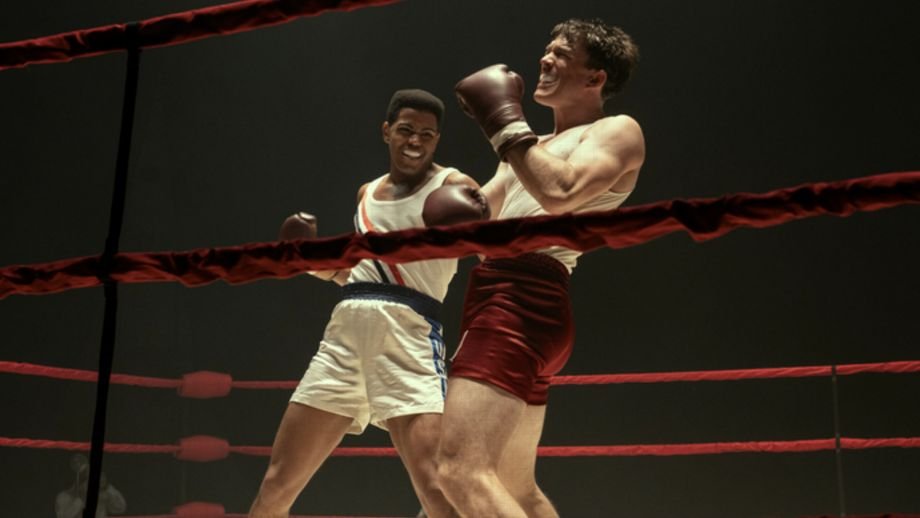
Jaalen Best had to do much more than resemble Muhammad Ali to bring the legendary boxer to life in Prime Video‘s upcoming series, The Greatest. The 28-year-old actor immersed himself in Ali’s boxing techniques, movement, personality and personal history to portray one of the most influential figures in sporting history.
The eight-episode docuseries, which premieres Wednesday, marks Best’s first leading role. Created by Ben Watkins, with Michael B. Jordan and Ali’s widow, Lonnie Ali, among its executive producers, the production is the first authorised scripted series about the boxer’s life. Rather than focusing exclusively on his achievements inside the ring, it explores Ali’s family relationships, personal experiences and the world that shaped him.
For Best and his co-stars, stepping into Ali’s world required a combination of physical preparation, historical research and personal connections. From recreating the boxer’s distinctive footwork to understanding the complicated relationships within his family, the cast worked to capture the people behind the sporting legend.
Jaalen Best’s transformation into Muhammad Ali began with intense training
Best’s portrayal of Ali is reflected not only in his appearance but also in the way he speaks and carries himself. During an interview with ESPN, the actor demonstrated a confidence and rhythm reminiscent of the former heavyweight champion.
When asked how his day was going, Best responded with a phrase that echoed Ali’s familiar style: “I can’t complain, too good it’s a dag-gone shame.”
That confidence also reflected the significance of landing his first lead role. Playing Ali, however, required more than adopting a recognisable voice or wearing clothes associated with the boxer. Best needed to understand the physical details that made Ali’s movement and fighting style distinctive.
According to Teen Vogue, Best was among four actors considered for the role by creator Ben Watkins. The final selection process included a boxing workout designed to help determine which performer could convincingly embody the legendary athlete.
Watkins brought the four finalists together for the session but did not remain throughout the workout. Instead, a crew member posing as a front-desk employee observed the actors, allowing the production team to assess their behaviour without making them feel constantly watched.
Later that evening, Watkins gave each finalist another challenge: studying and memorising the third round of Ali’s gold-medal bout at the 1960 Rome Olympics.
Best’s physical resemblance to Ali was one factor that helped distinguish him from the other candidates. But his preparation and commitment to understanding the boxer’s movement were equally important in developing the role.
Three hours of boxing training, six days a week
Before securing the part, Best trained with boxing coach Rob Sally for three hours a day, six days a week. The sessions focused on developing the speed, balance and precision required to recreate Ali’s style.
Sally also assigned Best footage of Ali boxing, shadowboxing and training. The actor had to study the videos carefully and return with observations about the boxer’s movements, posture and technique.
Rather than simply watching Ali’s fights for Entertainment, Best examined small details that could make his performance more authentic. He paid attention to how relaxed Ali kept his shoulders, how effortlessly he delivered his jab and how his body moved when throwing an uppercut.
“It would be ‘are his shoulders super relaxed’ or ‘the jab is really effortless or is fluid,’ or his uppercut when he turns — it’s like a pop with his shoulder or something of that magnitude,” Best told ESPN.
He also slowed down footage of Ali moving around the ring to understand the rhythm of his feet. The goal was to reproduce the smoothness and speed that made the boxer’s movement so distinctive.
Best already had an athletic background, having previously been a walk-on basketball player at East Carolina. However, the physical skills he developed through basketball did not automatically translate into Ali’s boxing style.
His trainer repeatedly pushed him to become quicker and sharper. Best recalled receiving constant corrections whenever his punches or footwork lacked the speed required.
“It’s like ‘OK, he throws his jabs this way, he does that, he does this’ and my trainer would constantly tell me ‘too slow, not fast enough, not sharp enough,'” Best said.
He explained that the process involved repeatedly adjusting his technique, extending his punches fully and becoming faster on his feet. Recreating Ali’s movement required patience and continuous attention to detail.
Music helped Best understand Ali’s rhythm inside the ring
Best’s preparation extended beyond boxing drills and fight footage. He also explored the popular music and cultural trends of Ali’s era to better understand the environment in which the boxer developed his distinctive personality and style.
Music became an important part of his training. Songs by James Brown and Sam Cooke, alongside contemporary music from artists such as Leon Bridges, helped Best find a rhythm that made him more comfortable moving around the ring.
He began to view Ali’s boxing style as something closer to an artistic performance than a sequence of technical movements. The combination of rhythm, timing and graceful footwork helped him understand why Ali’s movement was so recognisable.
“I’ve realized throughout the process, it was like poetry, it was like the blues or jazz music playing and you just dancing along,” Best said.
He described the experience as learning to float and move naturally rather than relying only on rehearsed boxing techniques. The music helped him connect the physical demands of the role with the sense of freedom and expression that characterised Ali’s performances.
For Best, the challenge was to make those movements look natural on screen. His preparation required him to combine the technical details learned from Sally with the rhythm and personality he discovered through his research.
Omari Hardwick found a personal connection to Ali’s family
While Best concentrated on recreating Ali’s physical style, Omari Hardwick approached his role through a more personal connection to the boxer. Hardwick portrays Cassius Clay Sr., Muhammad Ali’s father, in the series.
Hardwick said he recognised a shared interest in poetry, describing Ali as someone who had a strong appreciation for the written and spoken word.
“We both obviously have a penchant for poetry, right? He was quite the poet,” Hardwick told ESPN.
The actor had actually met Ali years before joining the project. Their connection began after Hardwick met Ali’s daughter Maryum at the 2015 NAACP Image Awards. She told him that her father admired his work in the television series Power, which eventually led to Hardwick visiting the family.
That meeting stayed with him. Hardwick later wrote about Ali in a poem featured on his album never ghost: season 7, titled peOple’s cHamp.
When the opportunity to play Ali’s father arrived, Hardwick viewed his earlier meeting with the boxer as something meaningful. He felt a personal connection to the role and described the experience as almost a direct invitation from Ali’s spirit.
“I got to always believe that it was Muhammad Ali asking me and not only asking, but going ‘You gonna play my daddy,’ I don’t think there’s a lot of asking there with him. I think his spirit told me, you’re gonna play my pops, figure it out,” Hardwick told ESPN.
Portraying Cassius Clay Sr. meant exploring a complicated family relationship
Hardwick’s character is central to the series’ exploration of Ali’s life away from boxing. Cassius Clay Sr. is portrayed as a complicated figure whose relationship with his son combines pride, jealousy and family conflict.
The series depicts his pride in Muhammad’s growing success while also examining his domestic violence against Ali’s mother, Odessa Grady Clay. It places the family’s experiences within the wider social conditions of the Jim Crow era, when Cassius Sr. was trying to support his family as his son became increasingly prominent.
Hardwick said the story also examines how society recognises certain forms of achievement while overlooking others. He highlighted the difference between the attention given to a boxer and the recognition received by someone working with their hands in a less celebrated profession.
“The one who works with his hands with gloves on is celebrated. The one who works with his hands with no gloves on, paint all over his hand, ain’t bothering nobody ain’t in the ring, ain’t fighting, just painting. It’s not necessarily celebrated,” Hardwick said.
His comments reflect one of the themes explored through the family story: Muhammad’s rise to international recognition did not take place in isolation. It unfolded against the experiences, ambitions and tensions of the people closest to him.
Jaalen Best and Omari Hardwick developed a father-son bond off screen
Hardwick and Best developed a close relationship while filming in Toronto. The two actors lived near each other, giving them opportunities to spend time together outside the production environment.
Hardwick, who is a father of two, wanted his children to become familiar with Best. Once he discovered that the younger actor lived just around the corner, their relationship began to develop naturally.
One day, Hardwick put Best on the phone with his son, Brave. Listening to the conversation made him recognise a connection between his real-life experience as a father and the relationship he was preparing to portray on screen.
“I pick him up one day and I put him on the phone with [my son] Brave and I sat there and listen to them talk and I thought ‘Here’s my real life as a father matching me becoming a father,'” Hardwick told ESPN.
Their bond became so close that Best began calling Hardwick “Pops”. Hardwick said the relationship helped him move beyond the boundaries of acting, making their father-son dynamic on set feel more natural.
That personal connection offered another dimension to their performances. Rather than building the relationship entirely through rehearsals, the actors developed a genuine sense of familiarity that could inform their scenes together.
Michael Ealy kept his distance from Best to make Malcolm X’s first meeting authentic
Michael Ealy, who plays Malcolm X, chose a very different approach to preparing for his scenes with Best. He asked creator Ben Watkins to keep the two actors apart until they filmed their first scene together.
Ealy wanted the first encounter between Malcolm X and the young Cassius Clay to feel as authentic as possible. He believed that becoming familiar with Best before filming could interfere with the natural anticipation he wanted to bring to the moment.
“It’s nothing personal, nothing like that. I just want the first time that Malcolm meets Cassius [Jr.] to be as authentic and organic and as real as possible,” Ealy explained to ESPN.
The scene was particularly important because young Cassius Clay admired Malcolm X and wanted to meet him. He was interested in understanding Malcolm’s ideas and discussing the possibility of joining the Nation of Islam.
Ealy wanted to approach the encounter without preconceived ideas about Best as a person or performer. Instead, he wanted to respond to the character in front of him, just as Malcolm might have responded to the young boxer.
“I didn’t want to go in with any preconceived notion of who he was as a person, he was as an actor, I just wanted to see young Cassius Clay,” Ealy said.
He also praised Best’s performance, saying the actor did a phenomenal job portraying the young Cassius and helping bring the meeting to life.
Lonnie Ali and Attallah Shabazz helped the cast understand their characters
Historical research and physical preparation were only part of the cast’s work. Conversations with people who knew the real-life figures also helped the actors understand the personalities and relationships they were portraying.
Ealy spoke with Attallah Shabazz, the daughter of Malcolm X, to learn more about her father’s life as a husband and parent. The conversations provided insight into aspects of Malcolm’s personality that might not be immediately apparent from his public speeches and political activities.
Best and Hardwick also turned to Lonnie Ali for a better understanding of Muhammad Ali’s life outside the boxing ring. As his widow and an executive producer on the series, Lonnie offered an important connection to the personal side of the story.
These conversations helped the performers look beyond the public images of two influential figures. For a series that aims to explore Ali’s family life and personal experiences, understanding the people behind the historical record was an important part of the process.
Understanding the meaning behind Muhammad Ali’s claim to greatness
For Best, portraying Ali ultimately meant understanding the ambition and determination behind one of the boxer’s most famous declarations: “I am the greatest.”
He explained that the statement was not simply about sporting ability. It also represented the desire to prove himself and make a meaningful contribution to the world beyond boxing.
“‘I am the greatest’ and having to prove yourself, prove a point to just be someone that wants to mean something to the world in a much bigger place than sport,” Best said.
That understanding became central to Best’s approach to the character. Ali’s legacy was built through his achievements in the ring, but his influence extended into his family life, public identity and wider ambitions.
The Greatest aims to explore those different dimensions through an authorised scripted portrayal of his life. With Best leading the cast as Ali, Hardwick playing his father and Ealy portraying Malcolm X, the series brings together actors who approached their roles through different forms of preparation and personal connection.
For Best, the journey involved months of intensive boxing training, detailed study of Ali’s movements and an effort to understand the rhythm behind his fighting style. For his co-stars, it meant exploring the relationships and historical experiences that helped shape the people around him.
The result is a production that seeks to look beyond the familiar image of Muhammad Ali as a heavyweight champion. By focusing on his family, relationships and personal world, the series aims to present a broader portrait of the man behind the famous declaration that he was the greatest.
For breaking news and live news updates, like us on Facebook or follow us on Twitter and Instagram. Read more on Latest Sports on thefoxdaily.com.






COMMENTS 0