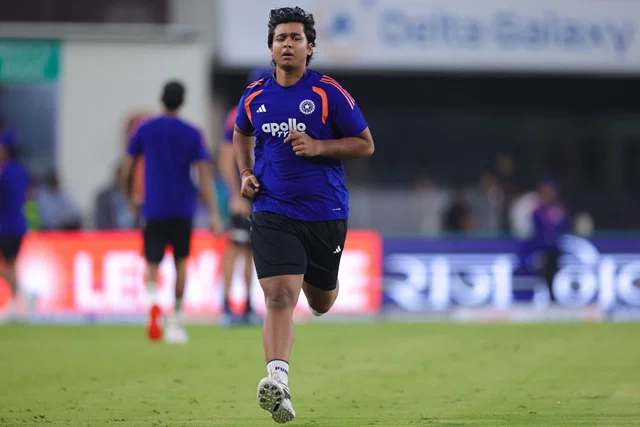
India T20I captain Shreyas Iyer has made it clear that teenage batting sensation Vaibhav Suryavanshi will need to remain patient before earning a regular place in the national team’s playing XI. Ahead of India’s five-match T20I series against New Zealand, Iyer backed the youngster to use the tour as an opportunity to understand overseas conditions and prepare himself for future international appearances.
Suryavanshi has continued to be part of India’s T20I squad, but opportunities at the highest level have remained limited. Despite growing calls for his inclusion, particularly amid inconsistent performances from India’s current opening combination, the team management appears committed to supporting its established players.
Speaking during the pre-series press conference ahead of the India vs New Zealand 1st T20I, Iyer stressed that Suryavanshi is still young and has plenty of time to establish himself in international cricket. The captain also pointed to the contributions of India’s existing openers, Sanju Samson and Abhishek Sharma, while explaining why the teenage prodigy cannot expect an immediate place in the starting lineup.
With the opening match scheduled for Thursday, October 22, at Hagley Oval in Christchurch, the series presents an opportunity for Suryavanshi to gain valuable experience in New Zealand, even if his involvement initially remains limited.
Shreyas Iyer Explains Why Vaibhav Suryavanshi Must Wait for His Opportunity
Vaibhav Suryavanshi’s rapid rise has attracted considerable attention, with the young left-handed batter earning recognition for his aggressive approach and ability to score quickly. However, selection in a competitive Indian team depends on more than individual talent, particularly when established international players are already occupying key positions.
Since making his international debut in England, Suryavanshi has featured in India’s tour of Zimbabwe and the Asian Games 2026 campaign in Japan. However, he has yet to play an international match on home soil, having remained on the bench during the T20I series against Afghanistan and the West Indies.
His continued presence in the squad has fuelled discussions about whether India should give him an opportunity at the top of the order. Those conversations have intensified because neither Sanju Samson nor Abhishek Sharma has been consistently productive in recent outings, according to the supplied report.
Despite the debate, Iyer indicated that the team management would continue to back its existing opening options rather than rush the teenager into the playing XI.
“It is important that a talent like him is always happy in the dressing room, and he is really young. He has many more years to get an opportunity. It is not as if he can walk straight into this team, because our openers are also scoring consistently and they have won us the World Cup also.”
Iyer made the remarks during India’s pre-series press conference, as reported by RevSportz. His comments underline the importance of maintaining a balance between developing young talent and retaining confidence in players who have already contributed to the team’s success.
The captain also suggested that the New Zealand tour could benefit Suryavanshi even if he does not immediately feature in a match. Exposure to unfamiliar conditions, different bowling approaches and the challenges of playing overseas can help a young batter prepare for future opportunities.
“If you look at it, whenever we come overseas, he will get a fair idea of how to play here. So next time when he comes in these conditions, he will be well prepared,” Iyer added.
The message is clear: Suryavanshi remains part of India’s plans, but the team does not intend to accelerate his integration simply because of the growing public demand for his selection.
Why India May Continue to Back Sanju Samson and Abhishek Sharma
The debate over Suryavanshi’s inclusion is closely linked to the performances of India’s current opening pair. Sanju Samson and Abhishek Sharma have occupied important roles at the top of the T20I batting order, but their inconsistent form has encouraged supporters to call for a fresh option.
In T20 cricket, the opening partnership often determines the direction of an innings. A quick start can provide the middle order with the freedom to attack, while early wickets can force the remaining batters to rebuild before accelerating later in the innings. As a result, opening combinations frequently attract scrutiny when performances fluctuate.
Suryavanshi’s aggressive batting style makes him an appealing alternative. A naturally attacking opener can put pressure on bowlers during the powerplay, disrupt fielding plans and create scoring opportunities before restrictions are lifted.
However, replacing an established opener is not necessarily a straightforward decision. Team management must consider a player’s overall contribution, experience, role within the batting order and ability to adapt to different match situations. Iyer’s comments suggest that India currently sees value in maintaining continuity while allowing Suryavanshi time to develop.
That does not necessarily mean the teenager will remain on the sidelines throughout the series. Rather, his selection will depend on the team’s requirements, the performances of the existing players and the conditions encountered during the tour.
For Suryavanshi, the immediate challenge is to remain ready for an opportunity while learning from the experienced players around him. Even without regular match time, training sessions, team discussions and exposure to overseas conditions can help him understand the demands of international cricket.
New Zealand Conditions Could Help Vaibhav Suryavanshi Develop
India’s five-match T20I series offers Suryavanshi an opportunity to experience New Zealand cricket from close quarters. The opening match is scheduled to take place at Hagley Oval in Christchurch on October 22, with the remaining fixtures providing further opportunities for the Indian squad to assess its combinations and adapt to the conditions.
Playing in New Zealand can present different challenges from those encountered on many Indian grounds. Depending on the surface and weather, batters may have to adjust to movement through the air, bounce off the pitch and variations in how quickly the ball reaches the bat.
For a young opener whose natural game is built around attacking bowling, learning when to take risks and when to build an innings is an important part of development. Overseas experience can help him recognise how to approach different bowlers, assess conditions during the opening overs and adapt his shot selection without losing his attacking instincts.
Iyer’s explanation reflects this longer-term approach. Instead of treating the tour solely as a chance to select a new opener, India can use it to familiarise Suryavanshi with the environment in which he may be expected to perform in the future.
The youngster was part of the first batch of Indian players to arrive in New Zealand ahead of the series. His early arrival also gives him time to settle into the surroundings and prepare for the conditions, regardless of whether he is selected for the first match.
For a teenager still building his international experience, this preparation could prove valuable. A future opportunity may arrive with less uncertainty if he has already experienced the conditions and understands the challenges that overseas pitches can present.
Shreyas Iyer Backs Flexibility in India’s T20I Batting Order
Alongside Suryavanshi’s selection prospects, Iyer also discussed India’s approach to batting-order flexibility. The team has increasingly shown a willingness to move players around depending on the match situation, opposition bowling attack and conditions.
This approach has been particularly visible during Gautam Gambhir’s tenure as head coach. Shivam Dube has batted at several positions, including No. 4, No. 7 and No. 8, while Tilak Varma has also moved around the order according to the team’s needs.
Rather than assigning every batter a fixed position, India has attempted to give itself additional options during different phases of a T20 innings. A player might be promoted to attack a particular bowling matchup or pushed down the order to provide finishing power during the closing overs.
Iyer said players must accept this flexibility and focus on what the team requires instead of insisting on a preferred batting position.
“I feel you should be flexible with what the team demands in a particular situation. If we look at here, we have so many batters who cannot be so destructive in the lower order, but I feel that I can bat at any number, depending on the situation.”
The India captain also referred to Ishan Kishan’s role at No. 3 during the previous World Cup, highlighting how a batter can perform consistently in a particular position while still being part of a larger team strategy.
“If you see in the last World Cup, Ishan Kishan was batting consistently at No. 3 and he is the No.1 ranked batter right now. I don’t force myself to push for the top order, but if we look at it, every individual in the team has to be flexible,” Iyer said.
He further explained that match conditions and the situation of the innings should determine where a player bats.
“The conditions will demand it, the situation will demand it, and you will have to be happy with whatever number you get. It cannot be that one player can only play in one particular position,” he added.
The comments offer an insight into the team’s broader philosophy. In modern T20 cricket, adaptability can be as important as specialising in one role. Batters may need to change their approach depending on the number of overs remaining, the wickets in hand and the bowlers available to the opposition.
What Does India’s Flexible Batting Strategy Mean for Suryavanshi?
India’s emphasis on flexibility could eventually create opportunities for players who can contribute in more than one situation. However, Suryavanshi is primarily viewed as an aggressive opener, meaning his most natural route into the playing XI would likely be through the top order.
If India decides to change its opening combination during the New Zealand series, the teenager could come into consideration. But the team’s current approach indicates that selection will not be based on potential alone. The management will also have to determine whether he is the right option for the specific conditions and match situation.
The flexible batting order also places responsibility on established players such as Iyer. Since returning to India’s T20I setup, he has generally occupied the No. 4 position, apart from one appearance at No. 5 in the second T20I against the West Indies in Ranchi.
His willingness to bat at different positions reflects the same principle he expects from his teammates: individual preferences must not take priority over the team’s needs.
For a young player waiting for his first opportunity in a particular series, that philosophy can mean accepting a supporting role while remaining prepared to contribute when selected. It also highlights the importance of understanding the team’s tactical plans rather than focusing exclusively on personal milestones.
India vs New Zealand 1st T20I: What to Expect
The opening T20I at Hagley Oval will provide the first indication of India’s preferred combination for the five-match series. Attention will be on the opening pair, the balance between specialist batters and all-rounders, and the positions assigned to players in the middle order.
Suryavanshi’s presence in the squad ensures that the selection debate will continue, especially if the established openers struggle to produce consistent performances. However, Iyer’s pre-series remarks suggest that India is prepared to give its existing combination further opportunities while allowing the teenager to gain experience.
The series could therefore become an important learning experience for Suryavanshi, even if his first appearance does not come immediately. Understanding overseas conditions now may help him respond more effectively when a place becomes available in the future.
Ultimately, the decision will rest on the team’s requirements and the balance it wants to maintain throughout the series. India’s management must weigh the excitement surrounding a promising young batter against the value of experience and continuity at the top of the order.
Conclusion
Shreyas Iyer’s comments have reinforced India’s position that Vaibhav Suryavanshi must be patient while waiting for his opportunity in the T20I team. The captain has acknowledged the youngster’s talent but stressed that selection is not automatic, particularly when the established openers have already played important roles in India’s success.
With the five-match series against New Zealand beginning in Christchurch on October 22, Suryavanshi has an opportunity to learn about overseas conditions and prepare for future international challenges. Whether he makes the playing XI immediately or continues to wait, the tour could help him gain experience that becomes valuable later in his career.
Iyer’s separate comments on batting-order flexibility also underline India’s wider team philosophy: players must adapt to match situations and accept the roles required of them. For Suryavanshi, that means staying prepared, learning from the team environment and allowing his opportunity to arrive when the management believes the time is right.
For breaking news and live news updates, like us on Facebook or follow us on Twitter and Instagram. Read more on Latest Cricket on thefoxdaily.com.






COMMENTS 0