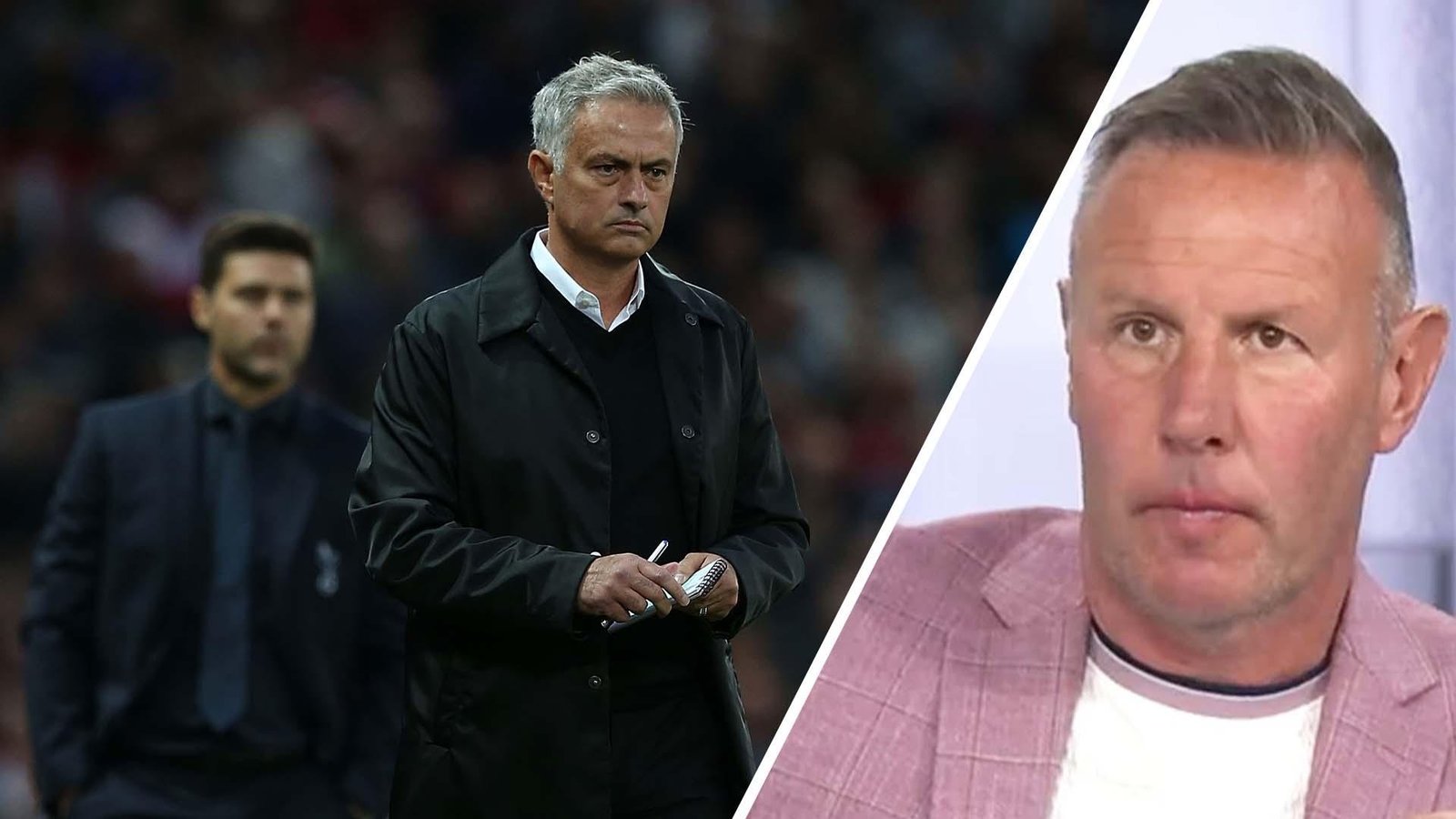
Erling Haaland’s disallowed goal against Fulham has sparked another debate over the use of Video Assistant Referee (VAR) in the Premier League. Manchester City believed they had taken the lead when Haaland followed up an initial effort and put the ball into the net, but referee Tom Bramall ruled the goal out for a foul on Fulham goalkeeper Bernd Leno. VAR official James Bell reviewed the incident and decided there was not enough evidence to overturn the on-field decision.
The incident was one of several controversial refereeing decisions examined during the 2026-27 season. Former Select Group referee Andy Davies, who has more than 12 seasons of experience across the Premier League and Championship, has provided an assessment of the major incidents, explaining how VAR protocol and the laws of the game apply to each situation.
Davies believes the decision to disallow Haaland’s goal was debatable. Although the goalkeeper appeared to spill the ball before the striker scored, the referee’s interpretation that Leno had control of it was not conclusively disproved by the available evidence. As a result, VAR was right to allow the original decision to stand under the current intervention threshold.
Should Haaland’s goal against Fulham have been disallowed?
Manchester City vs. Fulham (November 21)
Referee: Tom Bramall
VAR: James Bell
Time: 24th minute
Incident: Erling Haaland’s goal disallowed for a foul on Fulham goalkeeper Bernd Leno.
Manchester City appeared to have found the breakthrough when Haaland got on the end of a deep cross and directed the ball towards Leno. The Fulham goalkeeper initially appeared to make contact with the effort, but he spilled the ball rather than holding it securely.
Haaland reacted quickly to the loose ball and followed up his original attempt, bundling it into the net. However, referee Bramall disallowed the goal because he believed Leno had control of the ball when the striker challenged for it. A foul was awarded in Fulham’s favour.
VAR decision: No goal. VAR checked the incident and upheld the referee’s on-field decision.
VAR review: Davies described the outcome as debatable but explained that there was no conclusive evidence to establish that the referee had made a clear and obvious error. Under the VAR protocol, the decision therefore did not meet the threshold for intervention.
Verdict and insight: The goalkeeper does not need to hold the ball with both hands for it to be considered under his control. Under the Laws of the Game, having one hand engaged with the ball can be sufficient for the goalkeeper to be regarded as having control.
Davies questioned whether Bramall had the best possible view of the challenge and its circumstances. He suggested that the referee had to rely partly on his experience and judgment when deciding that Leno had control of the ball. In the moment, Davies felt that disallowing the goal was an understandable decision and said he would have reached the same conclusion.
However, the former referee also noted that some still images appeared to show Leno’s hands close to the ball, while the video replays presented a slightly different picture. The footage suggested that the goalkeeper may have spilled the ball, and his immediate body language appeared to indicate that he had made an error before having time to react.
Ultimately, Davies felt Leno was fortunate that the decision went in Fulham’s favour. Manchester City had reason to feel aggrieved, but the incident was one that could reasonably have been interpreted in either direction in real time.
Did Lammens interfere with Suzuki in Manchester United’s equaliser?
Manchester United 4-4 Aston Villa (November 8)
Referee: Chris Kavanagh
VAR: Craig Pawson
Time: 96th minute
Incident: Possible foul in Manchester United’s equalising goal.
Manchester United produced a dramatic late attack against Aston Villa after falling 4-3 behind. With time running out, Bruno Fernandes delivered a corner into the penalty area, and goalkeeper Senne Lammens joined his teammates in an attempt to rescue a point.
Patrick Dorgu rose above the Villa defenders and headed the ball into the net. However, Aston Villa goalkeeper Zion Suzuki immediately protested, claiming that Lammens had fouled him while attempting to prevent him from reaching the ball.
Lammens made contact with Suzuki without looking at the ball or making an attempt to play it. The Villa goalkeeper believed that the Manchester United player had deliberately obstructed his movement and prevented him from punching the ball away.
Referee Kavanagh was unmoved by the appeals, booked Suzuki for his protests and allowed the goal to stand.
VAR decision: VAR checked the incident and cleared the on-field decision to award the goal.
VAR review: Davies explained that Lammens appeared to intend to disturb Suzuki by making contact with him. However, the contact was considered minimal, and the impact on the Villa goalkeeper was open to interpretation.
The former referee described this type of situation as a 50-50 decision, an area in which VAR is generally reluctant to intervene. Unless the on-field decision is clearly wrong, the original outcome is likely to remain.
“Didn’t notice in real time but that is literally VAR’s job and it gets no better with every viewing. If that was on Lammens we’d be fuming so got to be honest we got away with one there” Mark Goldbridge, November 8, 2026.
Verdict: Davies agreed with VAR’s decision not to intervene, despite acknowledging that Lammens had clearly attempted to disturb Suzuki. He explained that intent alone is not a punishable offence and that the available replays did not demonstrate enough physical impact to meet the threshold for a clear and obvious error.
However, Lammens took a risk with his action. Had Kavanagh interpreted the contact differently and awarded Aston Villa a late free kick, Manchester United would have had little reason to complain. Davies considered it a borderline incident in which allowing the referee’s original decision to stand was appropriate.
Arsenal denied a penalty against Hull City
Arsenal 1-0 Hull City (November 7)
Referee: Farai Hallam
VAR: Michael Oliver
Time: 42nd minute
Incident: Penalty not awarded to Arsenal following an offside decision.
Arsenal believed they should have been awarded a penalty after Hull City defender Nobel Mendy appeared to pull Kai Havertz’s shirt inside the penalty area. The contact occurred as Havertz attempted to reach a ball played into the box.
Following a VAR review, referee Farai Hallam went to the pitchside monitor to assess the possible foul. After reviewing the footage, he agreed that Mendy had committed a foul on Havertz. However, Hallam also concluded that the Arsenal attacker had been in an offside position when the ball was played.
The referee therefore ruled out the possibility of a penalty and awarded an indirect free kick to Hull City.
VAR decision: VAR recommended an on-field review for a possible penalty to Arsenal.
VAR review: Michael Oliver directed Hallam to the monitor to examine Mendy’s challenge. Hallam identified the shirt pull but then judged that Havertz was offside, leading to the defensive restart.
“¡Arsenal no la pasa bien! Reclamaban un penal por falta sobre Kai Havertz, el árbitro dejó correr la jugada y luego fue a revisar, solo para encontrarse con una posición adelantada” Telemundo Deportes, November 7, 2026.
Verdict: Davies argued that the law was incorrectly applied. He believed Arsenal should have received a penalty because a player in an offside position who is fouled before committing an offside offence should have the foul penalised.
The distinction is important because being in an offside position does not automatically mean that a player has committed an offside offence. The referee must establish whether the player has become actively involved in play before deciding how to restart the game.
Davies had some sympathy for Hallam, noting that judging whether a player has interfered with an opponent can be difficult. The position of Havertz and the possibility that he affected Mendy’s next action may have contributed to the referee’s interpretation.
However, he believed that the officials should have reached the correct outcome after the review. Davies also suggested that the release of the officials’ live communications would be useful in explaining how the decision was reached. Arsenal eventually won the match, which may reduce the wider impact of the controversial call.
Liverpool denied a penalty against Arsenal?
Liverpool vs. Arsenal
Referee: Andy Madley
VAR: Stuart Attwell
Time: 34th minute
Incident: Possible penalty for Liverpool.
Liverpool had a penalty appeal turned down after Alexander Isak attempted to reach a cross inside the Arsenal penalty area. The forward appeared to have his shirt pulled by Jurriën Timber, but referee Andy Madley allowed play to continue.
VAR decision: VAR checked the incident and upheld the referee’s decision not to award a penalty.
VAR review: Davies described the incident as an interesting one for VAR to examine. However, the officials concluded that the contact did not meet the threshold for a clear and obvious error and decided not to recommend an on-field review.
Verdict: Davies believed Liverpool had reason to feel aggrieved. He considered Timber’s action a deliberate holding offence, arguing that the Arsenal defender made no attempt to play the ball and appeared focused on preventing Isak from reaching it.
Although the contact looked like a foul in real time, Davies acknowledged that Madley may have struggled to judge its full impact from his position on the pitch. The VAR was also required to apply the Premier League’s higher threshold for intervention.
However, Davies argued that deliberate holding which directly affects an opponent’s ability to play the ball should be penalised. In his assessment, Attwell should have recommended an on-field review, and the decision not to intervene represented a VAR error in an important Premier League match.
Did Lisandro Martinez deserve a red card against Chelsea?
Chelsea 2-0 Manchester United (October 31)
Referee: Peter Bankes
VAR: James Bell
Time: 61st minute
Incident: Chelsea penalty and second yellow card for Lisandro Martinez.
Manchester United defender Lisandro Martinez was involved in a controversial aerial challenge with Chelsea’s Wesley Fofana. Martinez appeared to lead with his arm and made contact with the Chelsea defender’s head.
Referee Peter Bankes initially allowed play to continue without awarding a penalty. However, VAR James Bell reviewed the incident and recommended an on-field review after identifying a possible reckless challenge.
VAR decision: VAR recommended an on-field review for a possible penalty. Following the review, Bankes awarded Chelsea a penalty and showed Martinez a second yellow card, resulting in his dismissal.
VAR review: Davies explained that the replay evidence showed Martinez arriving late, making no attempt to play the ball and facing his opponent rather than the ball. The most important factor was the reckless contact made with his arm.
“Lisandro Martínez is sent off after receiving a second yellow card. Manchester United is down to 10 men as Chelsea is awarded a penalty kick.” USA Sports, October 31, 2026.
Verdict: Davies considered the intervention correct. He believed the penalty and second yellow card were the appropriate outcomes because Martinez’s challenge was reckless and involved dangerous contact with Fofana.
The former referee was surprised that Bankes had not awarded the penalty during the match. However, he praised the VAR for identifying a clear error and recommending that the referee review the incident despite the emphasis on limiting interventions during the season.
Why was Matheus Cunha’s goal disallowed for offside?
Time: 34th minute
Incident: Manchester United’s Matheus Cunha had a goal disallowed for offside.
Manchester United appeared to have scored from a deep corner when Harry Maguire headed the ball back across the goalmouth and Matheus Cunha directed it into the net. However, a VAR check quickly determined that Cunha was in an offside position when Maguire played the ball.
VAR decision: Goal disallowed for an offside offence.
VAR review: The officials used the semi-automated offside technology system (SAOT) to examine the players’ positions. The technology showed that Cunha’s left leg was beyond the last defender when his teammate played the ball.
Verdict: Davies considered the decision correct. Although it was difficult to identify the offside position in real time, the technology provided clear evidence that Cunha had moved beyond the defensive line.
Because this was a factual offside decision, there was no need for the referee to visit the pitchside monitor. The VAR could complete the check using the available technology and communicate the outcome to the on-field officials.
Why did Manchester United’s Ayden Heaven avoid a red card?
Manchester United 0-3 Bournemouth (October 25)
Referee: Jarred Gillett
VAR: Paul Howard
Time: 37th minute
Incident: Possible red card for Manchester United defender Ayden Heaven.
Manchester United defender Ayden Heaven received a yellow card after a dangerous-looking challenge on Bournemouth’s Evanilson. Heaven went into the tackle with both feet off the ground and appeared to make contact over the top of the ball.
Bournemouth players were unhappy with the decision and believed the challenge deserved a red card. However, referee Jarred Gillett showed Heaven a yellow card, and VAR agreed with the original punishment.
VAR decision: Yellow card upheld.
VAR review: Davies explained that the referee described the challenge as reckless and as showing a disregard for the opponent’s safety. The VAR agreed with that assessment and found no clear reason to recommend an on-field review.
Verdict: Davies considered the yellow card the correct outcome. Although the challenge included some characteristics associated with serious foul play, the absence of meaningful contact or real danger to Evanilson meant it did not meet the threshold for a red card.
The distinction between a yellow and red card in such incidents often depends on the level of contact and the danger created for the opponent. Heaven’s challenge was reckless, but Davies felt it did not go beyond that level.
Should Brentford’s Yarmoliuk have been sent off against Liverpool?
Brentford 1-2 Liverpool (October 17)
Referee: John Brooks
VAR: Darren England
Time: 45+3 minutes
Incident: Brentford defender Yehor Yarmoliuk sent off for violent conduct.
During a corner-kick situation near the end of the first half, Brentford’s Yehor Yarmoliuk clashed with Liverpool defender Jérémy Jacquet. Jacquet ended up on the ground following the confrontation.
After a lengthy VAR review, referee John Brooks was advised to visit the pitchside monitor. The footage showed Yarmoliuk making contact with Jacquet’s head in an act of violent conduct, and Brooks subsequently issued a red card.
VAR decision: On-field review recommended. Red card for violent conduct.
VAR review: Davies explained that the incident was difficult to assess from every camera angle. VAR Darren England needed time to identify a replay that clearly showed the action. A tight camera angle from inside the penalty area eventually provided the evidence required to recommend a review.
Verdict: Davies considered the intervention correct. Deliberately making contact with an opponent’s head in this manner is likely to result in a red card for violent conduct.
However, he criticised the four minutes required to reach the on-field review, arguing that the process should have been completed more quickly. He also addressed questions about why the restart was not a penalty kick. Because the ball was not in play when the incident occurred, the original corner-kick restart remained correct.
Was Ryan Gravenberch wrongly sent off against Manchester City?
Liverpool 0-3 Manchester City (October 11)
Referee: Chris Kavanagh
VAR: Paul Howard
Time: 62nd minute
Incident: Liverpool midfielder Ryan Gravenberch sent off after receiving a second yellow card.
Ryan Gravenberch was dismissed after committing a foul on Manchester City’s Jérémy Doku. The Liverpool midfielder had already received a yellow card earlier in the match, and referee Chris Kavanagh showed him a second booking for the challenge.
“RYAN GRAVENBERCH RED CARD. Ryan Gravenberch’s tackle on Jérémy Doku sees him earn a second yellow card, and he’s sent off.” NBC Sports Soccer, October 11, 2026.
VAR review: Second yellow cards can be reviewed by VAR in the Premier League during the 2026-27 season, but only when the decision is factually incorrect. Davies explained that Gravenberch’s dismissal did not fall into that category, meaning VAR could not intervene simply because the booking was considered soft or debatable.
Verdict: Davies acknowledged that many people would question the second yellow card, but he believed Kavanagh had been placed in a difficult position by Gravenberch’s late challenge.
The foul stopped a promising Manchester City attack in an area where Doku had an opportunity to move forward. Davies considered the subsequent booking understandable and ultimately correct.
He did, however, believe Gravenberch could feel unfortunate about his first yellow card. Replays appeared to show that the referee had misjudged the contact involving Liverpool midfielder and Elliot Anderson, with a free kick potentially being the more appropriate punishment.
Nevertheless, once a player has already been booked, a late challenge from behind carries a significant risk of a second yellow card. Davies concluded that Liverpool could feel hard done by, but the dismissal itself was justified.
Should Manchester United have received a penalty against Fulham?
Fulham 1-1 Manchester United (September 20)
Referee: Peter Bankes
VAR: Nick Hopton
Time: 86th minute
Incident: Possible handball penalty against Fulham defender Calvin Bassey.
Manchester United appealed for a penalty when Lisandro Martinez struck the ball towards Fulham defender Calvin Bassey from close range. The ball hit Bassey’s arm, but referee Peter Bankes decided that no handball offence had taken place.
VAR decision: VAR upheld the on-field decision, concluding that the ball had been struck from close range and Bassey’s arm was close to his body and within his body line.
Verdict: Davies considered the decision correct. He explained that the handball law allows play to continue when a player’s arm movement is a natural reaction to protect the face or body, provided the action does not make the body unnaturally bigger.
The position of the arm is also important. If the arm remains within the player’s body line and the ball would otherwise have struck the body or face, that can support a decision not to award a penalty.
Davies felt Bassey’s reaction fell within this interpretation and praised the officials for correctly reading the incident.
Was Declan Rice lucky to avoid a red card against Brighton?
Brighton & Hove Albion 3-0 Arsenal (September 19)
Referee: Darren England
VAR: Tim Wood
Time: 90+7 minutes
Incident: Possible red card for Arsenal midfielder Declan Rice.
Declan Rice received a late yellow card after appearing to kick out at Brighton’s Malick Yalcouyé in an off-the-ball incident. The action attracted attention because such challenges can sometimes be considered violent conduct and punished with a red card.
VAR decision: The yellow card was checked and upheld.
VAR review: Davies explained that VAR can intervene in this type of situation only when the officials believe a violent act or an act of brutality has been missed. The review team concluded that Rice’s action did not meet either threshold.
Verdict: Davies described the incident as a frustrated and petulant attempt to trip Yalcouyé rather than a violent act. He felt the yellow card was a sensible outcome, although Rice was fortunate that the officials did not interpret the action more seriously.
The former referee also noted that Rice could have faced a three-match suspension if the incident had been judged to warrant a red card. With no clear evidence of violent conduct, VAR was correct to uphold the original decision.
Why was Phil Foden sent off in the Manchester derby?
Manchester United 0-1 Manchester City (September 13)
Referee: Michael Oliver
VAR: Matt Donohue
Time: 23rd minute
Incident: Red card for Manchester City midfielder Phil Foden.
Phil Foden was sent off after appearing to kick out at Manchester United captain Bruno Fernandes following an untidy coming together between the players. Referee Michael Oliver quickly judged the action to be violent conduct and showed the Manchester City midfielder a red card.
VAR decision: The red card was checked and confirmed as correct.
VAR review: Davies described the review as straightforward. The replay footage clearly showed Foden kicking out at Fernandes, matching the referee’s description of the incident during the match.
Verdict: Davies believed Foden had little reason to complain about the dismissal. Although there could be discussion about the level of contact, deliberately kicking out at an opponent in this manner is likely to result in a red card for violent conduct.
He also praised Oliver’s positioning, which allowed the referee to see the incident clearly and make a quick decision. VAR correctly checked the available footage and confirmed the outcome.
Why was Enzo Fernandez not ruled offside in Manchester City’s goal?
Manchester United 0-1 Manchester City (September 13)
Time: 60th minute
Incident: Controversial Manchester City winning goal involving Erling Haaland and Enzo Fernandez.
Manchester City were awarded a controversial goal after a lengthy VAR check. Erling Haaland appeared to be in an offside position during the attacking move, but semi-automated technology showed that he was onside when his teammate delivered the cross.
However, the review involved a second and more complicated question concerning Enzo Fernandez. Fernandez was in an offside position and stood in front of Manchester United defender Lisandro Martinez. VAR had to determine whether the City player had played the ball or interfered with Martinez’s ability to defend the situation.
VAR decision: The on-field decision was overturned and the goal was awarded. VAR concluded that Haaland was onside and Fernandez had not committed an offside offence.
VAR review: Davies agreed that the factual part of the decision was correct. The semi-automated system showed that Haaland was behind the relevant defensive line when the ball was crossed.
However, he strongly disagreed with the subjective decision involving Fernandez. Davies believed the City midfielder’s position and actions affected Martinez’s ability to defend the ball. Under the offside law, a player can commit an offence by clearly attempting to play a nearby ball in a way that impacts an opponent or by making an obvious action that clearly affects an opponent’s ability to play it.
Verdict: Davies considered the decision to award the goal incorrect. In his assessment, Martinez was clearly affected by Fernandez’s position and actions, and this should have been recognised during the review.
He argued that the referee should have been sent to the pitchside monitor because the subjective element required an on-field review. The final decision should then have been made by the referee after assessing the incident himself.
Although the technology correctly established Haaland’s onside position, Davies believed the officials had failed to apply the relevant interpretation of offside interference. He described the outcome as a significant error that could have a major impact on the match.
Should Sunderland have received a penalty against Arsenal?
Sunderland 0-2 Arsenal (September 12)
Referee: John Brooks
VAR: Stuart Attwell
Time: 54th minute
Incident: Penalty awarded to Sunderland for a challenge involving Ezri Konsa and Dan Ballard.
With the match goalless early in the second half, Sunderland were awarded a penalty after Arsenal defender Ezri Konsa was judged to have fouled Dan Ballard following a corner. Referee John Brooks believed Konsa had committed a holding offence and pointed to the spot.
VAR decision: VAR checked and confirmed the penalty.
VAR review: Brooks’ live communication described Konsa as being all over Ballard at the near post and facing the wrong way. VAR considered the referee’s explanation accurate and confirmed the penalty decision.
Verdict: Davies disagreed with the outcome and believed the penalty should not have been awarded. He explained that the replay footage showed Ballard using his left arm to pull Konsa’s shirt, causing the Arsenal defender to turn and fall onto the Sunderland player.
According to Davies, the punishable action had actually been committed by Ballard, meaning Arsenal should have received a defensive free kick. He questioned why VAR did not intervene, particularly because the referee’s description of the incident did not match what the replay footage showed.
Davies also noted that the Premier League had encouraged referees to take a stronger approach towards holding during set pieces. However, he argued that this emphasis should not lead to penalties being awarded when the defender is not responsible for the foul.
He described the failure to intervene as a poor VAR decision and believed an on-field review should have been recommended. Arsenal eventually won the match, but Davies felt the incident still represented a significant refereeing error.
Why was Nottingham Forest’s Neco Williams denied a goal against Tottenham?
Nottingham Forest 0-0 Tottenham (September 5)
Referee: Craig Pawson
VAR: Peter Bankes
Time: 67th minute
Incident: Possible handball by Neco Williams before scoring.
Nottingham Forest defender Neco Williams thought he had scored the opening goal after bundling the ball over the line against Tottenham. However, VAR reviewed the incident and identified a handball immediately before the ball entered the net.
VAR decision: Goal disallowed for handball.
VAR review: The officials examined several camera angles and replay speeds to establish whether the ball had struck Williams’ arm. A camera positioned inside the goal provided the decisive evidence, showing the ball making contact with his arm before entering the net.
Under the Laws of the Game, a goal must be disallowed if the goalscorer accidentally handles the ball immediately before scoring. The decision does not depend on whether the handball was deliberate.
Verdict: Davies considered the final outcome correct. Although the review required careful examination, the decisive replay made the situation clear. The ball had struck Williams’ arm immediately before he scored, so VAR was right to recommend that the goal be disallowed.
He also distinguished the incident from the earlier controversy involving Harry Maguire’s handball against Ipswich. In Williams’ case, the player who handled the ball was the one who scored, making the law’s application more straightforward.
How new VAR standards cost Arsenal a penalty against Aston Villa
Aston Villa 0-1 Arsenal (August 31)
Referee: Jarred Gillett
VAR: James Bell
Time: 90+9 minutes
Incident: Possible penalty for Arsenal.
Arsenal appealed for a late penalty after Bruno Guimaraes was challenged from behind by Aston Villa’s Ian Maatsen inside the penalty area. Maatsen appeared to make contact with the Arsenal player without playing the ball, but referee Jarred Gillett waved away the appeals.
VAR decision: VAR checked and upheld the decision not to award a penalty.
VAR review: James Bell applied the Premier League’s higher threshold for intervention, concluding that the referee’s decision was not a clear and obvious error.
Verdict: Davies believed Arsenal should have received a penalty. He argued that Maatsen’s challenge involved a scissor-like action from behind, with no realistic opportunity to play the ball. Since the defender made contact with Guimaraes rather than the ball, Davies felt the action clearly met the criteria for a foul.
He was surprised that neither Gillett nor VAR intervened. Davies acknowledged that the Premier League’s higher threshold could reduce unnecessary interruptions and repeated reviews, but warned that clear penalty-area fouls must still be corrected.
Arsenal went on to win the match, reducing the impact of the decision on the result. However, Davies believed the incident would have attracted much greater attention had it cost the club points.
Why did Harry Maguire’s handball not cancel Manchester United’s goal?
Manchester United 5-2 Ipswich Town (August 30)
Referee: Craig Pawson
VAR: Jarred Gillett
Time: 56th minute
Incident: Possible handball by Harry Maguire in the build-up to Manchester United’s second goal.
Manchester United scored after the ball appeared to strike Harry Maguire’s arm inside the Ipswich penalty area. Maguire brought the ball down and shot towards goal, but his effort took a significant deflection off Ipswich defender Jacob Greaves before entering the net.
Following a VAR review, the goal was allowed to stand because the officials judged that the deflection had turned the effort into an own goal and Maguire had not been the immediate goalscorer.
VAR decision: Goal awarded. VAR determined that the goal was an own goal and that the accidental handball by Maguire was not punishable.
“It’s an own goal and the accidental handball is not punishable, so we recommend you award the goal.” VAR communication.
VAR review: Davies explained that the officials had to consider two questions: whether Maguire’s effort was on target before the deflection and whether the handball was deliberate or accidental.
The VAR concluded that Greaves had turned the ball into his own net and that Maguire’s contact with the ball was accidental. Because Maguire was not the goalscorer, the specific rule requiring an immediate handball by a goalscorer to be penalised did not apply.
Verdict: Davies understood why Ipswich felt hard done by, but considered the decision legally defensible. Had Maguire scored directly from his effort, the accidental handball would have resulted in the goal being disallowed.
He described the incident as a close judgment that could have produced a different outcome depending on the VAR’s interpretation. However, he did not consider the decision incorrect because the handball was judged accidental and the goal was ultimately credited as an own goal.
Should Liverpool have been awarded a late penalty against Newcastle?
Newcastle United 2-2 Liverpool (August 23)
Referee: Stuart Attwell
VAR: James Bell
Time: 90+6 minutes
Incident: Penalty awarded to Liverpool following a challenge by Lewis Hall on Victor Muñoz.
Liverpool were awarded a late penalty after Victor Muñoz moved into Newcastle’s penalty area and was brought down by Lewis Hall. Referee Stuart Attwell immediately pointed to the spot, giving Liverpool an opportunity to equalise in the closing moments.
VAR decision: VAR checked and confirmed the penalty.
The referee explained that Hall had not played the ball and had made clear contact with the Liverpool attacker. VAR agreed, describing the challenge as knee-to-thigh contact and confirming the original decision.
Verdict: Davies considered the penalty correct and believed the foul was clear even in real time. He explained that defenders must successfully play the ball when challenging an attacker moving into the penalty area at speed with possession under control.
Hall’s challenge was clumsy and unnecessary, while Muñoz was able to take advantage of the situation. Davies felt the Newcastle defender was responsible for the penalty and that the referee’s decision was justified.
Although Newcastle supporters may have felt Liverpool were fortunate to escape with a draw, Davies argued that Hall’s foul was the decisive factor. The penalty was therefore an appropriate outcome rather than an unfair intervention by the officials.
What these VAR decisions reveal about Premier League refereeing
The incidents examined by Davies highlight the difficult balance between allowing referees to make decisions on the pitch and using VAR to correct clear mistakes. The technology is not designed to review every disputed contact or replace the referee’s judgment whenever an incident is open to interpretation.
Instead, VAR operates within a defined threshold. When a decision is subjective and the available footage does not conclusively establish a clear and obvious error, the original call is generally expected to stand. This explains why some controversial decisions, including Haaland’s disallowed goal against Fulham, remain unchanged after review.
Other incidents involve factual decisions, such as offside positions established through semi-automated technology. In those cases, VAR can provide a more direct answer without requiring the referee to visit the pitchside monitor.
The season’s examples also demonstrate that VAR intervention can be necessary when the referee misses a clear offence, as Davies believed happened in the cases involving Martinez against Chelsea and Yarmoliuk against Liverpool. At the same time, he has criticised non-interventions involving Liverpool’s penalty appeal against Arsenal and Arsenal’s penalty claims against Aston Villa.
For Davies, consistency remains the central issue. The higher threshold for VAR intervention may reduce unnecessary stoppages, but it must not prevent officials from correcting clear and significant errors. Haaland’s disallowed goal against Fulham illustrates how a decision can remain debatable even after a review, leaving one team frustrated and the other relieved.
Ultimately, the former referee’s analysis shows that VAR decisions cannot be judged simply by whether a goal, penalty or red card is awarded. The key questions are whether the laws were correctly applied, whether the referee’s original decision was supported by the available evidence and whether the incident met the threshold for intervention.
For breaking news and live news updates, like us on Facebook or follow us on Twitter and Instagram. Read more on Latest Football on thefoxdaily.com.






COMMENTS 0