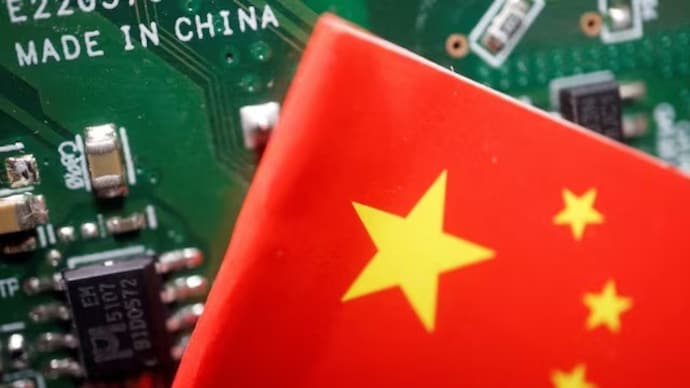
China rare earth patents have become a focal point in the global technology race as a new study reveals an important paradox. While China dominates the world’s rare earth mining and refining industries, it remains behind the United States and Japan in many of the high-value patents that power advanced applications such as Electric Vehicles, defense systems, semiconductors, renewable energy, and consumer electronics. The findings challenge the common perception that control over raw materials automatically translates into technological supremacy and underscore the growing importance of innovation, intellectual property, and advanced manufacturing in determining global competitiveness.
WHO dominates the rare earth industry? China controls the majority of global rare earth mining and processing. What does the latest study reveal? That Japan and the United States continue to lead in numerous core patents for advanced rare earth functional materials. When is this becoming strategically important? Amid intensifying competition over Critical Minerals and advanced technologies worldwide. Where are these materials used? Across defense, clean energy, electronics, healthcare, aerospace, and automotive industries. Why does the patent gap matter? Because intellectual property often determines who captures the highest economic value from technological innovation. How can China address the challenge? By strengthening research commercialization, industry-academia collaboration, and high-value patent development.
What Are Rare Earth Elements?
Rare earth elements (REEs) are a group of 17 chemically similar metallic elements that play a vital role in modern technology. Despite their name, many are relatively abundant in the Earth’s crust. However, economically viable deposits are difficult to locate, and separating individual rare earth elements requires highly specialized and environmentally intensive processing.
These elements possess unique magnetic, optical, electrical, and catalytic properties that make them indispensable for advanced manufacturing.
Common rare earth elements include:
- Neodymium
- Dysprosium
- Terbium
- Europium
- Cerium
- Lanthanum
- Yttrium
China’s Dominance in Rare Earth Supply Chain
China has spent decades building an integrated rare earth ecosystem that spans mining, refining, separation, processing, and exports.
According to widely accepted industry estimates, China accounts for approximately:
- About 70% of global rare earth mining.
- Nearly 90% of rare earth refining and processing capacity.
- A substantial share of global exports of processed rare earth materials.
This dominance has enabled China to become a critical supplier for manufacturers around the world.
Mining Leadership Does Not Equal Technology Leadership
The latest research highlights an important distinction between controlling raw materials and owning the technologies that transform those materials into sophisticated products.
Mining creates value, but significantly greater economic returns often come from downstream innovation.
Examples include:
- High-performance permanent magnets.
- Catalytic converters.
- LED phosphors.
- Precision polishing compounds.
- Medical imaging materials.
- Defense-grade magnetic systems.
These advanced products rely heavily on patented manufacturing techniques rather than simply access to raw minerals.
Why Patents Matter More Than Raw Materials
Patents protect inventions and manufacturing processes, giving companies exclusive rights to commercialize technological innovations.
In industries involving advanced materials, patents frequently determine:
- Market leadership.
- Licensing revenues.
- Manufacturing advantages.
- Global competitiveness.
- Technology transfer.
- Long-term innovation capacity.
Countries with stronger patent portfolios often capture a larger share of profits even if they import raw materials.
Japan’s Leadership in Permanent Magnet Technology
Permanent magnets represent one of the most valuable applications of rare earth elements.
They are essential components in:
- Electric vehicles.
- Wind turbines.
- Industrial robotics.
- Military aircraft.
- Precision manufacturing equipment.
- Consumer electronics.
Japan has invested in permanent magnet research for decades, enabling its companies to develop numerous high-value patents covering material composition, manufacturing techniques, and performance optimization.
United States Leads in Advanced Functional Materials
The study also indicates that the United States continues to maintain leadership across several high-value rare earth technologies.
These include:
- Catalytic materials.
- Luminescent compounds.
- Advanced polishing materials.
- Industrial processing technologies.
- Specialized manufacturing methods.
Many of these technologies are fundamental to semiconductor production, aerospace manufacturing, healthcare equipment, and clean energy systems.
Applications That Depend on Rare Earth Technologies
| Industry | Rare Earth Application | Importance |
|---|---|---|
| Electric Vehicles | Permanent magnets | High-efficiency motors |
| Defense | Radar, sonar, missile systems | National security |
| Renewable Energy | Wind turbine generators | Clean electricity production |
| Consumer Electronics | Smartphones and speakers | Miniaturization and performance |
| Medical Technology | MRI equipment and imaging | Advanced diagnostics |
| Semiconductors | Polishing compounds | Chip manufacturing |
The Value Lies Downstream
One of the study’s most significant findings is that downstream rare earth products account for more than 80% of rare earth-related patents worldwide.
These products include:
- Permanent magnets.
- Catalysts.
- Luminescent materials.
- Optical compounds.
- High-performance ceramics.
- Advanced polishing materials.
This demonstrates that the greatest commercial value is increasingly created after mining and refining rather than during resource extraction itself.
Challenges Within China’s Innovation Ecosystem
The researchers suggest several factors contributing to China’s technology gap.
These include:
- Lower proportion of internationally influential patents.
- Limited commercialization of academic research.
- Fragmented collaboration between universities and industry.
- Weak intellectual property management in certain sectors.
- Insufficient focus on breakthrough technologies.
While China files a large number of patents annually, quantity does not always translate into commercial influence or technological leadership.
Comparison: Resource Leadership vs Technology Leadership
| Factor | China | United States & Japan |
|---|---|---|
| Rare earth mining | Global leader | Limited production |
| Processing capacity | Largest worldwide | Smaller capacity |
| Advanced patents | Growing but limited | Strong leadership |
| High-value manufacturing | Expanding | More mature |
| Commercial technology influence | Improving | Established leadership |
Global Strategic Implications
Rare earth materials have become increasingly important in international economic and geopolitical competition.
Governments worldwide are investing billions of dollars to diversify supply chains, strengthen domestic processing capabilities, and reduce dependence on single suppliers.
Countries including the United States, Japan, Australia, Canada, India, and members of the European Union have introduced initiatives to develop alternative rare earth supply networks.
How This Affects India and Other Economies
India, Japan, South Korea, and European countries rely heavily on imported rare earth materials for manufacturing advanced products.
Disruptions in supply chains can affect industries including:
- Electric vehicle production.
- Electronics manufacturing.
- Defense procurement.
- Renewable energy projects.
- Telecommunications.
Consequently, many governments are accelerating efforts to develop domestic processing facilities and secure long-term mineral partnerships.
A Unique Insight: The Future Battle Is Over Intellectual Property, Not Just Minerals
The study illustrates a broader transformation occurring across global technology industries. During the twentieth century, access to natural resources often determined industrial strength. Today, ownership of intellectual property, proprietary manufacturing methods, and advanced material science increasingly defines competitive advantage.
This means countries that successfully combine resource security with research excellence and commercialization are likely to dominate the next generation of high-value manufacturing.
Future Outlook
China is expected to continue investing heavily in advanced materials research, semiconductor manufacturing, Artificial Intelligence, and industrial innovation to reduce dependence on foreign technologies. Greater emphasis on international-quality patents, stronger collaboration between universities and industry, and improved commercialization of research could gradually narrow the technology gap.
Meanwhile, the United States and Japan are likely to maintain their leadership in advanced rare earth technologies through sustained investment in research, intellectual property protection, and high-end manufacturing. Global competition in this sector is expected to intensify as clean energy, electric vehicles, defense modernization, and digital infrastructure continue driving demand for advanced rare earth applications.
Conclusion
The latest findings demonstrate that China’s rare earth dominance remains unmatched in mining and processing, but leadership in raw material production does not automatically translate into technological superiority. Japan and the United States continue to hold significant advantages in many of the patents that underpin the world’s most valuable rare earth applications, including permanent magnets, catalysts, luminescent materials, and precision manufacturing technologies.
As the Global Economy increasingly depends on advanced materials, the competition is shifting from control of natural resources toward ownership of innovation and intellectual property. The countries that successfully integrate abundant resources with cutting-edge research, globally influential patents, and high-value manufacturing will be best positioned to lead the next era of technological development.
For breaking news and live news updates, like us on Facebook or follow us on Twitter and Instagram. Read more on Latest World on thefoxdaily.com.






COMMENTS 0