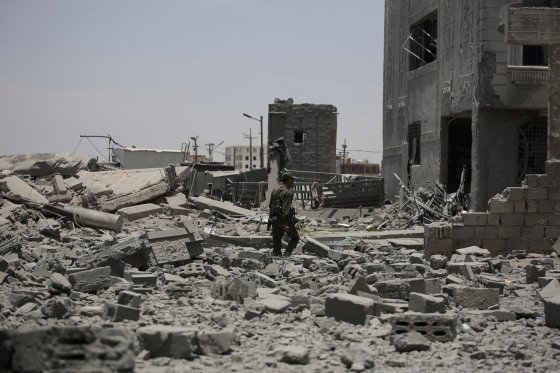
The Pentagon has confirmed that U.S. airstrikes targeting the Houthi movement in Yemen killed and wounded hundreds of civilians in April 2025, with 153 civilian deaths attributed to three strikes carried out during the month.
The disclosure comes more than a year after the attacks and confirms reporting by NBC News about the civilian toll of the U.S. military campaign in Yemen. The acknowledgment adds new detail to growing concerns over the impact of American bombardments on civilians while the United States was conducting operations against the Iran-backed Houthi movement.
According to the information released by the Trump administration, all of the reported civilian casualties occurred during three strikes in April 2025. The Pentagon’s confirmation provides an official acknowledgment of deaths that had already prompted questions about the consequences of the U.S. campaign.
What the Pentagon confirmed
The Pentagon’s assessment establishes that 153 civilians were killed in three U.S. strikes conducted in Yemen in April 2025 while American forces were targeting the Houthis.
The reported toll includes civilian deaths and injuries resulting from the bombardments, with the administration’s figures confirming the scale of the human impact more than a year after the strikes took place.
The confirmation is significant because civilian casualties during military operations can be difficult to establish while a conflict is ongoing. In this case, the Pentagon’s acknowledgment provides an official basis for the reported deaths rather than leaving the figures solely to outside reporting or local accounts.
However, the information provided does not establish further details about the individual strikes, including the specific weapons used, the exact locations of each attack or the circumstances surrounding every civilian death.
Three strikes accounted for the reported civilian deaths
The civilian casualties were concentrated in three U.S. strikes carried out in April 2025. The fact that all 153 reported deaths were linked to three attacks makes those operations particularly important to understanding the civilian consequences of the broader campaign.
The Pentagon’s confirmation does not mean that civilian casualties were limited to only those three incidents across the entire U.S. campaign. Rather, the information supplied in the report identifies those three April strikes as the attacks responsible for the reported 153 civilian deaths.
The distinction matters when assessing the overall impact of military operations in Yemen. A single strike can produce a large number of casualties, particularly when military action takes place near populated areas or when people are unable to leave an affected location before an attack.
For families and communities affected by the April strikes, the consequences extend beyond the number of people officially recorded as casualties. Civilian deaths can also affect households and communities that lose family members, caregivers and sources of income.
Why U.S. forces were striking the Houthis
The U.S. military campaign in Yemen was directed at the Houthi movement, which has been involved in a wider regional conflict and has carried out attacks that have drawn an international military response.
The strikes took place amid heightened tensions surrounding the Houthis and the broader regional security situation. The American campaign sought to target Houthi capabilities, but the Pentagon’s acknowledgment of civilian deaths demonstrates the difficulty of conducting military operations without affecting civilians.
The supplied information does not provide enough detail to establish the specific military objectives of each of the three April strikes. It therefore would be inappropriate to assume that all three attacks followed the same operational pattern or involved identical targets.
How the confirmation changes the picture
The Pentagon’s confirmation is important because it moves the reported civilian death toll from the realm of outside reporting into an officially acknowledged figure.
NBC News had previously reported that U.S. bombardments in Yemen killed and wounded hundreds of civilians in April 2025. More than a year later, the Pentagon’s confirmation supports the core finding that American strikes caused significant civilian casualties.
The timing of the acknowledgment is also notable. The attacks occurred in April 2025, while the Pentagon’s confirmation came more than a year later. Such a gap can make it difficult for the public to obtain a clear picture of civilian harm during an active military campaign.
For governments and military authorities, post-strike assessments can involve reviewing intelligence, targeting decisions, operational records and reports of casualties. The confirmation indicates that the Pentagon’s assessment ultimately attributed the deaths to the three U.S. strikes.
Growing concerns over civilian harm
The reported deaths have added to concerns about the consequences of U.S. military operations in Yemen.
Civilian protection is one of the most difficult challenges in modern air campaigns. Military forces may seek to strike specific targets, but the use of force in populated areas can create risks for people WHO are not directly involved in fighting.
The 153 civilian deaths confirmed by the Pentagon provide a concrete measure of that risk in the three April 2025 strikes.
The figure also raises questions about how military planners assess potential civilian harm before an attack and how authorities evaluate incidents after civilians are killed or injured. The information supplied for this report does not provide those operational details, so conclusions about the specific decision-making behind the three strikes would require additional evidence.
Why civilian casualty assessments matter
Official casualty assessments serve several purposes during and after military operations. They can help authorities determine whether civilians were harmed, examine what went wrong and evaluate whether changes are needed in future operations.
They can also provide families and the wider public with information about deaths that might otherwise remain disputed or undocumented.
In the Yemen campaign, the Pentagon’s acknowledgment is particularly significant because the reported casualties were caused by U.S. operations. An official admission can therefore become an important part of assessing the military campaign’s effectiveness and its humanitarian consequences.
Military objectives and civilian protection are not necessarily mutually exclusive, but achieving both requires careful targeting and assessment. When civilian deaths occur, determining exactly how and why they happened becomes essential for accountability and future decision-making.
The Yemen conflict creates a complicated operating environment
Yemen has endured prolonged conflict and instability, leaving civilians exposed to risks from multiple armed actors. Military operations take place within an environment where distinguishing between combat-related targets and civilian surroundings can be particularly difficult.
The U.S. campaign against the Houthis therefore carries risks beyond the immediate destruction caused by individual strikes. Civilian casualties can affect public perceptions of military action and add to the humanitarian burden in communities already affected by conflict.
The Pentagon’s confirmation of 153 civilian deaths does not by itself answer broader questions about the U.S. campaign. It does, however, establish that the military operation had a substantial civilian cost during the three April strikes identified by the administration.
What remains unclear
Several important details are not contained in the information released for this report.
The available material does not identify the exact locations of the three strikes, the number of civilians wounded in each attack, the intended military targets, the weapons used or the Pentagon’s detailed assessment of how civilian casualties occurred.
It also does not provide information about whether any disciplinary, operational or policy changes followed the findings.
Those details could be important for understanding the circumstances behind the civilian deaths. Without them, it is possible to establish the reported casualty figure but not to draw a complete conclusion about the decisions that led to the deaths.
What the Pentagon’s admission means for the U.S. campaign
The confirmation puts civilian casualties more prominently into the record of the U.S. military campaign against the Houthis.
For the Trump administration, the findings come amid continuing scrutiny of how American military operations affect civilians. The confirmation of 153 deaths means that the consequences of the April strikes cannot be assessed solely through the military objectives they were intended to achieve.
The civilian toll is now an established part of the story.
Whether the findings lead to further Investigation or changes in operational practices depends on what additional information the Pentagon releases and how authorities interpret the circumstances of the three strikes.
A year-old operation with continuing consequences
More than a year after the April 2025 attacks, the Pentagon’s confirmation has renewed attention on the human cost of U.S. military action in Yemen.
The reported 153 civilian deaths were concentrated in three strikes, but their significance extends beyond those individual operations. They raise broader questions about civilian protection, transparency and accountability during military campaigns.
The Pentagon’s acknowledgment also confirms the central finding of earlier reporting that U.S. bombardments in Yemen killed and wounded large numbers of civilians during April 2025.
For now, the confirmed figure provides the clearest measure available from the information released: 153 civilians were killed in three U.S. strikes while American forces were targeting the Houthis. The remaining questions concern the circumstances behind those deaths, the decisions that led to the strikes and whether the lessons from the incidents will influence future U.S. military operations.
For breaking news and live news updates, like us on Facebook or follow us on Twitter and Instagram. Read more on Latest World on thefoxdaily.com.



COMMENTS 0