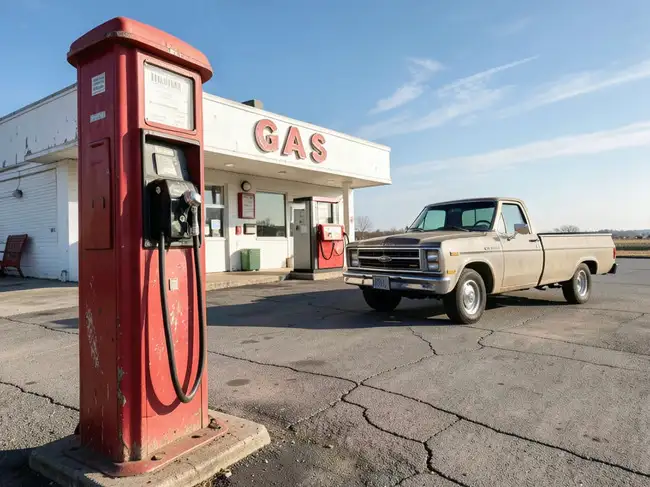
The comparison is striking because the two regions use the same global oil market but have very different approaches to taxing and pricing transport fuels. The difference is not simply about how much crude oil costs. Government duties, value-added tax, refining capacity, distribution networks and domestic energy policies all influence what motorists ultimately pay at the pump.
How do US gas prices compare with EU petrol prices?
Figures for the week of November 2, 2026, show that the average price of regular gasoline in the United States was approximately $4.153 per US gallon. Converted using the exchange rate of around €1 to $1.1216, this works out to approximately €0.98 per litre.
By comparison, the European Commission’s Weekly Oil Bulletin recorded a weighted average price of €1.929 per litre for Euro-super 95 petrol across the 27 EU member states during the same reference week.
This means the EU average was almost twice the US regular gasoline price when measured in euros per litre. Put another way, American motorists paid roughly €0.98 for a litre of regular gasoline, compared with nearly €1.93 for a litre of standard Euro 95 petrol in the EU.
The difference becomes clearer when the prices are converted into a common unit:
| Fuel price comparison | United States | European Union |
|---|---|---|
| Petrol price per litre | Approximately €0.98 | €1.929 |
| Petrol price in US dollars per gallon | $4.153 | Approximately $8.19 |
| Reference period | November 2, 2026 | November 2, 2026 |
The comparison uses US regular gasoline and the EU’s Euro-super 95 category. These are widely used consumer benchmarks, but they are not identical fuel specifications. The octane-rating systems used in the United States and Europe differ, so the figures should be understood as a practical retail-price comparison rather than a perfectly identical product comparison.
There are also differences between individual European countries. On November 2, petrol prices ranged from €1.34 per litre in Malta to €2.50 in Denmark. The Netherlands, Finland, France and Germany were also among the more expensive markets, while Poland, Bulgaria and Malta recorded lower prices.
Therefore, the EU-wide average does not mean that every European driver pays almost twice as much as an American motorist. Local taxes, national policies, competition and supply conditions create substantial differences between member states.
Are US diesel prices also lower than EU diesel prices?
Yes. Diesel is also more expensive on average across the European Union, although the difference is smaller than the petrol gap.
For the week of November 2, 2026, the EU weighted average diesel price was approximately €2.154 per litre. The corresponding US average was around $6.292 per gallon, equivalent to approximately €1.482 per litre at the exchange rate used for the comparison.
On this basis, EU diesel cost about 45% more per litre than US diesel. The difference is significant for truck operators, delivery companies, farmers and households that rely on diesel-powered vehicles.
| Diesel price comparison | United States | European Union |
|---|---|---|
| Price per litre | Approximately €1.482 | €2.154 |
| Price in US dollars per gallon | $6.292 | Approximately $9.15 |
| Reference period | November 2, 2026 | November 2, 2026 |
Diesel prices are influenced by more than crude oil costs. Refinery capacity, demand from freight and industrial users, seasonal consumption and international trade can all affect the final price. Europe also relies on international suppliers for a significant share of its refined fuel requirements, making the region sensitive to disruptions in global diesel markets.
In 2026, tensions surrounding energy supplies and the disruption of oil trade routes have added pressure to fuel markets. Diesel has been particularly exposed because it is essential to freight transport, agriculture and several industrial activities.
Why are petrol and diesel prices higher in Europe than in the US?
Several structural differences explain why European motorists generally pay more for fuel. The most important is taxation, but the difference also reflects the way the two regions produce, refine, distribute and regulate petroleum products.
1. Higher fuel taxes in European countries
Taxation is one of the biggest reasons for Europe’s higher petrol and diesel prices. EU member states impose excise duties and value-added tax (VAT) on transport fuels. These charges form a substantial part of the amount motorists pay at petrol stations.
According to the breakdown of the European Commission’s November 2 fuel-price data, taxes accounted for approximately 45.9% of the EU average petrol price. That represented around €0.885 of the €1.929 charged for each litre of Euro 95 petrol.
For diesel, taxes accounted for approximately 37.2% of the EU average price, or about €0.802 of the €2.154 paid per litre.
These figures show that a considerable portion of the European pump price goes to government revenue rather than directly covering the underlying cost of fuel.
European governments use fuel taxation for several purposes, including raising public revenue, financing transport infrastructure and encouraging more efficient energy consumption. Higher taxes can also support environmental policies by making fossil-fuel consumption more expensive relative to alternatives such as public transport and electric vehicles.
The United States also taxes gasoline and diesel, but its fuel taxes are generally much lower than those in Europe.
US federal gasoline tax is 18.4 cents per gallon, while the federal diesel tax is 24.4 cents per gallon. State governments impose additional taxes and fees. As of January 2026, the average state-level tax and fee component was approximately 33.27 cents per gallon for gasoline and 35.50 cents for diesel.
Although state-level rates differ, the overall US tax burden on fuel is substantially lower than the combined excise duties and VAT commonly applied in European markets.
2. The US has a large domestic oil and refining industry
The United States benefits from a large domestic oil and gas industry. Its extensive production infrastructure, pipelines, refineries and distribution networks help supply a huge domestic transport market.
Domestic production does not mean the country is completely independent of international oil markets. US crude oil and refined petroleum products are traded globally, and prices remain influenced by international supply and demand. The country also imports and exports different grades of crude oil and petroleum products.
However, the scale of US production and refining gives its market a different supply structure from that of many European countries. The availability of domestic crude, a large refining network and established transport infrastructure can support supply and competition in the domestic market.
Europe has significant refining capacity of its own, but individual countries have different levels of domestic production and dependence on imported crude oil and refined products. The EU’s Energy Market is also affected by international shipping routes, pipeline infrastructure and changes in the availability of supplies from major exporting regions.
This does not mean that American crude oil is automatically cheaper than oil purchased by European refiners. Global crude prices are an important influence on both markets. The difference at the pump is also shaped by taxes, refining costs, distribution and national pricing policies.
3. Different approaches to environmental and energy policy
European fuel taxation is closely connected to the region’s wider climate and transport policies. Many governments use taxes and other incentives to encourage motorists to reduce fossil-fuel consumption, choose more efficient vehicles or switch to electric transport.
Fuel duties and VAT are part of a broader policy framework that includes emissions regulations, renewable-energy targets and incentives for lower-carbon transport. These policies vary between EU member states, but they contribute to a generally higher tax component in retail Fuel Prices.
The United States also has vehicle-emissions standards, clean-energy programmes and incentives for electric vehicles. However, its approach to fuel taxation and transport policy has historically been different. Lower fuel taxes mean that a smaller share of the retail price is collected by governments, leaving American pump prices more directly exposed to movements in crude oil and wholesale fuel markets.
The International Energy Agency has highlighted this distinction, noting that average European fuel taxes are substantially higher than US levels. As a result, changes in international oil prices can have a different impact on the final amount paid by motorists in each market.
4. VAT and excise duties increase the final European price
European fuel prices are affected by two major forms of taxation: excise duties and VAT. Excise duties are generally charged as a fixed amount per unit of fuel, while VAT is calculated as a percentage of the taxable price.
This means that consumers can face a tax burden even when the underlying cost of crude oil or refined petrol falls. VAT can also increase as the pre-tax price rises, depending on the country’s tax rules.
Tax rates are not identical across the EU. The Netherlands, Finland, Greece and Italy, for example, had petrol prices above the EU average in the November 2 comparison. Malta and Poland were among the cheaper markets.
These differences demonstrate why there is no single European fuel-tax structure. Each country determines its own rates within the applicable EU framework, and national decisions can significantly influence retail prices.
5. Refining, transportation and distribution costs matter
Fuel does not move directly from an oil well to a vehicle’s tank. Crude oil must be transported to a refinery, processed into usable products and delivered through pipelines, ships, storage terminals and road tankers before reaching petrol stations.
Each stage adds costs. Refinery margins can change depending on the availability of crude oil, demand for particular fuels, maintenance schedules and the supply of competing petroleum products.
Transportation costs also vary. Countries with access to major ports, pipelines and nearby refineries may have different supply costs from landlocked markets or regions that depend heavily on imported refined products.
These factors help explain why petrol prices can vary considerably even between neighbouring European countries. They also explain why a global fall in crude oil prices does not always translate into an immediate or equally large reduction at every petrol station.
Does cheaper US petrol mean American oil is cheaper?
Not necessarily. The difference between US and European pump prices should not be interpreted as proof that crude oil is significantly cheaper in America.
Crude oil is traded in international markets, where prices respond to global production, demand, geopolitical developments, shipping conditions and decisions by major oil-producing countries. Both US and European refiners are exposed to these wider market forces.
The final retail price is made up of several components, including crude oil, refining, distribution, marketing and taxes. The proportions differ between countries and can change over time.
US Energy Information Administration data on gasoline price components illustrates the importance of crude oil costs in the American market. In August 2026, crude oil accounted for approximately 50.3% of the average US regular gasoline price, while taxes represented around 12.9%. Refining accounted for 24.4%, with distribution and marketing making up the remainder.
This breakdown helps explain why US motorists can still experience sharp increases when crude oil prices rise. Lower taxes provide a price advantage, but they do not protect drivers from international energy shocks.
Will the gap between US and EU gas prices continue?
The price difference is likely to remain a feature of the two markets as long as their taxation systems and energy policies remain substantially different. However, the exact gap can widen or narrow depending on international oil prices, currency movements, refining capacity and government decisions.
Global oil supply will remain a major influence
Any disruption to crude oil production or international shipping can affect both American and European motorists. Conflicts, sanctions, supply restrictions and interruptions to important trade routes can push up crude oil and refined-product prices.
Europe can be particularly exposed when disruptions affect the supply of imported crude oil or diesel. The United States has a large domestic production base, but its fuel market is not insulated from international price movements because oil and petroleum products are traded across borders.
Government tax decisions could change the difference
European governments could reduce fuel duties or temporarily adjust VAT to ease pressure on households and businesses. Such measures can lower pump prices, although their effect depends on the size and duration of the tax reduction.
In the United States, changes to federal or state fuel taxes could also influence the price advantage enjoyed by motorists. However, tax policy is only one part of the retail-price calculation, and movements in crude oil and refining costs could outweigh a modest tax adjustment.
Electric vehicles could influence long-term fuel demand
The transition towards electric vehicles is another factor that could reshape fuel markets over the coming years. European countries have introduced a range of policies to encourage electric mobility, while the US is also seeing changes in vehicle technology and consumer demand.
If electric-vehicle adoption reduces petrol and diesel consumption, refineries and fuel distributors may need to adjust their operations. The impact on prices will depend on how quickly demand changes, how much refining capacity remains available and whether fuel taxes are redesigned as governments seek alternative sources of transport revenue.
Currency movements can alter the comparison
The US-EU price gap is also influenced by the exchange rate between the dollar and the euro. International oil is commonly priced in US dollars, while European consumers pay for fuel in euros.
If the euro weakens against the dollar, imported oil and petroleum products can become more expensive for European buyers, even if the underlying dollar price remains unchanged. A stronger euro can have the opposite effect.
Currency movements do not directly determine the entire retail price, but they can influence the cost of imported energy and change how large the difference appears when prices are converted into a common currency.
What the US-Europe fuel price gap really shows
The difference between American and European fuel prices is primarily a reflection of contrasting tax systems, energy-market structures and government policies. In the November 2, 2026, comparison, EU petrol averaged €1.929 per litre, almost twice the approximately €0.98 paid for US regular gasoline. Diesel was also more expensive in Europe, although the gap was smaller.
Higher European fuel taxes explain a substantial part of the difference, while domestic production, refining infrastructure, distribution costs and international supply conditions also shape prices. The United States is not immune to oil-market volatility, and European prices are not determined by taxes alone.
For motorists, the central lesson is that the price displayed at a petrol station reflects much more than the cost of crude oil. Government taxation and the structure of the energy market can make the same broad category of fuel significantly more expensive in one region than another.
For breaking news and live news updates, like us on Facebook or follow us on Twitter and Instagram. Read more on Latest World on thefoxdaily.com.






COMMENTS 0