Poland has launched a Terrorism Investigation into a deadly shooting in the southern city of Krakow that left six people dead and several others injured. Prosecutors are examining the suspect’s possible motives, including indications that he was influenced by far-right ideologies.
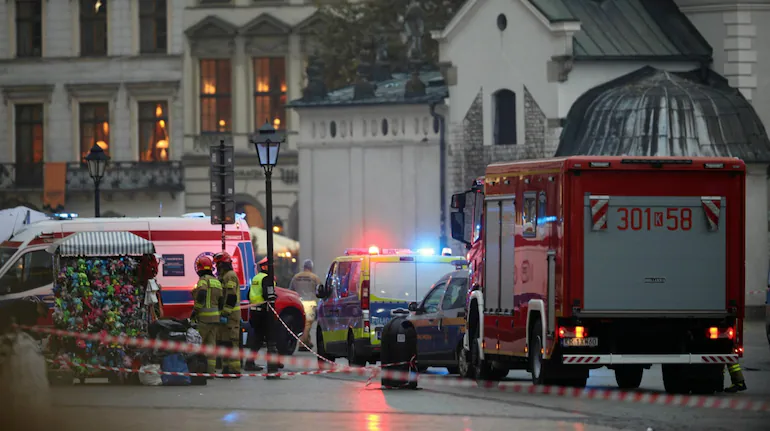
The attack took place on Saturday, November 7, in Krakow’s historic Main Market Square, one of Poland’s busiest tourist destinations. A Polish national in his mid-20s allegedly opened fire on people in the area before exchanging gunfire with police officers. He was wounded during the confrontation and remains in critical condition in hospital.
The National Prosecutor’s Office said it was investigating the killing of six people with a firearm and the attempted murder of several others, including police officers. The case is being treated as a suspected terrorist offence.
Prime Minister Donald Tusk described the shooting as an act of terrorism, while Interior Minister Marcin Kierwinski said preliminary information suggested that the suspect held radical, ultranationalist views and was fascinated by far-right ideologies. Investigators have not yet established a definitive motive or confirmed whether the attacker had connections to any extremist organisation.
The discovery of three additional bodies at the suspect’s family home has added another dimension to the investigation. Police identified the deceased as his parents and sister, whose bodies showed injuries preliminarily assessed as gunshot wounds.
Six Killed in Krakow’s Historic Main Market Square
The shooting occurred at around 3 pm on Saturday in Krakow’s Main Market Square, a major public space in the city’s historic centre. The area is surrounded by restaurants, cafes, shops and historic buildings and regularly attracts large numbers of residents and international visitors.
According to police accounts, the suspect drove into the area and opened fire at random. Witnesses reported hearing multiple gunshots as people ran for cover in nearby streets and buildings.
The victims included four women and two men. A British national was among those killed, while Polish authorities were still working to establish the identities and nationalities of all the victims.
Reports on the number of injured initially varied. Police and several news agencies reported 15 people wounded, while other accounts put the figure at 16 when including the suspect. The injured included two police officers and nationals from countries including Austria, Britain, Germany, Portugal and Russia.
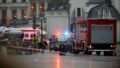
The Main Market Square and surrounding streets were sealed off as emergency services treated victims and investigators began examining the scene. Police also checked the suspect’s vehicle for additional weapons and possible explosives.
Police Officers Confront Gunman in Shootout
Police officers responding to the shooting confronted the suspect as he continued firing. According to authorities, the attacker was wearing military-style clothing, including a bulletproof vest, and was carrying a semi-automatic firearm.
The suspect reportedly left his vehicle and opened fire on officers who were pursuing him. Police returned fire, wounding him before taking him into custody. He was transported to hospital in critical condition and underwent medical treatment.
Two police officers were injured during the confrontation. One was reported to be in serious but stable condition, while the other suffered multiple gunshot wounds and was initially described as being in a critical condition.
One of the wounded officers was identified as Jakub Kulik. Police appealed to the public for blood donations to support his treatment. Prime Minister Tusk also identified the officers as Jakub Kulik and Artur Moranski, praising their actions during the confrontation.
Tusk said the officers had likely saved many lives by confronting the armed attacker despite the danger. Their response has become a central part of the public discussion about how the attack was stopped.
Videos circulating on social media showed people fleeing the square and seeking shelter as gunfire continued. Other footage appeared to show emergency responders attempting to resuscitate victims and police officers exchanging shots with the suspect. Authorities are expected to examine available recordings as part of the investigation.
Suspect’s Parents and Sister Found Dead at Family Home
In a separate development, police discovered three bodies at the suspect’s home in Ostrowiec Świętokrzyski, approximately 150 kilometres northeast of Krakow. Authorities later identified the deceased as the suspect’s parents and sister.
The victims were a 53-year-old man and two women aged 52 and 21. Police said their bodies had injuries that were preliminarily assessed as gunshot wounds.
Seven firearms were seized from the apartment, while Interior Minister Kierwinski said additional weapons had also been found in the suspect’s vehicle. Investigators are examining whether the firearms recovered from the home and car were connected to the Krakow attack.
The discovery has raised questions about the events leading up to the shooting and whether the suspect may have been involved in other violent incidents before travelling to Krakow. However, authorities have not publicly established the circumstances or timing of the relatives’ deaths.
Polish media identified the suspect by the name Michał O., although authorities have not made his identity a central part of their public statements. Local media reports said he had no previous criminal record and was associated with a shooting club alongside his father.
Investigators will need to establish how the suspect obtained the firearms, whether he acted alone and whether the deaths at the family home were connected to the attack. The findings could help explain whether the shooting was part of a wider sequence of violence.
Poland Investigates Suspected Far-Right Ideological Influence
One of the main questions facing investigators is whether extremist ideology played a role in the attack. Interior Minister Marcin Kierwinski said the suspect appeared to hold very radical views and was fascinated by far-right ideologies.
The comments have prompted authorities to examine the suspect’s background, personal communications, online activity and possible associations. Investigators are also expected to examine whether he consumed extremist material or had contact with individuals or groups promoting political violence.
However, the minister’s remarks represent preliminary indications rather than a final conclusion about the motive. Authorities have not publicly established that the suspect was a member of a far-right organisation or that another person directed or assisted the attack.
The National Prosecutor’s Office is investigating the killings and attempted murders as a suspected terrorist offence. That classification reflects the seriousness and possible nature of the crime, but the final legal assessment will depend on the evidence gathered by prosecutors.
Polish authorities have also indicated that the suspect appeared to have acted alone. Investigators are nevertheless examining whether there were accomplices, whether the attack was planned in advance and whether the weapons were legally obtained.
The suspect’s apparent fascination with far-right ideology will be an important part of the inquiry, but investigators must establish a direct connection between any ideological influence and the decision to carry out the violence.
Why the Terrorism Investigation Matters
Poland’s decision to investigate the shooting as a suspected terrorist offence means prosecutors will examine more than the immediate circumstances of the killings. They will also seek to establish whether the attack was motivated by extremist beliefs or intended to spread fear beyond its immediate victims.
Investigators will need to assess the suspect’s communications, access to weapons, possible preparations and any evidence of ideological motivation. The discovery of additional firearms and ammunition makes the examination of his weapons access particularly important.
The investigation also has implications for public safety in a country where mass shootings are uncommon. Authorities will be under pressure to explain how the suspect obtained the weapons and whether warning signs were missed before the attack.
At this stage, the evidence made public does not establish a wider extremist network or a coordinated terrorist operation. The investigation must distinguish between an individual’s ideological beliefs, the motive for a specific crime and any organised involvement.
Poland Begins Two Days of National Mourning
Poland began a two-day period of national mourning on Sunday, November 8, to honour the six people killed in Krakow. Public flags were lowered to half-mast, while black ribbons appeared on Polish flags across the country.
In Krakow, mourners gathered near the Main Market Square to leave candles and pay tribute to the victims. The area remained partly sealed as police and forensic investigators continued their work. Several nearby cafes and souvenir shops remained closed during the mourning period.
The traditional trumpet call from St Mary’s Church, which overlooks the square, was suspended for 12 hours in memory of those killed. The performance is a familiar feature of Krakow’s public life and is traditionally played at regular intervals from the church tower.
The suspension was widely seen as a symbolic gesture of mourning in a city where the square is an important part of local identity and tourism.
Krakow residents expressed shock at the violence. One local resident told AFP that she was devastated by the attack and had considered the city one of the safest places in the world. She said the shooting would change how people viewed the square and their sense of security.
In Warsaw, police increased security around busy public areas and locations popular with tourists. Barriers were installed on streets leading towards Krakowskie Przedmieście in the historic centre of the capital.
International Victims and Response to the Attack
The presence of foreign nationals among the victims has also drawn international attention. A British citizen was confirmed among those killed, while injured people included nationals from Austria, Britain, Germany, Portugal and Russia.
The incident prompted expressions of sympathy from political leaders outside Poland. British Prime Minister Andy Burnham expressed shock and sadness over the attack and offered condolences to the victims’ families and those injured.
British authorities also advised their citizens in Krakow to follow local instructions and monitor updates from Polish authorities. The attack took place in a city that receives large numbers of international visitors throughout the year, making the safety of tourists an important concern.
For Poland, the incident has highlighted the vulnerability of crowded public spaces, even in cities where mass shootings are rare. The investigation is expected to examine not only the suspect’s motives but also the security response and the circumstances that allowed the attack to unfold.
Mass Shootings Remain Uncommon in Poland
The Krakow Shooting has shaken a country where mass shootings are relatively rare compared with several other parts of Europe and the United States. Poland has strict firearms regulations, although the number of people holding gun permits has increased in recent years.
Figures cited in reports put the number of people holding firearms permits at approximately 411,000 in a country with a population of around 37 million. The increase in interest in gun ownership has been linked to a range of factors, including security concerns and recreational shooting.
The fact that the suspect was reportedly associated with a shooting club has added to questions about firearms access and oversight. Investigators will need to establish which weapons were legally registered, where they were stored and whether the suspect complied with the conditions attached to any firearms licence.
The incident has also renewed discussion about extremist content and the potential for individuals to move from radical beliefs towards violence. Polish officials have previously raised concerns about attacks and threats involving extremist material, although the circumstances of those incidents differ from the Krakow shooting.
Recent Attacks Have Raised Public Safety Concerns
The Krakow attack comes amid wider concerns about violence in public spaces. In October, three attacks at schools in Poland’s central Mazovia province took place within four days, leaving one person dead and several others injured, including children.
Those incidents involved knives or other sharp objects rather than firearms. Officials linked some of the concerns surrounding the attacks to extremist material circulating online, prompting renewed attention to the influence of digital content on violent behaviour.
Although the school attacks and the Krakow shooting are separate incidents, their proximity has intensified public discussion about prevention, early intervention and the ability of authorities to identify individuals who may pose a threat.
The Krakow shooting has also prompted questions about the protection of crowded public locations. Main Market Square is an open public space with restaurants, pedestrian areas and tourist attractions. Maintaining security in such places without disrupting ordinary public life presents a challenge for authorities.
What Investigators Must Establish Next
The immediate priority for Polish investigators is to establish the full sequence of events before, during and after the shooting. This includes examining the suspect’s movements, the firearms recovered from his car and home, and evidence from the locations where the victims were found.
Investigators will also need to determine whether the suspect killed his relatives before travelling to Krakow, whether the same firearms were involved and whether there was any connection between the family deaths and the public shooting.
The suspect’s medical condition could affect the timing of formal questioning. Police and prosecutors may need to rely initially on forensic evidence, witness accounts, surveillance footage and digital records to reconstruct what happened.
Another central question is whether the attack was motivated by far-right extremism or another personal or ideological factor. Authorities have identified possible extremist influences but have not yet provided a definitive explanation.
The investigation will also examine the suspect’s firearms licence and shooting-club connections to understand how he obtained access to the weapons. Any evidence of illegal possession, unsafe storage or breaches of firearms regulations could lead to additional legal questions.
Krakow Faces the Challenge of Recovery After the Shooting
Beyond the criminal investigation, the attack has left a lasting impact on a city whose historic centre is closely associated with tourism, cultural events and public gatherings. The Main Market Square is not simply a tourist attraction; it is also a central meeting place for residents and an important part of Krakow’s identity.
The national mourning period and public tributes have provided an opportunity for residents to remember those killed and support the injured. The return of normal activity will depend partly on the progress of the investigation and the authorities’ assessment of security risks.
For the families of the victims, the immediate priority remains dealing with the loss of loved ones and supporting those receiving medical treatment. The injured police officers and other survivors also face a recovery process following the violence.
The Krakow shooting has raised serious questions about extremist influence, access to firearms and public safety in Poland. But the final answers will depend on the evidence collected by investigators, not preliminary descriptions of the suspect’s ideology.
As prosecutors continue their terrorism investigation, Poland faces the task of establishing the motive, determining whether anyone else was involved and ensuring accountability for the six deaths. The two days of national mourning mark the country’s immediate response to the tragedy, while the investigation will determine what happened and whether further preventive measures are necessary.
For breaking news and live news updates, like us on Facebook or follow us on Twitter and Instagram. Read more on Latest World on thefoxdaily.com.


COMMENTS 0