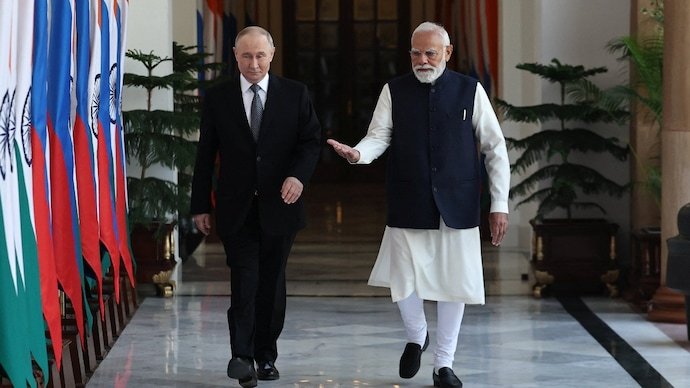
Prime Minister Narendra Modi‘s diplomatic engagement with Russia and Ukraine has once again come into the international spotlight after Poland‘s Deputy Foreign Minister Wladyslaw Teofil Bartoszewski claimed that the Indian leader helped dissuade Russian President Vladimir Putin from considering the use of tactical nuclear weapons during a critical phase of the Ukraine war in late 2022.
Speaking after the India-Poland Joint Economic Commission meeting in New Delhi, Bartoszewski described Modi as one of the few global leaders whose advice carries significant weight in Moscow because of India’s decades-long strategic relationship with Russia. Although the claim has not been independently verified by Russian or Indian officials, it underscores the perception among several international observers that India occupies a unique diplomatic position capable of engaging with both Russia and Western nations.
The remarks also highlight India’s evolving global role as a country that increasingly seeks to influence international crises through dialogue, strategic autonomy, and diplomatic engagement rather than military alliances.
Key Highlights
| Issue | Details |
|---|---|
| Who Made the Claim? | Poland’s Deputy Foreign Minister Wladyslaw Teofil Bartoszewski. |
| Main Assertion | PM Narendra Modi helped persuade Vladimir Putin not to use tactical nuclear weapons in 2022. |
| Context | Ukraine conflict during heightened nuclear tensions. |
| India’s Position | Consistent advocacy for dialogue, diplomacy and peaceful resolution. |
| Strategic Significance | Highlights India’s growing diplomatic influence on global security issues. |
What the Polish Minister Said
During his interaction with the media, Bartoszewski said Prime Minister Modi is widely respected internationally and maintains a unique relationship with President Putin that allows for frank discussions even during periods of geopolitical confrontation.
According to the Polish minister, Modi’s engagement with the Russian leadership during the Ukraine Conflict demonstrated that India could play a constructive role in encouraging restraint and preventing further escalation.
He also suggested that India remains among the few major powers capable of maintaining open communication channels with Moscow while preserving strong relations with Western democracies.
The Context: Nuclear Concerns in Late 2022
The claim relates to a period when international concern over potential nuclear escalation reached one of its highest levels since the Cold War.
As fighting intensified in Ukraine during 2022, several global leaders urged restraint amid speculation about the possible use of tactical nuclear weapons. Governments across Europe, North America and Asia emphasized that any nuclear escalation would have catastrophic humanitarian, political and economic consequences.
Although no nuclear weapons were ultimately used, diplomatic efforts by multiple countries sought to reduce tensions and reinforce the importance of preventing further escalation.
What Are Tactical Nuclear Weapons?
Tactical nuclear weapons are generally designed for use on the battlefield against military targets rather than cities. They typically have a lower explosive yield than strategic nuclear weapons, which are intended to strike large urban or industrial centers.
Despite their smaller size, tactical nuclear weapons would still have devastating humanitarian and environmental consequences and could dramatically increase the risk of a wider nuclear conflict.
Most international security experts agree that any use of nuclear weapons—regardless of yield—would fundamentally alter global security dynamics.
India’s Position on the Russia-Ukraine War
Since the conflict began, India has consistently advocated for diplomacy and dialogue while avoiding direct alignment with either side.
New Delhi has repeatedly emphasized that:
- Conflicts should be resolved through peaceful negotiations.
- Respect for international law remains important.
- Humanitarian assistance should continue.
- Global food and Energy Security must be protected.
- Escalation should be avoided.
India has also maintained communication with both Russian President Vladimir Putin and Ukrainian President Volodymyr Zelenskyy throughout the conflict.
“Today’s Era Is Not of War”
One of the defining moments of India’s diplomatic engagement occurred in September 2022 when Prime Minister Modi told President Putin that “today’s era is not of war.”
The remark received widespread international attention and was viewed by many governments as a clear public call for de-escalation while preserving India’s independent foreign policy approach.
Since then, India has continued encouraging dialogue during bilateral meetings and international summits.
Why India’s Relationship With Russia Is Unique
India and Russia share a strategic partnership that spans several decades.
Key areas of cooperation include:
- Defence cooperation.
- Energy security.
- Civil nuclear collaboration.
- Space cooperation.
- Trade and investment.
- Scientific research.
This long-standing relationship allows India to maintain direct communication with Russian leadership even during periods of heightened geopolitical tension.
Balancing Relations With the West
While preserving ties with Russia, India has simultaneously strengthened strategic partnerships with the United States, the European Union, Japan, Australia, and several other democratic nations.
This balanced foreign policy approach—often described as strategic autonomy—allows India to engage constructively with multiple global powers while making decisions based on its national interests.
The approach has become a defining feature of India’s contemporary diplomacy.
Energy Security Remains a Key Consideration
India has continued purchasing Russian crude oil during the conflict, arguing that affordable energy remains essential for its economic development and energy security.
Government officials have consistently stated that energy procurement decisions are guided by national requirements while maintaining compliance with applicable international regulations.
Energy security continues to be a central pillar of India’s foreign and economic policy.
Poland Also Backed India’s Diplomatic Approach
Beyond Ukraine, Bartoszewski expressed support for India’s diplomatic engagement in West Asia, particularly regarding tensions involving Iran.
He noted that both Poland and India continue to favor diplomatic solutions over military escalation, emphasizing dialogue as the preferred path toward regional stability.
The remarks suggest increasing recognition of India’s role as a constructive diplomatic partner in addressing multiple international crises.
India’s Growing Global Influence
| Area | India’s Expanding Role |
|---|---|
| Global Diplomacy | Maintaining dialogue with competing geopolitical blocs. |
| Energy Security | Balancing affordable imports with strategic partnerships. |
| Conflict Resolution | Advocating diplomacy and peaceful negotiations. |
| Multilateral Forums | Active participation in G20, BRICS, SCO, Quad and the United Nations. |
| Economic Influence | Growing importance in global trade and investment. |
What the Claim Means Geopolitically
Whether or not the specific claim regarding tactical nuclear weapons is independently confirmed, the statement itself reflects India’s growing diplomatic standing.
Increasingly, international partners view India as a country capable of communicating with governments that may have limited engagement with one another.
Such diplomatic credibility can become increasingly valuable as geopolitical competition intensifies and global conflicts grow more complex.
Future Outlook
The Ukraine conflict continues without a comprehensive political settlement, making sustained diplomatic engagement essential. Countries capable of maintaining dialogue with multiple stakeholders are expected to play an increasingly important role in supporting future peace initiatives.
India’s emphasis on strategic autonomy, dialogue, and balanced diplomacy is likely to remain central to its foreign policy as it expands its global influence and seeks a greater role in international governance, including its longstanding aspiration for permanent membership of the United Nations Security Council.
Conclusion
Poland’s Deputy Foreign Minister’s claim that Prime Minister Narendra Modi helped persuade President Vladimir Putin against using tactical nuclear weapons has renewed international attention on India’s diplomatic influence during the Ukraine conflict. Although the assertion has not been independently verified, it reinforces the perception of India as a trusted interlocutor capable of engaging with diverse global powers.
By maintaining communication with both Russia and Ukraine while consistently advocating diplomacy, India has positioned itself as an important voice in efforts to reduce international tensions. As geopolitical challenges continue to evolve, New Delhi’s strategy of strategic autonomy and dialogue is likely to remain a defining feature of its growing role on the global stage.
For breaking news and live news updates, like us on Facebook or follow us on Twitter and Instagram. Read more on Latest India on thefoxdaily.com.



COMMENTS 0