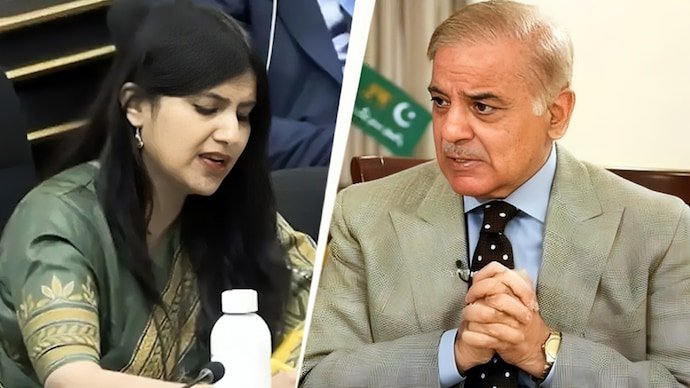
India mounted a forceful diplomatic offensive against Pakistan at the United Nations Human Rights Council (UNHRC), describing its neighbour as a “Frankenstein state” that created and nurtured terrorist networks only to suffer the consequences of those very policies.
The remarks, delivered by Indian diplomat Anupama Singh during a UNHRC session, represented one of New Delhi’s most direct attacks on Pakistan’s counterterrorism narrative in recent years.
Her intervention came amid continuing tensions between the two countries over Terrorism, Kashmir, cross-border militancy, and regional security.
By invoking the metaphor of a “Frankenstein state,” India sought to highlight what it sees as a fundamental contradiction in Pakistan’s position: a country accused of supporting militant organisations while simultaneously claiming to be one of terrorism’s biggest victims.
The Remark That Grabbed Global Attention
During her address, Singh argued that Pakistan’s repeated claims of being a victim of terrorism lacked credibility given its own historical record.
She stated that Pakistan represented a unique paradox in international affairs—a state that allegedly cultivated militant networks as instruments of policy and later found itself threatened by some of those same forces.
The diplomat said Pakistan appeared “shocked when its own monster bites back,” a phrase that quickly became the defining quote of the exchange.
The statement reflected India’s long-held position that Pakistan’s security establishment has, for decades, distinguished between groups it considers strategic assets and those it regards as threats.
Indian officials have consistently argued that such distinctions are unsustainable because extremist organisations eventually destabilise the very systems that enable them.
The Context Behind the ‘Frankenstein State’ Reference
The term “Frankenstein” originates from Mary Shelley’s famous novel in which a creator loses control over a monster of his own making.
In geopolitical discussions, the phrase is often used to describe situations where governments support armed groups or militant organisations that later become difficult to control.
India’s reference appeared aimed at Pakistan’s historical relationship with various militant groups operating in South Asia.
For decades, international observers, intelligence agencies, and policymakers have debated the extent to which elements within Pakistan’s security apparatus supported certain organisations during conflicts in Afghanistan and Kashmir.
Pakistan has repeatedly denied allegations that it currently sponsors terrorism and has emphasized its own sacrifices in combating extremist violence.
However, the issue continues to remain a major source of friction between Islamabad and New Delhi.
The Significance of Khawaja Asif’s Remarks
India’s criticism gained additional attention because it appeared to reference comments made previously by Pakistan’s Defence Minister Khawaja Asif.
During a widely discussed interview, Asif acknowledged that Pakistan had, over several decades, participated in policies aligned with Western strategic objectives during various regional conflicts.
He suggested that Pakistan had performed what he called “dirty work” on behalf of larger powers and later paid a heavy price for those decisions.
Although Pakistani officials have framed such comments within the context of Cold War and post-9/11 Geopolitics, India frequently cites them as evidence supporting its long-standing allegations regarding Pakistan’s past policies toward militant groups.
The remarks continue to be referenced in diplomatic exchanges because they are viewed by Indian officials as rare public admissions from a senior Pakistani leader.
The Kashmir Dimension of the Diplomatic Clash
Beyond terrorism, the exchange also focused heavily on Kashmir.
India used the UN forum to reiterate its position that Jammu and Kashmir is an integral and inseparable part of the country.
At the same time, New Delhi accused Pakistan of using Kashmir-related rhetoric to divert international attention from its own domestic challenges.
This argument has become a recurring feature of India’s diplomatic responses whenever Pakistan raises Kashmir at international platforms.
Indian officials often contend that Islamabad attempts to internationalise the issue in order to deflect scrutiny from political instability, economic challenges, and Governance issues within its own territory.
Pakistan, meanwhile, maintains that Kashmir remains an unresolved international dispute and continues to advocate for international attention to developments in the region.
Why Rawalakot Became Part of the Debate
A major component of India’s intervention focused on recent unrest in Pakistan-occupied Kashmir (POK), particularly in Rawalakot.
Protests erupted across the region over rising living costs, electricity tariffs, Inflation, and economic hardships.
Demonstrators demanded greater subsidies and relief measures as economic pressures intensified.
The protests eventually escalated into confrontations with authorities, resulting in casualties and injuries.
India used these events to argue that residents of Pakistan-occupied Kashmir were facing political repression and economic neglect.
By highlighting Rawalakot at the UNHRC, New Delhi sought to shift attention toward governance conditions in territories administered by Pakistan.
The move reflects a broader diplomatic strategy in which India increasingly challenges Pakistan not only on terrorism but also on human rights and governance issues.
The Battle of Narratives at International Forums
The exchange illustrates how international institutions have become key battlegrounds for India and Pakistan.
While military tensions between the two nuclear-armed neighbours often attract headlines, diplomatic confrontations at global forums are equally significant.
Both countries regularly use platforms such as the United Nations, international conferences, and multilateral organizations to advance competing narratives.
Pakistan frequently raises concerns regarding Kashmir and human rights.
India, in turn, counters by focusing on terrorism, cross-border militancy, and Pakistan’s internal challenges.
These exchanges are rarely aimed solely at each other.
Instead, they are often intended for the wider international audience of diplomats, policymakers, investors, and global institutions.
Pakistan’s Position on Terrorism
Pakistan consistently rejects accusations that it supports terrorism.
Its leaders emphasize that the country has suffered immensely from extremist violence over the past two decades.
Thousands of civilians, military personnel, and law enforcement officers have lost their lives in terrorist attacks.
Islamabad argues that its counterterrorism operations have dismantled numerous militant networks and that it remains committed to combating extremism.
Pakistani officials also point to international recognition of their efforts against terrorism and stress that the country itself has been a frontline state in the global fight against extremist organisations.
However, critics contend that questions remain regarding the distinction between groups targeted by Pakistani authorities and those perceived as useful for strategic purposes.
This debate continues to shape international discussions about regional security.
How India’s Strategy Has Evolved
India’s diplomatic approach toward Pakistan has evolved significantly over the past decade.
Rather than focusing exclusively on cross-border terrorism, New Delhi increasingly links terrorism issues with broader concerns involving governance, political stability, economic management, and human rights.
This strategy aims to challenge Pakistan’s credibility on multiple fronts simultaneously.
Indian diplomats now frequently combine discussions about militant groups with references to unrest in Pakistan-occupied Kashmir, minority rights concerns, economic difficulties, and political instability.
The goal appears to be creating a broader narrative that portrays Pakistan’s internal challenges as interconnected rather than isolated problems.
The Broader Geopolitical Context
The timing of the exchange is notable because South Asia is undergoing significant geopolitical changes.
Regional security dynamics are increasingly influenced by developments in Afghanistan, China’s growing role in the region, evolving India-US ties, and shifting global power structures.
Against this backdrop, India and Pakistan continue competing for international support and diplomatic influence.
Each country seeks to shape how global institutions perceive regional security issues.
Statements made at forums like the UNHRC therefore carry significance beyond immediate headlines.
They contribute to long-term efforts to influence international opinion and policy.
What the UN Exchange Reveals
The sharp rhetoric exchanged at the UN Human Rights Council demonstrates that despite periodic calls for dialogue, the diplomatic relationship between India and Pakistan remains deeply adversarial.
Fundamental disagreements persist over terrorism, Kashmir, territorial claims, and regional security.
Neither side appears willing to soften its position on these issues.
Instead, international forums increasingly serve as arenas where both governments seek to reinforce their respective narratives before the global community.
As regional tensions continue to evolve, such confrontations are likely to remain a regular feature of India-Pakistan diplomacy.
Conclusion
India’s description of Pakistan as a “Frankenstein state” at the UNHRC was more than a provocative diplomatic phrase. It encapsulated New Delhi’s broader argument that Pakistan’s historical approach toward militant groups has produced long-term consequences that continue to destabilise the region.
By linking terrorism, unrest in Pakistan-occupied Kashmir, and broader governance issues, India sought to challenge Pakistan’s portrayal of itself as primarily a victim of extremism.
Whether one agrees with that characterization or not, the exchange underscores how terrorism remains at the centre of one of the world’s most enduring geopolitical rivalries. As both countries continue to battle for influence at international forums, the struggle over narratives may prove nearly as consequential as developments on the ground.
For breaking news and live news updates, like us on Facebook or follow us on Twitter and Instagram. Read more on Latest India on thefoxdaily.com.






COMMENTS 0