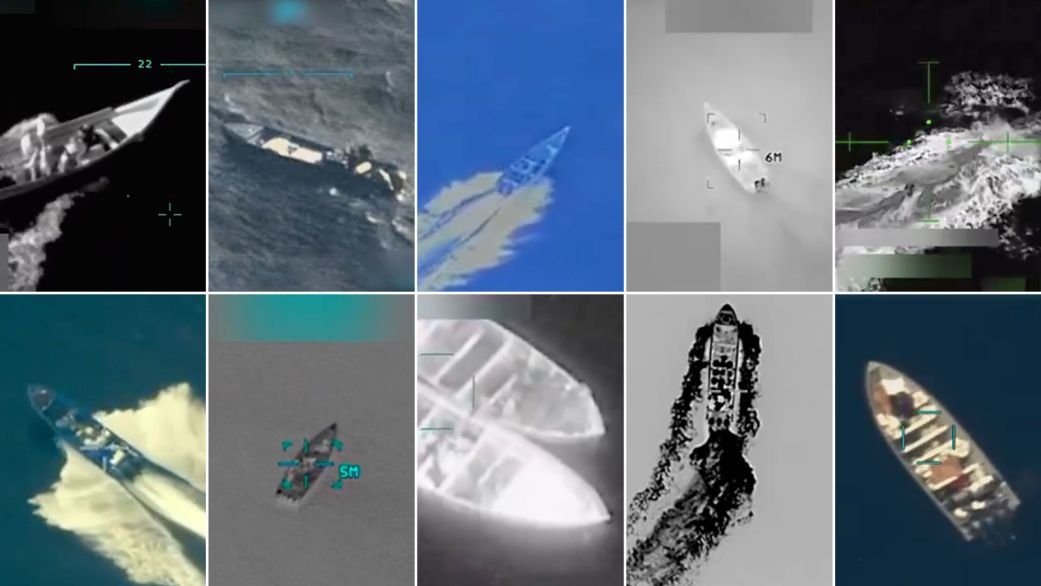
- What the Timeline Reveals
- From Interdiction to Airstrikes: A Strategic Shift
- The Legal Controversy: “Armed Conflict” Designation
- Search and Rescue Efforts: Limited Success
- Human Rights Concerns: Calls for Transparency
- A Missing Piece: Evidence and Accountability
- Operational Perspective: No US Casualties
- A Broader Insight: The Militarization of Drug Policy
- Global Implications: A Precedent in International Waters
- What Happens Next?
- Conclusion: A Defining Debate in Modern Security Policy
The United States has carried out a series of maritime strikes targeting suspected drug-trafficking vessels, resulting in the deaths of at least 180 people and the destruction of dozens of boats. What Washington describes as a decisive escalation in its fight against narcotics trafficking is increasingly being scrutinized as a major shift in both Military doctrine and legal interpretation.
At the center of the debate is a fundamental question: can suspected drug traffickers be treated as combatants in an armed Conflict?
What the Timeline Reveals
Over the past several months, US forces have conducted repeated strikes in international waters, targeting vessels believed to be linked to drug smuggling networks. These operations mark a departure from traditional law enforcement approaches.
Key figures from the campaign include:
- At least 54 vessels destroyed
- Over 180 people killed
- At least 15 known survivors
- Additional individuals reported missing after search efforts were suspended
The most recent strike occurred on April 19, continuing a pattern of operations that has intensified since late 2025.
From Interdiction to Airstrikes: A Strategic Shift
Historically, US counter-narcotics efforts at sea focused on interception. Suspected traffickers were detained, prosecuted, and processed through the legal system.
That approach has now changed significantly.
| Approach | Previous Strategy | Current Strategy |
|---|---|---|
| Primary Method | Interdiction and arrest | Direct military strikes |
| Legal Framework | Criminal law enforcement | Armed conflict designation |
| Outcome | Prosecution in courts | Lethal engagement |
This transformation reflects a broader redefinition of drug cartels not as criminal enterprises, but as entities engaged in conflict with the United States.
The Legal Controversy: “Armed Conflict” Designation
The US administration has informed congress that it considers itself in an “armed conflict” with drug cartels. This classification carries significant implications.
Under this framework:
- Individuals on targeted vessels are labeled “unlawful combatants”
- Lethal force can be used without traditional judicial oversight
- Operations fall under military, rather than law enforcement, authority
Critics argue that this interpretation stretches the definition of armed conflict and risks bypassing established legal protections.
Search and Rescue Efforts: Limited Success
Despite the scale of operations, search and rescue missions have often struggled to locate survivors.
Several incidents highlight the challenges:
- Searches following strikes in October, January, and February were suspended without success
- In one case, eight survivors were believed to be in the water but were not located
- Some survivors were briefly detained before being returned to their home countries
These outcomes raise concerns about the humanitarian dimension of such operations, particularly in open ocean environments where survival windows are limited.
Human Rights Concerns: Calls for Transparency
Human Rights organizations and some lawmakers have raised serious questions about the campaign.
Key concerns include:
- Lack of publicly available evidence linking targeted vessels to drug trafficking
- Absence of due process for those killed
- Potential violations of international maritime and humanitarian law
Critics argue that even suspected traffickers should be subject to arrest and trial, not summary lethal action.
A Missing Piece: Evidence and Accountability
One of the most contentious aspects of the campaign is the limited public disclosure of evidence.
Authorities have not consistently provided proof that:
- The vessels carried narcotics
- Passengers were affiliated with organized cartels
This lack of transparency fuels skepticism and complicates international acceptance of the strategy.
Operational Perspective: No US Casualties
From a military standpoint, the campaign has been executed without reported harm to US personnel.
This reflects:
- Use of advanced surveillance and targeting systems
- Operations conducted at distance, minimizing direct engagement risks
However, operational success does not necessarily resolve ethical or legal concerns.
A Broader Insight: The Militarization of Drug Policy
This campaign signals a deeper shift the militarization of counter-narcotics policy.
For decades, drug enforcement has operated within a legal framework focused on policing and prosecution. By contrast, the current approach treats trafficking as a Security threat comparable to armed insurgency.
This raises critical questions:
- Does military force effectively deter drug trafficking?
- Could such actions escalate violence in trafficking networks?
- What precedent does this set for future international operations?
The answers remain uncertain, but the implications are far-reaching.
Global Implications: A Precedent in International Waters
Operations conducted in international waters add another layer of complexity. These areas are governed by international law, where jurisdiction and Use of Force are tightly regulated.
If widely accepted, this approach could:
- Encourage other nations to adopt similar tactics
- Blur the line between law enforcement and military action
- Increase tensions in already sensitive maritime regions
In effect, this is not just a domestic policy shift it is a global signal.
What Happens Next?
Short-Term
- Continued strikes as part of ongoing operations
- Increased scrutiny from lawmakers and advocacy groups
Medium-Term
- Potential legal challenges to the “armed conflict” classification
- Greater demands for transparency and oversight
Long-Term
The strategy could reshape how nations approach transnational crime either reinforcing military involvement or prompting a return to legal frameworks.
Conclusion: A Defining Debate in Modern Security Policy
The timeline of US strikes on suspected drug-trafficking vessels represents more than a series of operations it marks a turning point in how crime, security, and warfare intersect.
While the goal of disrupting drug flows remains clear, the methods being used have opened a complex debate about legality, morality, and effectiveness.
As the campaign continues, one thing is certain: the line between war and law enforcement is becoming increasingly blurred.
For breaking news and live news updates, like us on Facebook or follow us on Twitter and Instagram. Read more on Latest World on thefoxdaily.com.






COMMENTS 0