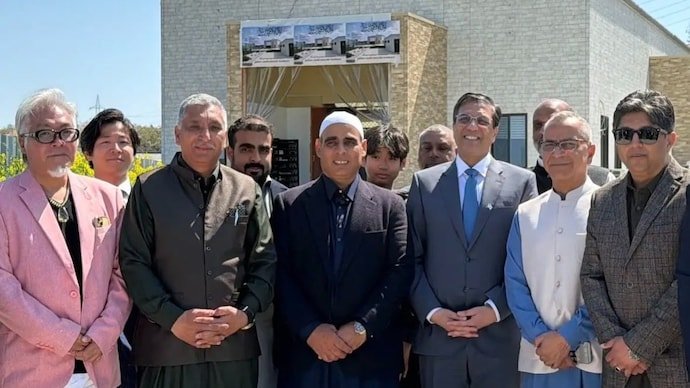
A mosque built by members of Pakistan‘s diaspora in Japan has become the center of a growing Controversy after city authorities in Kawagoe determined that the structure was constructed without the permissions required under Japanese law.
The issue has drawn national attention not only because the mosque was inaugurated in April by Pakistan’s Ambassador to Japan, Abdul Hameed, but also because local authorities are now reviewing requests seeking the building’s demolition.
What began as a community religious project has evolved into a complex legal, political, and social dispute involving municipal regulations, diplomatic sensitivities, neighborhood concerns, and questions about how religious infrastructure should be developed in one of the world’s most rule-oriented societies.
What Happened in Kawagoe?
The mosque was constructed in Kawagoe, a historic city located in Saitama Prefecture near Tokyo. According to Kawagoe City Hall, the structure was built in an urban development control area where construction is generally restricted unless specific approvals are obtained under Japan’s City Planning Act.
Municipal authorities stated that the required permissions were never granted.
The city further explained that officials spent considerable time attempting to guide those involved toward corrective measures. However, the building had already been completed and inaugurated before the legal issues became public.
Authorities have since acknowledged receiving requests from concerned parties seeking demolition of the structure, and the proposal is currently under review.
Why Japan’s City Planning Laws Are Strict
To outside observers, the controversy may appear to be a dispute about religion. However, Japanese authorities have emphasized that the issue is primarily about compliance with urban planning regulations.
Japan maintains some of the world’s most detailed land-use and zoning laws.
These regulations are designed to:
- Prevent uncontrolled urban sprawl.
- Protect agricultural and environmentally sensitive areas.
- Ensure infrastructure capacity matches development.
- Maintain neighborhood character and safety.
- Reduce future legal disputes.
Construction in designated control zones often requires extensive reviews, consultations, and permits before any building activity can begin.
In Japan, even relatively small development projects can involve significant regulatory oversight compared with many other countries.
The Embassy’s Clarification and Diplomatic Embarrassment
The controversy placed Pakistan’s diplomatic mission in Tokyo in an uncomfortable position.
After reports emerged that the mosque lacked required approvals, the embassy issued public statements emphasizing that it had no involvement in any project that violated Japanese law.
The embassy stated that Ambassador Abdul Hameed attended the inauguration after being informed that all necessary approvals had already been secured.
The clarification was notable because diplomatic representatives typically avoid involvement in local legal disputes.
By publicly distancing itself from the project, the embassy sought to reassure Japanese authorities that Pakistan officially supports compliance with local regulations and respects Japanese legal processes.
Religious Freedom Versus Regulatory Compliance
The controversy highlights an important distinction often misunderstood in international debates.
Most modern democracies, including Japan, protect freedom of religion.
However, religious freedom does not exempt organizations from building codes, zoning regulations, environmental laws, or planning requirements.
Places of worship, whether they are mosques, churches, temples, or synagogues, are generally required to comply with the same legal framework that governs other construction projects.
The central issue in Kawagoe is therefore not whether a mosque can exist, but whether the building was legally constructed.
The Growth of Japan’s Muslim Community
The dispute also shines a spotlight on Japan’s steadily growing Muslim population.
While Muslims remain a small minority in Japan, Immigration, international Education, business exchanges, and tourism have increased demand for religious facilities across the country.
Over the past two decades, dozens of mosques and Islamic centers have been established in major Japanese cities.
Many serve not only Pakistani communities but also people from Indonesia, Bangladesh, Malaysia, Turkey, the Middle East, and Africa.
The growth of these communities has encouraged greater cultural diversity while also creating new challenges involving integration, planning approvals, and local engagement.
The Importance of Community Consultation in Japan
One of the most significant aspects of the controversy involves local residents.
Japanese authorities have indicated that because the structure lacked official approval, they cannot verify whether adequate consultations occurred with neighboring communities before construction.
This is an important issue in Japanese society.
Unlike many countries where legal permits alone are often sufficient, Japanese development culture places considerable value on consensus-building and community communication.
Developers frequently engage residents before construction begins, explaining how projects may affect traffic, noise levels, parking, and local infrastructure.
Failure to conduct such consultations can generate opposition even when projects are legally permitted.
A Historical Perspective: Religious Buildings and Local Resistance
The Kawagoe controversy is not unique to Japan.
Throughout history, religious buildings have occasionally become focal points for wider debates about law, identity, and community change.
Across Europe, North America, and Asia, proposed places of worship have sometimes faced objections related to:
- Zoning regulations.
- Traffic concerns.
- Parking requirements.
- Environmental impact.
- Neighborhood character.
- Population growth.
In many cases, the underlying disputes involve administrative procedures rather than theology.
The Kawagoe case appears to fit within this broader global pattern where legal compliance becomes central to community acceptance.
What Happens if the Mosque Is Demolished?
If authorities ultimately decide demolition is necessary, the consequences could extend beyond the physical structure itself.
Such a decision could have financial implications for those who funded the project and emotional consequences for community members who viewed the mosque as a religious and cultural center.
At the same time, Japanese authorities may view enforcement as essential for maintaining the credibility of planning regulations.
Allowing unauthorized construction to remain untouched could create precedents that weaken future enforcement efforts.
The challenge for city officials will be balancing legal consistency with social sensitivity.
Lessons for Diaspora Communities Worldwide
The controversy offers broader lessons for immigrant and diaspora communities across the world.
Religious and community projects often emerge from sincere intentions and grassroots fundraising efforts. However, successful projects require more than financial support.
They also require:
- Full legal compliance.
- Transparent planning processes.
- Community engagement.
- Professional legal guidance.
- Ongoing dialogue with local authorities.
Projects that neglect these foundations can face significant obstacles regardless of their social or religious importance.
The Bigger Picture: Trust, Law, and Integration
Perhaps the most important lesson from the Kawagoe mosque controversy is that successful multicultural integration depends heavily on trust.
Trust between immigrant communities and local governments is built when laws are respected, communication is transparent, and concerns are addressed before disputes arise.
Japan, like many developed nations, is becoming increasingly diverse. As that diversity grows, both local authorities and minority communities will face new opportunities and challenges.
The long-term success of that relationship will depend not only on legal compliance but also on mutual understanding and cooperation.
Conclusion
The controversy surrounding the mosque in Kawagoe is about far more than a single building. It sits at the intersection of urban planning, religious freedom, community relations, immigration, and Diplomacy.
While local authorities continue reviewing the structure’s future, the case has already become a powerful example of how legal procedures and community engagement can shape the success or failure of religious infrastructure projects.
Whether the mosque ultimately remains standing or is demolished, the incident is likely to be remembered as an important lesson in the importance of regulatory compliance, transparency, and constructive dialogue in an increasingly interconnected world.
For breaking news and live news updates, like us on Facebook or follow us on Twitter and Instagram. Read more on Latest World on thefoxdaily.com.






COMMENTS 0