- A Diplomatic Opening Few Expected
- Understanding the Context: Why US-Iran Talks Matter
- Pakistan’s Diplomatic Strategy: Opportunity Meets Necessity
- Timeline: How Pakistan Positioned Itself as a Mediator
- The “Transactional Diplomacy” Factor
- Why the Talks Are Stalled
- Comparison: Pakistan vs Traditional Mediators
- The India Angle: A Missed Opportunity?
- Real-World Impact: Why This Matters Globally
- New Insight: Diplomacy as Reputation Repair
- Prediction: What Happens Next?
- Conclusion: A Calculated Diplomatic Gamble
A Diplomatic Opening Few Expected
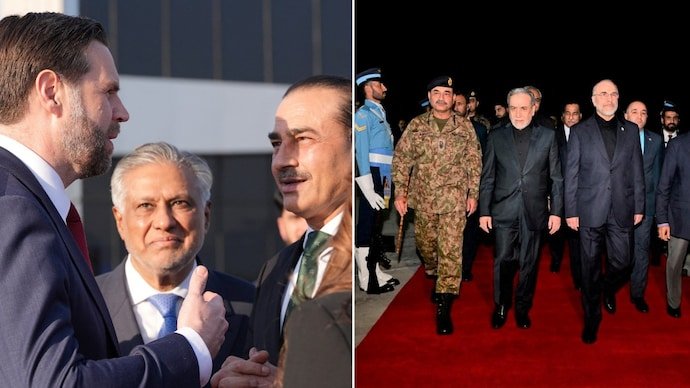
Can Pakistan really position itself as a credible mediator between the United States and Iran? That question, once unthinkable, is now central to global diplomatic conversations. As tensions simmer in the Middle East and negotiations stall, Islamabad has stepped into an unexpected role facilitator, bridge-builder, and strategic opportunist.
The ongoing US-Iran talks, hosted in Islamabad, have not yet produced a breakthrough. But they have already achieved something significant for Pakistan: visibility. In geopolitics, visibility is power. And for a country navigating economic stress and regional pressures, this moment offers a rare chance to reshape its international image.
This article explores how Pakistan is leveraging the US-Iran talks to elevate its global standing, what it means for regional stability, and whether this diplomatic gamble can deliver lasting results.
Understanding the Context: Why US-Iran Talks Matter
The United States and Iran have been locked in a cycle of confrontation for decades. From nuclear disagreements to regional proxy conflicts, the relationship has remained fraught and unpredictable.
The latest phase of tension escalated with:
- Military confrontations and strategic posturing in the Middle East
- Disruptions in global oil supply routes, especially the Strait of Hormuz
- Economic sanctions and countermeasures
Against this backdrop, dialogue is not just desirable it is necessary. Even limited talks can reduce the risk of miscalculation and provide breathing space for diplomacy.
That’s where Pakistan enters the picture.
Pakistan’s Diplomatic Strategy: Opportunity Meets Necessity
Pakistan’s involvement is not accidental. It is the result of deliberate positioning.
Islamabad has long maintained working relationships with both Washington and Tehran. While its ties with the United States have fluctuated over the years, its geographic proximity and cultural links with Iran provide a unique advantage.
More importantly, Pakistan has a direct stake in regional stability.
- Nearly 90% of its oil imports come from the Middle East
- Any disruption in energy supply hits its already fragile economy
- Regional instability spills over into domestic security concerns
In simple terms: peace is not just ideal for Pakistan it is essential.
Timeline: How Pakistan Positioned Itself as a Mediator
| Phase | Key Development | Strategic Impact |
|---|---|---|
| Early 2025 | Renewed outreach to US leadership | Rebuilt diplomatic channels |
| Mid-2025 | Counter-terror cooperation initiatives | Improved trust with Washington |
| Late 2025 | Economic and strategic engagement | Expanded cooperation areas |
| April 2026 | Hosted US-Iran talks | Elevated global diplomatic role |
This progression highlights a key insight: mediation is rarely spontaneous. It is built through groundwork, signaling, and timing.
The “Transactional Diplomacy” Factor
One of the most important and often overlooked drivers behind Pakistan’s rise as a mediator is its adaptation to transactional diplomacy.
Modern geopolitics is increasingly less about ideology and more about deals. Pakistan appears to have recognized this shift early.
Instead of positioning itself as a moral arbitrator, Islamabad has focused on delivering tangible value:
- Security cooperation
- Strategic intelligence sharing
- Economic engagement opportunities
This approach aligns closely with the current global trend where influence is earned through outcomes rather than rhetoric.
Why the Talks Are Stalled
Despite Pakistan’s efforts, the talks have hit a roadblock.
The reasons are complex but can be simplified into three major factors:
1. Continued Pressure Tactics
Iran is unlikely to engage meaningfully while facing economic and military pressure. Negotiating under duress rarely produces durable agreements.
2. Strategic Mistrust
Decades of hostility mean both sides approach talks with caution. Every move is scrutinized, and concessions are hard to make.
3. Internal Dynamics in Iran
Political divisions within Iran complicate decision-making. Different factions may have competing priorities, making unified negotiation difficult.
These factors explain why hosting talks is one thing but achieving results is another.
Comparison: Pakistan vs Traditional Mediators
| Factor | Pakistan | Traditional Mediators (e.g., Europe, Oman) |
|---|---|---|
| Geographic Proximity | High | Moderate |
| Political Neutrality | Moderate | High |
| Strategic Stakes | Very High | Moderate |
| Influence on Parties | Growing | Established |
This comparison reveals a critical insight: Pakistan’s strength lies not in neutrality, but in relevance. It is deeply affected by the outcome, which can sometimes make it a more motivated mediator.
The India Angle: A Missed Opportunity?
An interesting dimension to this development is the suggestion that another regional power could have played this role.
India, with its strong ties to both the United States and Iran, has historically been well-positioned to act as a bridge. However, shifting geopolitical alignments and strategic priorities have limited its involvement in this specific context.
This highlights a broader lesson in diplomacy: opportunities are time-sensitive. If not seized, they are quickly filled by others.
Real-World Impact: Why This Matters Globally
This is not just about Pakistan’s image. The stakes are much higher.
1. Energy Security
The Strait of Hormuz is a critical artery for global oil supply. Any instability directly impacts fuel prices worldwide.
2. Global Markets
Uncertainty in the Middle East triggers volatility in financial markets, affecting everything from stock indices to currency stability.
3. Regional Stability
Escalation between the US and Iran could draw in multiple countries, turning a bilateral conflict into a wider regional crisis.
In this context, even partial success in mediation can have outsized benefits.
New Insight: Diplomacy as Reputation Repair
Here’s a perspective often missing in mainstream analysis:
Pakistan’s mediation role is not just about influencing others it’s also about reshaping how the world sees it.
For years, global narratives around Pakistan have been dominated by security concerns and economic instability. Acting as a peacemaker allows Islamabad to:
- Project stability and responsibility
- Attract international engagement
- Strengthen its bargaining position in global forums
In other words, diplomacy is being used as a tool for reputation management.
Prediction: What Happens Next?
Looking ahead, three scenarios are possible:
- Breakthrough Scenario: Talks resume and produce limited agreements, boosting Pakistan’s credibility
- Stalemate Scenario: Negotiations remain frozen, but Pakistan retains its role as a facilitator
- Escalation Scenario: Tensions rise, sidelining diplomacy altogether
The most likely outcome lies somewhere between the first two. Even without a major breakthrough, maintaining dialogue channels is a win in itself.
Conclusion: A Calculated Diplomatic Gamble
Pakistan’s emergence as a mediator in US-Iran talks reflects a strategic shift in its foreign policy from reactive to proactive.
While the talks themselves remain uncertain, the broader objective is already being achieved: increasing international relevance.
In today’s geopolitical landscape, being at the table often matters as much as what is achieved on it.
For Pakistan, this moment represents more than a diplomatic experiment. It is a test of whether calculated engagement can translate into lasting influence.
The outcome will not only shape its global standing but also offer a glimpse into how middle powers can navigate an increasingly complex world order.
For breaking news and live news updates, like us on Facebook or follow us on Twitter and Instagram. Read more on Latest World on thefoxdaily.com.




COMMENTS 0