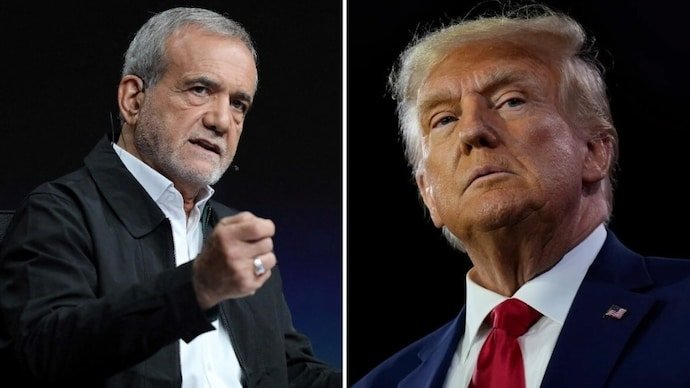
- Ceasefire or Strategic Pause? Conflicting Narratives Take Center Stage
- Iran’s Strategic Messaging: Deterrence Through Warning
- The Oil Factor: Economics Behind the Rhetoric
- Diplomatic Breakdown: Why Talks Are Failing
- The Nuclear Question: Core of the Conflict
- Military Readiness: Preparing for the Next Phase
- Political Dynamics in the United States
- Comparison: Ceasefires That Didn’t Last
- Information Warfare: Competing Realities
- Future Outlook: Three Possible Scenarios
- Conclusion: A Fragile Peace Built on Uncertainty
Just weeks after a fragile ceasefire, Iran has issued a stark warning: the war with the United States could resume. The statement, delivered by senior military official Mohammad Jafar Asadi, reflects more than routine rhetoric it signals a deepening breakdown in trust between Tehran and Washington at a moment when tensions remain dangerously high. As both sides exchange accusations and contradictory claims, the situation raises a critical question: is the ceasefire a pause, or merely the calm before another escalation?
Who is involved? Iran, the United States, and Israel three key players shaping the region’s security landscape. What is happening? Iran claims renewed conflict is likely due to what it sees as US non-compliance with agreements. When? In the immediate aftermath of a declared ceasefire that ended active hostilities. Where? Across the broader Middle East geopolitical theatre. Why? Competing narratives over nuclear policy, military action, and diplomatic commitments. How? Through public statements, strategic positioning, and ongoing political deadlock.
Ceasefire or Strategic Pause? Conflicting Narratives Take Center Stage
At the heart of the tension lies a fundamental disagreement over reality itself. The United States, under President Donald Trump, has framed the situation as a concluded conflict claiming the war has effectively been “terminated” following a ceasefire. Iran, however, sees something very different.
From Tehran’s perspective, the ceasefire is not a resolution but a temporary halt one that could collapse at any moment. Iranian officials argue that US actions and statements suggest a lack of genuine commitment to long-term agreements. This divergence in interpretation is not just semantic; it directly impacts how both sides prepare for what comes next.
In conflict dynamics, perception often matters as much as reality. If one side believes peace is temporary while the other believes it is settled, the risk of miscalculation increases significantly.
Iran’s Strategic Messaging: Deterrence Through Warning
Iran’s statement that war is “likely” to resume is not merely a prediction it is a calculated message. By publicly asserting readiness and framing the US as unreliable, Tehran is attempting to achieve several strategic objectives simultaneously.
- Deterrence: Warning of readiness aims to discourage preemptive or surprise actions from adversaries.
- Narrative Control: Positioning the US as untrustworthy strengthens Iran’s diplomatic stance globally.
- Domestic Stability: Reinforcing preparedness reassures internal audiences amid uncertainty.
This type of messaging is common in high-stakes geopolitical standoffs. It allows a country to project strength without immediate escalation, while still shaping the strategic environment in its favor.
The Oil Factor: Economics Behind the Rhetoric
One of the more revealing aspects of Iran’s statement is its claim that US messaging is “media-driven” and tied to oil prices. This introduces an economic dimension that is often overlooked in surface-level analysis.
Oil markets are highly sensitive to geopolitical instability. Even the perception of renewed conflict can drive prices upward, affecting global economies. By accusing the US of manipulating narratives to influence oil prices, Iran is highlighting how energy economics and military strategy are deeply intertwined.
Whether or not this claim holds true, it underscores a critical reality: modern conflicts are fought not just on battlefields, but also in Financial Markets.
Diplomatic Breakdown: Why Talks Are Failing
The latest tensions come amid stalled negotiations between Iran and the United States. Reports indicate that a recent Iranian proposal was rejected by President Trump, who described the terms as unacceptable and criticized Iran’s leadership as fragmented.
This breakdown reveals deeper structural issues in the negotiation process:
- Mutual Distrust: Both sides question the other’s intentions and credibility.
- Internal Divisions: Claims of fragmented leadership complicate consistent policy-making.
- Non-Negotiable Red Lines: Key issues particularly around nuclear capabilities leave little room for compromise.
diplomacy in such an environment becomes less about reaching agreement and more about managing conflict. The longer this stalemate persists, the higher the risk that military options regain prominence.
The Nuclear Question: Core of the Conflict
At the center of the US-Iran tension is the issue of nuclear capability. President Trump’s blunt statement that the conflict exists because “lunatics can’t have a nuclear weapon” reflects a hardline stance that leaves little room for diplomatic nuance.
For the United States and its allies, preventing nuclear proliferation in Iran is a top priority. For Iran, however, the issue is tied to sovereignty, deterrence, and regional influence. This fundamental clash of perspectives makes resolution extremely difficult.
In strategic terms, this is not just a policy disagreement it is a conflict over long-term security architecture in the Middle East.
Military Readiness: Preparing for the Next Phase
Iran’s armed forces have emphasized that they are on high alert and prepared for any escalation. This is not unusual in post-ceasefire environments, where both sides maintain readiness in case hostilities resume.
However, such readiness also increases the risk of accidental escalation. In high-tension scenarios, even minor incidents misinterpreted movements, technical errors, or localized clashes can spiral into larger conflicts.
This creates a paradox: the more prepared both sides are for war, the easier it becomes for war to restart.
Political Dynamics in the United States
The situation is further complicated by internal political factors within the United States. The debate over the War Powers Resolution highlights ongoing tensions between the executive branch and congress regarding military authority.
The resolution requires congressional approval for sustained military engagement, yet the deadline has passed without decisive action. This ambiguity creates uncertainty not just domestically, but also internationally.
For Iran, this may reinforce perceptions of inconsistency in US policy. For allies, it raises questions about the predictability of American decision-making in prolonged conflicts.
Comparison: Ceasefires That Didn’t Last
| Conflict | Ceasefire Outcome | Key Lesson |
|---|---|---|
| US-Iran (Current) | Uncertain, fragile | Trust deficit undermines stability |
| Israel-Hezbollah (2006) | Temporary stability | Deterrence can hold but tensions remain |
| India-Pakistan (Multiple) | Repeated violations | Ceasefires often act as pauses, not solutions |
| Russia-Ukraine (Various phases) | Frequent breakdowns | Military readiness drives renewed conflict |
This comparison highlights a consistent pattern: ceasefires without strong trust and enforcement mechanisms rarely lead to lasting peace.
Information Warfare: Competing Realities
Both Iran and the United States are actively shaping narratives around the conflict. While Iran emphasizes US unreliability, Washington projects strength and finality. These competing narratives serve different audiences:
- Domestic Audiences: Reinforcing political legitimacy and public support
- Allies: Signaling strength and commitment
- Adversaries: Deterring escalation through perception management
In modern conflicts, controlling the narrative can be as important as controlling territory.
Future Outlook: Three Possible Scenarios
Looking ahead, the situation could evolve in several ways:
- Renewed Conflict: Escalation triggered by breakdown in negotiations or military incidents
- Prolonged Standoff: Continued tension without direct confrontation, marked by rhetoric and strategic positioning
- Unexpected Diplomacy: A breakthrough agreement driven by external pressure or shifting political priorities
At present, the second scenario appears most likely but the margin for error remains dangerously thin.
Conclusion: A Fragile Peace Built on Uncertainty
Iran’s warning that war could resume is not مجرد rhetoric it reflects a deeper instability rooted in mistrust, competing narratives, and unresolved strategic conflicts. While a ceasefire may have paused active fighting, it has not addressed the underlying issues that led to the confrontation.
The coming weeks will be critical. Whether through diplomacy or escalation, the actions of both Tehran and Washington will determine whether the region moves toward stability or slips back into conflict.
For now, the situation remains balanced on a knife’s edge where words, perceptions, and decisions carry consequences far beyond the headlines.
For breaking news and live news updates, like us on Facebook or follow us on Twitter and Instagram. Read more on Latest World on thefoxdaily.com.






COMMENTS 0