- Why the Strait of Hormuz Crisis Changed Everything
- The Quiet Return of Russian Oil Through Third Countries
- Why Europe Never Fully Escaped Russian Energy Dependence
- The Druzhba Pipeline and Europe’s Sanctions Dilemma
- How Hungary Became Central to the Energy Standoff
- Did Vladimir Putin Gain Without Doing Anything?
- The Bigger Problem: Energy Security vs Sanctions Morality
- Why India and Turkey Became Important in the Oil Trade
- Europe’s Long-Term Energy Reality
- Could This Mark the Beginning of Sanctions Fatigue?
- The Geopolitical Lesson Europe Cannot Ignore
- Conclusion
For more than two years, Britain publicly positioned itself as one of the toughest Western powers confronting Russia economically after the invasion of Ukraine. London repeatedly emphasized strict sanctions, energy restrictions, and coordinated pressure designed to weaken Moscow’s ability to finance war.
Then, almost without fanfare, the UK government issued a licence allowing Russian oil refined in countries such as India and Turkey to re-enter British markets.
There was no major televised announcement. No dramatic policy briefing. Just a quietly published document on a government website.
But behind that understated administrative move lies a far larger story one involving war in the Middle East, the closure of the Strait of Hormuz, soaring fuel prices, Europe’s unresolved dependence on Russian energy, and the growing reality that sanctions become difficult to sustain when economic pressure begins hitting domestic markets.
The decision highlights one of the harshest truths of modern Geopolitics: energy security often overrides political messaging when crises intensify.
Why the Strait of Hormuz Crisis Changed Everything
The immediate trigger for the UK’s policy shift was the disruption surrounding the Strait of Hormuz following escalating conflict linked to the US-Iran war.
The Strait of Hormuz is not just another shipping route. It is one of the most strategically important energy chokepoints in the world.
Roughly one-fifth of global oil trade passes through it.
For Europe, the consequences of disruption were immediate and severe.
More than half of Europe’s jet fuel supplies moved through the region, and when shipping routes became effectively unusable, fuel markets reacted with extraordinary speed.
| Impact of the Hormuz Crisis on Fuel Markets | Effect |
|---|---|
| Jet Fuel Prices | Rose from $831 to $1,838 per tonne |
| European Airlines | Flight cancellations and rising operating costs |
| Energy Markets | Supply shock and volatility |
| Sanctions Policy | Pressure to ease restrictions on Russian-linked oil |
| European Governments | Increased concern over energy shortages |
The sudden spike in prices exposed how fragile Europe’s post-Russia energy strategy still remains.
Even after years of sanctions and diversification efforts, the continent remains vulnerable to Global energy disruptions.
The Quiet Return of Russian Oil Through Third Countries
The UK’s licence effectively allows Russian crude refined in third countries such as India and Turkey to enter British supply chains.
This matters because refined oil products often become legally and commercially reclassified after processing in another country.
In practical terms, Russian-origin crude can be refined abroad and sold onward without directly appearing as Russian exports.
Critics argue this creates a loophole large enough to undermine the political purpose of sanctions.
Supporters counter that energy markets operate on practical necessity, not ideological purity.
The UK government described the move as a phased implementation adjustment. Critics described it more bluntly: a sanctions rollback forced by market reality.
Why Europe Never Fully Escaped Russian Energy Dependence
One of the most misunderstood aspects of Europe’s sanctions regime is that Russian energy ties were never completely severed.
Europe significantly reduced dependence on Russian seaborne oil after the Ukraine war began, and that had a measurable impact on Moscow’s revenues.
However, pipeline infrastructure created long-term structural dependencies that proved far harder to dismantle.
This is especially true in Central Europe.
Countries such as Hungary and Slovakia continued relying heavily on Russian crude delivered through the Druzhba pipeline network.
The reason is not merely political sympathy toward Moscow although Politics certainly played a role.
The deeper issue is infrastructure compatibility.
Many refineries in Central Europe were specifically designed decades ago to process Russian-grade crude oil. Switching rapidly to alternative sources would require expensive upgrades, years of engineering changes, and potentially severe domestic energy disruptions.
The Druzhba Pipeline and Europe’s Sanctions Dilemma
The Druzhba pipeline became one of the most politically sensitive symbols of Europe’s sanctions contradictions.
While the European Union banned most seaborne Russian oil shipments, pipeline oil received exemptions because several landlocked countries lacked immediate alternatives.
This created a two-track sanctions structure:
- Russian tanker shipments faced major restrictions.
- Pipeline flows remained partially protected.
The arrangement exposed a fundamental reality of sanctions policy:
Economic punishment works only up to the point where domestic political costs become unbearable.
European leaders wanted to pressure Russia without triggering energy crises at home.
That balancing act has grown increasingly difficult.
How Hungary Became Central to the Energy Standoff
Hungary’s role in the crisis demonstrates how individual countries can dramatically influence broader European policy.
Former Hungarian Prime Minister Viktor Orban repeatedly resisted aspects of the EU’s sanctions agenda, arguing that abrupt energy restrictions would damage Hungary’s Economy.
At one point, Hungary reportedly blocked a massive EU financial package for Ukraine while disputes over pipeline access continued after drone damage affected parts of the Druzhba route.
Slovakia aligned with Budapest on several energy-related concerns.
The political deadlock highlighted deep fractures inside Europe over how far sanctions should go when domestic economic stability is at risk.
Interestingly, following Hungary’s election changes and the eventual restart of pipeline operations, stalled EU financial decisions moved forward rapidly.
The episode revealed how interconnected energy politics and geopolitical decision-making have become.
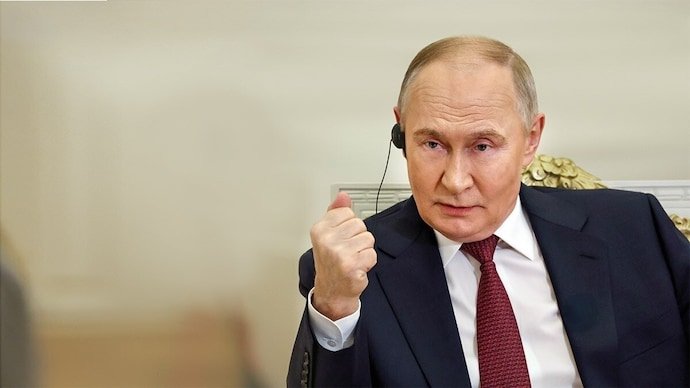
Did Vladimir Putin Gain Without Doing Anything?
One of the most striking aspects of the current crisis is that Russia did not directly create the chain of events that benefited its energy sector.
The Hormuz disruption emerged from Middle East conflict dynamics involving Iran, the United States, and regional instability.
Yet the consequences moved almost entirely in Russia’s favor.
As fuel prices surged:
- Sanctions pressure weakened.
- Russian-linked oil flows resumed.
- European governments softened positions.
- Pipeline dependence regained importance.
This reflects a recurring geopolitical pattern:
Global crises often reshape leverage in unpredictable ways.
Russia did not necessarily “win” strategically in a direct sense. But the energy shock created conditions that reduced the effectiveness of Western pressure campaigns.
For Ukraine and its allies, that outcome remains deeply uncomfortable.
The Bigger Problem: Energy Security vs Sanctions Morality
The UK’s decision exposes a broader conflict facing Western governments.
Sanctions are politically easier to maintain when economic pain remains abstract or distant. They become much harder when citizens experience:
- Higher fuel prices
- Travel disruptions
- Inflation
- Industrial strain
- Economic slowdown
Energy markets are uniquely powerful because they directly affect daily life and economic stability.
This creates a recurring policy dilemma:
How long can governments maintain strict sanctions when voters begin feeling significant economic consequences at home?
The Hormuz crisis accelerated that tension dramatically.
Why India and Turkey Became Important in the Oil Trade
India and Turkey have emerged as major refining hubs in the evolving global oil trade system.
Both countries significantly increased purchases of discounted Russian crude following Western sanctions.
After refining, petroleum products can legally enter international markets under different classifications depending on trade rules and origin standards.
This has created a complex global energy ecosystem where Russian crude continues circulating indirectly through third-country refining networks.
Critics argue the system weakens sanctions effectiveness.
Supporters argue it stabilizes global fuel supplies during periods of severe disruption.
The reality is that modern oil markets are highly interconnected and difficult to isolate completely.
Europe’s Long-Term Energy Reality
Despite aggressive diversification efforts, Europe’s energy transition remains incomplete.
The continent has expanded:
- LNG imports
- Renewable energy investments
- Alternative supplier agreements
- Energy storage infrastructure
But replacing decades of Russian energy integration cannot happen overnight.
The Hormuz crisis revealed that Europe’s energy vulnerability did not disappear after sanctions on Moscow it simply shifted into new forms.
Dependence on Middle Eastern shipping routes created another strategic exposure.
That realization may force European policymakers to rethink how energy security, sanctions policy, and geopolitical strategy interact.
Could This Mark the Beginning of Sanctions Fatigue?
One increasingly important question is whether Western economies are entering a phase of “sanctions fatigue.”
Over time, maintaining unified economic pressure becomes more difficult when:
- Global crises multiply
- Energy prices remain volatile
- Domestic industries face strain
- Political divisions grow internally
The UK’s quiet policy adjustment may therefore represent more than a temporary technical change.
It could signal the beginning of a broader recalibration where governments seek pragmatic flexibility rather than rigid sanctions enforcement.
That would not necessarily mean abandoning support for Ukraine.
But it may indicate growing recognition that economic warfare has limits when global energy systems remain deeply interconnected.
The Geopolitical Lesson Europe Cannot Ignore
The current crisis has reinforced one of the most important geopolitical lessons of the 21st century:
Energy remains power.
Even in an era dominated by Artificial Intelligence, digital economies, and financial sanctions, control over energy supply chains continues shaping global politics in fundamental ways.
Countries capable of influencing oil flows, shipping routes, refining systems, or energy infrastructure retain enormous strategic leverage.
The Hormuz disruption reminded Europe that energy security is not just an economic issue it is a National Security issue.
Conclusion
The UK’s decision to ease restrictions on Russian-linked oil amid the Hormuz crisis reveals the fragile reality behind modern sanctions regimes.
While Western governments publicly maintain strong political positions against Moscow, global energy disruptions have exposed how difficult it is to fully separate geopolitics from economic survival.
The closure of the Strait of Hormuz triggered fuel shocks that rapidly forced governments to prioritize supply stability over strict sanctions purity.
In the process, Russian-linked crude quietly regained access to important markets through indirect routes.
The deeper story is not simply about Britain or Russia.
It is about how interconnected global energy systems remain, how quickly geopolitical crises can reshape policy decisions, and how economic pressure campaigns often collide with the realities of market dependence.
For Europe, the episode serves as a warning that energy security strategies remain incomplete.
And for Vladimir Putin, even a crisis he did not create ended up shifting part of the geopolitical landscape in Russia’s favor.
For breaking news and live news updates, like us on Facebook or follow us on Twitter and Instagram. Read more on Latest World on thefoxdaily.com.




COMMENTS 0