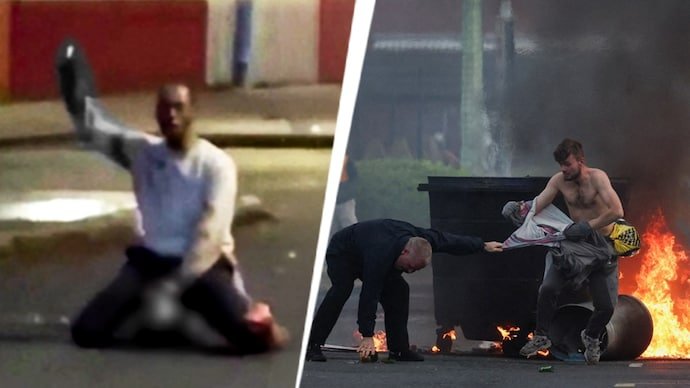
A shocking knife attack in Belfast has become the center of a growing political, social, and Security debate across the United Kingdom. Authorities have charged a 30-year-old Sudanese asylum seeker with attempted murder after a violent assault that left a man in his 40s fighting for his life with severe injuries to his neck, head, and face.
The incident quickly moved beyond a criminal Investigation and evolved into a broader Controversy surrounding Immigration policy, border controls, asylum procedures, community relations, and public confidence in government institutions. Within hours of the suspect being charged, Protests erupted across Belfast and other areas, with some demonstrations descending into violence, property damage, and clashes with police.
As political leaders urge calm and law enforcement continues its investigation, the attack has once again highlighted how individual criminal incidents can rapidly become flashpoints in larger national debates about immigration, integration, and public security.
What Happened in Belfast?
The attack occurred on Monday evening in Belfast, where police say a man suffered life-threatening injuries during what authorities described as a brutal assault.
Emergency services responded to the scene and recovered a kitchen knife believed to have been used in the attack. Investigators launched a major operation and later charged a 30-year-old Sudanese national with attempted murder, possession of a bladed article in a public place, and making threats to kill.
The victim remains the focus of concern, with authorities confirming he sustained serious injuries that required urgent medical attention.
Police have emphasized that the investigation remains active and that the case is currently being treated as a serious criminal matter rather than a terrorist incident.
Who Is the Suspect?
According to authorities, the accused is a Sudanese national who had previously sought asylum and was granted leave to remain in the United Kingdom in September 2023.
Investigators stated that he arrived in Ireland from Paris before later travelling to Belfast from Dublin in February 2023.
Police officials have also stressed that the suspect was not previously known to law enforcement or national security agencies.
Chief Constable Jon Boutcher stated that there was no record of the suspect appearing on national security databases and no previous history that would have flagged concerns to police.
This detail has become a significant part of the public discussion because it raises questions about how authorities assess risk among asylum applicants and migrants entering the country.
Why the Incident Triggered Such a Strong Public Reaction
Violent crimes often provoke strong emotional responses, particularly when the details are especially disturbing. However, several factors combined to make this incident particularly explosive.
- The severity of the attack
- The asylum status of the suspect
- Existing public concerns about immigration
- Political polarization surrounding migration policies
- The rapid spread of information and videos on Social Media
Within hours, public anger began spilling onto the streets, transforming a criminal investigation into a broader debate about immigration policy and national security.
For many residents, the attack reinforced existing concerns about border management and Public Safety. Others warned against using the actions of an individual suspect to stigmatize entire migrant communities.
Violent Protests Spread Across Belfast
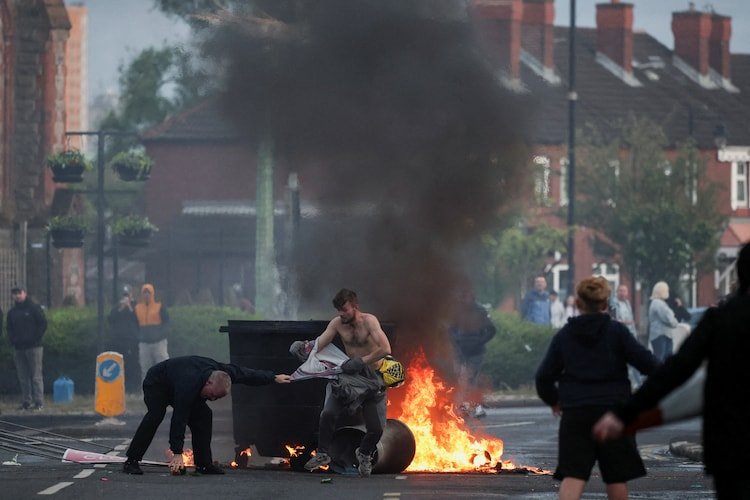
As news of the attack spread, demonstrations emerged across Belfast. While some protesters gathered peacefully, authorities reported that sections of the unrest turned violent.
Police deployed armored vehicles and additional officers to manage crowds as tensions escalated in several areas.
Reports indicated that:
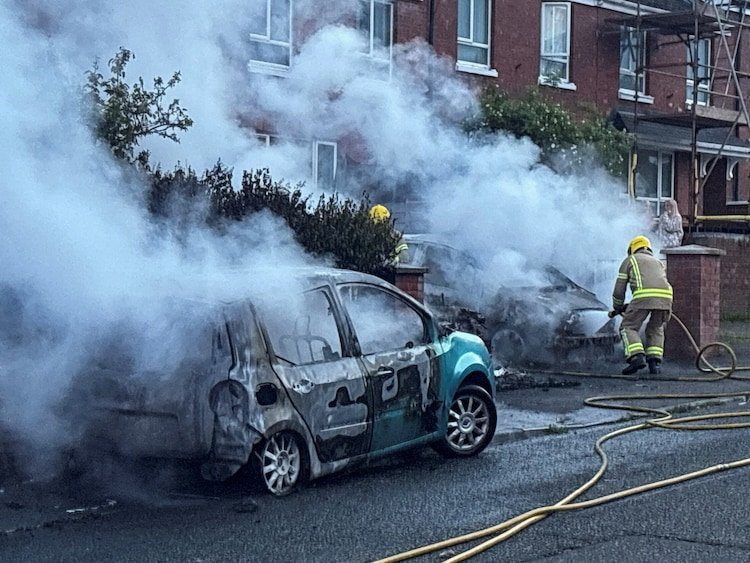
- Vehicles were set on fire
- A public bus was torched
- Properties were damaged
- Windows were smashed
- Police faced confrontations in multiple locations
Images circulating online showed significant damage in some neighborhoods, highlighting the scale of public anger and frustration.
A smaller demonstration was also reported in London, indicating that the incident had gained attention beyond Northern Ireland.
The Growing Immigration Debate in the UK
The Belfast attack arrives at a time when immigration remains one of the most discussed political issues in Britain.
Successive governments have faced pressure to address concerns surrounding asylum applications, illegal migration routes, border enforcement, and integration policies.
Public opinion surveys in recent years have consistently shown immigration ranking among the most important issues for many voters, alongside Healthcare, the economy, and crime.
The latest incident has intensified calls from some groups for stricter asylum controls, while others argue that immigration debates should remain focused on evidence rather than emotionally charged reactions to individual cases.
Understanding the UK’s Asylum System
The United Kingdom’s asylum system is designed to assess applications from individuals who claim they cannot safely return to their home countries due to persecution, conflict, or other serious threats.
The process typically involves:
- Application submission
- Identity verification
- Security checks
- Case review
- Legal assessment
- Final immigration decision
Applicants who are granted refugee status or humanitarian protection may receive permission to remain in the country legally.
However, the system has become increasingly controversial due to backlogs, accommodation costs, processing delays, and disagreements over how asylum claims should be managed.
| Key Immigration Debate Areas | Public Discussion |
|---|---|
| Border Security | Preventing illegal entry and trafficking |
| Asylum Processing | Speed and effectiveness of decisions |
| Integration Policies | Supporting newcomers in communities |
| Public Safety | Risk assessment and monitoring systems |
| Economic Impact | Costs and workforce contributions |
Why Northern Ireland Faces Unique Challenges
Northern Ireland occupies a unique position within the UK’s immigration landscape due to its land border with the Republic of Ireland.
The open border arrangement created under the Good Friday Agreement allows for the free movement of people across the island, making immigration enforcement more complex than in other parts of the United Kingdom.
As a result, migration-related issues often intersect with broader political and constitutional discussions that are specific to Northern Ireland.
This unique context helps explain why immigration-related incidents can quickly become politically sensitive in the region.
The Role of Social Media in Escalating Tensions
One major factor distinguishing modern public unrest from previous decades is the speed at which information spreads online.
Videos, images, eyewitness accounts, and political commentary can reach millions of people within hours.
While social media can help inform the public, it can also amplify emotions before all facts are fully established.
Experts increasingly warn that viral content often accelerates public reactions, making it more difficult for authorities to manage tensions during high-profile incidents.
The Belfast case appears to demonstrate how quickly online discussions can influence real-world events.
Political Leaders Call for Calm
In response to the unrest, Northern Ireland’s major political parties issued a joint condemnation of the attack while also urging restraint.
Leaders emphasized that violence against communities, property destruction, and disorder would only deepen divisions and distract from the ongoing criminal investigation.
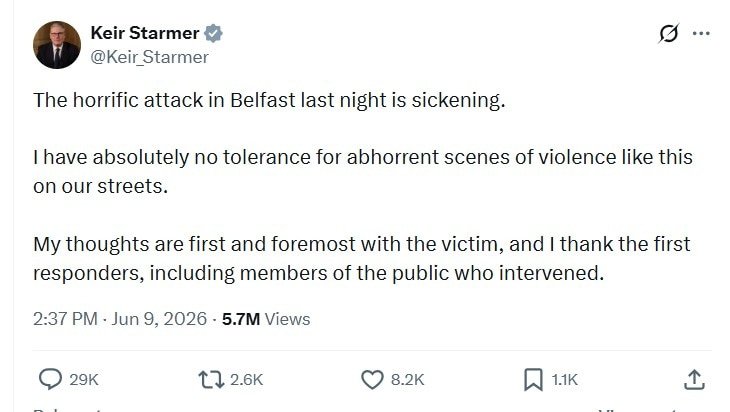
British Prime Minister Keir Starmer also condemned the assault, describing it as a deeply disturbing incident.
Authorities have repeatedly appealed for calm, stressing that the legal process should be allowed to proceed without interference.
The Risk of Community Polarization
One of the greatest challenges following incidents of this nature is preventing broader social divisions from taking root.
When crimes become linked to wider political debates, communities can become increasingly polarized.
Experts in social cohesion note that maintaining trust between different groups is critical for long-term stability.
There is often a delicate balance between addressing legitimate public concerns and avoiding the stigmatization of entire communities based on the actions of a single individual.
How leaders, media organizations, and public institutions respond can significantly influence whether tensions ease or continue to grow.
A Comparison With Previous Immigration-Related Flashpoints
| Factor | Previous Incidents | Belfast Attack Response |
|---|---|---|
| Public Attention | High | Extremely High |
| Social Media Impact | Significant | Immediate and widespread |
| Political Debate | Focused on immigration | Expanded to security and asylum policy |
| Public Disorder | Localized | Multiple protest locations |
The comparison illustrates how immigration-related incidents increasingly become national debates rather than isolated local events.
The Bigger Question: Public Safety vs Immigration Policy
The most important discussion emerging from the Belfast attack may ultimately center on how governments balance humanitarian responsibilities with public safety concerns.
Supporters of tougher immigration controls argue that stronger screening procedures and enforcement measures are necessary to protect communities.
Others maintain that isolated criminal cases should not be used to define broader immigration policy and that effective integration and community support remain essential.
The challenge for policymakers is finding solutions that address security concerns while maintaining fairness and compliance with legal obligations.
Future Outlook
The legal proceedings against the suspect will likely remain the immediate focus of attention. However, the broader political consequences may last much longer.
Several issues are expected to dominate public discussion in the coming months:
- Asylum policy reforms
- Border management strategies
- Public safety measures
- Community integration programs
- Police responses to public disorder
- Immigration screening procedures
The way authorities address these issues could significantly shape future immigration debates throughout the United Kingdom.
Conclusion
The Belfast knife attack has evolved from a serious criminal investigation into a wider national conversation about immigration, security, and social cohesion. The severity of the assault, combined with the asylum status of the accused and the subsequent unrest, has amplified political and public scrutiny of immigration policies across the UK.
While the courts will determine the outcome of the criminal case, the broader questions raised by the incident are likely to remain at the center of public debate. Policymakers now face the challenge of responding to legitimate concerns about public safety while preventing further division within communities already grappling with complex social and political pressures.
As investigations continue and tensions remain high, the Belfast incident may ultimately become a defining moment in the UK’s ongoing debate over immigration, integration, and national security.
For breaking news and live news updates, like us on Facebook or follow us on Twitter and Instagram. Read more on Latest World on thefoxdaily.com.






COMMENTS 0