- What Happened in the UK Local Elections?
- Why Catherine West’s Revolt Matters
- Labour’s Bigger Problem: Voters Are Losing Emotional Connection
- Why Reform UK’s Rise Is Alarming Labour Strategists
- The Leadership Numbers Problem
- Who Could Replace Keir Starmer?
- Why Internal Labour Divisions Are Reappearing
- Why Starmer’s “Reset Speech” Matters So Much
- The Gordon Brown Factor
- The Public Trust Problem Facing Labour
- Could Labour Actually Replace a Sitting Prime Minister?
- Comparison With Previous British Leadership Crises
- What Happens Next?
- Conclusion
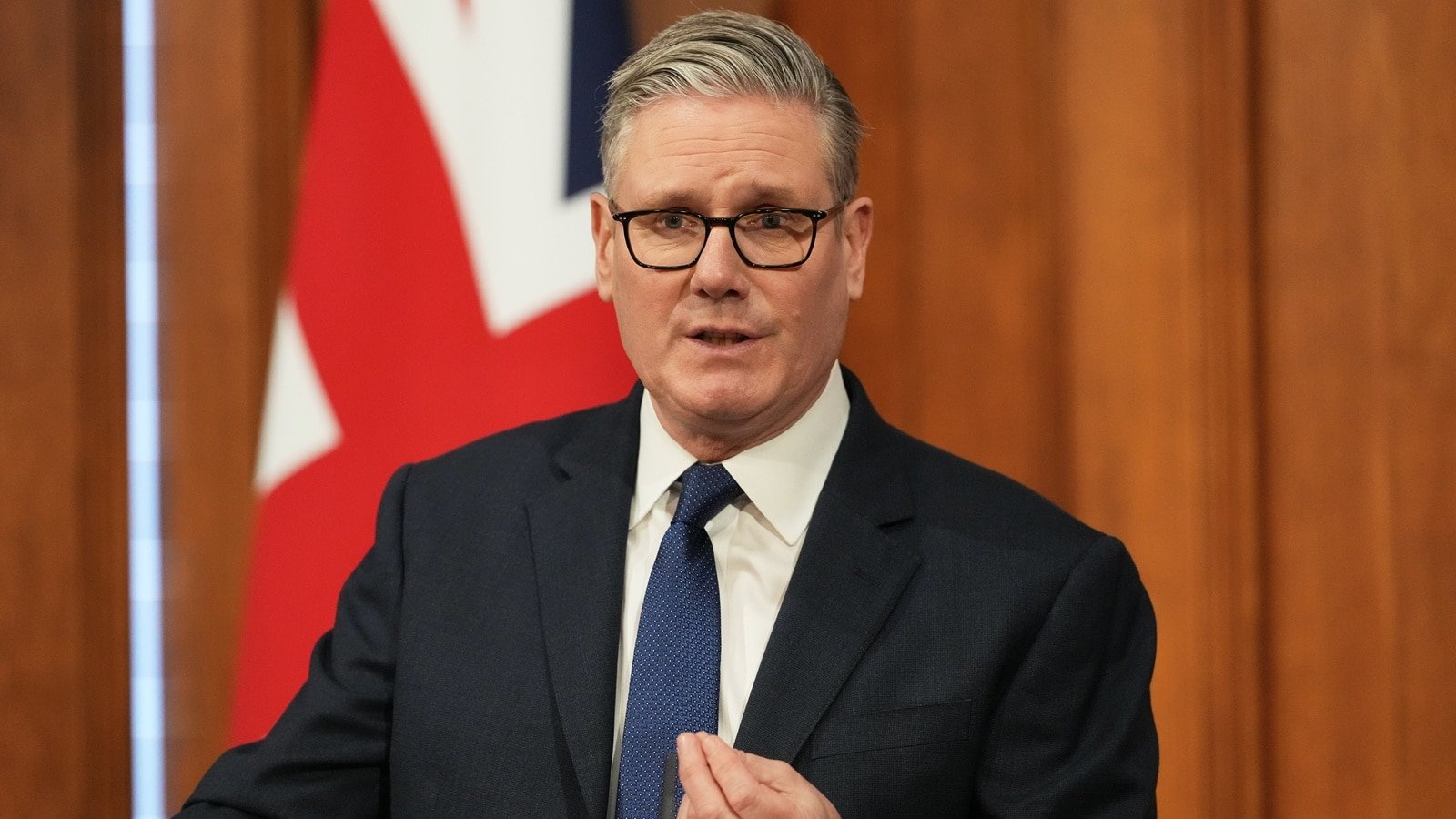
British Prime Minister Keir Starmer is facing the most serious political challenge of his leadership after Labour’s crushing local election losses sparked open revolt within sections of his own party.
What initially appeared to be routine post-election criticism has rapidly escalated into a potential Leadership Crisis, with Labour MP Catherine West publicly threatening to trigger a formal leadership contest if senior figures fail to act against Starmer.
The turmoil comes at a politically dangerous moment for Labour, which entered government promising stability, Economic Recovery and a break from years of Conservative turbulence. Instead, the party now finds itself confronting falling public confidence, internal factional tensions and growing anxiety over whether Starmer can remain electorally viable.
The crisis is no longer just about disappointing council results. It has become a broader referendum on Starmer’s leadership style, political messaging and Labour’s ability to maintain support after returning to power.
What Happened in the UK Local Elections?
Labour suffered one of the worst local election performances by a governing British party in decades, reportedly losing more than 1,400 council seats across England.
The scale of the losses shocked many within Westminster because governing parties typically expect some mid-cycle setbacks but not a collapse of this magnitude.
The election results revealed multiple warning signs:
- Collapse in traditional Labour strongholds
- Growing support for Reform UK
- Rise of smaller regional parties
- Voter frustration over economic conditions
- Low enthusiasm among Labour’s core base
The outcome has intensified fears that Labour’s current coalition of voters may be weaker and less stable than party strategists previously believed.
Why Catherine West’s Revolt Matters
Leadership criticism is common after election setbacks. What makes this situation more serious is that the dissent has now become public and procedural.
Labour MP Catherine West openly stated that she was prepared to trigger a leadership challenge if party leadership failed to move quickly.
Her comments matter for several reasons:
- They legitimise internal rebellion publicly
- They encourage hesitant MPs to speak out
- They signal weakening authority around Starmer
- They create media momentum around leadership instability
West’s description of herself as a possible “stalking horse” candidate is especially revealing.
In British political culture, a stalking horse candidate typically enters a leadership race not necessarily to win, but to create space for a stronger challenger to emerge.
That suggests the current unrest may be less about West herself and more about broader dissatisfaction simmering beneath the surface.
Labour’s Bigger Problem: Voters Are Losing Emotional Connection
One of the most important and overlooked aspects of Labour’s local election defeat is that the results exposed not just anger, but emotional disengagement.
Many voters who backed Labour to remove the Conservatives now appear unconvinced about what Starmer’s government actually stands for beyond competence and stability.
That creates a serious political vulnerability.
Modern British elections are increasingly driven by emotional identity Politics, cultural anxieties and leadership perception rather than policy detail alone.
While Starmer successfully projected himself as a safe alternative during opposition years, governing requires a different political skillset:
- Maintaining public enthusiasm
- Owning difficult economic decisions
- Projecting authority during crises
- Inspiring confidence beyond technocratic management
Critics inside Labour increasingly fear that Starmer appears managerial rather than transformational.
Why Reform UK’s Rise Is Alarming Labour Strategists
The gains made by Reform UK have deeply unsettled Labour strategists because they signal fragmentation across the British political landscape.
Reform UK’s growth demonstrates that dissatisfaction is no longer benefiting only traditional opposition parties.
Instead, voters frustrated with mainstream politics are increasingly exploring outsider alternatives.
This creates a dangerous scenario for Labour because:
- Right-wing populism remains electorally potent
- Working-class voters remain politically fluid
- Anti-establishment sentiment is growing
- Economic dissatisfaction cuts across party lines
Labour’s leadership now faces pressure not only from Conservatives but also from a broader anti-establishment political Environment.
The Leadership Numbers Problem
Under Labour Party rules, any formal challenger requires support from 20 percent of Labour MPs to trigger a leadership contest.
That threshold currently stands at approximately 81 MPs.
Reports suggest Catherine West may currently have support from around 10 MPs far short of the required number.
However, leadership rebellions in British politics often begin with small symbolic acts before rapidly accelerating if momentum shifts.
History shows that once leadership vulnerability becomes publicly visible, internal resistance can spread surprisingly quickly.
Who Could Replace Keir Starmer?
The fact that anti-Starmer factions reportedly remain divided over a successor is currently helping the prime minister survive.
Several names are already being discussed inside Labour circles.
| Potential Successor | Current Position | Political Strength |
|---|---|---|
| Wes Streeting | Health Secretary | Strong communicator, moderniser image |
| Andy Burnham | Mayor of Greater Manchester | Popular regional leader with working-class appeal |
| Catherine West | Labour MP | Possible catalyst candidate rather than frontrunner |
However, Andy Burnham’s current position outside Parliament complicates any immediate leadership challenge because Labour leaders must typically be MPs.
This lack of consensus among critics may ultimately buy Starmer valuable time.
Why Internal Labour Divisions Are Reappearing
Labour’s current tensions reflect deeper ideological fault lines that never fully disappeared after the party returned to government.
Starmer’s leadership strategy involved moving Labour toward the political centre after years of internal Conflict.
That approach succeeded electorally against a weakened Conservative Party, but it also created unresolved tensions involving:
- Economic policy direction
- Public spending priorities
- Immigration positioning
- Trade union influence
- Identity politics debates
- Foreign policy positioning
When electoral success weakens, those dormant ideological divisions often return quickly.
Why Starmer’s “Reset Speech” Matters So Much
Starmer’s upcoming “reset” speech has now become politically critical.
It is no longer simply a policy address it is effectively an attempt to re-establish leadership authority.
The speech must accomplish several difficult objectives simultaneously:
- Reassure nervous Labour MPs
- Convince voters Labour understands public frustration
- Project confidence rather than panic
- Offer a clear future direction
- Prevent rebellion from gathering momentum
That is an exceptionally difficult balancing act.
If the speech appears defensive, vague or overly technical, critics may intensify calls for leadership change.
The Gordon Brown Factor
Starmer’s reported decision to involve former Prime Minister Gordon Brown and veteran Labour figure Harriet Harman is politically significant.
It suggests Downing Street recognises the seriousness of the crisis.
Brown remains respected across many Labour factions because of his reputation for economic seriousness and intellectual depth.
Bringing experienced figures into Starmer’s inner advisory circle may help:
- Stabilise internal nerves
- Improve strategic communication
- Signal party unity
- Rebuild credibility among traditional Labour supporters
However, relying on veteran figures can also unintentionally reinforce perceptions that Labour lacks fresh political energy.
The Public Trust Problem Facing Labour
At the heart of Labour’s difficulties is a broader issue confronting many governing parties across Western democracies: declining public trust.
Voters increasingly expect rapid improvements after political change. When economic pressures persist, patience disappears quickly.
In Britain, households continue facing concerns over:
- Cost of living pressures
- Housing affordability
- NHS waiting times
- Economic stagnation
- Immigration tensions
- Public service strain
Even though many of these problems predate Labour’s government, voters often judge governments based on current lived experience rather than historical responsibility.
Could Labour Actually Replace a Sitting Prime Minister?
While leadership speculation dominates headlines, replacing a sitting prime minister remains politically risky.
Leadership changes can:
- Create perceptions of instability
- Damage investor confidence
- Trigger voter fatigue
- Deepen internal factionalism
- Distract from governance
Many Labour MPs may privately worry that removing Starmer could worsen political instability rather than solve it.
That calculation may ultimately determine whether rebellion grows or fades.
Comparison With Previous British Leadership Crises
Britain has witnessed multiple dramatic leadership collapses in recent years, including:
- Boris Johnson’s resignation
- Liz Truss’s rapid downfall
- Conservative Party internal warfare
Labour originally benefited politically by presenting itself as the stable alternative to Conservative chaos.
If Labour now descends into similar public infighting, it risks undermining one of its strongest electoral advantages.
What Happens Next?
The next several days could prove decisive for Starmer’s political future.
Key developments to watch include:
- Whether more MPs publicly join the rebellion
- The reception to Starmer’s reset speech
- Cabinet loyalty signals
- Opinion polling movement
- Potential emergence of a major challenger
If Starmer stabilises support quickly, the rebellion may fade into temporary post-election frustration.
But if internal criticism continues growing, Labour could face a prolonged period of political instability at precisely the moment it needs to rebuild public confidence.
Conclusion
Keir Starmer’s leadership crisis is about far more than one bad set of local election results.
It reflects deeper anxieties inside Labour over political identity, voter trust and whether the party’s current leadership can maintain authority during increasingly difficult economic and political conditions.
The prime minister now faces a defining test: convincing both the public and his own party that Labour still represents competence, direction and stability.
His response in the coming days may determine not only his political survival, but also the future trajectory of Britain’s governing party.
For breaking news and live news updates, like us on Facebook or follow us on Twitter and Instagram. Read more on Latest World on thefoxdaily.com.






COMMENTS 0