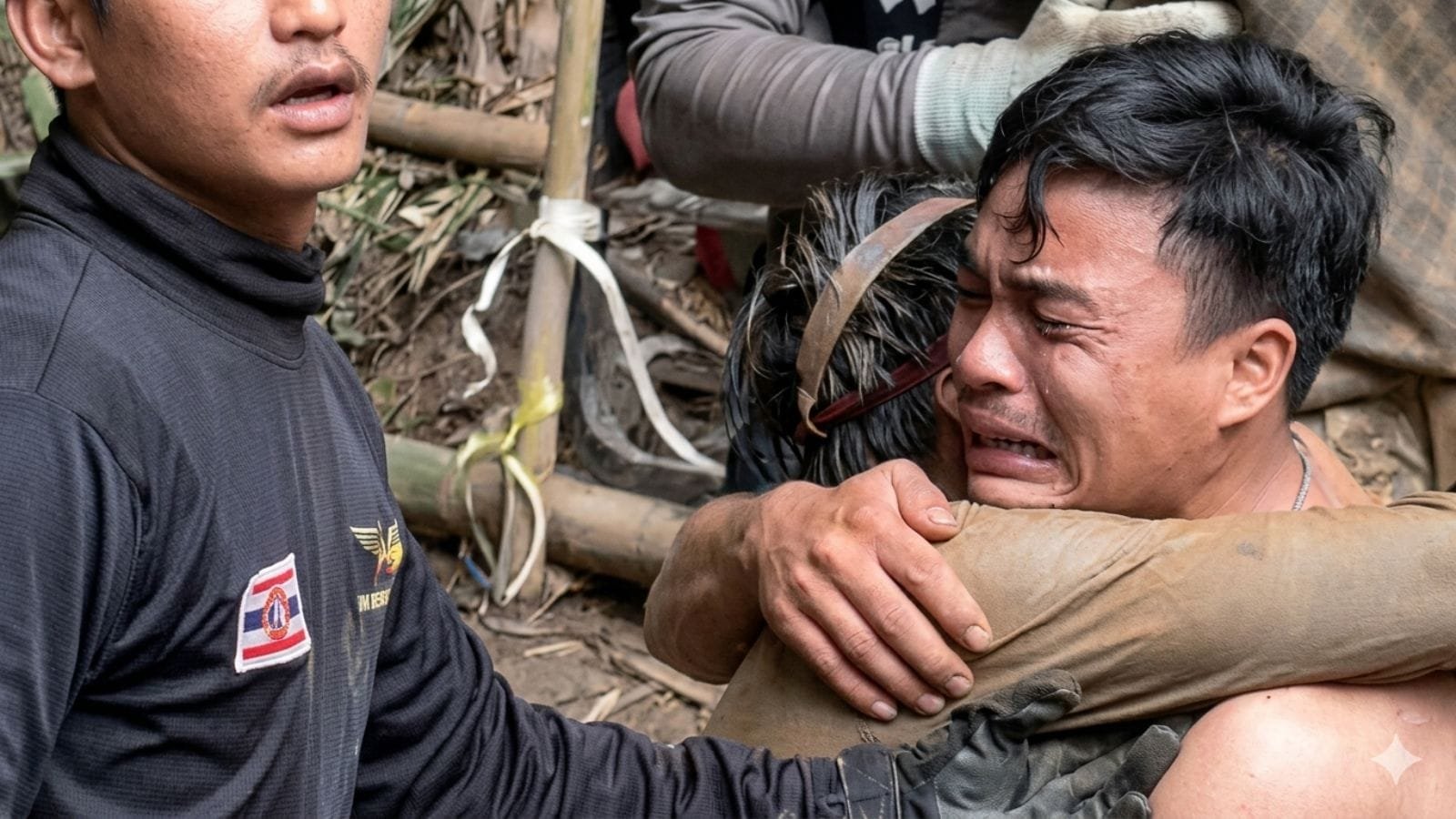
In a dramatic survival story that has captivated Southeast Asia and drawn comparisons with the famous 2018 Thailand cave rescue, five villagers trapped deep inside a flooded cave in central Laos have been rescued after spending ten days cut off from the outside world.
The men were part of an artisanal gold-prospecting expedition that entered a cave in Xaisomboun province on May 20. What began as a routine exploration quickly turned into a life-threatening ordeal when sudden flash floods surged through the cave system, blocking the exit and trapping several members of the group underground.
After days of uncertainty, an international team of elite cave divers, rescue specialists, and volunteers successfully located the survivors and executed one of the region’s most challenging rescue missions. While five men have now been brought to safety, two others remain missing, and rescuers are preparing for an even riskier phase of the operation.
How the Disaster Unfolded
The group of eight villagers entered the cave as part of a small-scale gold prospecting expedition. Such activities are common in rural parts of Laos, where local communities often search for valuable minerals to supplement their income.
However, caves in mountainous regions can become extremely dangerous during periods of sudden rainfall. Flash floods can rapidly transform navigable tunnels into deadly underground rivers, trapping explorers with little warning.
According to rescue officials, one member of the group managed to escape before floodwaters completely blocked the cave entrance. His alert to authorities launched a massive search-and-Rescue Operation that would eventually attract international attention.
The remaining seven villagers were believed trapped somewhere inside the cave network, with rescuers initially unsure whether they had survived the flooding.
A Race Against Time Beneath the Mountains
The rescue mission faced enormous challenges from the beginning.
Unlike surface rescues, cave operations involve highly unpredictable environments where communication is limited, visibility is often nonexistent, and even small mistakes can become fatal.
For days, rescue teams worked to pump water out of the flooded cave while mapping submerged passages and searching for signs of life.
The breakthrough finally came when divers discovered the trapped men alive on an elevated ledge approximately 260 meters from the cave entrance.
The survivors had managed to find a small refuge above rising water levels, but their condition was deteriorating due to limited food, exhaustion, dehydration, and prolonged exposure to harsh cave conditions.
Survival Against Incredible Odds
One of the most remarkable aspects of the rescue is the fact that the trapped men survived for ten days in an environment that offered virtually no comfort or certainty.
Cave survival presents unique challenges:
- Limited access to clean drinking water.
- Near-total darkness.
- Cold temperatures.
- Psychological stress and panic.
- Lack of food and nutrition.
- Risk of rising floodwaters.
Videos recorded during the rescue showed the survivors visibly weakened but determined to stay alive. One trapped man reportedly told rescuers that without food and assistance they would not survive much longer.
The statement highlighted how close the situation came to ending in tragedy.
The International Rescue Team That Made the Difference
The operation quickly evolved into a multinational effort involving specialists from several countries.
Rescue experts from Thailand, Finland, Australia, Japan, Malaysia, Indonesia, and France joined local Lao teams to assist with the mission.
Many of the divers involved had extensive experience in cave rescues and underwater operations. Some had previously participated in the world-famous rescue of the Wild Boars youth football team from Thailand’s Tham Luang cave in 2018.
Their expertise proved crucial because the Laos operation shared many of the same challenges:
- Narrow submerged passages.
- Zero visibility underwater.
- Strong psychological pressure on survivors.
- Complex logistics inside the cave.
- High risk for rescuers themselves.
Experience gained from previous operations helped teams develop strategies for safely guiding non-divers through dangerous underwater sections.
The Rescue Operation: A High-Risk Underwater Mission
Rescuers initially hoped falling water levels would allow the trapped men to walk out. However, conditions inside the cave remained too dangerous for a conventional evacuation.
This left rescuers with only one viable option: teach the survivors basic diving skills and guide them through flooded tunnels.
The plan carried substantial risks.
Most of the trapped villagers had no diving experience. They would need to remain calm while navigating submerged passages where visibility was almost zero.
Divers spent hours teaching breathing techniques, equipment use, and emergency procedures.
The rescue route itself was extremely challenging.
To reach the trapped men, divers first had to navigate more than 200 meters of twisting flooded tunnels before entering an additional submerged section leading to the survivors’ location.
The First Survivor Emerges
The rescue operation achieved its first major success when a survivor identified as Mued was brought safely out of the cave.
Videos showed the exhausted man emerging from floodwaters alongside a rescue diver before crawling through narrow passages toward safety.
His appearance generated an emotional reaction among rescuers WHO had spent days working under extreme pressure.
Medical teams immediately provided oxygen, thermal protection, and Health assessments before transporting him for further treatment.
The successful evacuation demonstrated that the rescue plan could work and provided hope for the remaining trapped men.
Rescue Timeline
| Date | Major Development |
|---|---|
| May 20 | Gold prospecting group enters cave |
| May 20 | Flash flooding traps seven villagers |
| May 21 | Authorities begin rescue efforts |
| May 25 | International rescue specialists arrive |
| May 27 | Survivors located alive inside cave |
| May 29 | First successful evacuation completed |
| May 30 | Additional survivors rescued |
| Ongoing | Search continues for two missing villagers |
Why Cave Rescues Are Among the Most Dangerous Missions in the World
Cave rescues are considered some of the most technically demanding operations in Emergency Response.
Unlike mountain rescues or maritime emergencies, caves create environments where rescuers themselves face life-threatening risks.
Several factors make such operations uniquely dangerous:
- Limited access routes.
- Flooding risks.
- Oxygen concerns.
- Navigation difficulties.
- Equipment failures.
- Psychological stress on survivors.
In many cases, rescue teams spend weeks planning operations that may only take a few hours to execute.
The Laos mission required rescuers to combine technical diving expertise, medical support, engineering solutions, and weather monitoring into a single coordinated effort.
The Critical Role of Water Pumping Operations
One of the most overlooked aspects of the rescue was the extensive pumping operation that reduced water levels inside the cave.
By continuously removing water, teams gradually improved conditions and created safer evacuation routes.
Without these efforts, rescuers may have been forced to attempt a much more dangerous underwater extraction.
Engineering support often plays as important a role as diving expertise during cave rescues, particularly when flooding is involved.
Weather Remains the Biggest Threat
Even after the successful rescue of five survivors, the operation remains far from over.
Forecasts indicating possible rainfall continue to worry rescue teams. Additional rain could rapidly refill parts of the cave system and complicate efforts to locate the two missing villagers.
Weather has historically been one of the most unpredictable factors in cave rescue operations. Heavy rainfall can transform manageable conditions into emergencies within hours.
This urgency is influencing decisions about how to allocate rescue resources during the next phase of the mission.
The Search for the Two Missing Men
Rescuers are now preparing to explore deeper sections of the cave where the missing villagers may have sought refuge.
According to rescue personnel, these areas are located approximately 20 to 25 meters deeper than the section where the five survivors were discovered.
Unfortunately, the deeper chambers remain heavily flooded and significantly more dangerous.
Teams must carefully balance speed with safety as they continue the search.
Every additional meter into the cave increases both the technical difficulty and the risk faced by rescue divers.
Lessons From the Rescue
The Laos cave rescue highlights several important lessons for emergency management and disaster preparedness.
- Rapid international cooperation saves lives.
- Specialized rescue training is invaluable.
- Weather monitoring remains critical.
- Community awareness of cave risks is essential.
- Modern rescue technology continues to improve survival odds.
The operation also demonstrates how knowledge gained from previous rescues can directly contribute to future successes.
Veterans of earlier cave missions brought experience that helped rescuers overcome obstacles that might otherwise have proved insurmountable.
Conclusion
The rescue of five trapped villagers from a flooded cave in Laos stands as one of the most remarkable survival stories of the year. After ten days underground, facing darkness, hunger, exhaustion, and uncertainty, the men were finally brought back to safety through the extraordinary efforts of local and international rescue teams.
Yet the mission is not over. Two villagers remain missing, and rescuers continue to push deeper into the cave despite difficult conditions and the looming threat of additional flooding.
For now, the successful rescue serves as a powerful reminder of human resilience, international cooperation, and the determination of rescue professionals willing to risk their own lives to save others. As the search continues, hopes remain high that the operation will deliver another miracle in the challenging depths of the Laos cave system.
For breaking news and live news updates, like us on Facebook or follow us on Twitter and Instagram. Read more on Latest World on thefoxdaily.com.




COMMENTS 0