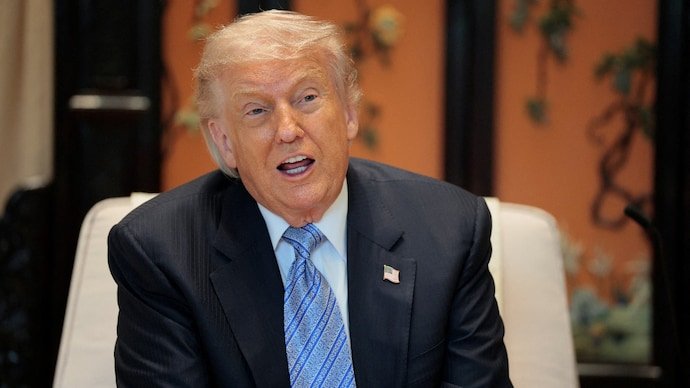
The latest confrontation between President Donald Trump and the federal Judiciary has unfolded around one of America’s most recognizable cultural landmarks: the John F. Kennedy Center for the Performing Arts. After a federal judge blocked efforts to associate Trump’s name with the institution and ruled that any official renaming would require congressional approval, the president launched a sharp public attack on the court system, arguing that no president in American history has been treated more unfairly by judges.
The dispute may appear at first glance to be about a building name, but the controversy reflects a much larger battle over executive authority, judicial oversight, and the limits of presidential influence over federally chartered institutions.
As legal challenges continue to affect multiple aspects of Trump’s policy agenda, the Kennedy Center ruling has become another flashpoint in an increasingly visible struggle between the executive and judicial branches of government.
What Happened at the Kennedy Center?
The controversy emerged after efforts were reportedly made to attach President Trump’s name to the Kennedy Center, a national cultural institution established by congress as a living memorial to President John F. Kennedy.
A federal court ruled that the institution’s name cannot be officially altered without congressional authorization. The judge concluded that the board of trustees lacked the legal authority to make such a fundamental change independently.
The ruling also reportedly blocked broader plans connected to operational and renovation proposals involving the facility.
In response, Trump accused the judiciary of interfering with efforts he claimed were intended to improve and modernize the center.
His reaction quickly transformed a legal dispute into a broader political debate about presidential authority and judicial intervention.
Why the Kennedy Center Holds Special National Significance
The Kennedy Center occupies a unique place in American public life.
Opened in 1971, it serves as the nation’s premier performing arts venue and hosts thousands of events annually, including concerts, theater productions, ballet performances, educational programs, and the prestigious Kennedy Center Honors.
Unlike many private cultural institutions, the center was created through federal legislation and maintains a special relationship with the US government.
Its name is not simply a branding decision. It serves as a congressional memorial to President John F. Kennedy, making any attempt to alter that designation legally and politically sensitive.
| Aspect | Kennedy Center | Importance |
|---|---|---|
| Established | 1971 | National cultural institution |
| Named After | President John F. Kennedy | Congressional memorial designation |
| Location | Washington, D.C. | National performing arts center |
| Governance | Board of Trustees and federal oversight | Public and cultural responsibilities |
The Constitutional Question Behind the Dispute
The central legal issue extends beyond personalities and politics.
The court’s ruling focuses on a fundamental constitutional principle: who has the authority to change the name of an institution created by Congress?
In the American system, Congress possesses the power to establish federal entities and define their legal status. Courts often examine whether executive actions exceed the authority granted under existing law.
In this case, the judge reportedly concluded that because Congress established the Kennedy Center as a memorial to John F. Kennedy, only Congress possesses the authority to alter that designation.
The decision therefore centers on statutory authority rather than personal views about Trump or his administration.
Trump’s Growing Frustration With the Courts
The president’s criticism did not emerge in isolation.
Since returning to office, Trump’s administration has faced numerous legal challenges across a wide range of policy areas, including immigration, trade, federal workforce restructuring, executive orders, and regulatory changes.
Several courts have temporarily blocked, delayed, or modified administration initiatives while legal proceedings continue.
Trump and his supporters argue that judges are increasingly stepping into political territory and preventing elected officials from implementing policies endorsed by voters.
Critics, however, argue that judicial review is functioning exactly as intended by the Constitution, serving as a check on executive power.
This debate has become one of the defining features of contemporary American politics.
The Long History of Presidential Conflicts With Courts
Although Trump argues that he has been treated unfairly, clashes between presidents and the judiciary are hardly new.
Throughout American history, presidents from both parties have expressed frustration with court decisions.
Some notable examples include:
- Thomas Jefferson’s criticism of Federalist judges in the early republic.
- Andrew Jackson’s disputes over Supreme Court rulings involving Native American policies.
- Abraham Lincoln’s tensions with courts during the Civil War.
- Franklin D. Roosevelt’s famous Conflict with the Supreme Court during the New Deal era.
- Richard Nixon’s legal battles during Watergate.
- Barack Obama’s criticism of court rulings on healthcare and immigration.
What makes the current period unique is the speed at which political disputes unfold publicly through Social Media and continuous news coverage.
Why Cultural Institutions Have Become Political Battlegrounds
The Kennedy Center controversy also reflects a broader trend in modern politics: cultural institutions increasingly find themselves at the center of ideological conflicts.
Museums, universities, libraries, public monuments, historical sites, and performing arts organizations have all become arenas where competing visions of national identity are debated.
Supporters of stronger executive involvement often argue that public institutions should reflect the priorities of elected leaders.
Opponents counter that cultural organizations should remain insulated from short-term political pressures.
The Kennedy Center dispute sits directly at the intersection of these competing perspectives.
The Financial Debate Surrounding the Kennedy Center
Trump has defended his involvement by arguing that the institution requires substantial improvements and better management.
Concerns about maintenance, infrastructure modernization, operational efficiency, and long-term financial sustainability are not unique to the Kennedy Center.
Many major cultural institutions worldwide face similar challenges.
Operating costs continue to rise, while audience habits have changed significantly following the pandemic era. Competition from digital entertainment, streaming services, and changing consumer preferences has forced performing arts venues to rethink their strategies.
The debate therefore extends beyond politics into questions about how national cultural institutions should adapt in the twenty-first century.
The Separation of Powers in Action
One reason the case has attracted national attention is that it provides a clear example of the separation of powers functioning in real time.
The US constitutional system deliberately divides authority among three branches:
- Congress creates laws.
- The executive branch implements them.
- The judiciary interprets them.
Conflicts between these branches are not signs of failure. In many ways, they are built into the system itself.
The founders designed a structure intended to prevent any single institution from accumulating excessive power.
Whether one agrees with the ruling or not, the Kennedy Center dispute demonstrates how these constitutional mechanisms continue to operate more than two centuries after the nation’s founding.
How the Decision Could Influence Future Presidential Actions
Beyond the immediate controversy, the ruling could establish important precedents regarding presidential influence over federally chartered institutions.
If courts consistently reaffirm that Congress retains ultimate authority over such entities, future administrations may face similar limitations when attempting to reshape public institutions through executive action alone.
That could affect decisions involving museums, commissions, memorials, educational organizations, and other federally connected bodies.
In this sense, the case carries significance beyond a single building in Washington.
A Political Issue Ahead of Major Elections
The timing of the controversy also matters politically.
Judicial rulings have increasingly become campaign issues, with candidates from both parties using court decisions to energize supporters and frame broader arguments about government power.
For Trump’s political base, the Kennedy Center dispute may reinforce existing concerns about judicial activism.
For critics, the ruling may serve as evidence that constitutional safeguards remain effective even when challenged by powerful political figures.
As a result, the debate is likely to continue far beyond the courtroom.
A Unique Angle Often Missed: The Battle Is Really About Institutional Authority
Most news coverage focuses on the personal confrontation between Trump and the judge. However, the more important issue may be institutional authority.
The underlying question is not whether one individual should have a building named after them.
The real question is who ultimately controls nationally significant institutions in a constitutional democracy.
Should elected presidents have greater flexibility to reshape public institutions? Or should longstanding congressional designations remain protected unless lawmakers explicitly approve changes?
That debate will continue regardless of who occupies the White House.
Future Outlook: More Court Battles Likely Ahead
The Kennedy Center ruling is unlikely to be the final chapter in the broader conflict between the Trump administration and the federal judiciary.
Numerous legal disputes involving executive authority remain active across multiple policy areas.
Some cases may eventually reach appellate courts or even the Supreme Court, where broader constitutional questions about presidential powers could be addressed.
Meanwhile, Congress could choose to engage more directly if lawmakers decide to revisit governance structures surrounding federal cultural institutions.
Whether through legislation, litigation, or political negotiations, the issues raised by this dispute are likely to remain part of the national conversation for some time.
Conclusion
President Donald Trump’s criticism of the Kennedy Center ruling goes far beyond a disagreement over a building’s name. The controversy highlights enduring tensions between the executive branch, Congress, and the federal judiciary, while also touching on broader questions about cultural institutions, presidential authority, and constitutional limits.
The court’s decision reinforces the principle that institutions created by Congress remain subject to congressional authority, while Trump’s response underscores growing political frustration with judicial intervention.
As legal battles continue across multiple fronts, the Kennedy Center dispute serves as a reminder that American governance is often shaped not only by elections but also by the ongoing balance of power among the nation’s constitutional institutions.
The ultimate outcome may determine more than the future of a performing arts center. It could help define how much influence future presidents can exercise over the public institutions that symbolize America’s history, culture, and national identity.
For breaking news and live news updates, like us on Facebook or follow us on Twitter and Instagram. Read more on Latest World on thefoxdaily.com.






COMMENTS 0