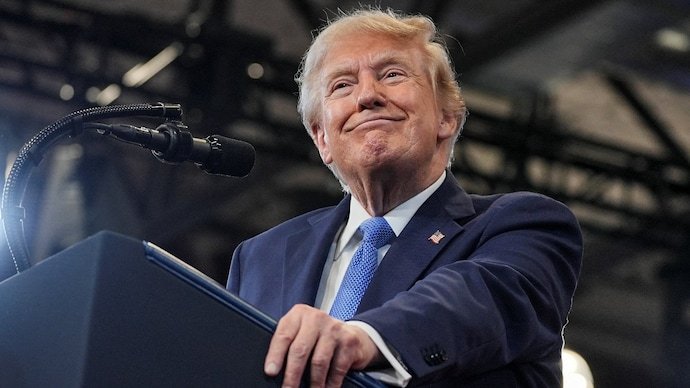
US President Donald Trump‘s approval rating has dropped to 33%, its lowest point of his current presidency, as a large majority of Americans say they expect the United States‘ war with Iran to continue for an extended period.
The latest Reuters/Ipsos poll found that 64% of respondents disapproved of Trump’s performance, compared with just 33% who approved. The result marks another decline from the 35% approval rating recorded in an earlier poll this month and matches the lowest level reached during Trump’s previous presidency in December 2017.
The poll comes as the conflict with Iran increasingly intersects with issues that directly affect American households, particularly petrol prices, inflation and the broader cost of living. It also arrives ahead of the November 3 congressional elections, giving Republicans additional reasons to be concerned about voter sentiment.
Trump’s approval rating falls as Iran war dominates public concerns
The decline in Trump’s approval rating reflects a difficult political environment for a president who returned to the White House in 2025 after campaigning on promises that included keeping inflation under control and avoiding prolonged wars.
Instead, his administration is now dealing with a conflict that has created uncertainty in Global Energy Markets and raised concerns among American voters about how long US military involvement could last.
The Reuters/Ipsos survey found that 80% of Americans believe US involvement in the Iran conflict will continue for an extended period. That view was shared across party lines, although Democrats were more likely to hold it than Republicans.
- 80% of Americans expect the conflict to continue for an extended period.
- 87% of Democrats hold that view.
- 71% of Republicans expect a prolonged conflict.
- Only 16% believe the conflict is likely to end within a few weeks.
The figures show that uncertainty about the war is not limited to Trump’s political opponents. A substantial majority of Republicans also expect the conflict to last longer than originally anticipated.
Why the Iran conflict is becoming a political problem
Trump initially suggested that the conflict with Iran could last only a few weeks. Iran’s continued resistance and the disruption surrounding the Strait of Hormuz have made that expectation harder to sustain.
The conflict has also affected the global oil trade. According to the supplied polling report, the fighting has effectively paralysed a fifth of global oil trade, contributing to higher petrol prices in the United States.
That creates a particularly sensitive political problem for Trump because fuel prices are among the costs consumers can see most directly. A change in the price displayed at a petrol station can quickly become a broader judgment about the economy and the administration managing it.
For a president who campaigned on controlling inflation, sustained increases in fuel costs can therefore become politically significant even when the causes extend beyond domestic economic policy.
Trump defends higher petrol prices
Trump has attempted to justify the economic cost of the conflict by arguing that Americans are paying a relatively small additional amount at the petrol pump in exchange for preventing Iran from obtaining a nuclear weapon, one of the stated rationales for US involvement in the war.
At a political rally in Garden City, New York, on Friday, Trump argued that paying a little more for petrol was worthwhile if it helped prevent what he described as a very evil country from obtaining a nuclear weapon.
That argument highlights the difficult balance facing the administration. Trump must persuade voters that the security objectives of the conflict justify its economic consequences while also addressing concerns that the war could continue for much longer than initially expected.
The Reuters/Ipsos poll suggests that argument has not yet produced broad public support. Only one in five Americans said they believe the war has been worth its cost. Even among Republicans, only about half viewed the conflict as worthwhile.
Trump’s shifting messages add to uncertainty
Throughout the conflict, Trump has alternated between warnings of further escalation and statements suggesting that a peace agreement could be close.
That changing rhetoric creates a complicated message for voters. On one hand, the administration has presented the military campaign as necessary to address a major National Security threat. On the other, suggestions that a deal may be imminent can raise expectations that the economic and military costs of the conflict could soon ease.
The latest poll indicates that most Americans are not expecting a quick resolution. With 80% anticipating an extended conflict, the public appears to be preparing for a longer period of uncertainty than the administration’s early messaging suggested.
Confirmed fact: The Reuters/Ipsos poll found that 80% of respondents expected US involvement in Iran to continue for an extended period.
Reasoned analysis: If the conflict continues and energy prices remain elevated, the issue could become increasingly connected to voters’ perceptions of inflation and household finances.
Possible future development: The political impact will depend heavily on whether the conflict ends, how quickly energy markets stabilize and whether voters believe the administration’s security objectives justified the economic costs.
Economic concerns are shifting the political landscape
The Iran conflict is not the only issue affecting Trump’s political standing. The latest Reuters/Ipsos polling also points to a broader change in how voters view the two major parties on economic management.
For the first time in about a decade, voters in this month’s Reuters/Ipsos polling preferred Democrats over Republicans as the party better able to manage the economy.
In the latest poll, 38% said Democrats would handle the economy better, while 35% preferred Republicans. Democrats were also viewed as better equipped to deal with the cost of living.
The relatively narrow difference is important because economic management has traditionally been one of the central issues in US elections. The numbers do not establish that voters have permanently shifted toward Democrats, but they show Republicans facing greater competition on an issue that can strongly influence congressional elections.
November midterms create additional pressure for Republicans
The political consequences of the Iran war could extend beyond Trump’s personal approval rating. Republicans are preparing to defend their slim majority in the US House of Representatives in the November 3 elections, while Democrats increasingly see an opportunity to compete for control of the Senate as well.
That makes the cost of living and petrol prices especially important. Candidates seeking to defend Republican seats may have to answer questions about whether the administration’s foreign policy decisions are contributing to higher household expenses.
The challenge is particularly complicated because the impact of the Iran conflict cannot be separated neatly from broader global oil-market conditions. Nevertheless, voters often evaluate economic conditions through their immediate personal experience rather than through a detailed assessment of every underlying cause.
If petrol prices remain elevated, the issue could become a recurring feature of campaign debates and political advertising as the elections approach.
Republicans also lose ground on immigration
Immigration remains an area where Republicans retain an advantage, but the latest poll suggests that advantage has narrowed sharply.
About 40% of registered voters said Republicans have the better approach to Immigration Policy, compared with 38% who preferred Democrats. The two-point Republican advantage is the smallest recorded during Trump’s current term.
The change is significant when compared with January 2025, when Republicans held a 26-point advantage on the issue.
Trump’s administration has pursued a nationwide immigration crackdown and the number of border crossings has fallen sharply. At the same time, the political debate has been complicated by deadly confrontations and an increase in detainees, including children.
As a result, Republicans continue to hold a numerical advantage on immigration in the latest poll, but the margin has become much smaller than it was when Trump began his second term.
What the approval numbers mean for Trump
A 33% approval rating does not by itself determine the outcome of an election or indicate that a president has lost support among every part of the electorate. Trump’s support remains particularly important among Republicans, and the latest survey shows that Republicans are still more likely than Democrats to support his handling of key issues.
However, the combination of declining overall approval, concerns about the length of the Iran conflict, higher petrol prices and changing perceptions of economic management creates a difficult political environment.
The most important issue for Trump may be whether voters begin to connect these separate concerns into a broader judgment about his presidency.
Foreign policy, energy prices and inflation are different issues, but they can converge in the household budget. A prolonged war can contribute to energy-market uncertainty, higher fuel costs can affect transportation expenses, and higher costs can reinforce concerns about inflation and the cost of living.
That connection could matter more as the midterm elections approach.
The biggest question is how long the Iran conflict lasts
The latest polling suggests that Americans are preparing for a prolonged conflict, but the duration of the war remains a central uncertainty.
If fighting ends sooner than expected, pressure on energy markets could potentially ease and the administration could point to a quicker resolution. If the conflict continues, however, the political conversation could increasingly focus on the costs of prolonged US involvement.
The same applies to Trump’s approval rating. A sustained conflict accompanied by higher petrol prices could create continued pressure, while a negotiated settlement or visible improvement in economic conditions could change the political picture.
For now, the poll captures a president facing his lowest approval rating of the presidency and a public that appears increasingly skeptical that the Iran conflict will be resolved quickly.
What to watch next
Several developments will be particularly important in determining whether Trump’s current approval slump deepens or reverses.
- The duration of the Iran conflict: A prolonged war would keep foreign policy and military costs at the center of the political debate.
- Petrol prices: Continued increases could intensify concerns about household finances and the cost of living.
- Economic perceptions: Democrats’ emerging advantage on economic management could become more important during the midterm campaign.
- Republican support: The degree to which Trump’s political base continues to support his handling of the war could influence the wider Republican campaign.
- Immigration: Republicans retain an advantage, but the narrowing margin suggests the issue may be less politically secure than it was at the beginning of Trump’s second term.
The Reuters/Ipsos poll surveyed 1,166 US adults nationwide online and reported a margin of error of three percentage points in either direction.
For Trump, the immediate challenge is not simply recovering a few points in approval. It is managing several issues that voters can experience at the same time: an overseas war, uncertainty over petrol prices, concerns about the cost of living and a closely contested congressional election environment.
The 33% approval figure provides a clear snapshot of the political pressure facing the president, but the direction of the presidency will depend on what happens next. If the Iran conflict continues, the economic consequences remain visible and voters maintain their concerns about the cost of living, the current approval slump could become a more significant electoral problem. If the conflict moves toward a resolution and economic pressure eases, Trump’s political position could look very different by the time Americans vote in November.
For breaking news and live news updates, like us on Facebook or follow us on Twitter and Instagram. Read more on Latest World on thefoxdaily.com.





COMMENTS 0