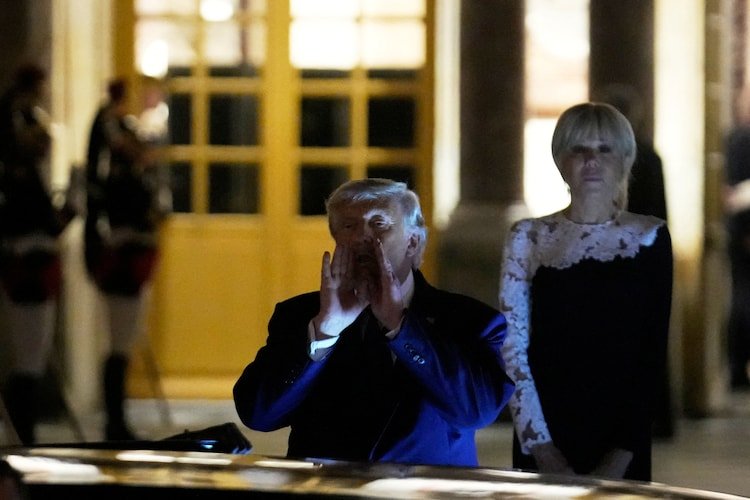
History occasionally produces moments so rich in symbolism that they immediately invite comparison with the past. The signing of a 14-point agreement between the United States and Iran at the Palace of Versailles is one such moment.
In 1919, Versailles became synonymous with victory, power, and the creation of a new international order after World War I. In 2026, the same venue hosted an agreement intended to end a dangerous confrontation between Washington and Tehran. Yet instead of celebrating unquestioned diplomatic triumph, the deal has triggered fierce debate across strategic, political, and security circles.
Supporters argue that US President Donald Trump succeeded in preventing a potentially devastating regional war. Critics counter that Washington secured peace only by granting concessions that Iran had sought for years.
The central question now is whether the agreement represents a diplomatic masterstroke or a strategic retreat whose consequences may become visible only years from now.
The Powerful Symbolism of Versailles
The Palace of Versailles occupies a unique place in diplomatic history.
When US President Woodrow Wilson arrived in France after World War I, he brought with him his famous Fourteen Points—a framework intended to create lasting peace. Although many of Wilson’s ideas were diluted during negotiations, the Treaty of Versailles ultimately reflected the dominance of the victorious Allied powers.
America emerged from that era as an increasingly influential global power.
More than a century later, another American president signed another 14-point framework agreement in the same palace.
The symbolism is impossible to ignore.
While Wilson arrived at Versailles as a representative of victorious powers imposing terms on a defeated adversary, critics argue that Trump arrived in 2026 under very different circumstances, negotiating with an adversary that retained significant leverage despite months of confrontation.
What the US-Iran Agreement Actually Seeks to Achieve
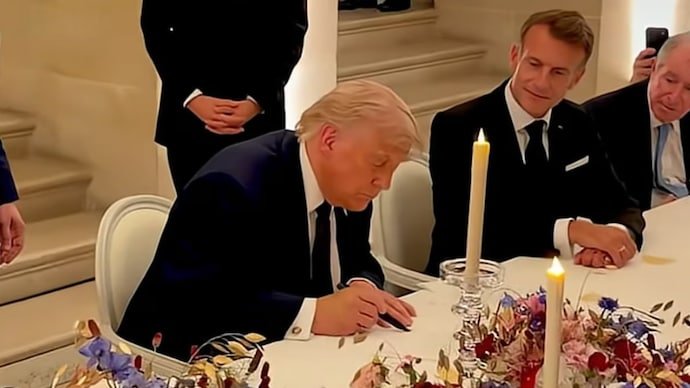
The agreement aims to halt escalating tensions between the United States and Iran while creating a framework for a broader and more comprehensive settlement.
The memorandum reportedly establishes:
- A ceasefire between the parties
- Commitments against future hostile actions
- Restoration of maritime traffic
- A phased reduction of sanctions
- Negotiations toward a final agreement within 60 days
- Iranian assurances regarding nuclear weapons
- Economic rehabilitation measures
- Mechanisms for future implementation and oversight
On paper, these objectives appear designed to reduce the risk of conflict while creating space for Diplomacy.
However, the details have generated Controversy because many analysts believe the agreement provides substantial economic and strategic benefits to Tehran.
The Road to Versailles: How the Crisis Escalated
To understand the significance of the agreement, it is important to examine the events that preceded it.
Early 2026 witnessed one of the most dangerous periods in Middle Eastern Geopolitics in years.
Military strikes, maritime confrontations, threats to energy routes, and escalating rhetoric created fears of a wider regional conflict involving multiple countries.
The Strait of Hormuz became a focal point of concern.
This narrow waterway handles a significant percentage of global oil shipments and serves as one of the world’s most important energy chokepoints.
Any prolonged disruption would have had consequences extending far beyond the Middle East, potentially affecting energy prices, Inflation, and economic stability worldwide.
Against this backdrop, diplomatic pressure mounted to find a solution before the situation spiraled further.
The Core Criticism: Did Washington Concede Too Much?
The strongest criticism of the agreement centers on the perception that the United States accepted terms that differ substantially from its publicly stated objectives at the beginning of the confrontation.
Critics identify several areas where they believe Tehran emerged with significant advantages.
1. Economic Relief for Iran
One of the most consequential provisions involves sanctions relief and access to frozen assets.
For years, sanctions have served as Washington’s primary tool for exerting economic pressure on Iran.
Under the agreement, pathways appear to be created for:
- Release of restricted assets
- Expanded oil exports
- Banking access
- Insurance and transportation services
- Future economic development initiatives
For Iran, these measures could provide significant economic breathing room at a time when sanctions have placed considerable strain on the country’s economy.
2. Missile Capabilities Remain a Point of Debate
Another contentious issue involves ballistic missiles.
During the crisis, strong rhetoric emphasized limiting Iran’s strategic military capabilities.
Yet the final framework appears focused primarily on nuclear concerns rather than requiring complete dismantlement of conventional missile programs.
This distinction has become one of the most debated aspects of the agreement.
Supporters argue that nuclear weapons and conventional missiles represent separate issues. Critics counter that missile capabilities remain a critical component of Iran’s regional influence.
3. Restrictions on Regional Military Operations
The agreement’s provisions regarding regional hostilities have also attracted scrutiny.
Some analysts argue that restrictions on future military actions could alter the strategic calculations of regional powers.
This concern is particularly prominent among observers who believe that deterrence requires maintaining broad operational flexibility.
The Strait of Hormuz: The Real Strategic Prize?
Perhaps the most important long-term issue emerging from the agreement involves maritime security.
The Strait of Hormuz remains one of the world’s most strategically significant waterways.
| Why the Strait of Hormuz Matters | Global Importance |
|---|---|
| Energy Exports | Major oil and gas transit route |
| Global Trade | Critical maritime chokepoint |
| Regional Security | Key area for naval operations |
| Economic Stability | Influences energy prices worldwide |
Any arrangement affecting navigation rights, maritime security, or shipping costs in this region carries consequences for the Global Economy.
Even modest changes to how maritime traffic operates through the strait can influence energy markets and international trade flows.
As a result, the maritime provisions of the agreement may ultimately prove more significant than many of its political clauses.
A Comparison with Historical Peace Agreements
One reason the Versailles comparison has gained traction is that history offers numerous examples of peace agreements producing unintended consequences.
Some agreements create durable stability.
Others merely freeze conflicts temporarily before tensions re-emerge later.
Several factors often determine which outcome occurs:
- Balance between concessions and enforcement
- Clarity of implementation mechanisms
- Verification procedures
- Regional acceptance
- Domestic political support
- Economic sustainability
The ultimate success of the 2026 agreement will depend less on the signing ceremony and more on how these factors evolve over time.
The Economic Dimension Often Overlooked
Much of the public discussion has focused on geopolitics, but the economic implications deserve equal attention.
A reduction in Middle East tensions can generate significant benefits:
- Lower energy market volatility
- Improved shipping security
- Reduced insurance costs
- Greater investor confidence
- Stabilized supply chains
From this perspective, supporters argue that preventing a major regional war may deliver economic benefits that outweigh concerns about concessions.
This argument resonates particularly with policymakers focused on inflation, energy prices, and global economic stability.
The Political Calculation Behind Trump’s Decision
Every major foreign policy decision involves balancing competing priorities.
For the Trump administration, the agreement appears to reflect a calculation that avoiding a prolonged conflict serves broader national interests.
A large-scale regional war would likely have required enormous financial resources, military commitments, and political capital.
By contrast, diplomacy offered an opportunity to achieve de-escalation without further military escalation.
Whether that calculation proves correct remains uncertain.
But it highlights a fundamental reality of modern geopolitics: negotiations rarely produce outcomes that fully satisfy all parties.
The Missing Perspective: Why Iran Also Took Risks
Much of the criticism assumes Iran emerged as the sole beneficiary.
That interpretation may overlook important realities.
By entering the agreement, Tehran also accepted constraints and commitments.
It committed to further negotiations, accepted scrutiny regarding aspects of its nuclear activities, and tied future economic benefits to continued implementation.
This does not necessarily mean the deal is balanced.
However, it suggests the agreement may be more complex than a simple winner-versus-loser narrative.
What Happens During the Next 60 Days?
The most important phase may actually begin after the signing.
The memorandum establishes a framework, but the final agreement still requires negotiation.
During the coming weeks, negotiators must address:
- Verification mechanisms
- Implementation timelines
- Sanctions schedules
- Nuclear monitoring arrangements
- Regional security concerns
- Economic commitments
The success or failure of these negotiations will largely determine whether Versailles 2026 becomes remembered as a breakthrough or a missed opportunity.
A Strategic Insight Competitors Are Missing
Most analysis focuses on whether America “won” or “lost” the negotiation.
That framing may be overly simplistic.
The more important question is whether the agreement changes the strategic Environment.
If the deal prevents a broader regional conflict, protects global trade routes, and reduces the risk of direct confrontation, policymakers may eventually view it as successful regardless of who appeared to gain more in the initial terms.
Conversely, if tensions return within a few years and unresolved issues resurface, critics will likely argue that the agreement merely delayed a larger crisis.
The true test is not what happened at Versailles, but what happens afterward.
Conclusion: Peace Agreement or Temporary Pause?
The 2026 US-Iran agreement has already secured a place in diplomatic history because of both its substance and its symbolism.
Signed at the Palace of Versailles more than a century after Woodrow Wilson helped shape the post-World War I order, the accord immediately invited comparisons with some of history’s most consequential peace settlements.
Supporters view it as a pragmatic achievement that prevented further bloodshed and opened a path toward stability. Critics see it as a concession-heavy arrangement that provides Iran with significant economic and strategic advantages while limiting future options for Washington and its regional partners.
The truth may lie somewhere between those positions.
History teaches that peace agreements should be judged not by the ceremony surrounding their signing but by their long-term consequences. The Treaty of Versailles shaped global Politics for decades after 1919. Whether the 2026 Versailles agreement becomes a foundation for stability or merely an intermission before future tensions remains the defining question.
For now, one thing is certain: the palace that once symbolized the triumph of great powers has once again become the stage for a geopolitical drama whose final chapter has yet to be written.
For breaking news and live news updates, like us on Facebook or follow us on Twitter and Instagram. Read more on Latest World on thefoxdaily.com.



COMMENTS 0