- Breaking Developments: Gunfire at Sea and Military Reassertion
- Why the Strait of Hormuz Is So Critical
- Iran’s Strategy: Controlled Access Instead of Full Closure
- Rhetoric and Reality: Signals of Escalation
- Global Impact: Markets, Trade, and Security
- Comparison: Full Closure vs Tightened Control
- Unique Insight: The Rise of “Maritime Pressure Tactics”
- What Happens Next? Possible Scenarios
- Conclusion: A Fragile Balance in a Critical Corridor
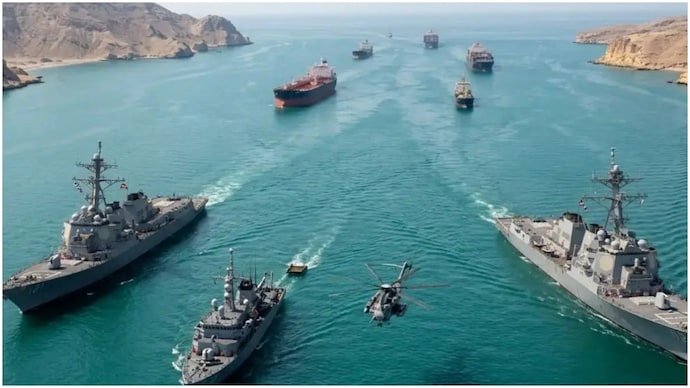
The already fragile situation in the Strait of Hormuz has taken a serious turn after reports that merchant vessels were struck by gunfire while attempting to transit the waterway. The development comes as Iran reimposes strict Military control over the strait, raising global concerns about Energy Security and the risk of wider Conflict. Who? Iran, the United States, and international shipping operators. What? Gunfire incidents targeting vessels and tightened naval control. When? Saturday, amid an ongoing ceasefire window. Where? The Strait of Hormuz. Why? Escalating tensions linked to blockades and alleged violations. How? Through military enforcement and maritime restrictions.
This latest escalation underscores how quickly conditions in the Gulf can deteriorate and how deeply interconnected regional conflict is with global economic stability.
Breaking Developments: Gunfire at Sea and Military Reassertion
According to multiple maritime security sources, at least two commercial vessels reported being hit by gunfire while navigating the Strait of Hormuz. While details remain limited, the incidents occurred shortly after Iran announced it was tightening its grip on the strategic passage.
Earlier in the day, tracking data indicated a convoy of Oil Tankers moving through the strait one of the first significant shipping movements since hostilities escalated weeks ago. That brief window of activity now appears to have closed.
Iran’s armed forces subsequently declared that transit conditions had reverted to strict military oversight, citing alleged violations by external forces and what it described as unlawful maritime interference.
Key Developments at a Glance
| Event | Details |
|---|---|
| Gunfire Reports | At least two vessels struck while crossing |
| Shipping Activity | Convoy of tankers briefly transited strait |
| Iran’s Action | Reimposed strict military control |
| US Position | No immediate response to latest developments |
The sequence of events highlights the volatility of the situation, where even short-lived openings for commercial shipping can quickly reverse.
Why the Strait of Hormuz Is So Critical
The Strait of Hormuz is one of the most strategically important waterways in the world. It serves as a gateway for oil exports from major producers in the Middle East to global markets.
Before the recent conflict, approximately one-fifth of the world’s Oil Supply passed through this narrow corridor. Any disruption whether partial or complete can have immediate consequences for energy prices and supply chains.
Strategic Importance of Hormuz
- Handles a significant share of global oil shipments
- Connects Gulf producers to international markets
- Highly vulnerable due to narrow geography
- Central to global energy security
Even limited restrictions or security incidents can lead to increased shipping costs, insurance premiums, and market volatility.
Iran’s Strategy: Controlled Access Instead of Full Closure
While Iran has previously threatened to close the Strait of Hormuz entirely, its current approach appears more nuanced. Instead of a complete shutdown, Tehran is implementing strict military oversight and controlled passage.
This strategy allows Iran to exert pressure without triggering an immediate large-scale military response. By regulating access, Iran can influence shipping flows while maintaining a degree of plausible deniability.
Officials have indicated that earlier agreements to allow limited vessel passage were made in good faith but were undermined by continued external actions, prompting the renewed restrictions.
Key Elements of Iran’s Approach
- Military Monitoring: Increased naval presence and enforcement
- Conditional Transit: Limited and regulated passage for vessels
- Strategic Messaging: Signals of readiness to escalate if needed
This approach reflects a broader shift toward hybrid tactics that blend military, economic, and political tools.
Rhetoric and Reality: Signals of Escalation
The situation has been further intensified by strong rhetoric from Iran’s leadership. Statements emphasizing readiness to inflict “new defeats” suggest a willingness to escalate if tensions continue.
At the same time, mixed signals from the United States including hints of potential diplomatic progress alongside warnings of renewed conflict add to the uncertainty.
This combination of aggressive messaging and unclear diplomatic direction creates a highly unpredictable environment.
Global Impact: Markets, Trade, and Security
The implications of these developments extend far beyond the Gulf region. The Strait of Hormuz is a linchpin in global trade, particularly for energy markets.
Potential Consequences
- Oil Price Volatility: Prices may spike due to supply concerns
- Shipping Disruptions: Delays and rerouting of vessels
- Insurance Costs: Higher premiums for transit through risk zones
- Economic Uncertainty: Broader impact on global markets
Even if the situation does not escalate into full conflict, prolonged instability could have lasting economic effects.
Comparison: Full Closure vs Tightened Control
| Scenario | Impact Level | Global Response |
|---|---|---|
| Full Closure | Severe | Immediate crisis, possible military intervention |
| Tightened Control | Moderate to High | Market volatility, diplomatic pressure |
| Open Transit | Low | Relative stability |
The current situation falls into the second category serious enough to disrupt markets, but not yet at the level of a full-blown crisis.
Unique Insight: The Rise of “Maritime Pressure Tactics”
One of the most notable aspects of this situation is the increasing use of maritime control as a strategic tool. Rather than relying solely on direct confrontation, nations are leveraging chokepoints like Hormuz to exert influence.
This approach has several advantages:
- Applies economic pressure without immediate large-scale conflict
- Creates uncertainty that affects global markets
- Allows for gradual escalation or de-escalation
However, it also carries significant risks. Miscalculations or accidental incidents such as ships being fired upon can quickly escalate into broader conflict.
What Happens Next? Possible Scenarios
The coming days will be critical in determining the trajectory of this crisis. Several outcomes are possible:
- De-escalation: Diplomatic efforts restore limited transit agreements
- Continued Tension: Ongoing restrictions with periodic incidents
- Escalation: Increased military activity and potential confrontation
The expiration of the current ceasefire window adds urgency to the situation, as decisions made in the near term could shape the region’s stability.
Conclusion: A Fragile Balance in a Critical Corridor
The latest incidents in the Strait of Hormuz highlight the delicate balance between conflict and cooperation in one of the world’s most important regions. Gunfire reports and tightened controls serve as stark reminders of how quickly tensions can escalate.
For global markets, policymakers, and industry leaders, the stakes are clear. Stability in the Strait of Hormuz is not just a regional concern it is a cornerstone of the Global Economy.
As the situation evolves, the focus will remain on whether Diplomacy can prevail or whether the region edges closer to a more dangerous confrontation. In a world increasingly shaped by interconnected risks, what happens in Hormuz will not stay in Hormuz.
For breaking news and live news updates, like us on Facebook or follow us on Twitter and Instagram. Read more on Latest World on thefoxdaily.com.






COMMENTS 0