- Introduction: A Strategic Waterway Under Tight Control
- What Happened: The First Attempt to Break the Blockade
- The Numbers: 27 Ships Turned Back
- Why the Strait of Hormuz Matters
- Strategic Messaging: More Than Just Enforcement
- Shipping Industry Response: Caution and Retreat
- Comparison: Blockade vs Traditional Sanctions
- The Risk Factor: Escalation at Sea
- New Insight: The Psychology of Deterrence
- What Happens Next?
- Conclusion: A Chokepoint Under Pressure
Introduction: A Strategic Waterway Under Tight Control
The Strait of Hormuz has long been a pressure point in global geopolitics. Now, it is becoming something more a controlled chokepoint where Military enforcement, economic pressure, and strategic signaling are unfolding in real time.
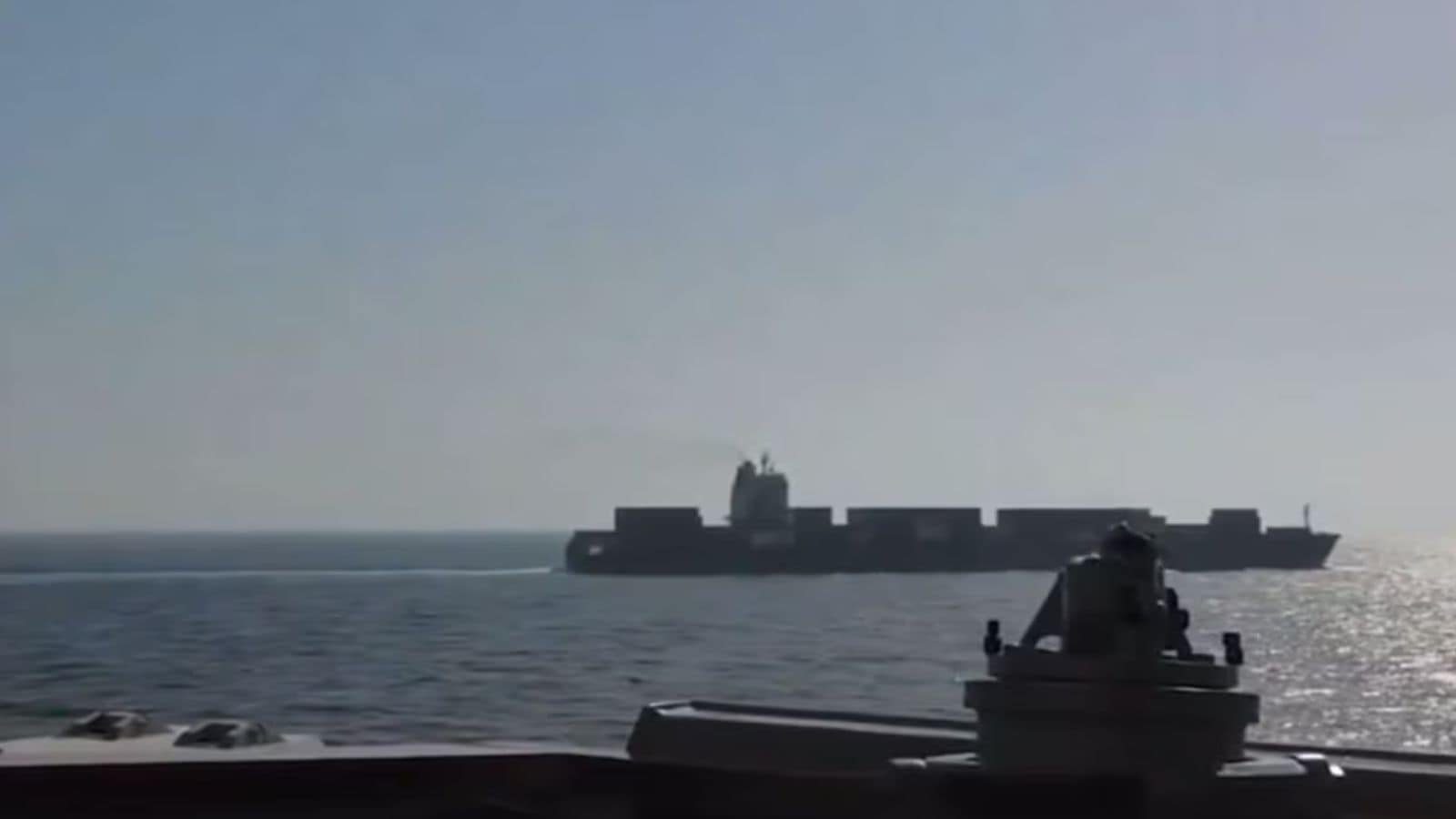
In a significant escalation, the United States has turned back 27 vessels attempting to move in or out of Iranian Ports following the imposition of a maritime blockade. At the center of this development is one ship in particular a cargo vessel that attempted to defy the restrictions and was subsequently intercepted.
This marks a turning point. The blockade is no longer just a policy it is being actively enforced.
What Happened: The First Attempt to Break the Blockade
The seizure of an Iranian cargo vessel stands out as a defining moment in the unfolding situation.
According to officials, the ship attempted to navigate through restricted waters despite the blockade. It was intercepted, disabled, and boarded by naval forces in the Gulf of Oman.
This incident is significant for two reasons:
- It represents the first known attempt to bypass the blockade
- It demonstrates that enforcement will involve direct intervention at sea
Military personnel reportedly conducted inspections of the ship’s cargo, scanning containers and assessing potential risks.
The final decision on the vessel’s fate remains uncertain, with options ranging from releasing it to redirecting it to a controlled port.
The Numbers: 27 Ships Turned Back
Beyond a single incident, the broader scale of enforcement is equally important.
Since the blockade began:
- 27 vessels have been ordered to turn around or return
- shipping activity linked to Iranian ports has sharply declined
- Maritime traffic patterns in the region are shifting
This level of intervention suggests a coordinated and sustained effort rather than a symbolic move.
It also indicates that the psychological impact of the blockade is already taking hold.
Why the Strait of Hormuz Matters
To understand the significance of these developments, one must consider the importance of the Strait of Hormuz.
This narrow passage connects the Persian Gulf to global markets and serves as a vital artery for energy trade.
Key facts:
- A substantial portion of the world’s oil supply passes through it
- It is one of the most heavily monitored maritime routes
- Any disruption has immediate global consequences
Control over this chokepoint translates into leverage not just regionally, but globally.
Strategic Messaging: More Than Just Enforcement
The blockade is not only about restricting movement it is also about sending a message.
By turning back ships and intercepting those that attempt to bypass restrictions, the United States is signaling:
- Its willingness to enforce maritime control
- Its capacity to monitor and respond in real time
- Its intent to limit economic flows tied to Iran
This kind of signaling plays a crucial role in geopolitical strategy. It shapes the behavior of not just adversaries, but also neutral actors navigating the region.
Shipping Industry Response: Caution and Retreat
One of the most immediate effects of the blockade has been a shift in behavior among shipping companies.
Reports suggest that many vessels are now avoiding the region altogether or delaying voyages.
This cautious approach is driven by:
- Uncertainty over enforcement rules
- Risk of interception or delay
- Insurance and liability concerns
Even without direct confrontation, the blockade is achieving a key objective reducing traffic through deterrence.
Comparison: Blockade vs Traditional Sanctions
| Aspect | Economic Sanctions | Maritime Blockade |
|---|---|---|
| Method | Financial restrictions | Physical enforcement at sea |
| Speed of Impact | Gradual | Immediate |
| Visibility | Low | High |
| Risk Level | Lower escalation | Higher geopolitical tension |
This comparison highlights why the current situation is particularly sensitive. A blockade introduces a level of immediacy and confrontation that traditional sanctions do not.
The Risk Factor: Escalation at Sea
While the blockade is being enforced, it also carries inherent risks.
Potential flashpoints include:
- Further attempts to evade restrictions
- Miscommunication between naval forces and commercial vessels
- Accidental confrontations escalating into larger conflicts
The interception of the cargo vessel shows how quickly situations can evolve from routine monitoring to direct action.
In such an Environment, even minor incidents can have outsized consequences.
New Insight: The Psychology of Deterrence
One of the most underappreciated aspects of the blockade is its psychological dimension.
The fact that 27 ships have already turned back suggests that:
- Perceived risk is influencing decisions as much as actual enforcement
- Shipping companies are adapting behavior proactively
- The blockade’s impact extends beyond physical interceptions
This is deterrence in action not through force alone, but through the anticipation of force.
In many ways, the most effective blockades are those that rarely need to be enforced because compliance becomes voluntary.
What Happens Next?
The coming weeks will be critical in determining how this situation evolves.
Key questions include:
- Will more vessels attempt to challenge the blockade?
- How will Iran respond to increased enforcement?
- Will diplomatic efforts ease tensions or deepen the standoff?
The answers will shape not only regional dynamics but also global Energy Markets.
Conclusion: A Chokepoint Under Pressure
The turning back of 27 ships and the interception of a vessel attempting to bypass restrictions mark a significant escalation in the Strait of Hormuz.
This is no longer a theoretical standoff it is an active, evolving situation with real-world consequences.
At stake is not just control of a waterway, but the balance between economic pressure and military restraint in one of the world’s most sensitive regions.
As enforcement intensifies and tensions persist, the Strait of Hormuz is once again proving that in Global Geopolitics, narrow passages can carry enormous weight.
For breaking news and live news updates, like us on Facebook or follow us on Twitter and Instagram. Read more on Latest World on thefoxdaily.com.





COMMENTS 0