- Context: A Crisis Shaped by Narratives and Power Plays
- Key Developments: Claims, Counterclaims, and Rising Stakes
- The Strait of Hormuz: A Global Chokepoint Under Pressure
- Deep Analysis: The Rise of “Information Warfare”
- Market Reaction: Why Investors Are Watching Closely
- Unique Insight: From Military Threats to Regulatory Control
- Comparison: Closure vs Controlled Access
- Prediction: What Comes Next?
- Conclusion: A High-Stakes Battle Beyond the Battlefield
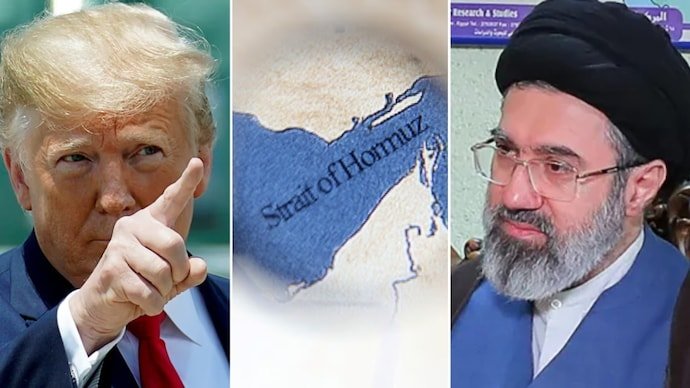
A fresh war of words between Iran and former US President Donald Trump has intensified an already volatile geopolitical situation. Iran’s Parliament Speaker Mohammad Bagher Qalibaf has publicly accused Trump of making “seven false claims in one hour,” while warning that Tehran could once again move to restrict access to the Strait of Hormuz. The dispute raises critical questions: Who is involved? Iran and the United States. What is happening? Conflicting claims over negotiations, nuclear commitments, and maritime access. When? Amid an ongoing ceasefire window and diplomatic deadlock. Where? Centered on the Gulf region and the strategic Strait of Hormuz. Why? Deep mistrust, competing narratives, and pressure tactics. How? Through public statements, economic measures, and potential maritime restrictions.
Beyond rhetoric, this confrontation highlights a deeper struggle over control, credibility, and influence one that could ripple across global energy markets and international Diplomacy.
Context: A Crisis Shaped by Narratives and Power Plays
The current standoff is not just about military positioning or economic Sanctions it is increasingly about narrative dominance. Both Washington and Tehran are attempting to shape global perception, using media platforms and public statements as strategic tools.
Iran’s leadership has framed recent US claims as misinformation designed to project strength and force concessions. Meanwhile, US messaging has emphasized progress and control, even as negotiations remain inconclusive.
This divergence in narratives is significant. In modern geopolitics, perception can influence markets, alliances, and even battlefield decisions. When both sides present conflicting realities, uncertainty becomes the dominant global response.
Timeline of Escalating Statements
| Event | Development |
|---|---|
| Earlier Phase | Iran signals Strait of Hormuz remains open during ceasefire |
| Recent Talks | Diplomatic efforts fail to produce agreement |
| US Statements | Claims of nuclear suspension and maritime stability |
| Iran Response | Accusations of false claims; renewed Hormuz warning |
Key Developments: Claims, Counterclaims, and Rising Stakes
At the heart of the current escalation lies a series of bold and conflicting claims. Trump has suggested that Iran agreed to significant concessions, including halting aspects of its nuclear program and transferring sensitive materials. Tehran has firmly denied these assertions.
Qalibaf’s sharp rebuttal signals more than disagreement it reflects a breakdown in trust and communication. His statement that “seven claims in one hour” were false underscores Iran’s frustration with what it sees as exaggerated or misleading US messaging.
Simultaneously, Iran has reiterated its willingness to leverage one of its most powerful strategic tools: control over the Strait of Hormuz.
What Iran Is Signaling
- Conditional Access: Passage through Hormuz may require Iranian authorization.
- Designated Routes: Maritime traffic could be restricted or regulated.
- Economic Measures: Potential transit fees for vessels passing through the strait.
- Strategic Leverage: Using geography as a bargaining tool in negotiations.
These signals suggest a shift from outright closure threats to more controlled, policy-driven restrictions an approach that could be equally disruptive while appearing more legally justified.
The Strait of Hormuz: A Global Chokepoint Under Pressure
The Strait of Hormuz remains the focal point of this crisis. Its importance cannot be overstated it is one of the world’s most critical energy corridors, connecting major oil producers to global markets.
Even minor disruptions or uncertainties in this region can trigger immediate reactions in oil prices and investor sentiment. The mere possibility of restricted access introduces risk premiums into global markets.
Why Hormuz Is So Critical
- Handles a significant share of global oil exports
- Essential for energy supply chains across Asia, Europe, and beyond
- Narrow geography makes it vulnerable to control or disruption
- Highly sensitive to political and military developments
In practical terms, if Iran were to impose restrictions even without fully closing the strait it could slow shipping, increase insurance costs, and create bottlenecks in global supply.
Deep Analysis: The Rise of “Information Warfare”
One of the most overlooked aspects of this crisis is the role of information warfare. Qalibaf explicitly referenced “media warfare” and the importance of shaping public opinion, highlighting how communication itself has become a battleground.
Unlike traditional conflicts, where military actions dominate, modern geopolitical confrontations often unfold in parallel across digital platforms, news media, and public discourse.
Key Elements of Information Warfare in This Crisis
- Public Messaging: Leaders using social platforms for strategic announcements
- Narrative Control: Competing versions of events and agreements
- Market Influence: Statements impacting investor behavior and oil prices
- Psychological Pressure: Shaping expectations and perceptions
This dynamic complicates diplomacy. When public statements contradict private negotiations, trust erodes, and compromise becomes more difficult.
Market Reaction: Why Investors Are Watching Closely
Interestingly, Financial Markets have shown moments of optimism despite the tensions. Reports of potential agreements or stability even if later disputed have led to temporary drops in oil prices and positive stock market reactions.
However, this optimism is fragile. Markets are highly sensitive to new information, and conflicting signals can lead to rapid reversals.
Potential Economic Impacts
- Oil Price Volatility: Sudden spikes or drops based on geopolitical news
- Shipping Costs: Increased insurance and rerouting expenses
- Supply Chain Disruptions: Delays affecting global industries
- Investor Uncertainty: Fluctuations in energy and defense sectors
In essence, the current situation creates a “risk environment” where uncertainty itself becomes a major economic factor.
Unique Insight: From Military Threats to Regulatory Control
While much attention has focused on potential military escalation, a subtler shift is emerging. Iran appears to be moving toward regulatory control rather than outright closure of Hormuz.
This includes measures such as:
- Imposing transit fees
- Requiring authorization for passage
- Designating specific shipping routes
This approach offers several advantages. It allows Iran to assert control without triggering immediate large-scale conflict, while still exerting pressure on global markets and negotiating partners.
In many ways, this strategy represents a hybrid form of economic and geopolitical leverage less dramatic than military action, but potentially just as impactful.
Comparison: Closure vs Controlled Access
| Scenario | Impact Level | Global Reaction |
|---|---|---|
| Full Closure | Severe | Immediate crisis response, possible military intervention |
| Controlled Access | Moderate to High | Market volatility, diplomatic pressure |
| Status Quo | Low | Temporary stability with underlying tension |
This comparison highlights why controlled access may be the more likely path it provides leverage without crossing the threshold into full-scale confrontation.
Prediction: What Comes Next?
Looking ahead, several scenarios could unfold:
- Escalation Through Regulation: Iran implements transit controls rather than closure
- Continued Narrative Clash: Ongoing disputes over claims and agreements
- Partial Diplomatic Progress: Limited agreements on specific issues
- Renewed Tensions: Breakdown of ceasefire leading to broader conflict
The most likely outcome may involve a mix of these elements a prolonged standoff characterized by controlled pressure and intermittent negotiation.
Conclusion: A High-Stakes Battle Beyond the Battlefield
The latest exchange between Iran and Donald Trump underscores a critical reality: modern geopolitical conflicts are no longer confined to military action. They are fought across narratives, الأسواق, and strategic chokepoints.
Iran’s rejection of US claims and its renewed threat regarding the Strait of Hormuz signal a willingness to escalate but on its own terms. By combining rhetoric, regulatory measures, and strategic positioning, Tehran is shaping a multifaceted response to US pressure.
For the global community, the implications are significant. Energy markets, international trade, and regional stability all hang in the balance. As competing narratives continue to unfold, one thing is clear: the outcome of this standoff will extend far beyond the Gulf, influencing the future of geopolitics and economic security worldwide.
In a world where a single statement can move markets and shift alliances, the line between words and action has never been thinner.
For breaking news and live news updates, like us on Facebook or follow us on Twitter and Instagram. Read more on Latest World on thefoxdaily.com.




COMMENTS 0