- What Exactly Happened?
- Why Iran’s Response Matters
- India and China: Why the “Cradles of Civilisation” Label Resonates
- The Real Issue: Birthright Citizenship Debate in the US
- Geopolitical Context: More Than Just Words
- Energy Security and the Strait of Hormuz Factor
- The Bigger Narrative: Identity, Power, and Perception
- The Missing Insight: Why Language Matters in Diplomacy
- Future Outlook: What Happens Next?
- Conclusion: A Controversy That Reflects a Changing World
When Words Trigger Global Ripples
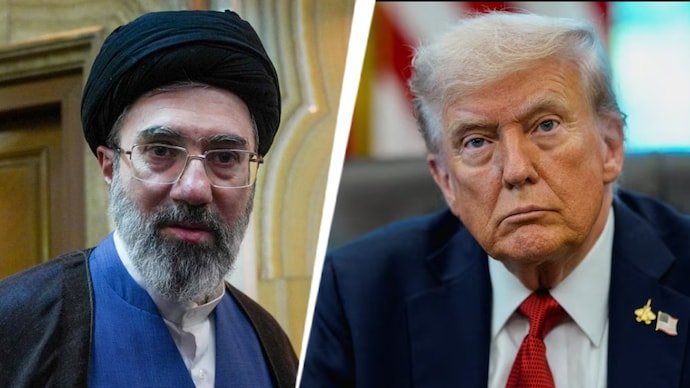
A single phrase can sometimes carry the weight of geopolitics. That is exactly what happened when Donald Trump amplified remarks describing countries like India and china as “hellholes.” The reaction was swift and unusually pointed.
Iran stepped in, defending both nations as “cradles of civilisation,” while sharply criticizing the United States in return. What might appear as a routine political controversy quickly evolved into a broader debate involving History, identity, diplomacy, and global power dynamics.
But this is not just about rhetoric. It reflects deeper tensions shaping today’s world from Immigration debates in the US to shifting alliances across Asia and the Middle East.
What Exactly Happened?
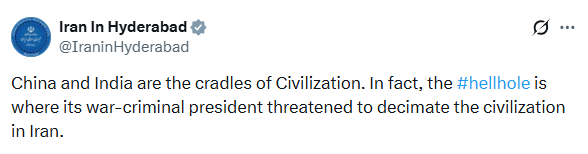
The controversy began when Trump shared content referencing a letter and commentary criticizing birthright citizenship in the United States. The remarks included a description of countries such as India and China in derogatory terms.
In response, Iran issued a strong statement defending both nations, emphasizing their ancient civilizational heritage and turning the criticism back toward Washington.
Key takeaway: What started as a domestic US political argument quickly became an international diplomatic flashpoint.
Why Iran’s Response Matters
Iran’s reaction was not random it was strategic.
By defending India and China, Tehran achieved multiple objectives:
- Positioned itself as a voice against Western criticism
- Strengthened rhetorical alignment with major Asian powers
- Reinforced its narrative against US foreign policy
This move fits into a broader pattern where geopolitical rivals use moments of controversy to shape global perception.
Insight: Diplomatic responses are rarely just about the statement they are about the signal being sent.
India and China: Why the “Cradles of Civilisation” Label Resonates
The phrase “cradles of civilisation” is not just symbolic it carries historical weight.
India’s Civilisational Depth
- Origins of ancient urban cultures like the Indus Valley Civilisation
- Continuous cultural and philosophical traditions spanning millennia
- Major contributions in mathematics, science, and spirituality
China’s Historical Continuity
- One of the world’s oldest continuous civilizations
- Influence across East Asia in governance, philosophy, and technology
- Long-standing traditions of statecraft and innovation
Both countries represent civilizational states nations whose identities are rooted in thousands of years of history rather than recent political formation.
Comparison Insight: This stands in contrast to relatively younger nation-states, where identity is more closely tied to modern political frameworks.
The Real Issue: Birthright Citizenship Debate in the US
At the core of the controversy lies a domestic American issue: birthright citizenship.
This policy grants citizenship to most individuals born on US soil, regardless of their parents’ immigration status.
Supporters Argue:
- It is a constitutional guarantee
- It promotes equality and inclusion
Critics Argue:
- It may be exploited for immigration advantages
- It requires reinterpretation or reform
The debate has intensified in recent years, making it a politically sensitive topic especially during election cycles.
Key Point: International controversies often emerge from domestic political battles.
Geopolitical Context: More Than Just Words
The timing of this controversy is crucial.
It comes amid:
- A fragile US-Iran ceasefire
- Ongoing tensions in the Middle East
- Strategic competition involving global powers
Iran’s response can also be seen as part of its broader geopolitical positioning, particularly as it navigates relationships with both India and China.
Energy Security and the Strait of Hormuz Factor
The controversy is unfolding alongside heightened tensions in the Strait of Hormuz, one of the world’s most critical energy corridors.
Any instability in this region has direct consequences for countries like India and China.
Why It Matters
- A significant portion of global oil supply passes through the Strait
- India relies heavily on imported energy
- China maintains larger reserves but is still exposed
| Country | Energy Dependence | Risk Level |
|---|---|---|
| India | High reliance on imports | High vulnerability |
| China | Diversified supply sources | Moderate vulnerability |
Insight: Geopolitical rhetoric often overlaps with economic realities especially in Energy Markets.
The Bigger Narrative: Identity, Power, and Perception
This episode highlights a deeper global trend the increasing importance of national identity narratives.
Countries today are not just competing economically or militarily they are competing in how they are perceived.
- Historical legacy becomes a tool of soft power
- Cultural identity shapes diplomatic positioning
- Public statements influence global opinion
By invoking civilisational pride, Iran tapped into a powerful narrative that resonates far beyond politics.
The Missing Insight: Why Language Matters in Diplomacy
In International Relations, language is not neutral.
Terms like “hellhole” carry:
- Emotional weight
- Political implications
- Diplomatic consequences
Such language can:
- Strain bilateral relationships
- Trigger public backlash
- Shift global narratives
Unique Perspective: In the digital age, a single statement can act as a geopolitical event.
Future Outlook: What Happens Next?
This controversy is unlikely to fade quickly.
Possible developments include:
- Continued debate over US immigration policies
- Stronger rhetorical alignment among non-Western nations
- Heightened sensitivity in diplomatic communication
For India and China, the incident reinforces their global positioning not just as economic powers, but as civilisational anchors in a shifting world order.
Conclusion: A Controversy That Reflects a Changing World
What began as a controversial remark has evolved into a broader reflection of global dynamics.
It highlights how:
- Domestic politics can trigger international reactions
- Historical identity remains a powerful force
- Geopolitics increasingly operates through narratives as much as actions
Iran’s defence of India and China is not just about countering criticism it is about reinforcing a vision of the world where civilisation, history, and sovereignty play a central role in global discourse.
And in that world, words are no longer just words they are instruments of power.
For breaking news and live news updates, like us on Facebook or follow us on Twitter and Instagram. Read more on Latest World on thefoxdaily.com.






COMMENTS 0